Private Conservation Probably Leads To Good Outcomes, But We Need To Know More

Oregon_BudeauWetlandEasement_TracyRobillardNRCS_web.jpg

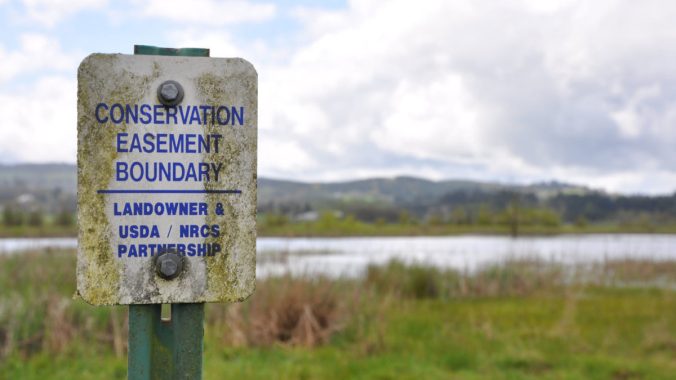
The boundary of land under conservation easement in Marion County, Oregon. TRACY ROBILLARD/NRCS

Richard Conniff does not always have the answers, but he always asks the right questions:

Why Isn’t Publicly Funded Conservation on Private Land More Accountable?

Taxpayer-funded conservation initiatives on private land cost the U.S. public hundreds of millions of dollars a year. Yet information on where these lands are and how they are being protected often is not monitored or publicly available, raising questions about the programs’ effectiveness.

NewYork_Greenwoods-Conservancy_Will-Parson-Chesapeake-Bay-Program_web.jpg

Earle Peterson walks through his 1,200-acre property in Burlington, New York, which is protected through a conservation easement. WILL PARSON/CHESAPEAKE BAY PROGRAM

A few years ago, an environmental lawyer named Jessica Owley set out to learn how well it works when the federal government allows development in the habitat of an endangered species. Under the terms of these deals, introduced in the 1980s to mollify opponents of the Endangered Species Act, the developers provide mitigation, typically with a conservation easement on some other parcel of private land.

Owley focused on four California examples, out of the almost 700 so-called Habitat Conservation Plans (or HCPs) that now exist nationwide. She had a long list of questions, from “Where are the protected parcels?” to “How do endangered species fare in the face of these deals?”

California_SantaClaraHCP_BjornEricksonUSFWS_web.jpg

Coyote Ridge, part of the Santa Clara Valley Habitat Conservation Plan in Northern California, is a vital habitat for threatened species. BJORN ERICKSON/USFWS

“I ended up being stopped at the first question,” says Owley, now a professor at the University of Buffalo Law School. “It wasn’t just that I couldn’t find the HCP sites, but the U.S. Fish and Wildlife Service didn’t know and couldn’t find them.” In one case, an HCP to protect the Mission blue butterfly outside San Francisco, nobody had even bothered to record the easement in municipal land records. Owley came away thinking that a lack of transparency is standard for conservation practices on private land — even when these practices are paid for by taxpayers and meant to serve a significant public interest. Continue reading
Organikos & Fair Trade

3720.jpg

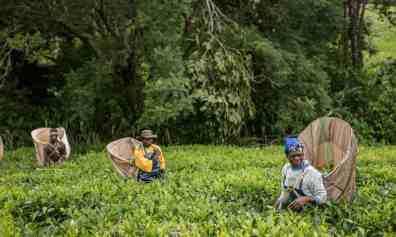
Fairtrade tea producers in Malawi. Photograph: Chris Terry/Fairtrade

We are weeks away from launching two shops that will carry a dozen varieties of Organikos coffee, a fair trade selection among them. Fair trade coffee has been selling well to the people who visit Costa Rica and want to support its sustainable development. We will also offer an organic coffee, which sales data show to be approximately twice as popular as fair trade among these same visitors. We are committed to these two forms of certification for reasons that should be clear from the eight years and thousands of posts on this platform.

But we also believe that all our coffee selections should be chosen by us using ethical criteria, and that the people buying these coffees care more and more about these criteria precisely because those certification programs have had an impact. The Guardian on occasion publishes an article like this one by Samanth Subramanian, who has an eye for important puzzles, that challenges our assumptions in very useful ways:

Is fair trade finished?

Fairtrade changed the way we shop. But major companies have started to abandon it and set up their own in-house imitations – threatening the very idea of fair trade.

4928 (2).jpg

UK supermarket with Fairtrade bananas. Photograph: Sean Spencer/Alamy

It wasn’t very long ago that a banana was just a banana – just a curved, yellow fruit. All you knew, if you bought a bunch in 1986, was that they cost around 97p per kilo. You weren’t told if they were organic or pesticide-free. You didn’t know if they came from Costa Rica or the Dominican Republic. And you certainly weren’t invited to worry about the farmers who grew them – or if their children went to school, or whether their villages had clinics. You just picked up your bananas and walked to the next aisle for your coffee or tea or chocolate, none the wiser about where they came from either, or about the people who farmed them.

2880

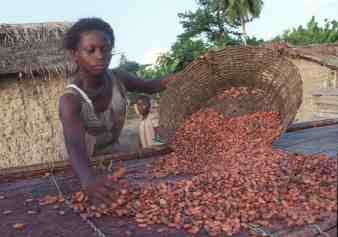
Fairtrade cocoa farmers in Ghana, Africa. Photograph: Karen Robinson/The Observer

Back then, the countries that grew these commodities and many others were still known as the Third World, and the habit of not caring about their farming conditions was a legacy of their colonial past. For centuries, trade propelled the colonial project, and exploitation was its very purpose. The farmers of Asia, Africa and South America were forced to raise the crops that the empire’s companies wanted, to work the crops in abject conditions, and to part with them at ruinously low prices. In the last century, the empires melted away but the trade remained lopsided – with the imbalance now rationalised by the market, which deemed it “efficient” to pay farmers as little as possible. In the 1970s, a Ghanaian cocoa farmer often received less than 10 cents out of every dollar his beans earned on the commodities market; as a proportion of the retail price of a chocolate bar, his take was smaller still. Child labour was common. The chocolate companies prospered and their customers shopped well; the farmers stayed poor.

4724

Human tea bags protest outside Sainsbury’s AGM. Photograph: Andy Aitchison / Oxfam

Then, in the late 1980s, you began to hear more about these farmers, encountering their stories on television or in newspapers or even on the labels of the packages you bought. The reasons were manifold. Environmental awareness was on the rise. The prices of some commodities were crashing, placing agricultural incomes in even more acute peril than usual. There had already been small groups pushing for more equitable trade: “little do-good shops scattered in cities around Europe, selling products … bought at fair prices directly from small producers abroad”, as one pioneer described it. By the early 1990s, these disparate initiatives began to coalesce into a larger international struggle to radically reform our relationship with what we bought. Trade had long been unfair by design, but now there was a growing movement to make consumers care about that unfairness, and even to help rectify it. Continue reading

Pondering Extinction Rebellion’s Approach

Knight-Extinction.jpg

Gail Bradbrook, a founder of Extinction Rebellion, speaks to protesters gathered to block roads near the BBC headquarters, during a recent demonstration in London. Photograph by Brais G. Rouco / SOPA / LightRocket / Getty

This article by Sam Knight starts the new week off on a compelling note:

Letter from the U.K.

Does Extinction Rebellion Have the Solution to the Climate Crisis?

The success of Extinction Rebellion, a British campaign of civil disobedience aimed at addressing the climate crisis, has been something to behold. In April, the group, which was formally launched only last October, blocked Waterloo Bridge, which spans the Thames, for more than a week. Across London, activists glued themselves to buildings, climbed on trains, chained themselves to company headquarters, and occupied key intersections, leading to some thousand arrests and messages of support from around the world. The Metropolitan Police commissioner, Cressida Dick, said that she had never encountered a protest like it. By the end of the month, Extinction Rebellion activists were meeting with Sadiq Khan, the mayor of London, and on May 1st, in accordance with one of their demands, Members of Parliament declared a climate and environment emergency, becoming the first national legislature to do so. In June, M.P.s agreed to another Extinction Rebellion request: to convene a citizens’ assembly, made up of a representative sample of the British population, to discuss the climate crisis. Although the assembly’s recommendations will not be legally binding, as the protesters wished, Extinction Rebellion’s language and its policy agenda have moved into the mainstream at remarkable speed. Continue reading
Penitentes, An Otherworldly Wonder

merlin_157990395_7798c95e-9813-4e2c-a2da-907cc85cdfdb-jumbo.jpg

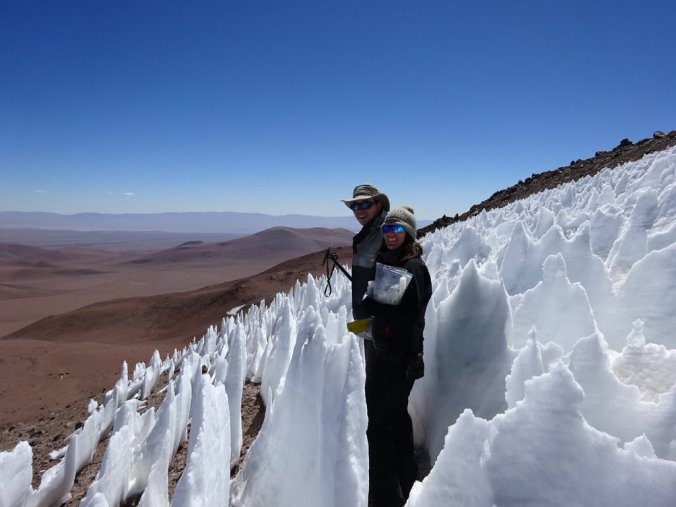
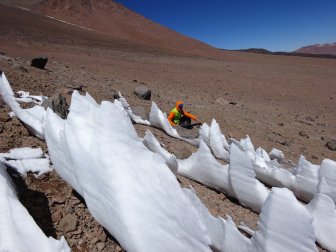
Lara Vimercati and Jack Darcy, two graduate students, at the edge of a penitente field on a Chilean volcano where researchers unexpectedly found algae. Steven K. Schmidt

Thanks to JoAnna Klein for bringing this question, and another Chilean wonder, to our attention:

If Algae Clings to Snow on This Volcano, Can It Grow on Other Desolate Worlds?

Scientists were surprised to find something living on the sterile heights of this Chilean volcano.

merlin_157990404_3a7edcc0-b2c1-4e89-9646-aa58b16dc587-jumbo.jpg

The penitentes are thought to result from an unusual mix of wind, temperature fluctuations and the sun’s ultraviolet rays. Steve Schmidt

In Chile’s Atacama Desert, Volcan Llullaillaco is Mars on Earth — or about as close to it as you can get. At 22,000 feet above sea level, it’s the second highest active volcano on Earth. Most of the mountain is a barren, red landscape of volcanic rock and dust, with thin, dry air, intense sunlight and winds that will blow your tent down the mountain.

While the ground can heat up to 90 degrees Fahrenheit, air temperatures rarely reach above freezing. When snow falls, it turns to gas just as it hits the earth. Occasionally, snow can collect in windblown banks, which then melt into icy spires up to 16 feet tall. The Spaniards called these “nieves penitentes,” penitent ones, because they look like hooded monks doing penance.

merlin_157990380_910bc355-b7cd-4ed4-8a05-969c301f8e8e-jumbo.jpg

Steve Schmidt

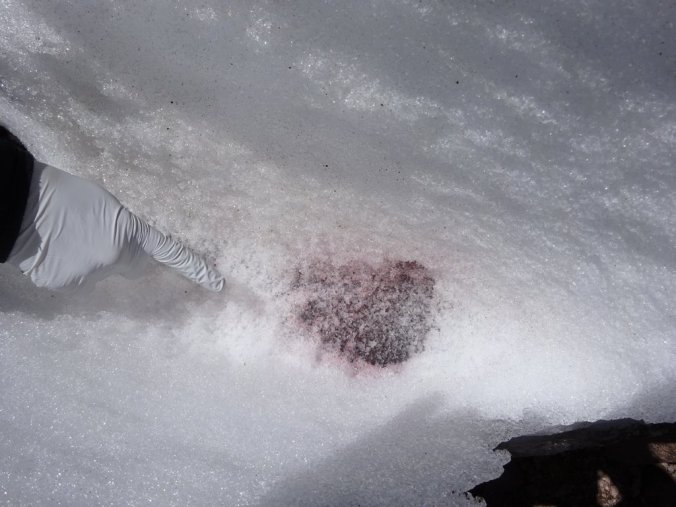
These conditions high up on the volcano made it seem about as lifeless as Mars. But a team of researchers led by Steven K. Schmidt, a microbiologist at the University of Colorado Boulder who studies extreme life, have discovered microbes living in and around the penitentes at 17,300 feet above sea level, about one thousand feet above the point at which vegetation stops on Volcan Llullaillaco. Continue reading
Avoiding Elephants In Zoos


3fd01892d37e4b1481015abfe9e9bb78-jumbo.jpg

Robin Schwartz for The New York Times

We have rarely written about zoos because they are simultaneously depressing and yet have had an important influence on most contributors to our pages. Thanks to the New York Times and Charles Siebert for this article raising questions about elephants in particular at the zoo:

Zoos Called It a ‘Rescue.’ But Are the Elephants Really Better Off?

Despite mounting evidence that elephants find captivity torturous, some American zoos still acquire them from Africa — aided by a tall tale about why they needed to leave home.

14mag-zoos-part2-03-superJumbo-v2

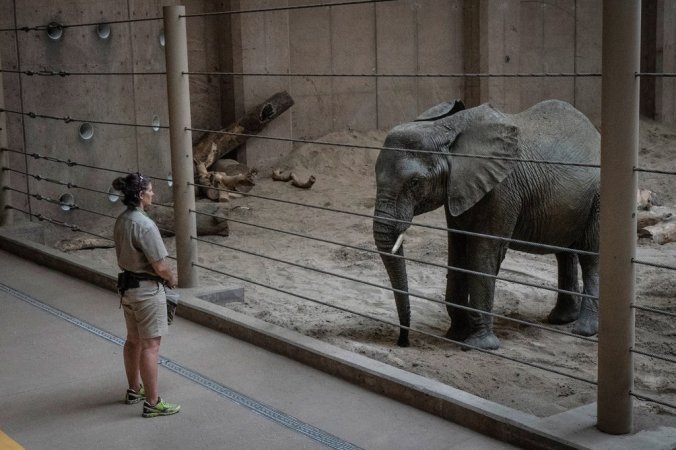
Arusi, one of the six Swaziland elephants at the Sedgwick County Zoo in Wichita, Kan.CreditCreditRobin Schwartz for The New York Times

The “Elephants of the Zambezi River Valley” enclosure at the Sedgwick County Zoo in Wichita, Kan., is a dreamscape idyll of an elephant’s natural home: five and a half sprawling acres of tree-dotted mock savanna and a 550,000-gallon pond where boated people and wading pachyderms can nearly meet on opposite sides of a discreetly submerged barrier. All eight of the zoo’s elephants were visible when I visited on Memorial Day 2018, two years after the habitat’s grand opening, including six recent arrivals from the tiny southern African kingdom eSwatini (formerly Swaziland), the lot of them moving about with the same slow, tensile synchrony of larger wild elephant herds. Only the background flicker of cars on Interstate 235 disrupted the tableau, as well as my own occasional thoughts of far less accommodated zoo and circus elephant captives over the years, right back to the very first elephant brought to the United States.

3fd01892d37e4b1481015abfe9e9bb78-5-jumbo.jpg

Robin Schwartz for The New York Times

According to historical records, it was in the early spring of 1796 that the America, a sailing vessel captained by Jacob Crowninshield, arrived in New York Harbor from Calcutta. As emphatically noted in the ship’s log kept by one of its officers, Nathaniel Hathorne (whose author son would soon add the “w” to the family name), there was an “ELEPHANT ON BOARD.” A 2-year-old female originally purchased by Crowninshield in Bengal for the bargain price of $450, she was immediately sold in New York for $10,000. Continue reading

New Zealand’s Minister of Conservation Shares Surprising Good News

When the Minister of Conservation speaks, we listen:

orange-fronted-parakeet-chick.jpg

We came to this news through the story below by National Public Radio (USA):

Rare New Zealand Parakeet Population Doubles After ‘Epic’ Breeding Season

orange-fronted-parakeet-chick-with-transmitter-doc-c9811c0f185647851facaa77fc88d87cd8614f8f-s1200-c85.jpg

The small bird was believed to have gone extinct but after a bumper crop of beech seeds this year, conservationists estimate the orange-fronted parakeet population has likely doubled.
Department of Conservation

One of the rarest birds in New Zealand is having its best breeding season in decades, potentially doubling the population.

The orange-fronted parakeet, known locally as the kākāriki karaka, is in the midst of a prolonged mating season due to a beech seed bonanza, Conservation Minister Eugenie Sage said in a statement on Wednesday.

“It is great news that this year there are more than three times the number of nests compared to previous years,” Sage said.

She added that at least 150 wild-born chicks have been born so far this season…

Read the whole story here.

The Corn Of The Future Is Valuable Patrimony From Mexico

corn-field-sierra-mixe-uc-davis_web

A Mexican scientist inspects a field of olotón maize near Oaxaca, Mexico. ALLEN VAN DEYNZE/UC DAVIS

Thanks to Martha Pskowski and Yale e360 for this:

Indigenous Maize: Who Owns the Rights to Mexico’s ‘Wonder’ Plant?

A nitrogen-fixing maize grown in an indigenous region of Mexico has the ability to fertilize itself, recent research shows. Now, as a global company and U.S. scientists work to replicate this trait in other corn varieties, will the villages where the maize originated share fairly in the profits?

In a 1979 visit to Totontepec, a small town in Oaxaca, Mexico, naturalist Thomas Boone Hallberg marveled at the local maize. The plants grew nearly 20 feet high in nutrient-poor soil, even though local farmers did not apply any fertilizer.

Aerial_Roots_small_web.jpg

MARS, INCORPORATED & JEAN-MICHEL ANE/UC DAVIS

The maize had aerial roots that grew a mucous-like gel just before harvest season. It seemed impossible, but Hallberg wondered if the maize was fixing its own nitrogen: extracting it from the air and somehow making it usable for the plant. He had visited countless towns since moving to Oaxaca in the 1950s, but what he saw in Totontepec stuck with him.

aerial-roots-sierra-mixe-corn-uc-davis_0_web.jpg

The maize variety olotón has aerial roots that produce a mucous-like gel that fixes nitrogen, meaning that it can effectively fertilize itself. MARS, INCORPORATED & JEAN-MICHEL ANE/UC DAVIS

In 1992, Hallberg returned with a group of Mexican scientists. The maize, known as olotón, was almost ready for harvest and its aerial roots glistened with gel. Ronald Ferrera-Cerrato, a microbiologist, took samples back to his lab outside Mexico City to test the bacteria in the gel. His preliminary results, published in a 1996 report, showed that the maize received nitrogen from the air, through its aerial roots, meaning that it effectively had the ability to fertilize itself.

At the time, scientists around the world were puzzling over similar questions. In a 1996 paper in Plant and Soil, microbiologist Eric Triplett, then at the University of Wisconsin, described the possibility of corn plants that fix nitrogen as “the ‘holy grail’ of nitrogen fixation research” because of the potential to reduce fertilizer demand. Continue reading

Rewilding’s Latest Live Case Study

3500c.jpg

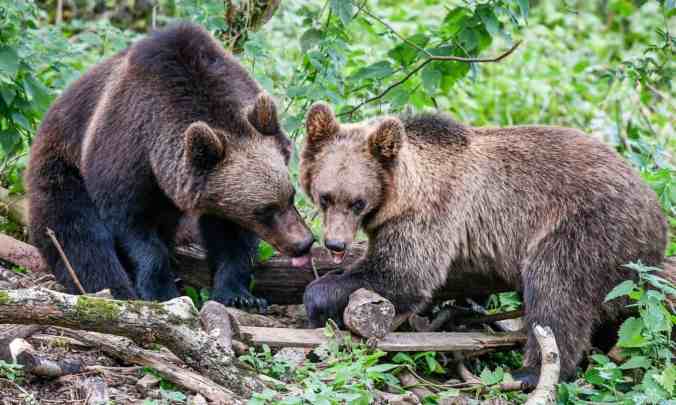
European brown bears, thought to have become extinct in the UK in the Middle Ages, will share a paddock with wolves, lynxes and wolverines. Photograph: Ben Birchall/PA

Thanks to Steven Morris (yet again) for another excellent nature story in the Guardian:

Bears and wolves to coexist in UK woods for first time in 1,000 years

Bear Wood near Bristol aims to spark debate about rewilding of ancient woodlands

For the first time in more than 1,000 years native bears and wolves are coming snout to muzzle with each other among towering oaks and ashes in a slice of British woodland.

European brown bears, thought to have become extinct in the British wilds in medieval times, and grey wolves – which roamed free until the 17th century – are to coexist in a project called Bear Wood near Bristol.

The idea of the scheme – which is part of Bristol Zoological Society’s Wild Place Project – is to give visitors a glimpse into life in the woods and forests that used to cover much of the UK.

It is also intended to initiate a debate about rewilding schemes, which could reintroduce animals such as lynxes – and perhaps wolves and bears. Continue reading
Two Sides of a Conservation Story – With Wolves in the Middle

Karin Vardaman, pictured left, walks the pastures with Breanna Owens, the owner of Cobblestone Ranch, in Los Molinos, California.Photographs by Lucas Foglia for The New Yorker

The return of apex predators to both national parks and rugged, yet unprotected areas of the United States impacts conservation and regeneration of biodiversity for both wildlife and native landscape.  Not surprisingly, it also creates challenges within the well established ranching community.

We’re grateful to all those who participate in the process of navigating a successful middle ground.

The Persuasive Power of the Wolf Lady

To bridge the divide between wolf-lovers and ranchers, the conservationist Karin Vardaman had to change many minds—including her own.

Early one morning in April, 2016, Karin Vardaman and four travelling companions woke in a motel in Siskiyou County, a rugged and remote region where rural California meets the Oregon border. They were in a town called Montague—a dot on the map that had begun, in the eighteen-eighties, as a stop on the Southern Pacific Railroad. After visiting a small market to pick up breakfast and snacks, they continued on to the old community hall, a narrow, low-slung building by the railroad tracks. Large, glass-paned windows ran the length of one side; below them, murals depicted horse-drawn wagons from the area’s pioneer days. Outside, a few dozen people were gathering. Watching them, Vardaman had an uneasy feeling. Oh, boy, she thought. Here we go.

Inside, chairs were arranged in a semicircle. Vardaman stood at the center, near a screen on which a PowerPoint slide displayed the title of her workshop, “On Wolves and Livestock.” Tall and sturdy, in her fifties, she has a flowing mane of lustrous red hair, framing slate-blue eyes and a narrow face. She introduced herself to the crowd as an advocate with the California Wolf Center. The Center, she said, was sponsoring a new, collaborative project called the Working Circle, through which it hoped to find a way for cattle and sheep to coëxist with endangered gray wolves.

Before Vardaman could continue, a man in the audience stood up, interrupting her. He wore a cowboy hat and cowboy boots. He calmly thanked her and her team: they had helped the local economy, he said, by shopping at the market. What he didn’t appreciate, he went on, was their coming into town and dictating to the community what it should and shouldn’t do about wolves. As he spoke, his voice rose in anger, and he stepped suddenly toward Vardaman; at the same moment, more than twenty other people rose to their feet. Some waved anti-wolf flyers above their heads. Others held rifle cartridges, their brass glinting in the light. They chanted, “Shoot, shovel, and shut up!”—an anti-wolf slogan. Vardaman watched as several people opened their jackets, revealing handguns.

For most of the last century, there have been no wolves in California; government-sponsored livestock-protection campaigns exterminated the state’s wolf population by 1924. But in December, 2011, a lone male gray wolf from Oregon, known as OR-7, was tracked via radio collar as he crossed into the Golden State. Slowly, over time, a few others followed. In 2014, the gray wolf gained protection under California’s Endangered Species Act; not long afterward, in Siskiyou County, two wolves were spotted by a trail camera. Today it’s thought that there are at least twelve to fifteen wild wolves in the state. This nascent comeback has opened a rancorous breach between California’s agricultural community, which fears losing livestock to wolf attacks, and its environmentalists, who have been galvanized by the idea of an iconic predator resurrected.

A version of this polarizing conflict has played out wherever wolves have reappeared, from Michigan to the Northern Rockies and Washington State. To an extent, livestock producers and wolf conservationists are divided for pragmatic reasons. If a wolf kills a heifer calf, a rancher can suffer a substantive economic hit—one or two thousand dollars, plus the loss of income from all the calves that the mature cow would’ve had over her lifetime. (Since the wolves returned to Northern California, an estimated eleven calves and cows have died in wolf attacks.) Conversely, if a rancher kills a wolf in an area where the wolf population is still recovering, it could be a significant blow to the animals’ survival.

And yet ranchers and conservationists are divided in other ways, too. Continue reading
Vegan Hooligans @ Abby’s Diner

vegan01.jpg

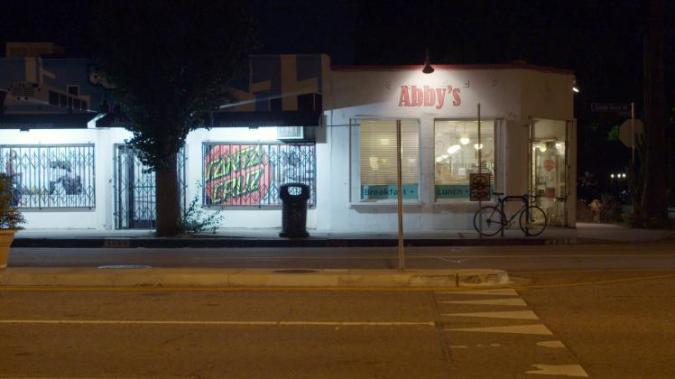
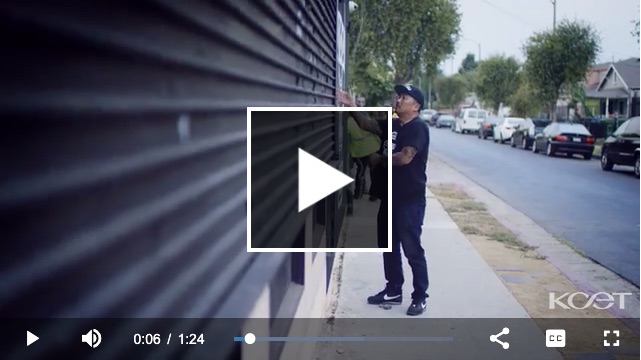
When I started reading this short piece below, subtitled “The chefs Roy Choi and Jose Mejia sample the Vegan Hooligans’ plant-based junk food at an L.A. pop-up.” and containing no photos, before getting two paragraphs in I had to see what Abby’s Diner looked like, and found the image above and those below, on Instagram and in a story by KCET, so following is a mix of the sources:

The chef Roy Choi posted up at the counter of Abby’s Diner in Los Angeles recently. Several times a week, the place morphs from a traditional greasy spoon—booths, tiled floor, B.L.T.s—to a greasy spoon that serves vegan renditions of such drive-through classics as the McDonald’s McRib.

Roi Choi.jpg

Entrepreneur, social activist and chef Roy Choi takes a journey through his hometown of Los Angeles to explore complex social justice issues including food deserts, food waste and sustainability. Learn more about “Broken Bread.” Watch this trailer.

Sheila Marikar has not appeared in our pages before, but I will be on the lookout for more from her, because even without images (thanks to KCET and the Hooligans’ Instagram account for those here) her words make vegan more compelling:

vegan03

Jose Mejia is the man behind the Vegan Hooligans.

“I like to re-create a lot of stuff from fast food so people feel comfortable,” Jose Mejia said. He is a founder of the Vegan Hooligans, which began popping up last February. (The name is a nod to his love of punk rock and soccer.) He wore overalls and a brown beanie. “I wanted to create a brand that didn’t just capture the eyes of, like, vegans,” he added.

BeLeaf.jpgEleven years ago, Choi co-founded Kogi BBQ, a fleet of Korean-taco trucks that fuelled a food-truck renaissance and got him on a number of best-of lists (Food & Wine Best New Chef, Time 100). He is not a vegan. “Kogi, for Pete’s sake, means ‘meat’ in Korean,” he said. But after meeting Mejia while filming an episode of his TV series, “Broken Bread,” a less hedonistic version of Anthony Bourdain’s “No Reservations,” Choi decided to try more meat substitutes. Now he eats animals maybe once a week. Continue reading