Authentica, A Few Of Our Favorite Things

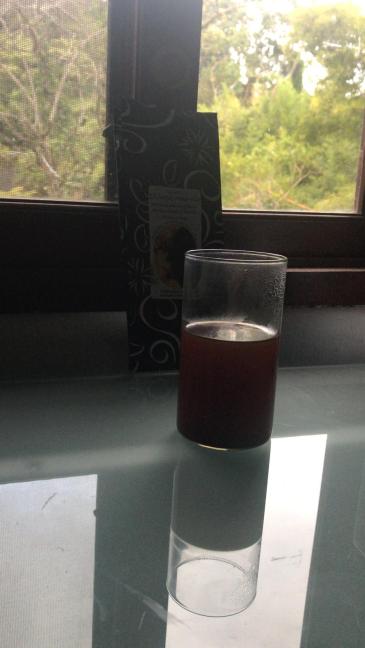
FransCoffee.jpegYesterday’s coffee sample from the Brunca region got us thinking about our interest in foods and beverages that represent the taste of a place we have gotten to know through our work. Today I am sampling a friend’s coffee grown a few hundred meters away from where I sit typing this.

It is an arabica varietal, known as Castillo, that has resisted the rust plaguing Central American highland coffee farms. And this glass of freshly brewed Castillo makes me realize that Authentica is also an outgrowth of the much broader array of work that led to our original interest in taste of place.

In 1995 I gave a lecture based on some ideas that came out of my doctoral dissertation, ideas which I now simply refer to as entrepreneurial conservation. Costa Rica had recently committed to the then-new sustainable development model. I made sure that the ideas from my dissertation could be clearly understood within Costa Rica’s framework. Based on the lecture he received an offer to lead an initiative, based in Costa Rica and serving the countries of Central America, that would facilitate the adoption of sustainable tourism development strategies in the region.

biesanzbbb6281c1oa.jpg

In 1996, tourism was limited in Costa Rica but there was enough of an industry to analyze its component parts. This highlighted pre-existing strengths on which to build a national tourism strategy. One of those components was handicrafts. We have not gone back to look at the findings, but memory tells us that handicrafts were a small but thriving sub-sector of tourism, and some of it was spectacular. The bowl to the left was the first we had seen made of the local wood called cocobolo.
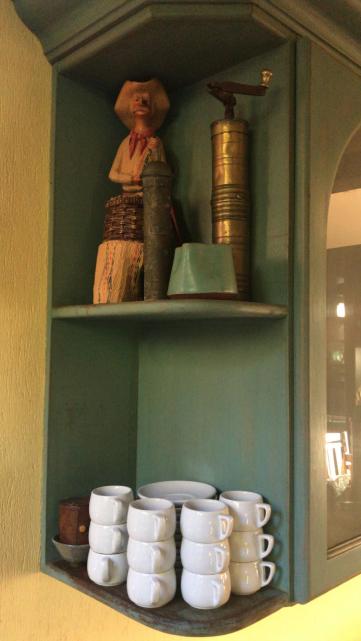
Pia pitcherIn the 2+ decades since that analysis, times have been difficult for the artisans of Costa Rica even as the tourism sector as a whole has grown dramatically. It is enough to say that something must be done in Costa Rica to valorize the artisans who have been able to hang on, and to likewise showcase the remarkable renaissance of artesania in this amazing country. The campesino in the photo to the right is from an artisan who carves coffee wood, with coffee farmers his primary subject. We received that carving as a gift in 1998 and we recently met the artisan who made it. He has managed to hang on.

On that same shelf is a small ceramic pitcher made by an artist of the next generation, who is a perfect representative of the renaissance we see, now that we are visiting Costa Rica after many years living in other parts of the world. A platform is needed to share these things that we see and love about Costa Rica, things which we believe represent this place well, and put them in a place where they can be purchased, in order to valorize the artistry and craftsmanship.
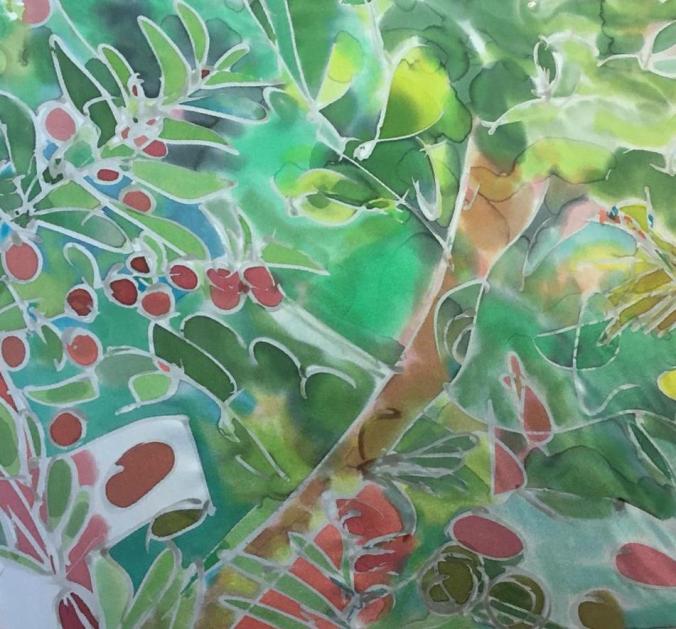
SilkCoffee1

Above is a hand-painted silk scarf made by a local artist whose life on a coffee farm inspired this particular image, and the one below. We will be more specific about these and other artists in future posts. For now it is just enough to say that we believe in local artists, artisans, farmers, roasters, chocolatiers enough that we have formed Authentica as a marketplace for their products, to be sold mostly to visitors who want to take home with them a sense of the place they have visited.
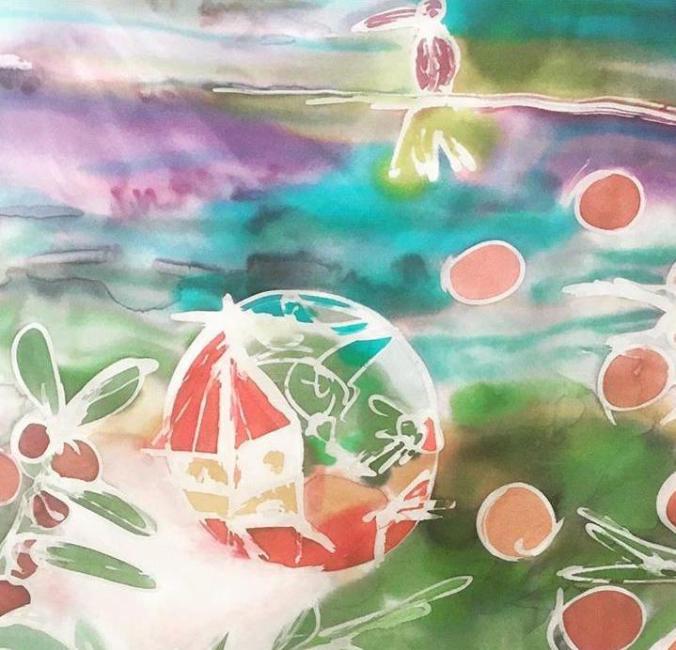
SilkCoffee2.jpeg

Looking Forward Requires Rethinking

Olympia1The new morning, the first of the new year, started just like any other. Coffee. But a theme related to looking forward was set in motion yesterday, and so it was time to taste this new coffee. Drinking mostly coffees from the Tarrazu region for all of 2018, today’s coffee is from the Brunca region.

Olympia2It is organic, washed (as opposed to natural process, or anaerobic or other new fangled methods) and medium-roasted. I use a nondescript filter brew machine, and I grind the beans slightly on the coarse side. Maybe I just woke up ready to enjoy the new year, but this tastes like one of the best new coffees I have sampled in the past 12 months. I have lost track of the count, but I have tasted several dozen varietals. This one stands out, perfect for my palate. The fact that it is organic, selected and roasted by friends for their own cafe, makes me think that we will have more of it before too long.
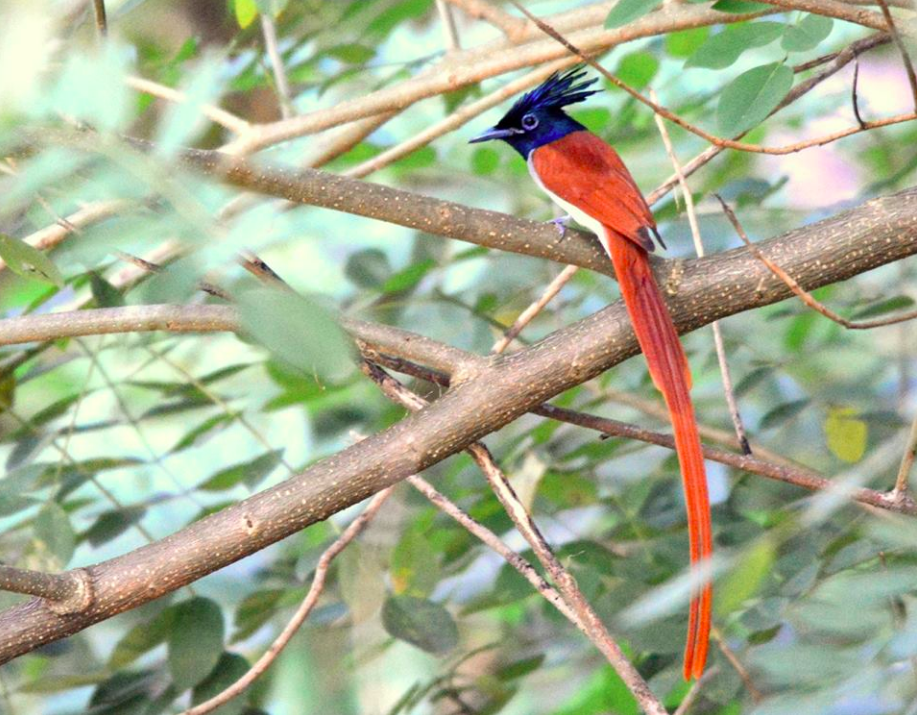
When we moved to Kerala, India in 2010 our flight was the day after Seth began college. We had an implicit goal of offering Milo two years of something different prior to his 18th birthday.  Dates of transition, like the first of a new year, are obviously no different from other days, but they can punctuate time with reflective review and reflexive preparation. 2019 will be a transition year. When we left India in 2017 it was without a clue of what we would do next, except our goal was to return to Costa Rica and start something that builds on our work while allowing us to learn something new. Here we go.

Closure Requires Looking Forward

OConnor-The-Snow-Leopard.jpg

The zoologist George Schaller, whom Matthiessen accompanied to the Himalayas, says that, forty years after “The Snow Leopard” ’s publication, the animal has grown only slightly less mysterious. Photograph by George Schaller

9781137279293.jpgWhen I see the name Peter Matthiessen the first thing I think of is a recording of his voice on my telephone ten years ago. I knew he would be passing nearby and had invited him to see what we were doing in Patagonia. His message was a very warm decline of the invitation.

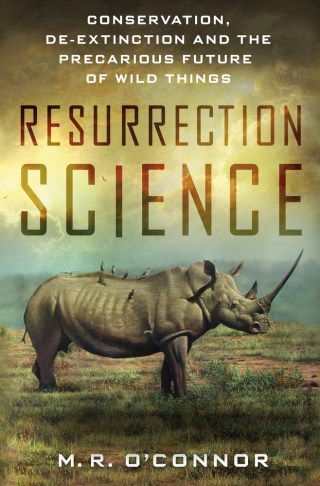
In addition to triggering that memory, M.R. O’Connor’s essay below reminds me that my family’s subscription to the New Yorker began in 1978, possibly with the late March issue in which Peter Matthiessen’s article about the snow leopard appeared. I can trace my interest in conservation back to that, and perhaps this accounts for why that magazine has been arriving weekly for me in the mail ever since. In the meantime this interest has exposed me to books like the one to the right. Which is as good a reason as anyway to make this link the 2018 coda (for me) on this platform:

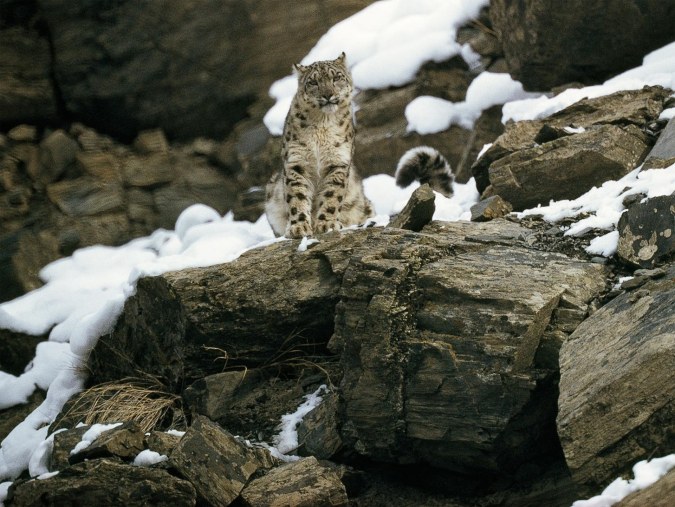
In the autumn of 1973, the naturalist and writer Peter Matthiessen and the zoologist George Schaller set out on a gruelling trek into the Himalayas. They were headed toward the Dolpo region of the Tibetan plateau. Schaller wanted to study Himalayan blue sheep; Matthiessen hoped to see a snow leopard—a large, majestic cat with fur the color of smoke. Snow leopards, which belong to the genus Panthera, inhabit some of the highest mountain ranges in the world, and their camouflage is so perfectly tuned that they appear ethereal, as though made from storm clouds. Two of them feature on the Tibetan flag of independence, representing harmony between the temporal and spiritual planes.

For Matthiessen, a serious student of Zen Buddhism, the expedition wasn’t strictly scientific. It was also a pilgrimage during which he would seek to break “the burdensome armor of the ego,” perceiving his “true nature.” After it was published, in 1978—first, in part, in The New Yorker, then as a book—“The Snow Leopard,” his account of the trip, won two National Book Awards, becoming both a naturalist and a spiritual classic. It overflows with crystalline descriptions of animals and mountains: “The golden birds fall from the morning sun like blowing sparks that drop away and are extinguished in the dark,” Matthiessen writes. But it’s also an austere Buddhist memoir in which the snow leopard is as alluring and mysterious as enlightenment itself. Continue reading

Tigers, Tales, Illumination

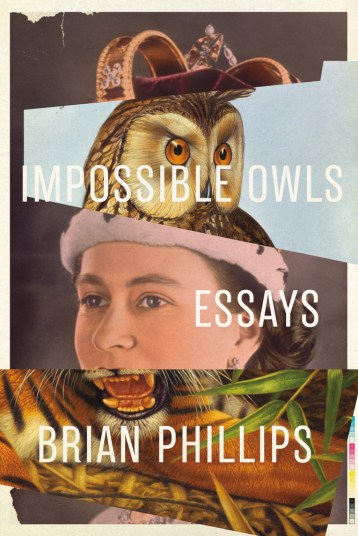
ImpossibleOwl.jpgBrian Phillips has not featured once in our pages until now, nor has The Ringer. If you read his essay below, featured also in the book to the right, the fit with our platform here is clear. Strange, though; I would not have expected to see it featured on a website that looks to be mostly focused on sports.

But it is a welcome surprise. It serves as another welcome reminder of some of the highlights of our years in India. And it provides a reason to track the author. The blurb the publisher chose to accompany the book (click the image to the right) is telling: “…Dogged, self-aware, and radiating a contagious enthusiasm for his subjects, Phillips is an exhilarating guide to the confusion and wonder of the world today. If John Jeremiah Sullivan’s Pulphead was the last great collection of New Journalism from the print era, Impossible Owls is the first of the digital age.”

phillips_tiger_getty_ringer.0.jpg

Getty Images/Ringer illustration

Man-eaters

1

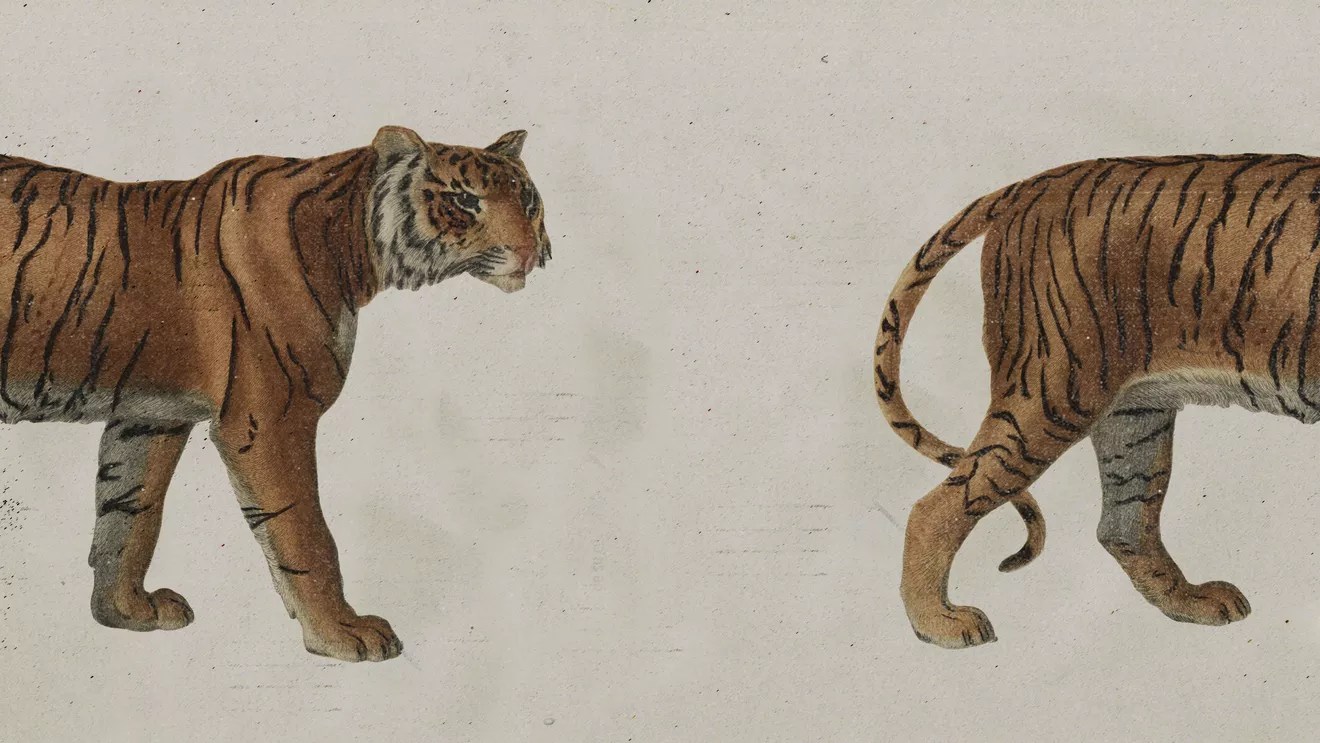
Of the twelve tigers I saw in India, one might have been a ghost; two were in water, eight were on land, and one was sleeping in a tree. One stepped out of high grass, crossed the road in front of me, and disappeared into grass on the other side. One walked along a low ridge on the edge of a different road, oblivious or indifferent to the tourists taking her photograph. One looked out from a cover of branches and red leaves, so perfectly concealed that from thirty feet away he kept stereoscoping in and out of sight. Three were cubs, just four or five months old. Three were juveniles, aged around one year. The rest were fully grown. All were tired, because the days were hot, and because the days were dry they moved and breathed and slept in a film of clay-colored dust. Continue reading

Fungi, Bees & Future

30stamets-hope-jumbo.jpg

Lilli Carré

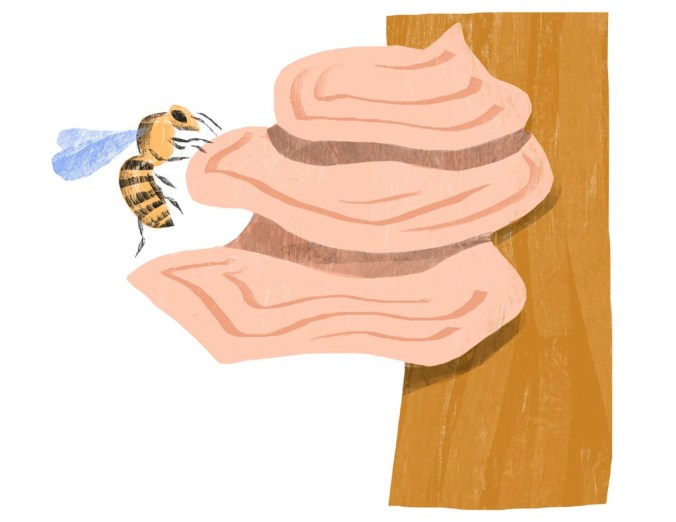
Fungi first appeared in our pages thanks to Milo. And the name of the essayist below was mentioned a couple times earlier as well. He deserves more attention, especially if his attention is focused on bees:

Will Mushrooms Be Magic for Threatened Bees?

We might be able to save honeybees from viruses transmitted by invasive parasites without chemical treatment.

By Paul Stamets

Mr. Stamets is a mycologist.

Sometime in the 1980s, microscopic mites that had been afflicting honeybees outside the United States found their way to Florida and Wisconsin and began wreaking havoc across the country. These parasites have invaded and decimated wild and domestic bee colonies. Along with other dangers facing bees, like pesticides and the loss of forage lands, the viruses these mites carry threaten the bees we rely on to pollinate many of the fruits, nuts and vegetables we eat. Continue reading

Outfitting For Wild Animals


Wolf.jpg

Teach a Wolf to Fish. By University Of Minnesota, Voyageurs National Park And Voyageurs Wolf Project. Nighttime footage of a wolf hunting freshwater fish in a river in Minnesota’s Voyageurs National Park. Dec. 14, 2018

I got to know Natural Habitat Adventures while our company was operating Chan Chich Lodge in Belize. I was impressed with their guides, and with the photographic and video skills of the guests who they brought to the lodge. And all of them were deeply concerned about conservation. But I never saw anything quite like the video above. When you have nine minutes to spare, it is as satisfying as any nature footage as I have seen in a long time.  I thank Jim Robbins again for this article, whose focal video about wolves fishing (to the left above) is definitely worth watching:

Watch This Wolf Go Fishing

Yes, researchers in Minnesota have recorded wolves diving into a stream to grab a meal.

Wolves are thought of as red-meat eaters, but a team of biologists in northern Minnesota, near Voyageurs National Park, has documented a pack that often enjoys a meal of fish. Continue reading

Electrical Generation Can Look Like Sausage When Visualized Just So

Electric.jpg

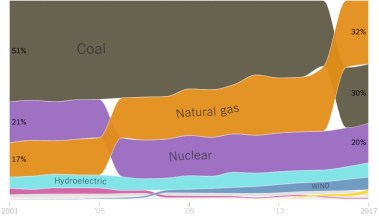
How the United States generated electricity from 2001 to 2017. Percentage of power produced from each energy source

America isn’t making electricity the way it did two decades ago: Natural gas has edged out coal as the country’s leading generation source … and renewables like wind and solar have made small yet speedy gains. But, each state has its own story.

Electric2

Nadja Popovich an explainer of complicated things with visualization techniques that have impressed us so far, now has this.

In Nevada, natural gas surpassed coal as the top source of electricity generation in 2005, earlier than in many other states. Coal’s role in the state’s power mix has continued to decline since then.

We cannot do justice to it, other than suggest you go see it for yourself. A state by state graphic representation of electrical generation methods:

How Does Your State Make Electricity?

Overall, fossil fuels still dominate electricity generation in the United States. But the shift from coal to natural gas has helped to lower carbon dioxide emissions and other pollution. Last year, coal was the main source of electricity generation for 18 states, down from 32 states in 2001.

Paul Watson Speaks

merlin_81011591_6f2b6bd7-4d1d-4c32-8d90-471604eed16a-jumbo.jpg

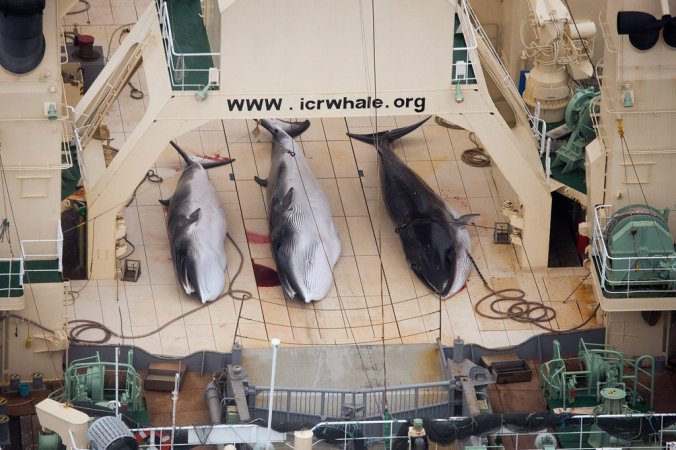
A photo from 2013, released by the environmentalist group Sea Shepherd, showing minke whales on the deck of a Japanese ship in the Antarctic. Japan says it will restrict whalers to its own waters as it resumes commercial whaling. Credit Tim Watters/Sea Shepherd Australia, via EPA, via Shutterstock

I had to read to the end to see Paul Watson’s name, and more importantly his proclamation on the significance of Japan’s withdrawal. It has been a long time since we have seen him or Sea Shepherd in our pages. My thanks to Daniel Victor and his employer for this important story:

Japan to Resume Commercial Whaling, Defying International Ban

Japan said on Wednesday that it would withdraw from an international agreement and resume commercial whaling, a defiant move to prop up an industry that still has cultural significance there, despite plummeting demand for whale meat.

Yoshihide Suga, Japan’s chief cabinet secretary, said the country would leave the International Whaling Commission, which established a moratorium on hunting whales that took effect in 1986.

The international agreement never stopped Japanese whaling, because it allowed the country to continue killing whales for scientific research while selling the meat. Critics considered the research a sham, little more than a cover for commercial whaling. Continue reading

Us & Them Versus The Rest

2200.jpg

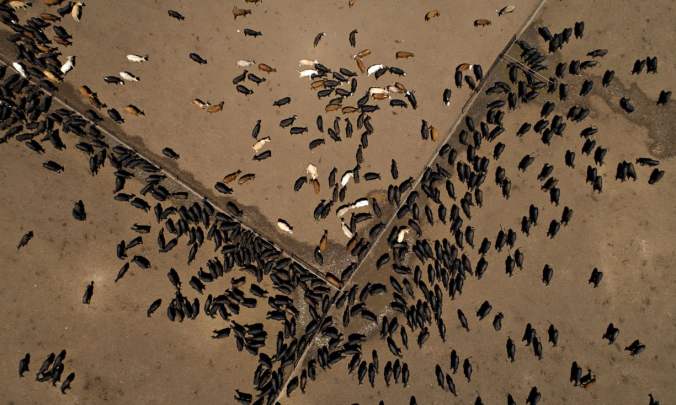
Beef cattle stand at a ranch in this aerial photograph taken above Texas. Meat and dairy accounts for just 18% of all food calories and around a third of protein. Photograph: Daniel Acker/Bloomberg via Getty Images

Them refers to the kinds of mammals in the photo above. Us refers to us humans. In keeping with yesterday’s post, Oliver Milman’s op-ed provides an excellent reminder that virtually all mammals living on planet earth today are we humans and the animals we farm for eating. There are still other species of mammals holding on, if barely, but they are being pushed to extinction largely due to the amount of meat we eat. Another good reason to go vegetarian, or vegan, or more simply just eating much less meat:

Why eating less meat is the best thing you can do for the planet in 2019

Eating meat has a hefty impact on the environment from fueling climate change to polluting landscapes and waterways

Recycling or taking the bus rather than driving to work has its place, but scientists are increasingly pointing to a deeper lifestyle change that would be the single biggest way to help the planet: eating far less meat. Continue reading

Taking Stock Of Animal Futures


Our cohabitation with animals on this planet is imperiled. There is no choice but to keep track of these things as best we can with art, with essays, with whatever it takes. Thanks to Rachel Riederer (again) for adding her words and links to images and videos on this topic:

The Not-So-Uplifting Year in the Animal Kingdom

During a year that saw the stripping away of environmental protections, the most resonant stories served as sombre warnings rather than warm-fuzzy generators.

Racoon.jpg

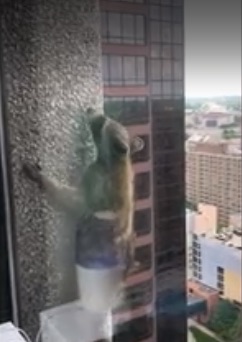
The skyscraper-climbing raccoon made it to the top of UBS tower in St Paul, Minnesota, where officials were waiting for it.

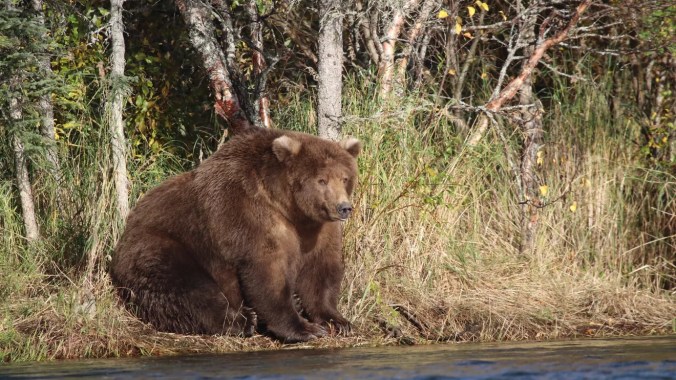
I can’t count the number of animal stories that appeared in my timelines this year with comments like, “Everything is garbage, so here’s this.” There was the cat who was reunited with her family after the Camp Fire, in California, and the parrot who was adopted after getting kicked out of an animal shelter for swearing too saltily. Among the bears preparing for hibernation at Katmai National Park, a female named Beadnose became famous for being the most gloriously round. There was the baby raccoon who scaled a skyscraper in St. Paul, “Mission Impossible” style, stopping occasionally for naps in window ledges along the way. (It was trapped, released, and promptly made the subject of a children’s book.) Stories from the animal world offer reliable moments of escapism—the ones we see in viral videos are usually cute, or tame, or strange and majestic, and glimpsed from a safe distance. But the animal stories that resonated most with me this year were the ones that hinted at a more ominous trend: that we humans are encroaching on nature in ways both glaring and subtle, putting the human and animal worlds into ever more intimate, and ever more fraught, contact.

44382577324_a5fb622fab_o.0

Katmai National Park’s bear 409 (aka “Beadnose”) won the 2018 competition for fattest bear. According to the park, when “she is not raising cubs, this bear is usually one of the fattest females.” NPS Photo/A. Ramos

The most influential animal of the year might be the unfortunate sea turtle who got a straw stuck—really, deeply, seriously stuck—up his nose. In an uncomfortable ten-minute video posted to YouTube, a marine biologist slowly extracts the straw, which is brown and crumpled and disgusting. The turtle’s nose bleeds, and throughout the ordeal, it opens its mouth as if to bite the biologist’s hand—or howl in pain. The video, filmed in 2015, in Costa Rica, became part of this year’s debate over plastic straws and was used by proponents of straw bans to show how such a small object, used and disposed of without a thought, can cause substantial suffering down the line.

BBPqucq

© Twitter Screengrab from the viral video

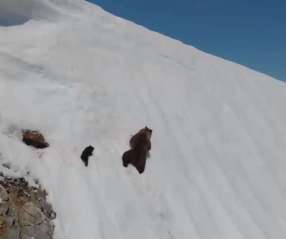
baby bear became an overnight Internet star when it was captured in a video that looked, at first, like a sweet inspirational tale. In aerial drone footage, the cub was shown repeatedly slipping down the side of a snowy ledge and trying mightily to make its way to the top, where its mother waited. Ultimately, the cub prevailed, and the video was embraced on social media as a tribute to the power of perseverance. But then drone operators and ecologists began weighing in: the drone that took the video had likely alarmed the bears; you can see the mother bear swatting the air as the drone flies closer. The machine’s operator, in chasing the bears for footage, had potentially driven them into a dangerous situation. Suddenly, the viral cub was transformed from a feel-good fable into a cautionary tale about how humans can imperil animals just by trying to get a good look at them. Continue reading