
Gallon Jug, Belize
Gallon Jug, Belize
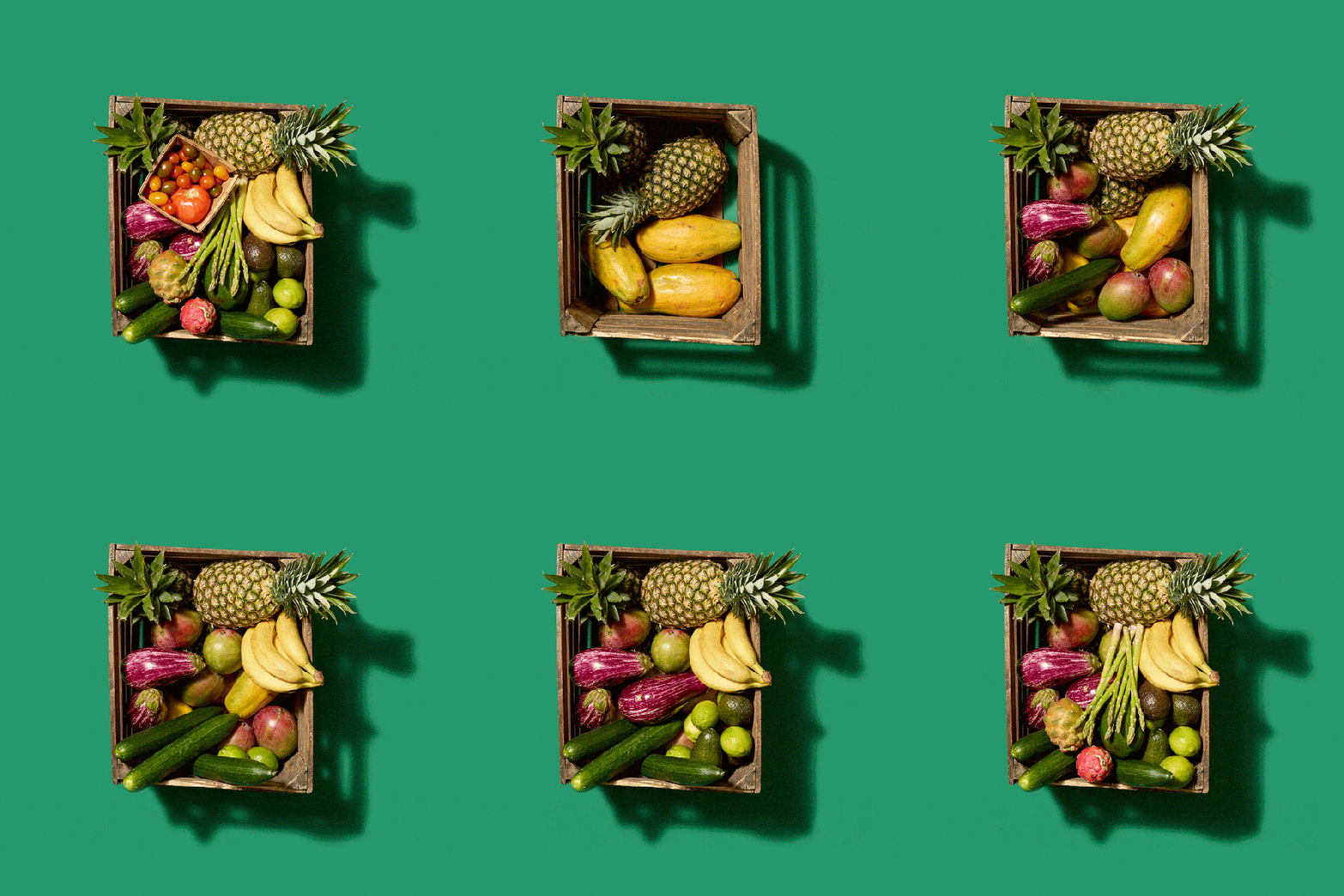
More than half of the fresh fruit and almost a third of the fresh vegetables Americans buy now come from other countries. Credit Jens Mortensen for The New York Times; Styled by Mariana Vera
David Karp, no not that David Karp, is in our distant memory recalled as The Fruit Detective, and we had lost track of him until today. Thankfully, he is still pomologizing:
Most of America’s Fruit Is Now Imported. Is That a Bad Thing?
It’s obvious to anyone who visits an American supermarket in winter — past displays brimming with Chilean grapes, Mexican berries and Vietnamese dragon fruit — that foreign farms supply much of our produce.
Although local, seasonal and farm-to-table are watchwords for many consumers, globalization has triumphed in the produce aisle. Credit Jens Mortensen for The New York Times
Imports have increased steadily for decades, but the extent of the change may be surprising: More than half of the fresh fruit and almost a third of the fresh vegetables Americans buy now come from other countries.
Although local, seasonal and farm-to-table are watchwords for many consumers, globalization has triumphed in the produce aisle. And despite the protectionist “America First” message coming from the Trump administration, the growth in imports appears likely to continue.
So this is an apt moment to examine how the shift happened, and what it portends — good or ill — for American consumers and farmers.
“I had no idea that more than half our fruit is imported, and it shocks me that this has happened so quickly,” said Michael Pollan, a professor of journalism at the University of California, Berkeley, whose best-selling books have analyzed the tensions between local and global food systems. Continue reading
Pangot, Uttarakhand

A photo taken in Astoria, Ore., circa 1910. It was stated that the chinook on the left weighed 116 pounds and the one on the right weighed 121 pounds. WikiMedia Commons
John Ryan, filed this story through Northwest Public Radio, KUOW and EarthFix, an environmental journalism collaboration led by Oregon Public Broadcasting in partnership with five other public media stations in Oregon, Washington and Idaho. Another of the many reasons we appreciate National Public Radio (USA) and its various associates:
This Is Why You Don’t See People-Size Salmon Anymore
While the orcas of Puget Sound are sliding toward extinction, orcas farther north have been expanding their numbers. Their burgeoning hunger for big fish may be causing the killer whales’ main prey, chinook salmon, to shrink up and down the West Coast.
Chinook salmon are also known as kings: the biggest of all salmon. They used to grow so enormous that it’s hard now to believe the old photos in which fishermen stand next to chinooks almost as tall as they are, sometimes weighing 100 pounds or more.
“This has been a season of unusually large fish, and many weighing from 60 to 70 pounds have been taken,” The Oregonian reported in 1895. Continue reading
Rio Celeste National Park, Costa Rica
“So, like, what do you do every day?”
I get asked this often and I’m not always sure how to explain it to people without pictures at hand or infinite patience for follow-up questions. So, in this blog post, with the benefit of time to pick the right words and theoretically infinite space to write them out, I figured I would try to provide an adequate answer.
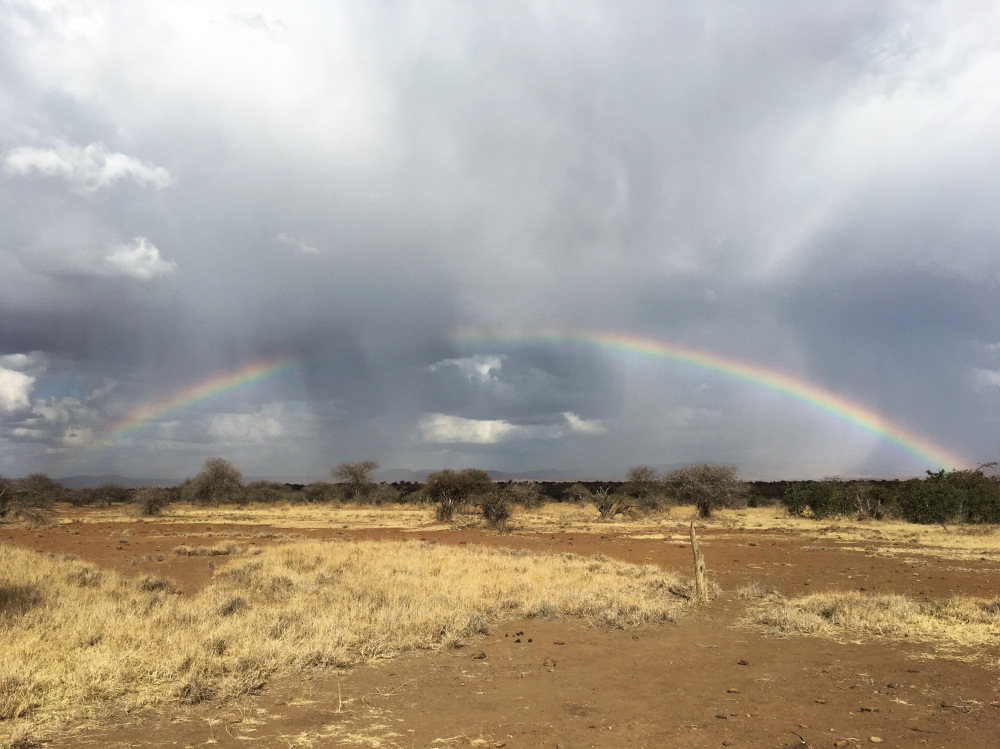
View from the field, a week or so ago
Why fieldwork?
This, I feel, is the question at the crux of the what-do-you-do-every-day question. Why do you have to go to Kenya to do your work? Right, the bird you study is only found there, but why do you have to be out on the savanna everyday – can’t you just bring the birds back to the lab or study them in a zoo?
Of course, you can (nowadays, only with the right permits) and that is precisely what early zoologists did, collecting specimens – alive or dead – from around the world and bringing them back to examine them under microscopes or in aviaries in a rainy British country garden. While this may be convenient, it inevitably renders your conclusions about a bird’s diet or the adaptive nature of its plumage coloration suspect, because they are arrived at out of context. Without the bird having been examined in the environment it’s found in, with different factors that might affect its behavior and morphology in play, it is impossible to understand why it acts the way it does and why it is the way it is. Hence, fieldwork: observing and sampling critters in the wild. Continue reading
Jageshwar, Uttarakhand

The elaborately detailed Bingham secretary enjoyed pride of place at the Wadsworth Atheneum in Hartford until it was determined to be a forgery. Credit John Banks
The principle of the matter, depending on how you look at it, makes this story interesting. The idea that a person can craft new wood into historical storylines so compellingly that experts cannot detect the recency of the crafting? Wow. Fooling a buyer into paying a premium for the historical significance? Uh, no. Thanks to John Banks for this sleuth story:
The Civil War memorial secretary was widely embraced as a folk art treasure. Fashioned from walnut, maple and oak, it was said to have been created circa 1876 to honor John Bingham, a Union infantryman who had fallen at Antietam.
A detail of the secretary, with the barnyard-bone lettering. CreditJohn Banks
Profusely adorned, it featured a music box that played “Yankee Doodle” and it was accompanied by a letter from a Bingham descendant, describing the significance of the piece to the family.“I was astonished by it,” said Wes Cowan, an auctioneer and dealer who examined the secretary at the Winter Antiques Show in New York in 2015.
The owner, Allan Katz, had bought it months earlier from a Massachusetts dealer for an undisclosed price, and was now trying to sell it for $375,000.
John Bingham, left, and his brother Wells, Union soldiers from East Haddam, Conn. Credit via, Military and Historical Image Bank
“Clearly,” Mr. Katz, a Connecticut antiques dealer, said in a video filmed at the show, “we are hoping that it might go to an institution, because it really would be wonderful to share this with the public on a day-to-day basis.”
So it was gratifying, Mr. Katz said in an interview, when the Wadsworth Atheneum in Hartford purchased the work and gave it prominent display. Continue reading
Miraflores, Peru

Kauai, Hawaii. Suzanne Cummings / Getty Images
We never think of evolution as particularly predictable. Surprising, yes. Awesome, yes. Predictable? Well, we love science for that reason, but still do not associate evolution with predictability. Thanks to Ed Yong, who enjoys making provocative statements that draw his reader in, for making evolution surprising in a new way:
Hawaii: Where Evolution Can Be Surprisingly Predictable
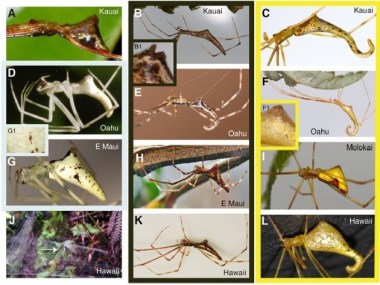
On each Hawaiian island, stick spiders have evolved into the same basic forms—gold, white, and dark. It’s a stunning example of how predictable evolution can be.
Examples of white, dark, and gold species of stick spiders on various Hawaiian island. The top-left species is the most ancestral of them all. (Rosemary Gillespie et al.)
Most people go to Hawaii for the golden beaches, the turquoise seas, or the stunning weather. Rosemary Gillespie went for the spiders.
Situated around 2,400 miles from the nearest continent, the Hawaiian Islands are about as remote as it’s possible for islands to be. In the last 5 million years, they’ve been repeatedly colonized by far-traveling animals, which then diversified into dozens of new species. Honeycreeper birds, fruit flies, carnivorous caterpillars … all of these creatures reached Hawaii, and evolved into wondrous arrays of unique forms. Continue reading

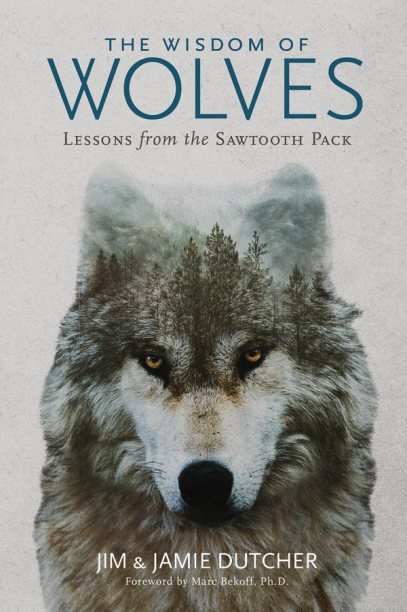 We first heard of the book here, so thanks to Public Radio station WNYC. However, in the blurb for the podcast interview with the authors, the link to the book went directly to Amazon. Must it forever more be so? Hope not.
So, click the image to the left to go to the actual source of the book, which seems a more worthy place to consider purchasing it, even though here too they give you the option to buy on Amazon. But there is a slight favoring of the publisher, National Geographic, in the purchase options. Here’s what they say:
CURIOSITY. COMPASSION. FAMILY FIRST.
After living among the wolves of The Sawtooth Pack for years, Jim and Jamie Dutcher present a new book, The Wisdom of Wolves: Lessons from the Sawtooth Pack, providing groundbreaking observations of their unique experience.
As strong, and just as immediately recognizable as the ties that unite a human family, the emotional bonds shared among wolves are far more complex than ever realized, and now are detailed in this exceptional book. Continue reading
Photo credit: Jeff Chemnick
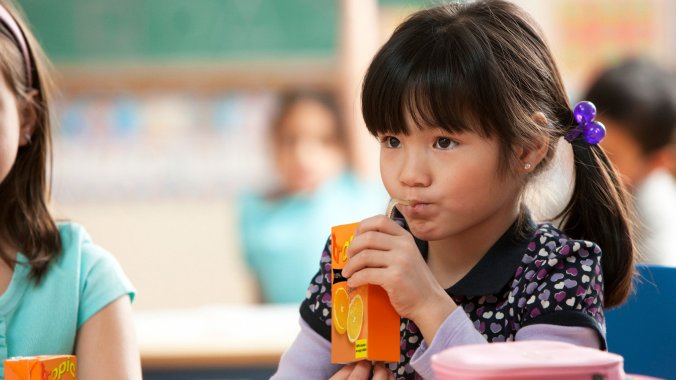
Because of layers of material that can be difficult to separate, many containers for juices and broths have traditionally been destined for landfills. But recycling them is getting easier. KidStock/Getty Images
Natalie Jacewicz, a science writer based in New York City has this illuminating story on packaging:
In The Recycling World, Why Are Some Cartons Such A Problem?
Scoot over, cans; cartons are moving in on your shelf space. Specifically, the soft, light rectangular containers commonly associated with juice boxes — “aseptic cartons” to the carton literati.
“They’re growing in popularity,” says Jason Pelz, vice president of recycling projects for the Carton Council, an industry group. “Broth is predominantly in aseptic packaging now, and you see a lot of coconut water in it.”
Aseptic cartons pack several environmental upsides, with one big catch: Traditionally, these containers have been quite difficult to recycle. To take stock of the promises and challenges of this supermarket sensation, I talked to experts on all things carton. Continue reading

Binsar Wildlife Sanctuary, Uttarakhand
It has been some time since we featured a story on rewilding, which occasionally involves iconic urban areas. New Jersey may not sound iconic, but it is the home to one of the masters of long form so we are happy to share this late great masterpiece of his:
Direct Eye Contact
The most sophisticated, most urban, most reproductively fruitful of bears.
Bears have been spotted in every New Jersey county. Illustration by Tamara Shopsin
Improbably, I developed a yearning, almost from the get-go, to see a bear someday in the meadow. While I flossed in the morning, looking north through an upstairs bathroom window, I hoped to see a bear come out of the trees. If this seems quixotic, it was. This was four miles from the campus of Princeton University, around which on all sides was what New Yorkers were calling a bedroom community. Deer were present in large familial groups, as they still are in even larger families. They don’t give a damn about much of anything, and when I walk down the driveway in the morning to pick up the newspaper I all but have to push them out of the way. Beforehand, of course, I have been upstairs flossing, looking down the meadow. No bears. Continue reading

Baja California Sur, Mexico
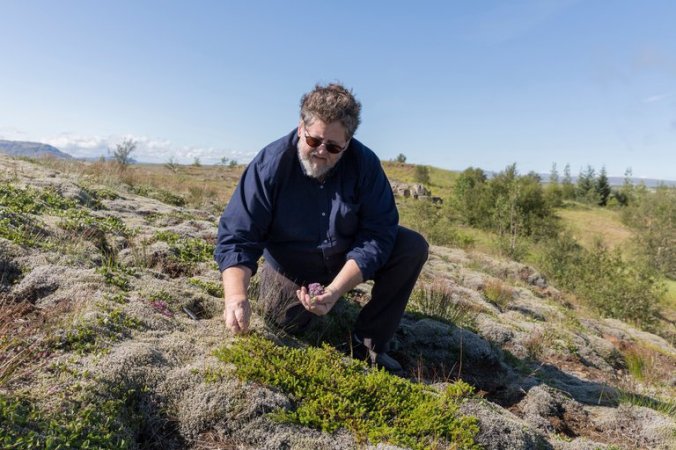
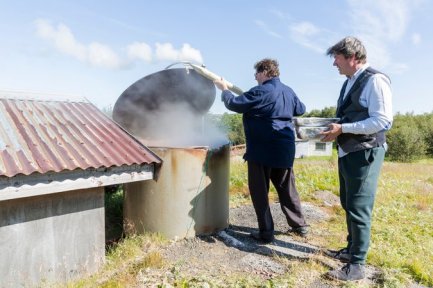
Jon Sigfusson, the chef at Fridheimar, a restaurant in Reykholt, Iceland, picking herbs for cooking lamb. Credit Bara Kristinsdottir for The New York Times
Thanks to Peter Kaminsky, who helps answer the question Why Cook Over an Icelandic Geyser? and does so with gusto:
REYKHOLT, Iceland — Standing in the mud of the Myvatn geyser field in northern Iceland, Kolla Ivarsdottir lifted the lid of her makeshift bread oven. It had been fashioned from the drum of an old washing machine and buried in the geothermally heated earth. All around us mudpots burbled and columns of steam shot skyward, powered by the heat of nascent volcanoes.
Mr. Sigfusson, left, and Kjartan Olafsson, a restaurant critic and fish exporter, putting food into the communal geothermal oven. Credit Bara Kristinsdottir for The New York Times
Ms. Ivarsdottir, a mother of three who sells her bread in a local crafts market, reached into the oven and retrieved a milk carton full of just-baked lava bread, a sweet, dense rye bread that has been made in the hot earth here for centuries. She cut the still-hot loaf into thick slices. It is best eaten, she said, “completely covered by a slab of cold butter as thick as your hand, and a slice of smoked salmon, just as thick.” We settled for bread and butter — still a supernal combination. Continue reading

Dandeli Wildlife Sanctuary, Karnataka
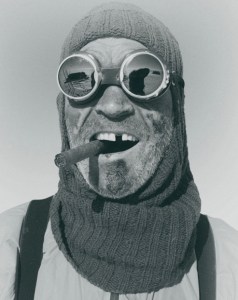
Before Henry Worsley set off alone, his family painted messages on his skis. “Come back to me safely, my darling,” his wife wrote.
Photograph by Sebastian Copeland
If you have not read it yet, go straight to it. If you have read it already, next you will want to listen to the author, the subject (via field recordings) and the subject’s wife.

Henry and Joanna Worsley at the Korean War Veterans Memorial, in Washington, D.C., in 2015. Worsley served in the British Army for thirty-six years.
Photograph courtesy Joanna Worsley
We have linked to stories about explorers, though none specifically about Shackleton, in the past. The subject of this story has something important to say about his hero, and it is worth hearing his voice as well as his wife’s (click here).
The author, who we have linked to more than once, gave two excellent interviews about his process as a long-form story-teller, and if this is your thing, then you will want to listen to both, first here and more recently here.
The White Darkness: A Journey Across Antarctica
A solitary journey across Antarctica.
By David Grann
I. Mortal Danger
The man felt like a speck in the frozen nothingness. Every direction he turned, he could see ice stretching to the edge of the Earth: white ice and blue ice, glacial-ice tongues and ice wedges. There were no living creatures in sight. Not a bear or even a bird. Nothing but him.
It was hard to breathe, and each time he exhaled the moisture froze on his face: a chandelier of crystals hung from his beard; his eyebrows were encased like preserved specimens; his eyelashes cracked when he blinked. Get wet and you die, he often reminded himself. The temperature was nearly minus forty degrees Fahrenheit, and it felt far colder because of the wind, which sometimes whipped icy particles into a blinding cloud, making him so disoriented that he toppled over, his bones rattling against the ground. Continue reading



 Organikos