When Malls Saved the Suburbs From Despair
Like it or not, the middle class became global citizens through consumerism—and they did so at the mall.
“Okay, we’ll see you in two-and-a-half hours,” the clerk tells me, taking the iPhone from my hand. I’m at the Apple Store, availing myself of a cheap smartphone battery replacement, an offer the company made after taking heat for deliberately slowing down devices. A test run by a young woman typing at a feverish, unnatural pace on an iPad confirms that mine desperately needed the swap. As she typed, I panicked. What will I do in the mall for so long, and without a phone? How far the mall has fallen that I rack my brain for something to do here. Continue reading
Bird of the Day: White-tufted Grebe
What Do We Want In A City Of The Future?
We do not normally link to the writing of science fiction authors, nor is the topic of the essay below typical of the themes in our 2011-2018. But it is not unheard of; nor is it too late to add more to this short thread of links to sci-fi authors. If Bruce Sterling catches your attention with these first few paragraphs pasted below, you may want to go to The Atlantic to read the rest:
Stop Saying ‘Smart Cities’
Digital stardust won’t magically make future cities more affordable or resilient.
The term “smart city” is interesting yet not important, because nobody defines it. “Smart” is a snazzy political label used by a modern alliance of leftist urbanites and tech industrialists. To deem yourself “smart” is to make the nimbyites and market-force people look stupid.
Smart-city devotees all over this world will agree that London is particularly smart. Why? London is a huge, ungainly beast whose cartwheeling urban life is in cranky, irrational disarray. London is a god-awful urban mess, but London does have some of the best international smart-city conferences.
London also has a large urban-management bureaucracy who emit the proper smart-city buzzwords and have even invented some themselves. The language of Smart City is always Global Business English, no matter what town you’re in.
So if grand old London is smart, with its empty skyscrapers, creepy CCTV videocams, and sewers plugged with animal fat, then we probably needn’t fret about the Elon Musk sequins and stardust of digital urbanism. Better to reimagine the forthcoming urban future as a mirror of Rome, that “Eternal City,” where nothing much ever gets tech-fixed, but everything changes constantly so that everything can remain the same. Continue reading
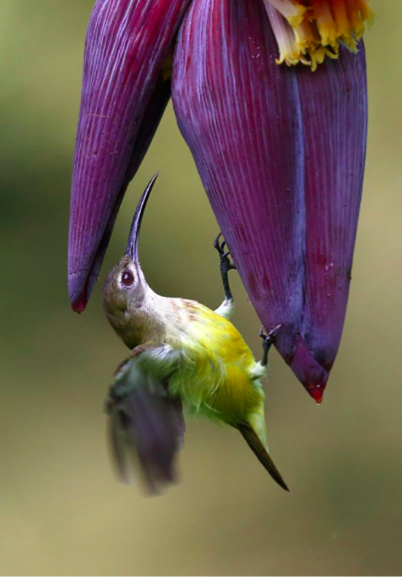
Bird of the Day: Little Spider Hunter
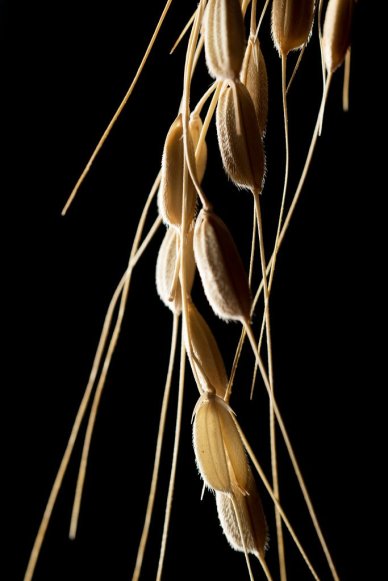
Rice Rediscovered

Upland red bearded rice, which grows in the Moruga district in Trinidad, turned out to be a missing culinary link between enslaved people in coastal Georgia and a group of slaves who were able to buy their freedom by fighting for the British in the War of 1812. Credit Karsten Moran for The New York Times
Bird of the Day: Brown Pelican
Peru’s Rendering Of The Best Idea

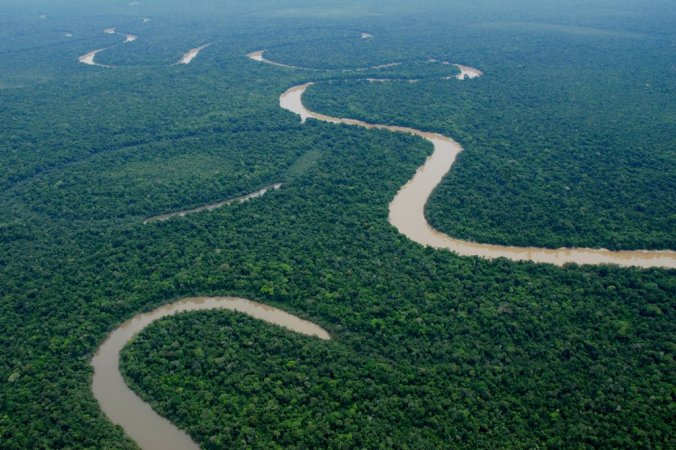
The Yaguas River of the Yaguas National Park in Peru, one of the Western Hemisphere’s newest national parks. Credit Álvaro del Campo/The Field Museum
Thanks to JoAnna Klein, whose article on a lionfish initiative in Florida a couple years ago put her on our radar; we have linked to her stories many times since. This story below is arguably the most profound, in terms of scale:
Peru Moves to Protect ‘One of the Last Great Intact Forests’
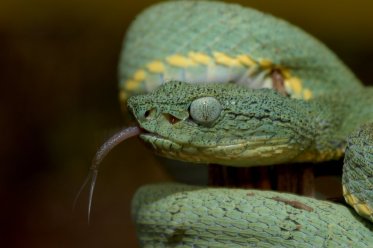
A parrot snake, also called the Amazonian palm viper (Bothriopsis bilineatus). Credit Álvaro del Campo/The Field Museum
While the United States may be weakening protections for wilderness, the creation of Yaguas National Park protects millions of acres from development and deforestation.
The remote rain forests in Peru’s northwest corner are vast — so vast that the clouds that form above them can influence rainfall in the western United States. The region contains species, especially unusual fish, that are unlike any found elsewhere on Earth. Scientists studying the area’s fauna and flora may gain insights into evolutionary processes and into the ecological health and geological history of the Amazon.
Now the area has become home to one of the Western Hemisphere’s newest national parks. Yaguas National Park will protect millions of acres of roadless wilderness — and the indigenous people who rely on it — from development and deforestation.
“This is a place where the forest stretches to the horizon,” said Corine Vriesendorp, a conservation ecologist at The Field Museum in Chicago, one of many organizations that worked to win the national park designation, Peru’s highest level of protection. “This is one of the last great intact forests on the globe.” Continue reading
Bird of the Day: Rufous-necked Hornbill
Indonesian Seaweed Farming
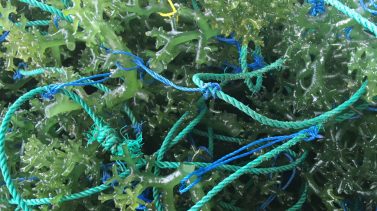
The subject of seaweed farming, which we sometimes refer to as kelp farming, is of keen interest to us because of the relationship to conservation; our thanks to Tiffany Waters at Cool Green Science:
Seaweed Farming: A Gateway to Conservation and Empowerment
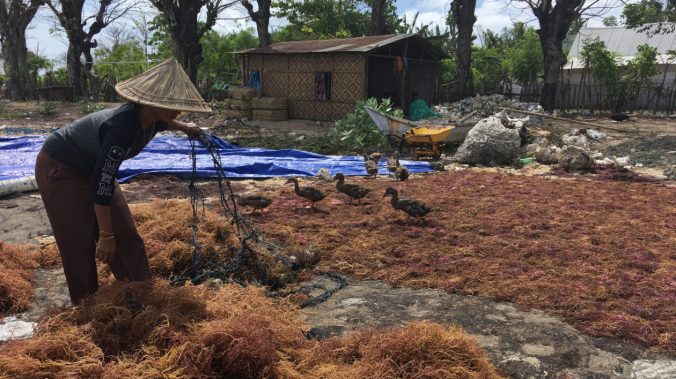
“What does your husband do while you’re working on the seaweed lines?”, we ask. She laughs and says in Bahasa, “He does the cooking and the cleaning.”
It’s day 6 of our field visit to Indonesia and we’re in Takalar visiting our fifth island and third seaweed farm of the trip. On the brink of the ‘extreme season,’ stifling hot is an understatement, but the light breeze from the Flores Sea provides a welcome break from the three flights and 2-hour van trip that brought us here. Continue reading
Bird of the Day: Blacksmith Lapwing

Dinokeng Game Reserve, Pretoria, SA
The Pests That Make Cacao Productive

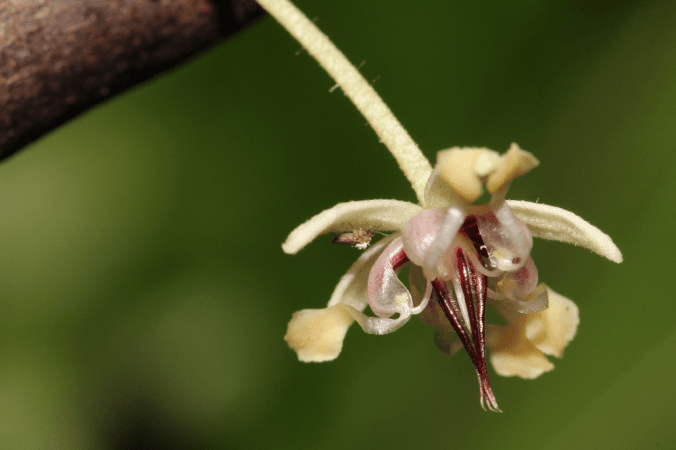
Forcipomyia spp. pollinating a cacao flower. Goodman Cacao Estate, Killaloe, Australia, 2017. Credit: Samantha J. Forbes
This 12-minute primer on Soundcloud gives a reason to appreciate these otherwise very annoying pests:
Chocolate: Brought To You By Bugs
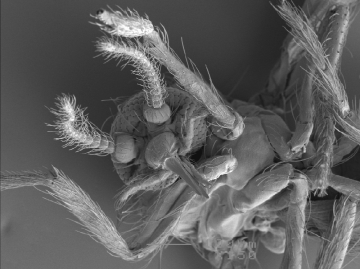
Forcipomyia spp. SEM image. Goodman Cacao Estate, Killaloe, Australia, 2017. Credit: Samantha J. Forbes
Chocolate starts as a beautiful yellow and cream-colored blossom, with blushes of pink and magenta. The flowers, sprouting straight from the bark of the cacao tree, are no bigger than a dime—and they’re pollinated by something much smaller: a barely visible fly related to biting no-see-ums, or midges. Continue reading
Bird of the Day: Yellow-crowned Night-Heron

Gallon Jug Estate, Belize
Rules Of Gardening, Reconsidered
Ok, while we are at it, let’s find some rules to break around the home (thanks to Margaret Renkl and the New York Times for such diverse op-ed contributors):
Let Your Winter Garden Go Wild
NASHVILLE — The snow was three inches deep, a blizzard by Nashville standards, when I got a text from a parent supervising the neighborhood sledding: “It’s a robin migration out in your front yard. Do you put food out there for them?”
I went to the window to look. There are nine bird feeders around my house, but I’ve never seen a robin at a single one of them. In winter, robins do gather in great flocks here in Middle Tennessee, and our yard is always popular with them because we have a birdbath with a heating element that keeps it from freezing. Even in winter, birds need to bathe — a seemingly counterintuitive behavior that keeps their feathers in shape for maximum insulation. Continue reading
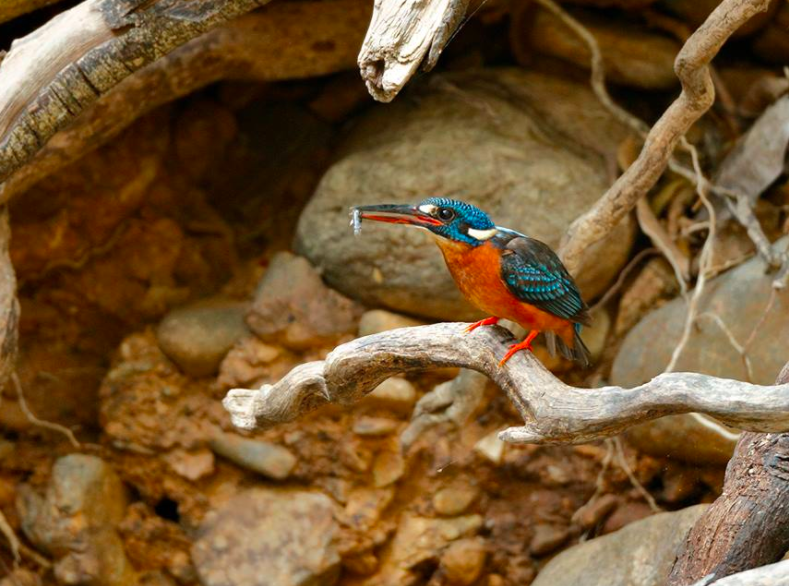
Bird of the Day: Blue-eared Kingfisher
Rules Of Experiencing Nature, Reconsidered

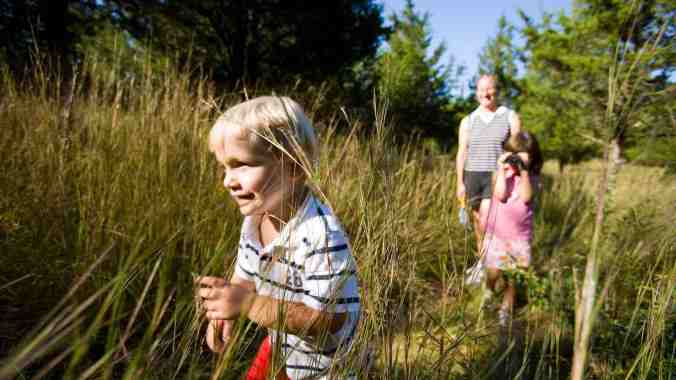
A woman and her young children hike through a grassy field in Pleasant Valley Preserve near the Eightmile River in Lyme, Connecticut. Photo © Jerry Monkman
Just when we thought we knew what we were doing out in nature, this:
Why Staying on the Trail Is Bad for Nature
Stay on the trail. Look, don’t touch. Take only photographs, leave only footprints.
These and similar rules have become a standard component of a refined environmental ethic; any reasonable outdoor education class is going to emphasize them.
I have a confession to make: As a kid I violated every one of those rules, frequently and without guilt. It made me a conservationist. Continue reading
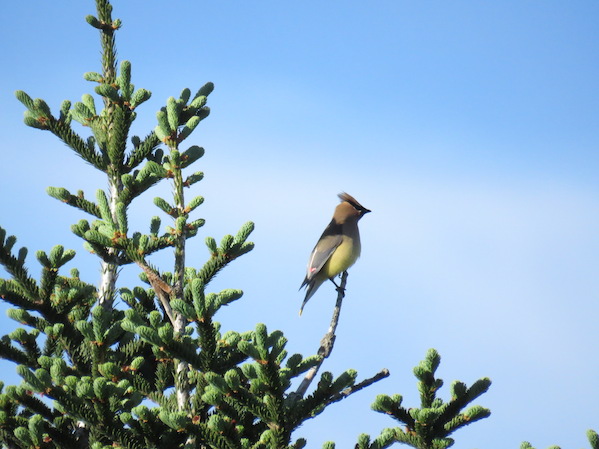
Bird of the Day: Cedar Waxwing

Mount Mitchell, North Carolina
Big Chicken
Maryn McKenna escaped our notice until now, as did her recent book Big Chicken:
In this provocative narrative, acclaimed journalist Maryn McKenna reveals the fascinating history of chicken—and how the common backyard bird became an industrial commodity impacting human health around the world. Crucial to its meteoric rise: the routine use of antibiotics, a practice that would transform agriculture, change the world’s eating habits, and contribute to the deadly rise of drug-resistant infections around the globe.
Bringing us on an extraordinary journey from the vast poultry farms of the United States to laboratories, kitchens and sidewalk markets around the world, McKenna reveals how economic, political and cultural forces converged to make America’s favorite meat a hidden danger—and how companies, activists, farmers and chefs are carving a path back to better, safer food.
Named a Best Science Book of 2017 by Amazon, Smithsonian, and Science News; an Essential Science Read by Wired; a Best Health Book by the Toronto Globe and Mail; and a Best Food Book of 2017 by Civil Eats and the Atlanta Journal-Constitution
Antibiotics changed the world.
Then we gave them to the animals we eat.
This is the story of what happened next. Continue reading
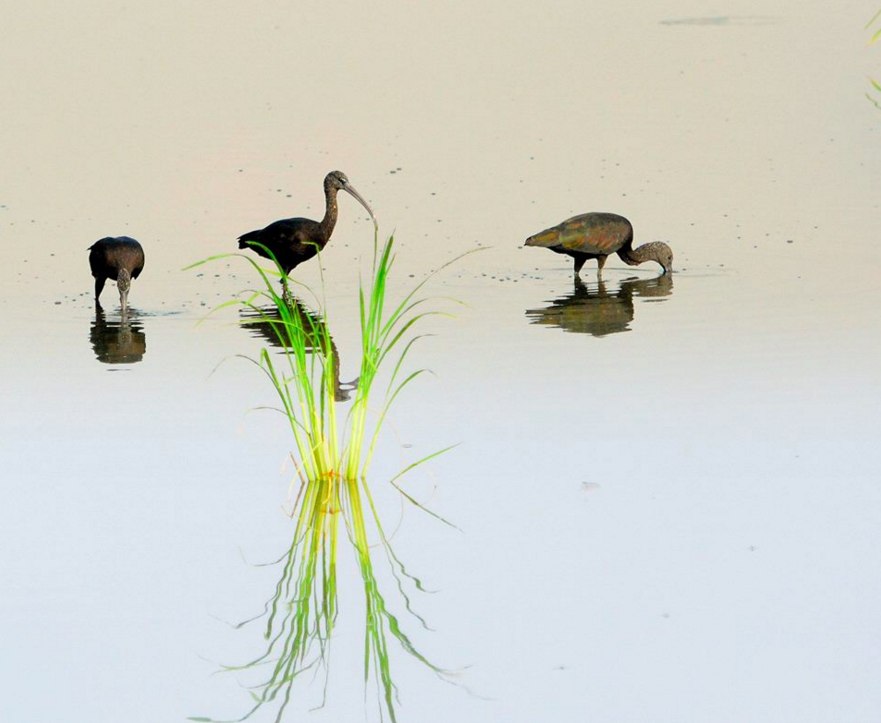
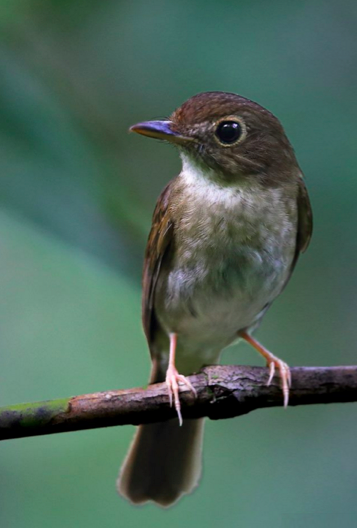
Bird of the Day: Nicobar Jungle-Flycatcher
Banana Futures

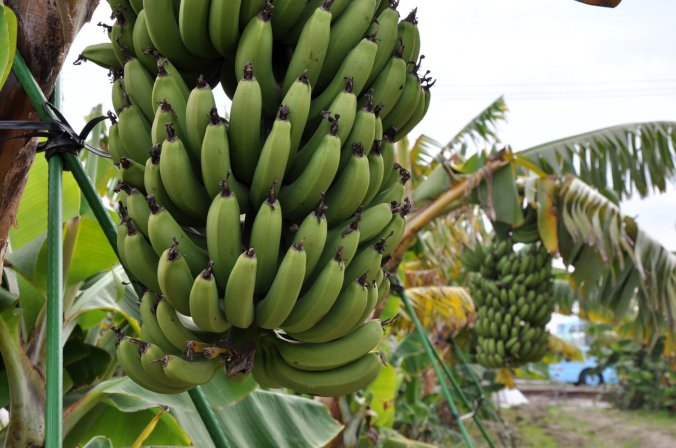
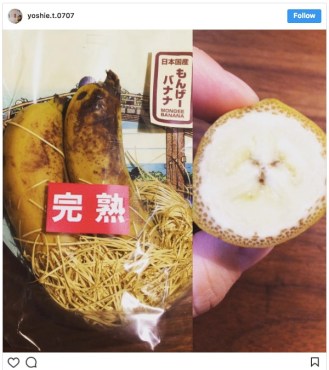
Japanese Mongee bananas debuted this winter, bred to be cold-resistant and pesticide-free. Plus: you can eat the peel. Courtesy of D&T Farm Inc
When we talk about the future of bananas, it is often looking backwards protectively. But forward is an option as this story below illustrates, as with other edibles, likewise:
A Banana Grown At Subzero Temps Also Has An Edible Peel
A Japanese farm introduced a new crop this winter: an organic banana with a peel that’s thin enough to eat. In a nod to this appealing outer covering, Setsuzo Tanaka, the banana’s inventor, has named his creation the Mongee (“mon-gay”) banana — which means “incredible banana” in Japanese.
“Setsuzo’s original purpose was to make a delicious banana with no pesticides,” Tetsuya Tanaka, a spokesperson for D&T Farms, the company behind the banana, writes in an email. Setsuzo Tanaka spent four decades tinkering with tropical fruit before the Mongee was born.
But if pesticides were his main concern, why not just grow a normal organic banana? Aren’t all bananas equally tasty? Continue reading