
Sivarpanam Palace, Pudukkottai, Tamil Nadu
Sivarpanam Palace, Pudukkottai, Tamil Nadu
In the video below, watch a Cactus Wren and Northern Cardinal sing to mark their territory, a Hooded Oriole bathe, and a young Loggerhead Shrike call for food to be brought by its parent:
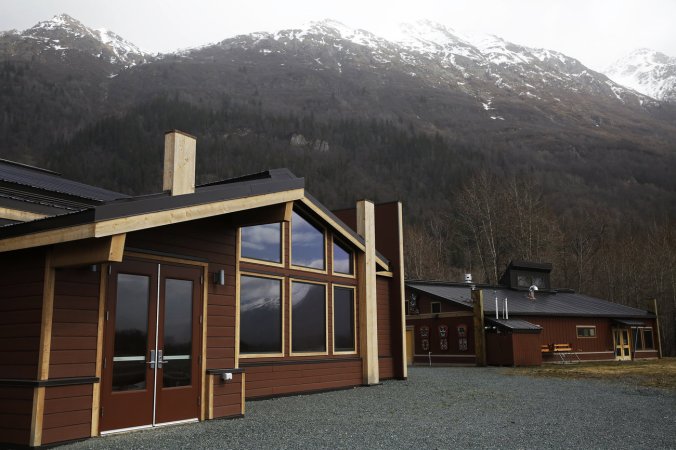
The Cultural Heritage Center is an $8 million investment in the community. Elissa Nadworny/NPR
It is not a question I have had to ponder (the opening line of the story below) for myself, but I get it. Losing the land, through battle, through treaties that are not honored, or otherwise, is an obvious existential threat for any community, and has been since the dawn of civilization. Invisible assets such as language, like any cultural heritage, also called intangible patrimony, are less obviously existentially important. But anyone who ponders it realizes that the loss of a language or another intangible component of cultural heritage matters to all of us, not only those who are at immediate and direct risk of its extinction. In the same way biodiversity matters, so does this.
And it is an underlying logic and motivator of our initiative with Ramon tree and its role in Mayan foodways. In earlier posts on the subject that I emphasized the environmental wonder of Ramon, but it is really a cultural heritage story, still to be told at Chan Chich Lodge. Meanwhile thanks to Melissa Block at National Public Radio (USA) for this story about one communities efforts along a related path:
A Native Village In Alaska Where The Past Is Key To The Future
What does it mean to lose your land, your language, and your heritage?
For Alaska Natives, these are existential threats.
On a trip to Southeast Alaska, I traveled to one village that is finding new ways to survive: Klukwan, ancestral home of the Tlingit tribe. Continue reading
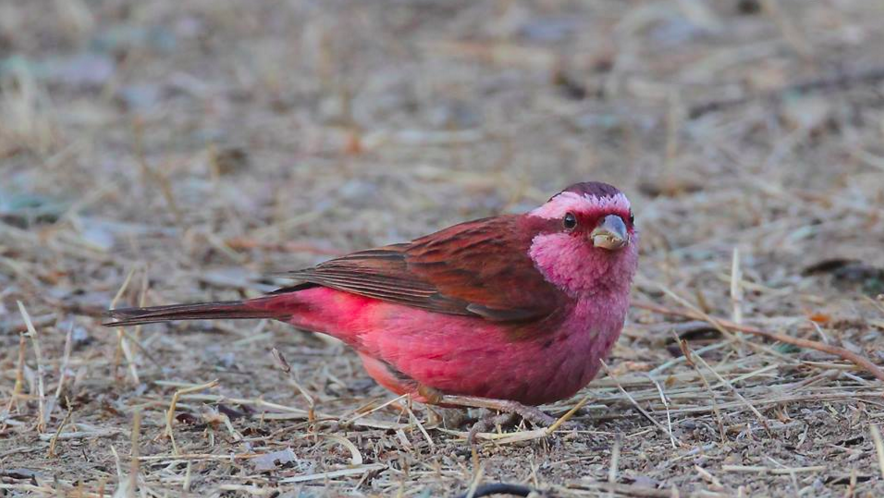
Binsar, Uttarakhand
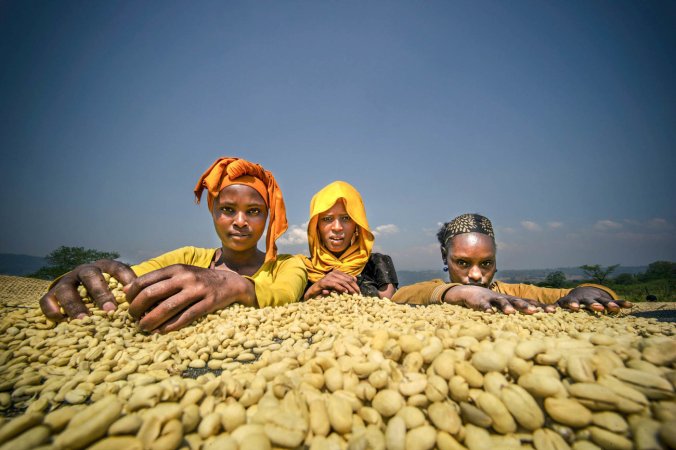
Growing coffee provides income for about 15 percent of Ethiopia’s population and is the country’s top export. Climate change is likely to shrink the land suitable for coffee, thereby also hurting the livelihoods of many people.
Courtesy of Emily Garthwaite
Change is almost never easy. Then there is climate change. Daunting, but we cannot stop considering the implications and the options. The planet may recover in geological time, the underlying logic of those who promote denial of the urgency, but plenty of people are at risk in real time, so no option but to keep focus.
Thanks to the salt, at National Public Radio (USA) for a reminder of coffee‘s relationship with conservation, a reminder of Ethiopia in general, which is always welcome, and especially Ethiopia’s relationship with one of our favorite beverages:
Ethiopia’s Coffee Farmers Are ‘On The Front Lines Of Climate Change’
by Courtney Columbus
Ethiopia gave the world Coffea arabica, the species that produces most of the coffee we drink these days. Today, the country is the largest African producer of Arabica coffee. The crop is the backbone of the country’s economy – some 15 million Ethiopians depend on it for a living. Continue reading
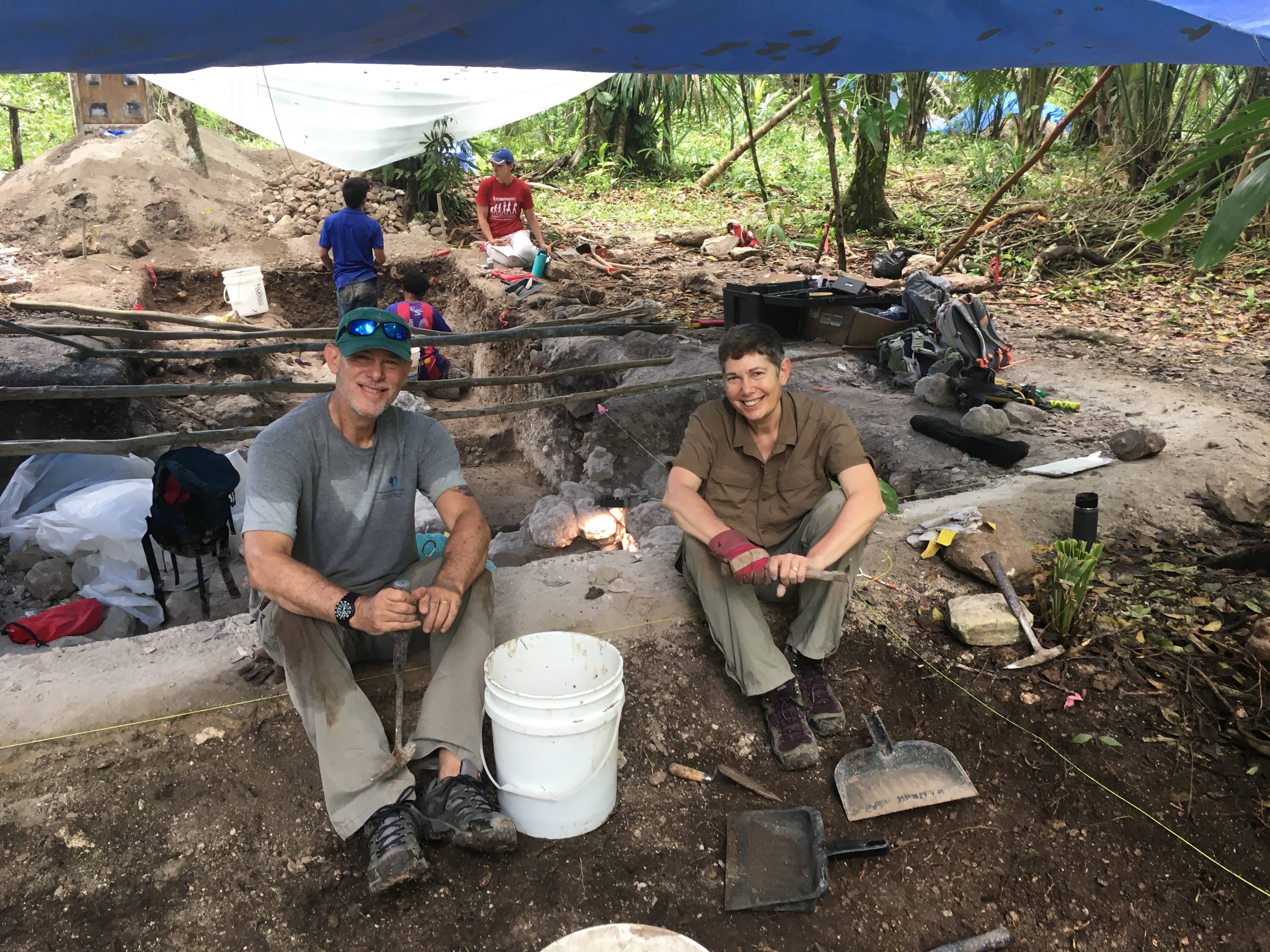
When Crist wrote about the Chan Chich Archaeological Project in April it was in anticipation of the group’s arrival. Now that we’re several weeks in I’ve had the opportunity to assist them first hand, in part as a “guinea pig” for guest involvement as citizen science participants. Fellow contributor Phil Karp (a veteran of many citizen science programs) was enthusiastically up for the experience as well.
The team of archaeologists and field school students, led by Texas Tech University associate professor Dr. Brett Houk, is studying the ancient Maya at Chan Chich and surrounding sites. Several weeks into their dig they’ve made significant progress, and they gamely accepted the challenge of taking novices into their ranks.
We began at the beginning, well known to be the very best place to start, with a new “lot” located next to a well-established excavated area. Continue reading

Braulio Carrillo National Park, Costa Rica
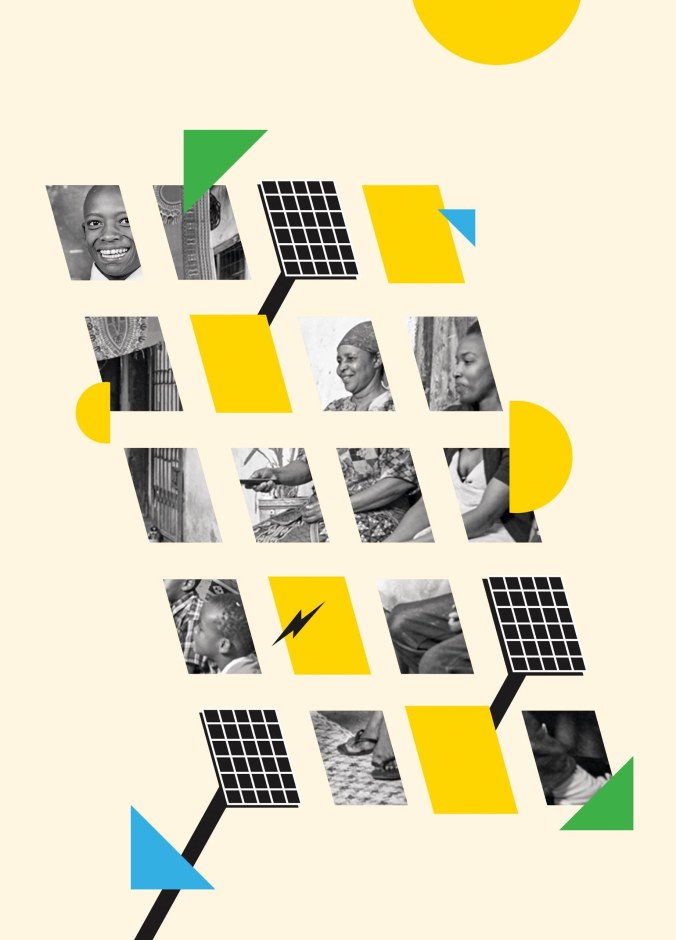
In eighteen months, entrepreneurs brought electricity to hundreds of thousands of people in places that the grid failed to reach. Illustration by Oliver Munday / Photographs courtesy Mathieu Young / Off-Grid Electric
The author has been featured in our pages mainly as an activist, but it is good to see he has returned to the New Yorker as a reporter, writer, and keen observer:
The Race to Solar-Power Africa
American startups are competing to bring electricity to communities that remain off the grid.
By Bill McKibben
The cacao-farming community of Daban, in Ghana, is seven degrees north of the equator, and it’s always hot. In May, I met with several elders there to talk about the electricity that had come to the town a few months earlier, when an American startup installed a solar microgrid nearby. Continue reading
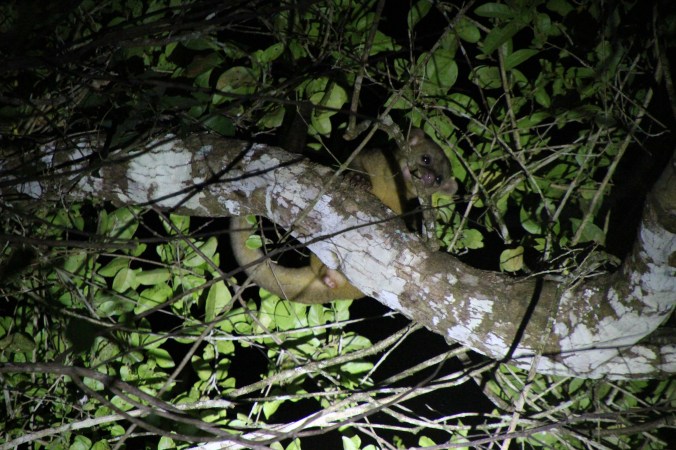
After my first few nights at Chan Chich, I quickly learned that the jungle activity changes a bit in the night time. Bats swoop through the air, the sounds of howler monkeys reverberate off of the trees, and cane toads hop across my path.
So of course, when the opportunity arose to go on a night ride I was eager to see what would be in store for me. While I knew it would be foolish to hope for a jaguar sighting, I set out taking comfort in the fact that at least my chances would be higher than if I had stayed in for the night. What I didn’t count on, however, was my inherently poor ability to spot wildlife in the darkness.
Ramón and Maya Ruins: An Ecological, not an Economic, Relation
J. D. H. Lambert and J. T. ArnasonScienceNew Series, Vol. 216, No. 4543 (Apr. 16, 1982), pp. 298-299
Observations on Maya Subsistence and the Ecology of a Tropical Tree
Charles M. PetersAmerican AntiquityVol. 48, No. 3 (Jul., 1983), pp. 610-615
Brosimum Alicastrum, The Ancient Maya Breadnut Tree
Did the Maya Build Forests of Breadnut Trees?
The breadnut tree (Brosimum alicastrum) is an important species of tree that grows in the wet and dry tropical forests of Mexico and Central America, as well as in the Caribbean Islands. Also known as the ramón tree, asli or Cha Kook in the Mayan language, the breadnut tree usually grows in regions that are between 300 and 2,000 meters (1,000-6,500 feet) above sea level. The fruits have a small, elongated shape, similar to apricots, although they are not particularly sweet. Continue reading

Valparai, Tamil Nadu
Hi, there! I’m Mari Gray, founder of artisan-made brand Kakaw Designs, based in Guatemala. After studying International Relations and Spanish at UC Davis and then working for several non-profits in Latin America, I became disillusioned and decided to focus on sustainable development through a social enterprise, partnering with talented artisan communities in Guatemala.
I feel incredibly fortunate to work with different artisan groups in Guatemala through Kakaw Designs (pronounced <kekao> like the cacao tree), an artisan-made brand I started about four years ago. We currently work with several different artisan groups: two weaving, one embroidery, two teams of leathersmiths, and one silversmith; all to make our designs come to life. But it was for a good reason that we started with the weaving cooperative Corazón del Lago in San Juan la Laguna, at Lake Atitlán.
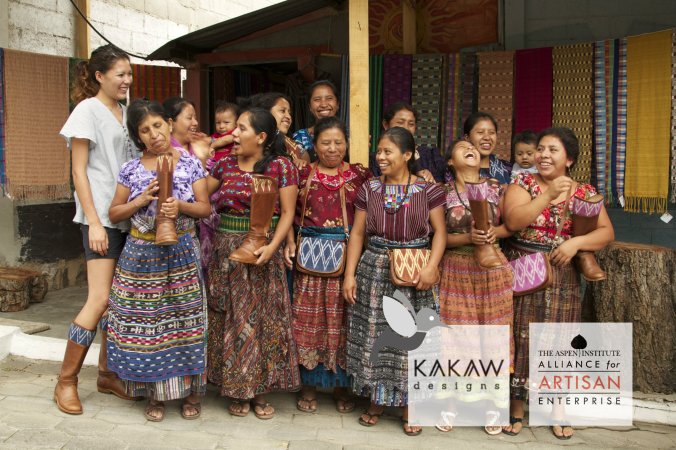
We would never have been able to launch Kakaw Designs without this group of forward-thinking, professional weavers from this small Maya village. The community itself is exceptional, with sustainability clearly a focus through:

Courtesy of Museums Victoria / CSIRO
Thanks to National Public Radio (USA) and Kat Lonsdorf for a brief look into the deep work of Tim O’Hara:
Explorers Probing Deep Sea Abyss Off Australia’s Coast Find Living Wonders
Far below the surface of the ocean, off the coast of eastern Australia is an area simply known as “the abyss.” The largest and deepest habitat on the planet, the abyssal zone stretches well beyond Australia’s waters and spans half the world’s oceans — but it remains largely unexplored. Continue reading
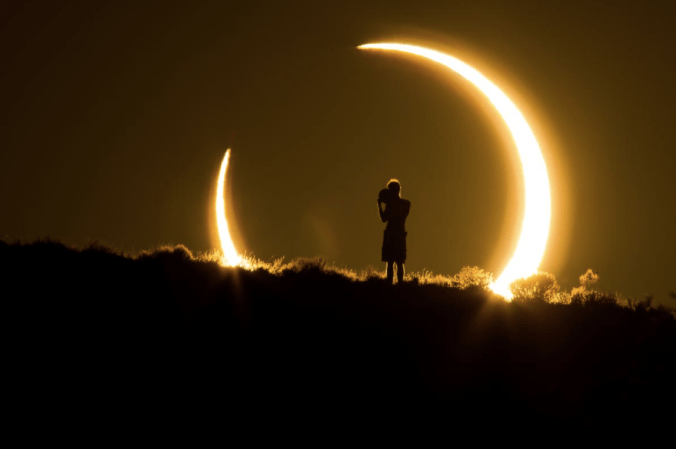
An onlooker watches an annular solar eclipse from New Mexico.
For the past few years it seems that August is the month to amaze and astonish on the astronomical front. Although the Perseid Meteor Shower happens annually, last year there were an unusually high number of meteor “outbursts” because Jupiter’s gravity has tugged some streams of comet material closer to Earth.
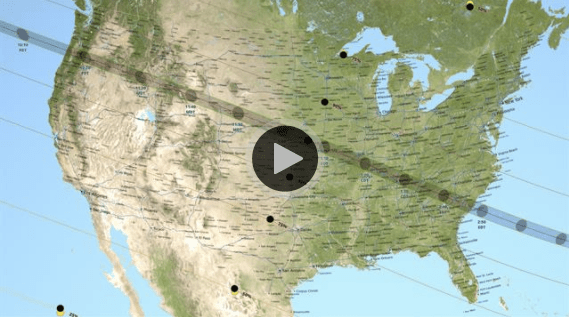
While solar eclipses aren’t technically rare, an annular solar eclipse is more so, when the moon is too far from Earth to obscure the sun completely, leaving the sun’s edges exposed and producing the ‘ring of fire’ effect. What’s particularly special about the upcoming August 21st eclipse is the path from which it can be viewed.
The August eclipse will be the first to go coast to coast across the U.S. since 1918, offering viewing opportunities for millions of people.
Sky-watchers across the United States are gearing up for the best cosmic spectacle in nearly a century, when a total solar eclipse will race over the entire country for the first time since 1918. On August 21, tens of millions of lucky people will be able to watch the moon completely cover the sun and turn day into night for a few fleeting minutes.
The main event will be visible from a relatively narrow path, starting in Oregon and ending in South Carolina. In between, the total eclipse will cross multiple cities in 12 states, prompting plans for countless watch parties, cosmic-themed tours, and scientific observations. (Also see “100 Years of Eclipse-Chasing Revealed in Quirky Pictures.”)
Click on the image above to FOLLOW THE ECLIPSE ON ITS COAST-TO-COAST TOUR

Great Rann of Kutch, Gujurat

Roy Lichtenstein’s “Masterpiece” (1962). Credit Estate of Roy Lichtenstein.
This isn’t the first time our Model Mad series has intersected with the Art World, but it may be the first for leveraging Art into action for social justice. Channeling Pop Art speech bubbles we have to say, “You Go, Girl!”
Agnes Gund Sells a Lichtenstein to Start Criminal Justice Fund
In January, rumors swirled that the art collector and patron Agnes Gund had sold her prized 1962 Roy Lichtenstein “Masterpiece” for a whopping $150 million, placing it among the 15 highest known prices ever paid for an artwork.
Ms. Gund is confirming that sale now, revealing that she parted with the painting (for what was actually $165 million, including fees) for a specific purpose: to create a fund that supports criminal justice reform and seeks to reduce mass incarceration in the United States.
This new Art for Justice Fund — to be announced Monday at the Museum of Modern Art, where Ms. Gund is president emerita — will start with $100 million of the proceeds from the Lichtenstein (which was sold to the collector Steven A. Cohen through Acquavella Gallery).
“This is one thing I can do before I die,” Ms. Gund, 78, said in an interview at her Upper East Side apartment, where the Lichtenstein used to hang over the mantel, along with works by Jasper Johns and Mark Rothko. “This is what I need to do.” Continue reading
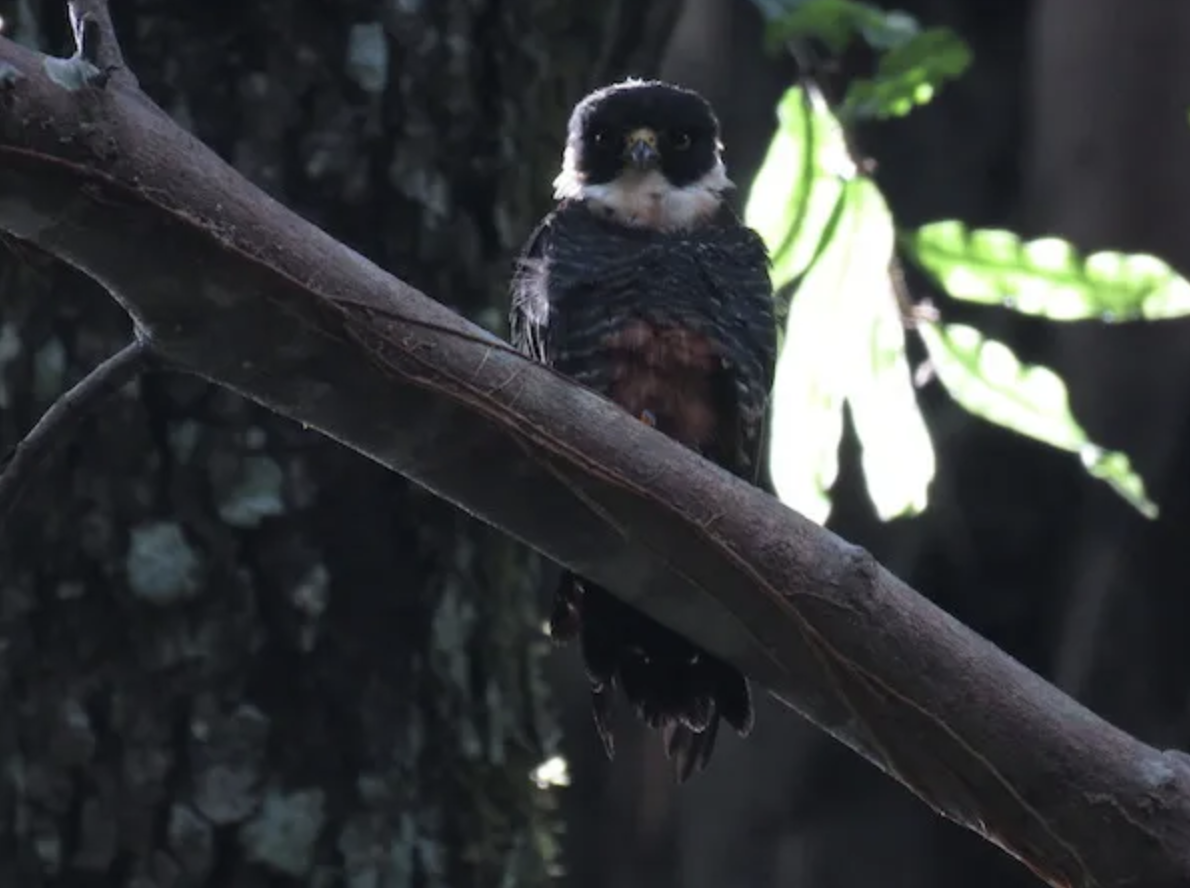
Gallon Jug Estate, Belize

Food has recently returned to the center of our attention, and in the outback of Belize we have had some lovely surprises. An unexpected essay, from one of the food world’s most prominent writers, gives another view altogether from the USA:
Like many of us, I spent the winter muddling through a mental miasma, pondering the meaning of life and democracy. I did, of course, think about “food” — how it’s produced, marketed, discussed, consumed, and so on — during my self-imposed hiatus from near-constant writing, which began more than 18 months ago. Continue reading
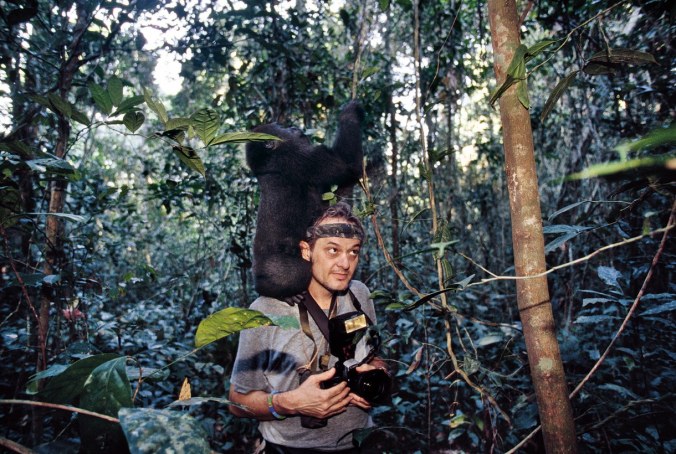
Michael Nichols with an orphaned gorilla, Gabon, 1999. PHOTOGRAPH BY STEVE GULLICK
Thanks to the New Yorker for this review, reminding us of what lengths photographers go to in order for us to have a closer look at wildlife than we ever would otherwise:
Nick Nichols’s Arresting Intimacy with the Wild World
By Peter Canby
The work of the wildlife photographer Michael (Nick) Nichols is widely admired for the intimacy he achieves with his animal subjects—an intimacy that allows the subjects to become wild individuals rather than generic wildlife. As Melissa Harris, the author of “A Wild Life: A Visual Biography of Photographer Michael Nichols,” puts it in her book, “Nichols intently focuses on specific characters and always there’s a sense of parity with himself.” Continue reading
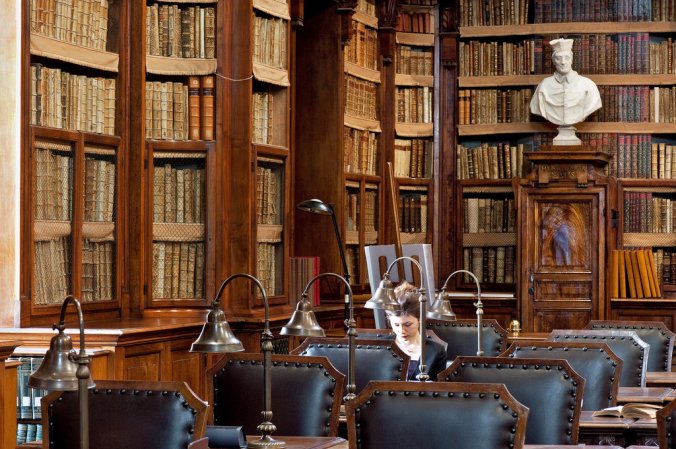
The Biblioteca Angelica in Rome holds the first volume of Cicero’s “De Oratore” that was printed in Italy, in 1465, and a precious early edition of Dante’s “Divine Comedy.” Credit Susan Wright for The New York Times
 Organikos