Braun Hughes, a cook, center, stokes a fire while another cook, Andy Risner, keeps watch. Drew Anthony Smith for The New York Times
Last week at Chan Chich Lodge we had guests from Vermont who were on their 6th visit, the first having been back in 1998. This couple started at dawn each day and while primarily birding they witnessed plenty of the other wildlife. Each sunset they enjoyed a classic dry martini with olives, and some conversation with Migde (yes, that is the spelling, pronounced mig-day) the bartender.
By the end of the week watching their sunset ritual, I had the image of a martini we might create in their honor. Instead of their favored olives we would put a few small cubes of chilled Harrington’s of Vermont smoked ham. Perhaps just to humor me, they said they would like to try that during their next visit. In the last few days I have been looking into the matter and I can find no evidence that this is a good idea.
I can also find no evidence that it is a bad idea. So I am continuing the investigation. And today I am happy to see a review related to another form of smoked meat, quite different from that of Harrington’s, in this case at a restaurant in Texas. Pete Wells now holds my attention better than any reviewer, on any topic. Anthony Lane, for a long time, held it on the residual strength of the laughter produced by one film review in 2005; his predecessor Pauline Kael also held it a long time before that. In the era of crowd-sourced reviews, the professional is still relevant for a reason. Today’s restaurant review is a case in point:
The C.B.P. considers rosaries to be potentially lethal, non-essential personal property, and agents dispose of them during intake. THOMAS KIEFER / INSTITUTE
This story, and these images, would maybe have less impact at another time, but during what seems like an assault on all immigration (hidden behind the veil of fighting illegal immigration) in the USA this exhibition is exceptionally moving:
Tom Kiefer was a Customs and Border Protection janitor for almost four years before he took a good look inside the trash. Every day at work—at the C.B.P. processing center in Ajo, Arizona, less than fifty miles from the border with Mexico—he would throw away bags full of items confiscated from undocumented migrants apprehended in the desert.
In addition to backpacks, shopping bags are used to transport food and belongings. Many are durable though non-biodegradable and adverse to the desert environment. THOMAS KIEFER / INSTITUTE
One day in 2007, he was rummaging through these bags looking for packaged food, which he’d received permission to donate to a local pantry. In the process, he also noticed toothbrushes, rosaries, pocket Bibles, water bottles, keys, shoelaces, razors, mix CDs, condoms, contraceptive pills, sunglasses, keys: a vibrant, startling testament to the lives of those who had been detained or deported. Without telling anyone, Kiefer began collecting the items, stashing them in sorted piles in the garages of friends. “I didn’t know what I was going to do,” he told me recently. “But I knew there was something to be done.”
Personal hygiene items such as toilet paper is disposed of during intake.When migrants are apprehended, Customs and Border Protection agents dispose of personal-hygiene items such as toilet paper during intake. THOMAS KIEFER / INSTITUTE
Kiefer, who is now fifty-eight, had moved to Ajo from Los Angeles, in 2001, hoping to simplify his life, purchase a home, and focus on his passion: taking pictures. (Previously, he’d been a collector and dealer of antique cast-iron bed frames, and, before that, a graphic designer.) He took the C.B.P. job, in 2003, for purely practical reasons: it paid ten dollars and forty-two cents an hour, and it seemed unlikely to steal mental space away from his photography projects. Now he began photographing his C.B.P. collection in his studio, arranging and rearranging items, sometimes putting Continue reading →
In southern Appalachia, botanist Joe-Ann McCoy is collecting the seeds of thousands of native plant species threatened by climate change. But in this job-scarce region, she also hopes to attract an herbal products company to cultivate the area’s medicinal plants. Continue reading →
The true élite of modern societies is composed of engineers, mechanics, and artisans—masters of reality, not big thinkers. Illustration by Leigh Guldig
Of all the prejudices of pundits, presentism is the strongest. It is the assumption that what is happening now is going to keep on happening, without anything happening to stop it. If the West has broken down the Berlin Wall and McDonald’s opens in St. Petersburg, then history is over and Thomas Friedman is content. If, by a margin so small that in a voice vote you would have no idea who won, Brexit happens; or if, by a trick of an antique electoral system designed to give country people more power than city people, a Donald Trump is elected, then pluralist constitutional democracy is finished. The liberal millennium was upon us as the year 2000 dawned; fifteen years later, the autocratic apocalypse is at hand. Thomas Friedman is concerned. Continue reading →
Timbers specializes in offbeat revisionist fantasies about historical figures.Photograph by Pari Dukovic for The New Yorker
Our goal, linking out to stories like this, is not to politicize this platform; it is to showcase creative problem-solving, akin to our fascination with and commitment to entrepreneurial conservation. That is what we mean by model mad. We are wary, and weary of the name of the polarizing figure, but resolutely curious to read about how others are dealing with it. Even with a title like A PROTEST MUSICAL FOR THE TRUMP ERA we know it will deliver on the creative side rather than the political. Thanks to Rebecca Mead for a well-focused message:
Five actors gathered in a room on Lafayette Street, in downtown Manhattan, to start rehearsing a new work for the Public Theatre, “Joan of Arc: Into the Fire.” Written by David Byrne, formerly of the Talking Heads, the show recast the enduring, improbable story of Joan—a teen-age girl in medieval France who experienced divine visions, led an army to defeat an occupying power, and was burned at the stake for heresy—as a rock musical that spoke to the current political moment. Continue reading →
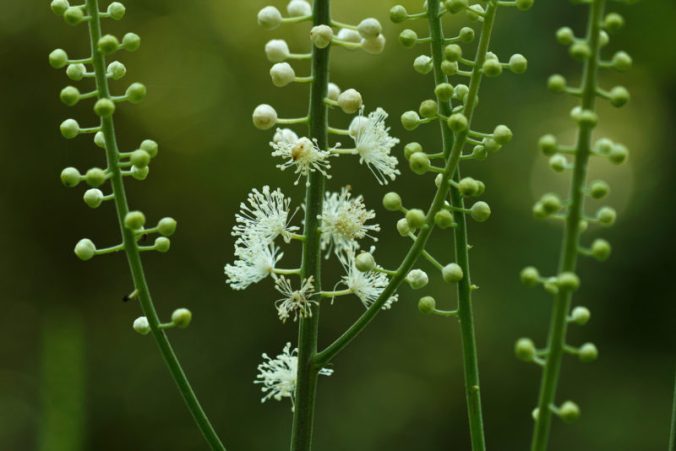
When I see a face like this I can only smile. I am not sure why, and I do not like to anthropomorphize animals, but this creature looks friendly, even a bit happy. Maybe because I am partial to the color green? Continue reading →
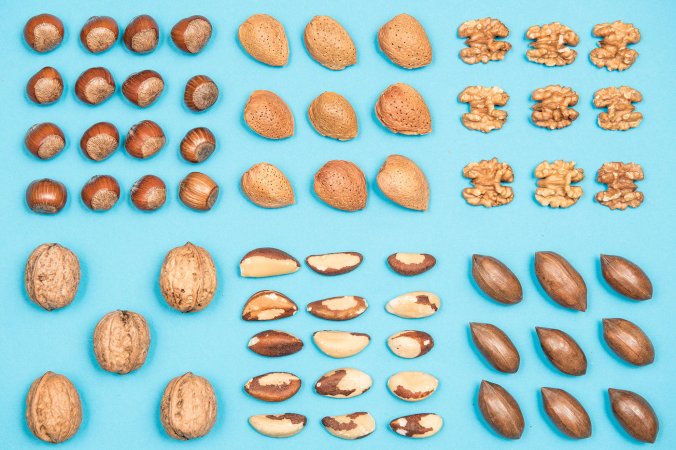
On the flip side, the study found that diets containing low amounts of nuts and seeds were linked to about 9 percent of deaths from heart disease and Type 2 diabetes. John Lawson/Belhaven/Getty Images
All things in moderation. If you follow that general rule, this article may not be of interest to you. But for most of us, the salt’s (thank you National Public Radio, USA) item for us today is worth a glance. After you collect some stardust, sprinkle it on a handful of nuts:
…We know, it may be tough to cut back on foods you love. Bacon is so alluring to many that it has even been called the ‘gateway’ to meat for vegetarians!
But, here’s the flip side: The researchers also found there’s a significant risk in eating too little of certain healthy foods. So, think of it this way: You can start consuming more of the foods that are protective… Continue reading →
While I personally don’t focus on organized religion, I can’t deny the power of sacred music to uplift my spirit. This story of inspired Renaissance composition and modern-day curiosity resonates with historical sleuthing and musical puzzle solving.
Click on the Sound Cloud musical links, close your eyes and breathe deep.
Eight years ago, leafing through a bibliography of 16th-century music prints (like you do), my eye was caught by the title of a motet: “Salve sponsa Dei.” “Bride of Christ,” I thought. “Must be for nuns!”
It was one of 23 anonymous motets published together in 1543, so I did what any self-respecting nunologist would do, and ordered a reproduction of the book. As I put the motets into a usable edition for modern singers, I found they were unlike any other 16th-century music I’d ever seen. They were dense, intense and sometimes startlingly dissonant.
The music – for five equal voices (of unspecified sex) – is astonishingly beautiful and yet strange, radical even. These works had lain unsung and unloved for almost four centuries, mostly because they were anonymous. These days, anonymity suggests that whoever created the book, music, painting or whatever was not important enough, or the product is not good enough, for anyone to care who made it. But in the 16th century, anonymity was also an important way for members of the nobility to disguise their participation in commercial ventures that were considered beneath them (which is why Gesualdo, a prince, published his madrigals anonymously).
But Virginia Woolf was right when she said: “Anonymous was a woman.” Continue reading →
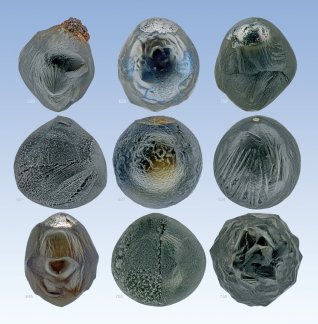
Varieties of space dust, barely the width of a human hair. These photomicrographs were made with a special camera setup that magnifies the dust grains nearly 3,000 times.CreditJan Braly Kihle/Jon Larsen
After decades of failures and misunderstandings, scientists have solved a cosmic riddle — what happens to the tons of dust particles that hit the Earth every day but seldom if ever get discovered in the places that humans know best, like buildings and parking lots, sidewalks and park benches.
The answer? Nothing. Look harder. The tiny flecks are everywhere.
An international team found that rooftops and other cityscapes readily collect the extraterrestrial dust in ways that can ease its identification, contrary to science authorities who long pooh-poohed the idea as little more than an urban myth Continue reading →
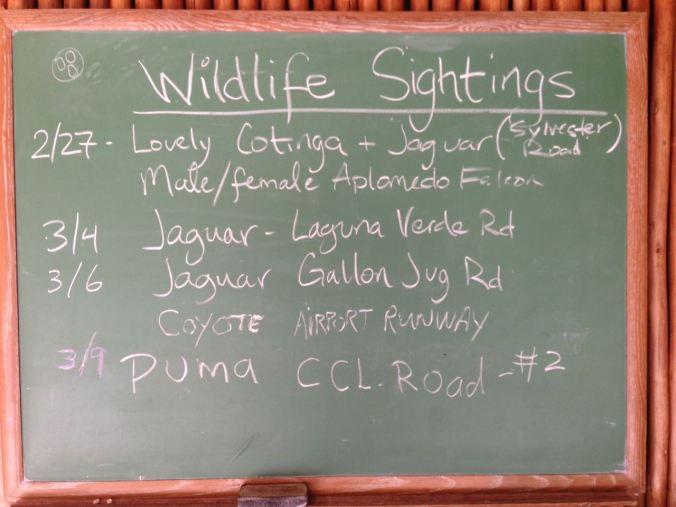
Norms have developed on the sightings board at Chan Chich Lodge over the years; unusual birds and apex predators get most of the attention most of the time.
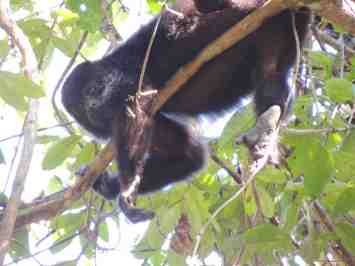
howler monkey
And for good reason. But on a day to day basis, monkeys are almost always in the trees in close proximity to the lodgings. The variety to the left is a noisy one, territorial and vocal in a manner that you will recognize from the soundscape of whatever King Kong movie you might have seen. Urbanite guests seem to favor that noise, we have noticed. Continue reading →
From a cartwheeling spider to a fish that hops on its fins and a katydid species that uses drumming to communicate, scientists are finding about 18,000 new species each year. Conniff reveals that so far, humans have identified about 2 million species, and the total number may be anywhere from 10 million to 100 million. He traveled to the remote country of Suriname on the northeastern coast of South America to take a firsthand look at what species discovery is all about.
We recommend this interview (click the Listen button in the banner above) with Richard Conniff on one of the WNYC programs we depend on for variety of perspectives as we pay attention to news about wellness, biodiversity and other topics of interest. Thanks to Smithsonian magazine for publishing Conniff’s story:
A newly discovered katydid species uses drumming to communicate. (Piotr Naskrecki)
It has been four years since we last noted his birthday and the most recent public event we can find now is this video is from two years ago. 65 is a suitable birthday to merit coming back to a favored writer and thinker with a small celebration. Neil Gaiman, starting at about nine minutes in to this video, pays fitting tribute to his friend, and ours, and what may have been his most important work.
Endangered pygmy elephants and orangutans threatened by scheme for Kinabatangan Wildlife Sanctuary
David Attenborough and Steve Backshall have joined conservationists and charities asking officials in Borneo to reconsider a bridge that threatens one of the last sanctuaries of the rare pygmy elephant.
2006-2007 was among my favorite stretches of time, both for our La Paz Group work and for life with my family. We were living on an island in the Adriatic Sea where the only other residents were fishermen and their families. Besides learning how blissful life can be on an island, I learned that island people are somehow different from mainlanders. It seems to be a cultural phenomenon worldwide. So when I heard this story about life on an island in Hawaii, I was expecting to hear about differences; this is about as different as I have ever heard of:
A family that owns a private island in Hawaii sets rules for the people who live there. But when the rules are administered in an unpredictable way, the islanders get upset. Sean Cole and Adia White tell the story. (22 minutes)
We’ve written about this amazing APP on our pages before, and it’s exciting to watch it’s evolution and expansion of both technology and territory.
Our work has yet to expand to Mexico, but birds don’t acknowledge national borders, so the majority of the species in the Yucatan can be found in all 3 countries that make up the peninsula – Belize, Guatemala and of course, Mexico.
We look forward to having our marvelous guides try it out just for fun!
Merlin Expands to Mexico
We’ve spent the last few months working to expand coverage of Merlin, and we’ve just released a new bird pack for the Yucatan Peninsula. Research at the Cornell Lab of Ornithology repeatedly points to the Yucatan Peninsula as a vital wintering ground for many of our favorite breeding birds in the United States. It’s also home to many dazzling birds unique to the Neotropics. Continue reading →








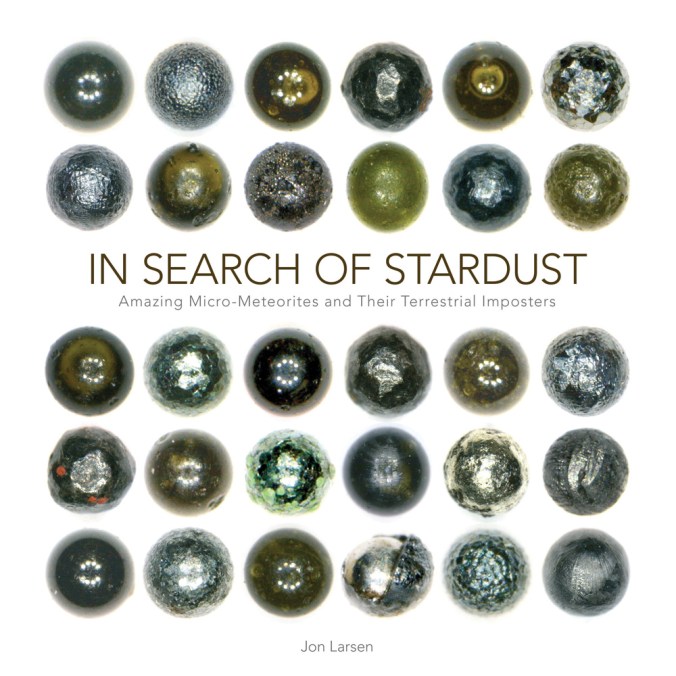 This is among the more unusual book reviews in a while, thanks to the Science section of the New York Times, and William J. Broad. We appreciate a radically new perspective every now and then:




 2006-2007 was among my favorite stretches of time, both for our La Paz Group work and for life with my family. We were living on an island in the Adriatic Sea where the only other residents were fishermen and their families. Besides learning how blissful life can be on an island, I learned that island people are somehow different from mainlanders. It seems to be a cultural phenomenon worldwide. So when I heard this story about life on an island in Hawaii, I was expecting to hear about differences; this is about as different as I have ever heard of:



 Organikos