Celebrating Real Accomplishment

feeney

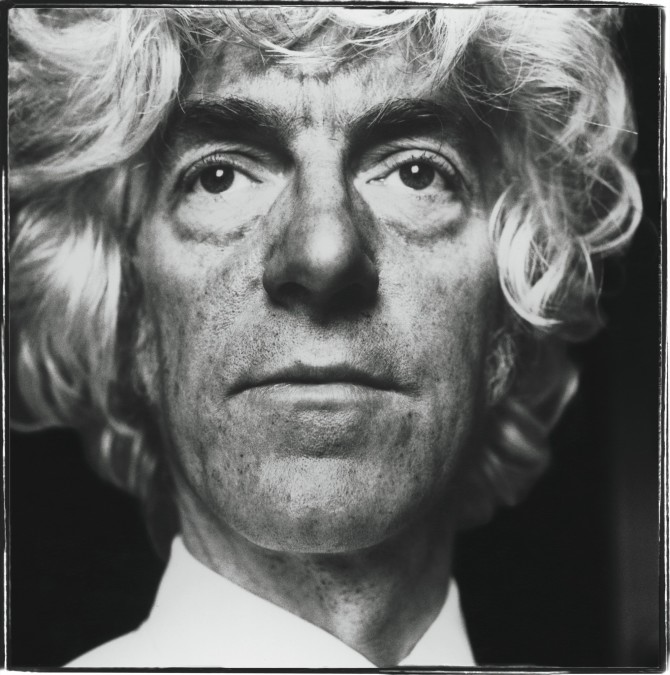
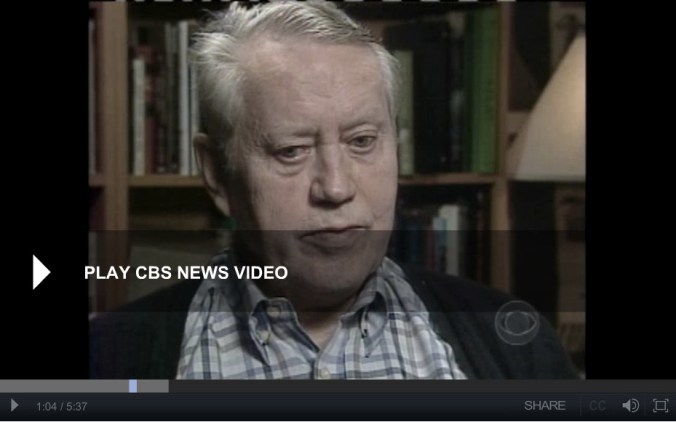
If you attended Cornell University 1980s or 1990s and earlier you may have heard his name if you were part of the Hotel School community, which he occasionally visited. Even then you would have heard simply that he was “a good friend” of his alma mater. It was only in the last decade or so that his visionary generosity was made public, most notably on CBS news in the USA. He had worked hard to keep his name out of the stories related to his foundation’s philanthropic giving.
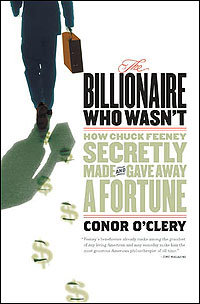
billionaircover-ecad87c5e5af133a76297c2d555e210992476de9-s1400-c85It eventually became easier to find information about  where all of that money went. Journalists did their work, and after he was revealed to be a genius of anonymous giving on a grand scale he reluctantly agreed to proper documentation of it all. He even agreed to a book-length documentation, which we first learned about here. Today the New York Times is reporting that he has finally achieved his goal of giving it all away. Bravo, Mr. Feeney, and thank you for reminding us what real accomplishment looks like:

…Nearly five years ago, Charles F. Feeney sat in a cushy armchair in an apartment on the east side of Manhattan, grandchildren’s artwork taped to the walls, and said that by the end of 2016, he was going to hand out the last of a great fortune that he had made. Continue reading
Urban Tracking And Other Soft Local Adventures

raccoontrack-1260x708

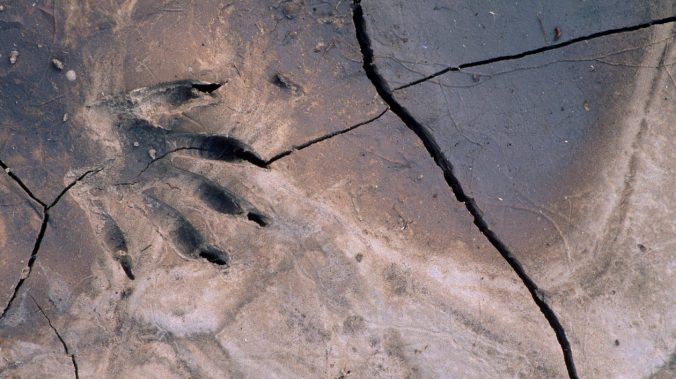
Raccoon track in mud along stream. Sarpy County, Nebraska. October 1996. Central Tallgrass Prairie Ecoregion. Photo © The Nature Conservancy (Chris Helzer)

It seems to go hand in hand with today’s other post, so thanks to The Nature Conservancy as always for this one:

A Field Guide to Tracking in Your Neighborhood

By Matt Miller

Tracking is one of the most family-friendly wildlife activities; you can enjoy it anywhere there is a patch of open ground. As I’ve written previously, kids love deciphering the mysteries of animal tracks. Even my two-year-old son loves checking out the tracks in our yard.

Continue reading

Urban Environments & Evolution


streetartevolution

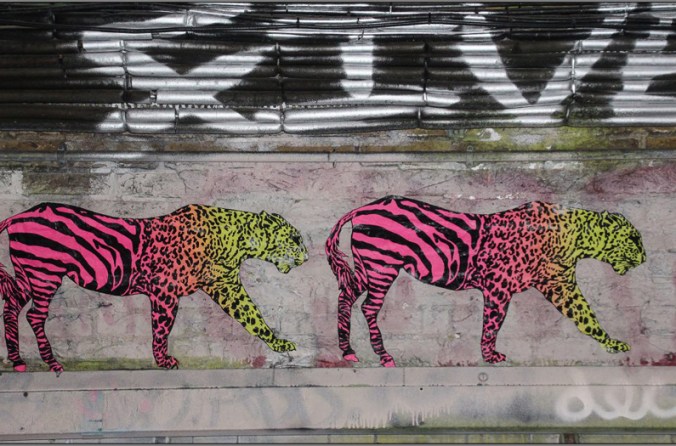
Header image: Street art in London by Aida. Credit: Maureen Barlin via Flickr.

Anthropocene is back, after a brief holiday break, with a good summary of findings on urban-influenced evolution:

Cities are the new laboratories of evolution

Altruism Is So 2011, And Even More So 2017

110905_r21085_g2048-670

Derek Parfit has few memories of his past and almost never thinks about it, a fact that he attributes to an inability to form mental images. Photograph by Steve Pyke / GETTY

Even though we had started a series of posts on the topic of altruism in 2011, our first year creating this platform, it was just after this article was published that we started paying close attention to the topic, and we had forgotten about it until just now.

Derek Parfit communicates convincingly about a logic for the common good being more important than that of the individual, and even put his own life and mortality into perfect context of the logic he was developing. So, though we resist posting obituaries of even our greatest heroes, his passing this week makes us think this profile is worthy of re-reading and sharing.

Even though our early attention to altruism led to hundreds of posts since 2011 for which altruism is at the core, this remembrance may stimulate even closer attention to altruism, a topic more worthy of attention than ever:

HOW TO BE GOOD

An Oxford philosopher thinks he can distill all morality into a formula. Is he right? Continue reading

Sanskrit Scholarship & Mystical Journeys

guru

Our random meeting and conversations with some scholars in southern India led to an exploration of the origins of yoga, which we linked to here.

guru1

Next, using some of the same clues provided by those conversations, we were led to some excellent programming by Smithsonian Channel that includes one of the two scholarly co-authors mentioned in that previous post (see the second book) plus someone you may recognize from another context:

MYSTICAL JOURNEY: KUMBH MELA

West meets East when acclaimed actor Dominic West joins his childhood friend on a pilgrimage to Northern India and the biggest religious festival in the world, Kumbh Mela. Here, 100 million Hindus have gathered to wash away their sins in the holy rivers near Allahabad, on the banks of Sangam. It is also where Dominic’s friend Sir James Mallinson will be initiated into a senior role called a mahant. Follow these friends on this incredible two-week journey, and submerge yourself in the sacred waters and culture of this triennial celebration.

Camera Trap, Australia Edition

Thanks to the Nature Conservancy’s blog for this addition to our growing file of stories about non-intrusive filming of wild animals in remote places:

Camera Trapping in the Australian Desert

BY JUSTINE E. HAUSHEER

When trying to drink out of a tiny waterhole, camels hit approximately a 9.5 on a scale from 1 to Exceptionally Awkward. Continue reading

Carbon Capture In India

3264-1

Tuticorin thermal power station near the port of Thoothukudi on the Bay of Bengal, southern India. The plant is said to be the first industrial-scale example of carbon capture and utilisation (CCU). Photograph: Roger Harrabin

Thanks to the Guardian’s Environment section for this news:

Indian firm makes carbon capture breakthrough

Carbonclean is turning planet-heating emissions into profit by converting CO2 into baking powder – and could lock up 60,000 tonnes of CO2 a year Continue reading

Keeping The Science Moving Forward, Rather Than Sideways or Backwards

00syngenta1-jumbo

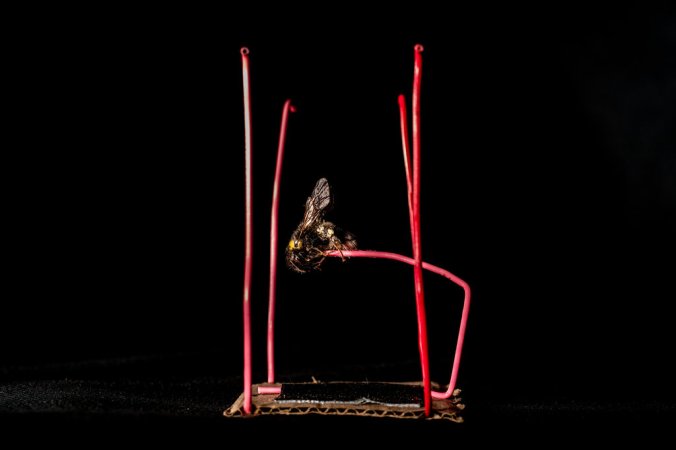
James Cresswell, a professor at the University of Exeter in England, has turned to less controversial areas of research on bees. Here, a bee is mounted on a wire in a wind tunnel, for research designed to estimate normal bee density. CreditAndrew Testa for The New York Times

It is a bit of a mystery story, worthy of the time if you care about bees (a minor character here) and especially if you care about the moral character of scientists while under pressure:

Scientists Loved and Loathed by an Agrochemical Giant

With corporate funding of research, “There’s no scientist who comes out of this unscathed.”

By

EXETER, England — The bee findings were not what Syngenta expected to hear. Continue reading

Mayan City, Deep Jungle Discovery

NYerMaya.jpg

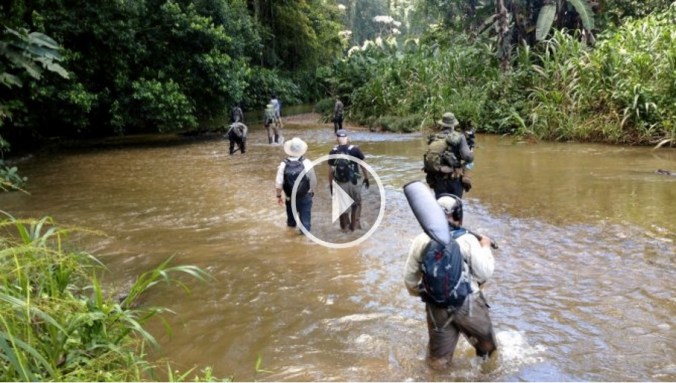
Mr. Preston shares an experience that is not familiar to many people, and perhaps only considered enviable by a select few. The team at Chan Chich Lodge meets visitors every day of the year who are looking for a distant cousin of this experience described below, and those guests come away invariably awed by the opportunity to have a safe, comfortable adventure deep in nature, exploring well protected remains of a Mayan civilization buried by time and jungle. For them, this is worth a read:

AN ANCIENT CITY EMERGES IN A REMOTE RAIN FOREST

…The revelation of an ancient city in a valley in the Mosquitia mountains, of Honduras, one of the last scientifically unexplored regions on Earth, was a different story. This was the first time a large archaeological site had been discovered in a purely speculative search using a technology called lidar, or “light detection and ranging,” which can map terrain through the thickest jungle foliage, an event I chronicled in a story for the magazine in 2013. As a result, this discovery revealed something vanishingly rare: a city in an absolutely intact, undisturbed, pristine state, buried in a rain forest so remote and untouched that the animals there appeared never to have seen people before. Continue reading

The Vertical Farm, Explained In Long Form

170109_r29265

Vertical farming can allow former cropland to go back to nature and reverse the plundering of the earth.Illustration by Bruce McCall

For all the reasons we have to enjoy reading this — the Ithaca, New York setting we care deeply about, including Cornell University not least, plus a main character straight out of entrepreneurial conservation central casting — most importantly we have been posting on vertical farming for years and this exposes some of what we have been missing up to now. We have taken information as it arrives on our doorstep, in small bundles. Now, a more in-depth look at the past, present and future of:

THE VERTICAL FARM

Growing crops in the city, without soil or natural light.

By Ian Frazier

No. 212 Rome Street, in Newark, New Jersey, used to be the address of Grammer, Dempsey & Hudson, a steel-supply company. It was like a lumberyard for steel, which it bought in bulk from distant mills and distributed in smaller amounts, mostly to customers within a hundred-mile radius of Newark. It sold off its assets in 2008 and later shut down. In 2015, a new indoor-agriculture company called AeroFarms leased the property. It had the rusting corrugated-steel exterior torn down and a new building erected on the old frame. Then it filled nearly seventy thousand square feet of floor space with what is called a vertical farm. The building’s ceiling allowed for grow tables to be stacked twelve layers tall, to a height of thirty-six feet, in rows eighty feet long. The vertical farm grows kale, bok choi, watercress, arugula, red-leaf lettuce, mizuna, and other baby salad greens. Continue reading

Origins Of Modern Yoga

9780195395341One of the excellent benefits of living in south India is meeting people who know alot about south India. Sounds circular, but occasionally the people are specialists on topics we have come to care deeply about. We met a group of Sanskrit scholars yesterday quite by chance, one of whom is a leading authority on the texts that are the earliest documentation of what we now call yoga.

When we mentioned our interest in yoga from the lay perspective, because we offer yoga experiences in various properties we manage in Asia and Latin America, it led to a simple question: where can we learn the most, most accessibly, about the real origins of yoga? The answer was this book and this author (incidentally a friend and colleague of the one to whom we were asking the question. So over at Oxford University Press this is what we found.

With a bit more searching we found this excellent BBC Radio 4 segment from just a few months ago that features the same scholar, Mark Singleton, and is worth a listen if you are interested in the origins of modern yoga.  Continue reading

2017, Year Of Wilderness Conservation, Farming & Food

CCL Board.jpg

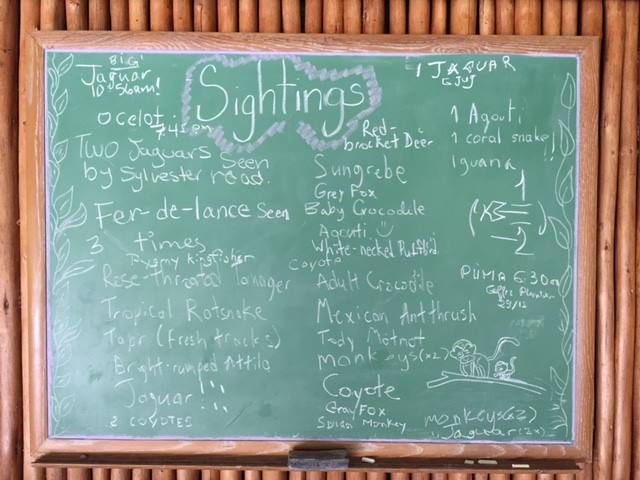
A few days ago Arnay, the General Manager of Chan Chich Lodge, posted a snapshot of the sightings board just outside the reception area, where guests share what they have seen on any given day while trekking with guides, or trekking solo. 2016 was not exceptional for Chan Chich, but it was another year of exceptional opportunity to witness the abundance that comes with committed conservation.

The big cats made their presence known day after day after day. The entire food chain on which they depend was right there with them, well balanced in the 30,000 acres of forest that Chan Chich protects, surrounded by an additional nearly half million acres that other private conservation-minded land-owners protect in northwest Belize. Continue reading

Old World Trade In Spices, Lessons for 21st Century Leadership Thinking

01ghosh-2-superJumbo.jpg

“The Return to Amsterdam of the Second Expedition to the East Indies,” painted by Hendrik Cornelisz Vroom, 1599. CreditPhas/UIG, via Getty Images

Amitav Ghosh, who we think of primarily as a writer of fiction, is also an important non-fiction thinker/author, and most recently published “The Great Derangement: Climate Change and the Unthinkable.” This op-ed in the New York Times puts future trade discussions into perspective in the most remarkable setting we can think of at the moment– the spice trade of centuries past. From our perch on the Malabar coast of India this is a welcome bit of history with which to welcome the new year and the challenges ahead:

GOA, India — For many years the word “globalization” was used as shorthand for a promised utopia of free trade powered by the world’s great centers of technological and financial innovation. But the celebratory note has worn thin. The word is now increasingly invoked to explain a widespread recoiling from a cosmopolitan earth. People in many countries are looking nostalgically backward, toward less connected, supposedly more secure times.

But did such an era ever exist? Was there ever an unglobalized world? Continue reading

One Type Of Farm Of The Future

img_4002-58_custom-e07c5a73d9c530cfd3b5ce3232509e17950feb69-s1100-c85

Dan Charles/NPR

The last story of 2016 offered by the salt, at National Public Radio (USA) seems a fitting story for us to link to as we jump in to 2017, which will be a year for stretching our farming and food activities beyond simple farm-to-table, onward to a bigger reach (more on which to come). It is useful, and heartening, to hear this family’s story:

By Returning To Farming’s Roots, He Found His American Dream

by Dan Charles

Eighteen years ago, on New Year’s Eve, David Fisher visited an old farm in western Massachusetts, near the small town of Conway. No one was farming there at the time, and that’s what had drawn Fisher to the place. He was scouting for farmland. Continue reading