Christmas Bird Count, 2016

Seth’s work at the Cornell Lab of Ornithology, with the Celebrate Urban Birds initiative helped us all get a close look at citizen science in action. Past Christmas counts since then have been an annual tradition in these pages. Thanks to Lisa Feldcamp for a note on this topic with her post Give Kids the Gift of Birding on The Nature Conservancy’s website Cool Green Science:

The annual Christmas Bird Count is one of birding’s most cherished traditions. This year, consider introducing the count to a child. There’s no better time to get a youngster started in birding.

“When I was a kid in a large family of eight kids in Upstate New York, my parents told us we could do anything that cost less than $5; baseball, boy scouts, or birding,” says Tom Rusert of Sonoma Birding. “I joined Junior Audubon with my brothers, not realizing it would be a life sport to enjoy forever. It really is no different than any other sport.” Continue reading

Cabo Pulmo, Community & Conservation

Octavio Aburto keeps coming to our attention, as we read more about Cabo Pulmo, and today we discovered that he has provided several excellent short videos on Vimeo:

A thriving undersea wildlife park tucked away near the southern tip of Mexico’s Baja peninsula has proven to be the world’s most robust marine reserve in the world, according to a new study led by researchers at Scripps Institution of Oceanography at UC San Diego. Results of a 10-year analysis of Cabo Pulmo National Park (CPNP), published in the Public Library of Science (PLoS) ONE journal, revealed that the total amount of fish in the reserve ecosystem (the “biomass”) boomed more than 460 percent from 1999 to 2009. Citizens living around Cabo Pulmo, previously depleted by fishing, established the park in 1995 and have strictly enforced its “no take” restrictions.

Better Food, Faster

little-quinoaisthenewbigmac-1200It’s time to change fast food for the better, forever.
Fresh and nutritious food doesn’t have to cost a fortune or take forever to prepare. At eatsa, we’ve upped the taste factor alongside affordability and speed, with bold flavors, seasonal ingredients, and hearty portions. Our commitment to you is simple: faster, nutritious, more affordable and tastier food. Continue reading

National Park of the Week: Cairngorms National Park, Scotland

Photo via cairngorms.co.uk

Photo via cairngorms.co.uk

Comprising most of the United Kingdom’s high-altitude terrain, Cairngorms National Park in northern Scotland is the largest park in the British Isles, and an example of successful sustainable development and conservation working together. Home to several endangered or rare animal and plant species, many types of ecosystem, and 18,000 human residents, a lot of careful management has to take place for business and the natural environment to both thrive.

Unlike some of the other parks featured in this weekly post, Cairngorms (4528 sq km) is what you might call a “mixed use” park, where agriculture and other natural resource extraction such as logging, fishing, and hunting all take place. While in many national parks around the world, people are not allowed to live within park boundaries, here that is not the case, and in fact, according to the Cairngorms official website, 75% of land ownership is private, 15% belongs to charities, and 10% public bodies. All of which makes the park an impressive display of cooperation among community members to make the area successful in its multi-faceted mission.

Continue reading

Big Weather & Big Cats At Chan Chich Lodge

Cockscomb Basin Wildlife Sanctuary is of interest because it is a pioneer in conservation in Belize–as Chan Chich Lodge is in its own way. But in writing about it Vicky Croke, for The Wild Life at WBUR (National Public Radio, Boston, USA), reminds a few of us of our time in Belize during Earl, and the aftermath during which jaguar sitings have been, and continue to be, inexplicably spectacular:

Jaguars Interrupted: Counting Big Cats After A Hurricane

Two months after Earl hit Belize, researchers at the world’s first jaguar reserve are still taking stock.

By Vicki Croke

This past summer, within days of gathering spectacular camera-trap footage of a female jaguar and her two tiny cubs sauntering through the Cockscomb Basin Wildlife Sanctuary in Belize, field scientists with Panthera, the global wild cat conservation organization, got the news that a tropical storm was forming and might just come their way. Continue reading

Sardine Disco Balls, Or Cabo Pulmo

15tb-sardines-superjumbo

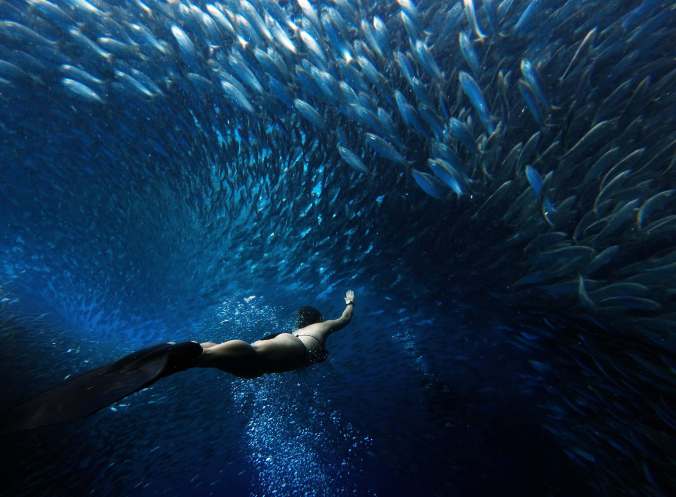
A free diver swooping into a sardine ball. Credit Keith Sepe

Joanna Klein’s story in the Science section of the New York Times this week, titled Swimming With the Mysterious Sardine Disco Balls of the Philippines, has had me thinking in recent days about the Gulf of California, and specifically about Villa del Faro. If you have reason to be in the Philippines, click the image above to get a quick view of what may be in store for a diver in certain waters.

But otherwise, I will riff off that photo in the direction of Baja California Sur. The intensity of those sardine schools are comparable to the biodiversity in the waters of Cabo Pulmo. Continue reading

Foraging Fellowship In New York City

dezon_wired_02

Reishi mushrooms (left) and Trametes versicolor collected in a folded map. ZACK DEZON

Thanks to Wired author Charley Locke for his story MEET THE OBSESSIVE MUSHROOM HUNTERS OF NEW YORK CITY:

ON A PARTICULARLY gorgeous Sunday in October, 30 explorers with the New York Mycological Society met at a cemetery in Brooklyn to hunt for mushrooms.

dezon_wired_01

Reishi mushrooms on a stump. ZACK DEZON

They rummaged through leaves, carefully inspected the headstones, and gingerly reached into tree trunks, hoping to find something amazing. A turkey tail, perhaps, or hen-of-the-wood. “It was like a scavenger hunt,” says Zack DeZon, a photographer who joined them on the search. “It struck me as the analog equivalent of Pokemon Go.”

DeZon is not particularly enamored with fungus, but a mushroom-obsessed friend’s Instagram feed piqued his interest. The fellow pointed him toward the Mycological Society which has since 1962 catered to those with an interest in mycology and mycophagy. The society, created by the composer John Cage, has 430 members and meets throughout the year to find mushrooms, eat mushrooms, and discuss mushrooms.

Continue reading

Rail-Trail Expansions

Rail-Trail.jpg

Thanks to Lorraine Chow at EcoWatch for this update on the longest rail-trail conversion in the USA, linking St. Louis to Kansas City:

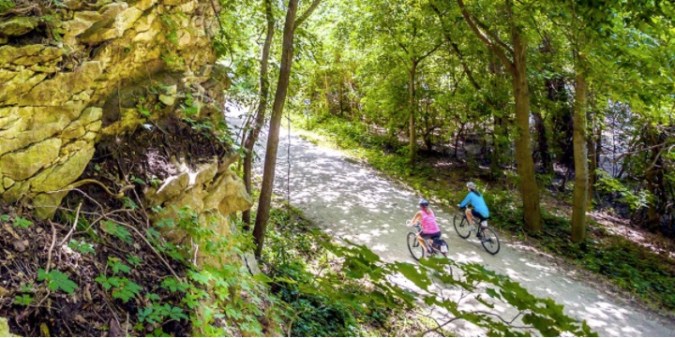
You can now walk or cycle across most of the state of Missouri. Gov. Jay Nixon has opened a 47.5-mile extension to the Katy Trail, effectively creating one continuous hike-and-bike path from the St. Louis area to the outskirts of Kansas City.

rail-trail2“You’ll be able to go 287 miles on an incredible asset,” Nixon told the Kansas City Star at the ribbon-cutting on Dec. 10 in Pleasant Hill, a suburb just south of Kansas City.

According to the governor’s office, the new section of the trail follows the corridor of the old Rock Island Railroad for 47.5 miles from Pleasant Hill to Windsor, where a junction connects to the rest of the Katy Trail State Park. Continue reading

Brew & Conservation

Patrick_McGovern_Analyzing_Midas_sample_at_Microscope.jpg

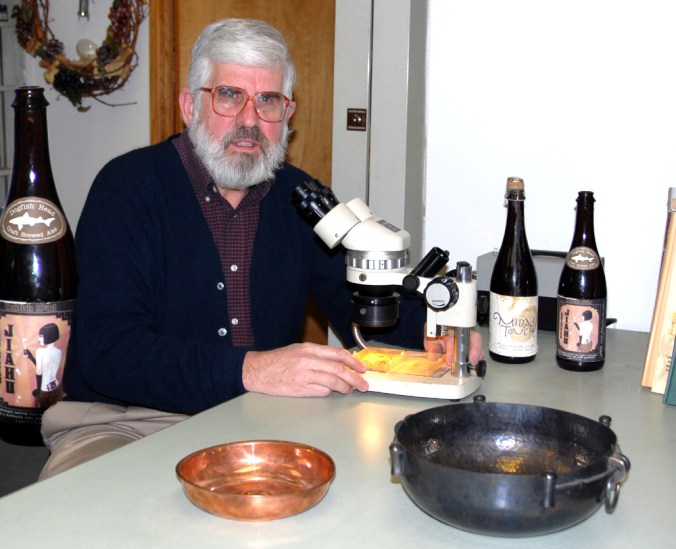
Patrick McGovern, Scientific Director of Biomolecular Archaeology Laboratory at the Penn Museum, examines a sample of the “King Midas” beverage residue under a microscope. Photo © Pam Kosty / Wikimedia through a Creative Commons license

And in other beer-related news, thanks to the Nature Conservancy’s contributors at Cool Green Science, particularly for Matt Miller’s article Dogfish Head’s Sam Calagione on Archaeology, Conservation and Beer:

Albatross, Age & Egg — Keeping The Species Going

4117.jpg

Wisdom tends to her egg. Laysan albatrosses spend the vast majority of their lives in the air. Photograph: US Fish and Wildlife Service/AP

Thanks to the Guardian’s Environment section (and Reuters) for this news:

World’s oldest-known seabird lays an egg at age of 66 in Pacific refuge

Wisdom, a Laysan albatross, is also world’s oldest-known breeding bird in the wild and has had a few dozen chicks Continue reading

Spain, Hops & Craft Beer

hops_wide-d79a830a1be1de6c8b818c90c577a0ca779d620f-s1100-c85

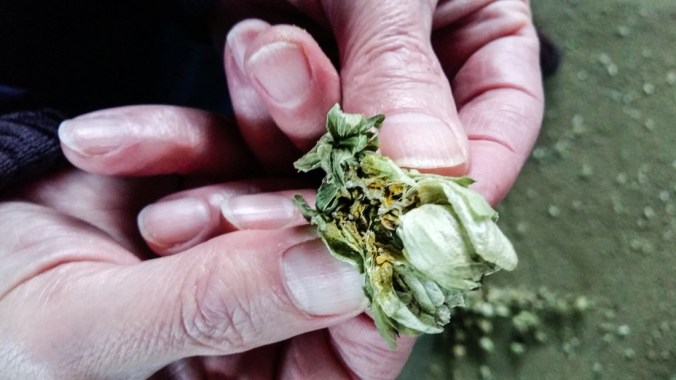
Ignacio Nicolas Campillo, director of a hops production facility in northern Spain, peels apart the flower of the hops plant, to reveal yellow powder inside. The powder is used to make beer. Lauren Frayer/NPR

This story from the salt over at National Public Radio (USA) adds to our hops coverage from time  to time:

Only the oldest residents of Villanueva del Carrizo, a town on the fertile banks of the Órbigo River in northern Spain, remember that day just after World War II, when all the area farmers were called to a meeting in the center of town.

Spain’s tiny beer industry was in a bind: It could no longer import hops – a key ingredient in beer – from war-devastated Germany. But brewers had spotted wild hops along the Órbigo River, and they had a hunch it could grow on farms too. Continue reading

Organic, If Not Natural, Beauty

harvest5

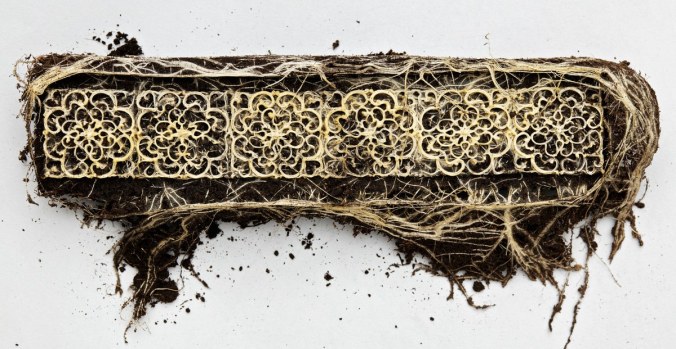
German artist Diane Scherer creates low-relief sculptures made from plant roots. DIANA SCHERER

Thanks to Wired for this bit of intrigue:

Artist Teaches Roots To Grow In Beautiful, Alien Patterns

by MARGARET RHODES

THE HUMAN RACE has a long history of bending nature to its will. The results of this relationship can be devastating—but they can also be strikingly beautiful, as German artist Diane Scherer skillfully proves with her low-relief sculptures made from plant roots.

Harvest2.jpg

Scherer grows these works of art by planting oat and wheat seeds in soil, and then carefully, meticulously, warping the growth pattern. DIANA SCHERER

Scherer grows these works of art by planting oat and wheat seeds in soil, and then carefully, meticulously, warping the growth pattern. She prefers to train her roots into geometric patterns found in nature, like honeycomb structures, or foliate designs reminiscent of Middle Eastern arabesques. Continue reading

Winds Over The Water Serving Those On Shore

00windpower-superjumbo

The Block Island Wind Farm’s turbines off the coast of Rhode Island in August. They began spinning on Monday and will deliver electricity to Block Island, a community nearby. Credit Kayana Szymczak for The New York Times

 Thanks to the Science section of the New York Times:

America’s First Offshore Wind Farm Spins to Life

By

Until this week, all of the wind power generated in the United States was landlocked. Continue reading

Better Nets, Better Fishing

ulotrawlproject_2016_069-55_wide-588bf1471991f6a62169e87318536f0a627efb4f-s1100-c85

Portland’s Gulf of Maine Research Institute has designed a trawl net that aims to target species that can still be profitable while avoiding cod. Courtesy of Gulf of Maine Research Institute

Thanks to the salt folks at National Public Radio (USA):

Fishermen Team Up With Scientists To Make A More Selective Net

FRED BEVER

Some New England fishermen are pinning their hopes on a new kind of trawl net being used in the Gulf of Maine, one that scoops up abundant flatfish such as flounder and sole while avoiding species such as cod, which are in severe decline.

For centuries, cod were plentiful and a prime target for the Gulf of Maine fleet. But in recent years, catch quotas have been drastically reduced as the number of cod of reproductive age have dropped perilously low. Continue reading