
Dinokeng Game Reserve, Pretoria, SA
Dinokeng Game Reserve, Pretoria, SA
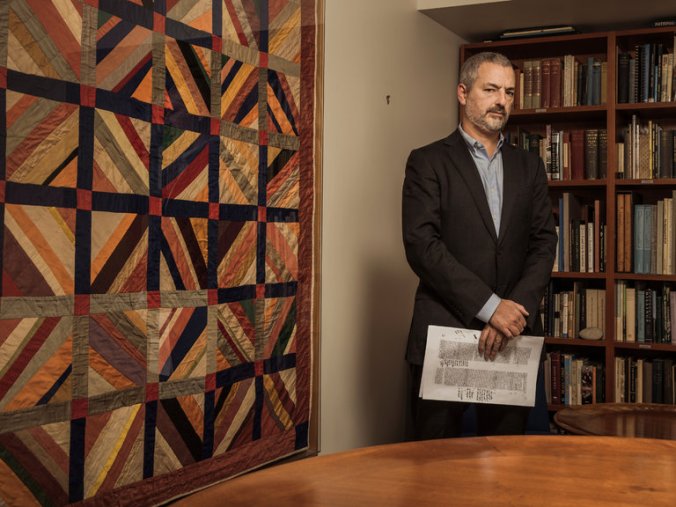
David Kaiser, is a fifth-generation Rockefeller and the head of a family fund fighting Exxon Mobil. Credit Sasha Maslov for The New York Times
The saying “that is rich” means, in this case, something more like–Really, Exxon Mobil?
Exxon Mobil Accuses the Rockefellers of a Climate Conspiracy
By
Exxon Mobil, under fire over its past efforts to undercut climate science, is accusing the Rockefeller family of masterminding a conspiracy against it. Yes, that Rockefeller family. Continue reading

WorldFish/Flickr
Anthropocene has a good summary of this recent scientific study on freshwater fish as a potentially robust, sustainable food supply that has been neglected:
We’re overlooking a giant piece in the global food security puzzle
When we think of sustainable fisheries, we tend to focus on oceans and even aquaculture. But there’s an important source of fish protein that’s often overlooked: freshwater fish. An expansive new study finds that fishing pressure and other threats to freshwater fish is greatest precisely where biodiversity is greatest. It also reveals that a very high proportion of the world’s population—particularly the poor and malnourished—depend heavily on this resource for food security. Continue reading
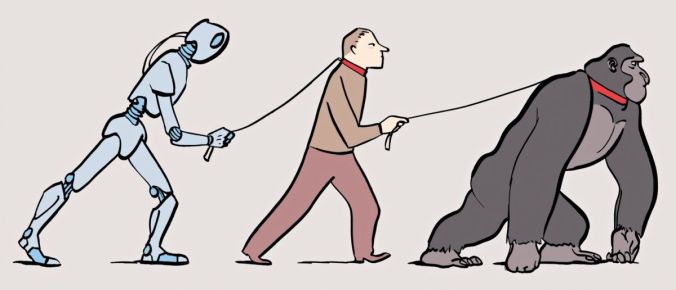
Nathan Heller is one of the most consistently engaging, most compelling writers out there, and this new article is one more piece of evidence:
IF ANIMALS HAVE RIGHTS, SHOULD ROBOTS?
We can think of ourselves as an animal’s peer—or its protector. What will robots decide about us?
Harambe, a gorilla, was described as “smart,” “curious,” “courageous,” “magnificent.” But it wasn’t until last spring that Harambe became famous, too. On May 28th, a human boy, also curious and courageous, slipped through a fence at the Cincinnati Zoo and landed in the moat along the habitat that Harambe shared with two other gorillas. People at the fence above made whoops and cries and other noises of alarm. Harambe stood over the boy, as if to shield him from the hubbub, and then, grabbing one of his ankles, dragged him through the water like a doll across a playroom floor. For a moment, he took the child delicately by the waist and propped him on his legs, in a correct human stance. Then, as the whooping continued, he knocked the boy forward again, and dragged him halfway through the moat.
Harambe was a seventeen-year-old silverback, an animal of terrific strength. When zookeepers failed to lure him from the boy, a member of their Dangerous Animal Response Team shot the gorilla dead. The child was hospitalized briefly and released, declared to have no severe injuries. Continue reading

Gallon Jug Estate, Belize

We wish the Earl well, and appreciate his efforts:
Ireland to Plant Largest Grove of Redwood Trees Outside of California
By Steve Williams
An estate in Ireland has revealed plans to create a redwood grove that will be the largest of its kind outside California. The initiative serves as a testament both to Ireland’s heritage and its commitment to fighting global warming. Continue reading

We are curious to know more:
Imposter fish may be more sustainable
In a first of its kind study, researchers tackled the environmental and financial impacts of consumers purchasing mislabeled fish. And—as upsetting as the mislabeling of any food is—they found a surprising silver lining. Continue reading
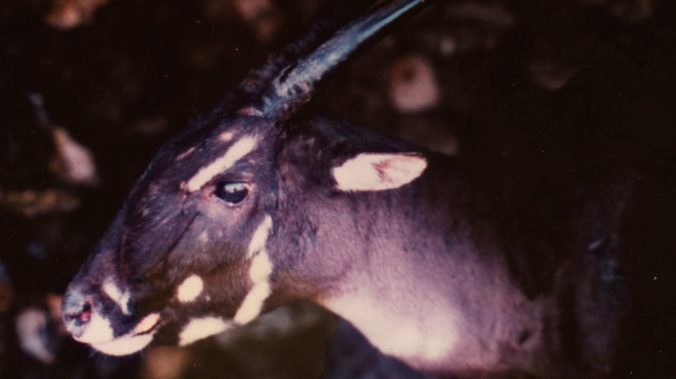
Saola. Photo © Bill Robichaud
Still so much to learn, and sometimes it seems like there is so little time to do so:
The Largest Mammal That No Scientist Has Ever Seen in the Wild
BY MATT MILLER
The saola is the largest terrestrial mammal never seen alive in the wild by a biologist. This is not a Bigfoot story. The saola undeniably exists. It roams only in the Annamite Mountains of Laos and Vietnam. Continue reading
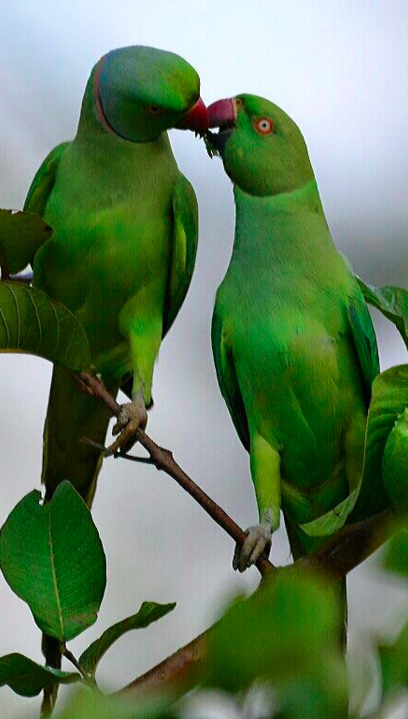
Sivarpanam Palace, Tamil Nadu
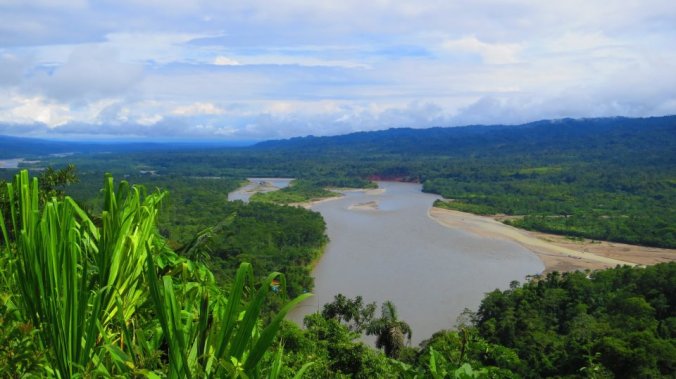
Source: andeanamazonexpeditions.com
Containing much of the Peruvian Amazon’s greatest flora and fauna, Manú National Park is one of the largest protected areas in the world and allows for once-in-a-lifetime sightings of rare and exotic animals. The park is Peru’s biggest and consists of three parts: the “Cultural or Buffer zone,” where native communities live and tourists can enter unaccompanied, the “Reserved zone,” an area set aside for controlled scientific research and ecotourism, and the “Intangible zone,” the largest section that is strictly for flora and fauna preservation. Declared a UNESCO World Heritage Site and UNESCO Biosphere Reserve, Manú offers adventurous travelers lush, untouched Amazon to explore and discover the unmatched beauty of virgin environments and unrestricted wildlife.
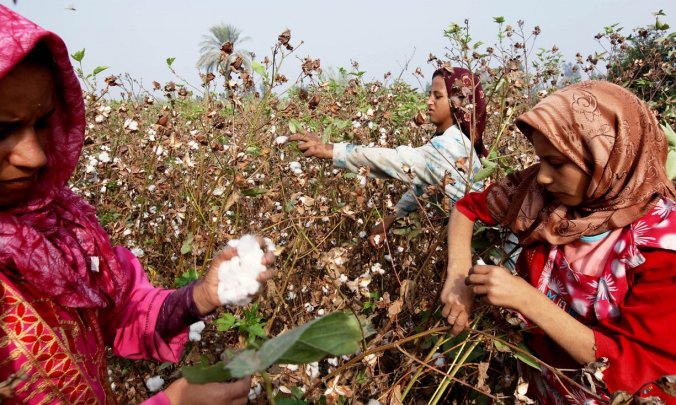
Agricultural employees harvest cotton in a field in Benha, Egypt. Welspun India, a giant home textile manufacturer, is in trouble for falsely advertising bedding products as containing Egyptian cotton. Photograph: Bloomberg/Getty Images
We are in the business of providing comfortable bedding as responsibly as possible, and we are as vigilant on sheets as anything else. So, in the spirit of FYI:
Those luxury Egyptian cotton sheets you own may not be luxurious – or Egyptian
Target and Walmart are pulling bedding off their shelves after a falsely labeled Egyptian cotton products controversy involving manufacturer Welspun India
Alison Moodie
Egyptian cotton, which can be spun into fine, long fiber to make sheets with a high thread count, is synonymous with luxury bedding. But in the last four months, it’s been at the center of a controversy that has caused many Americans to wonder whether the Egyptian cotton sheets they rely on for a good night’s sleep actually contain any cotton from Egypt. Continue reading
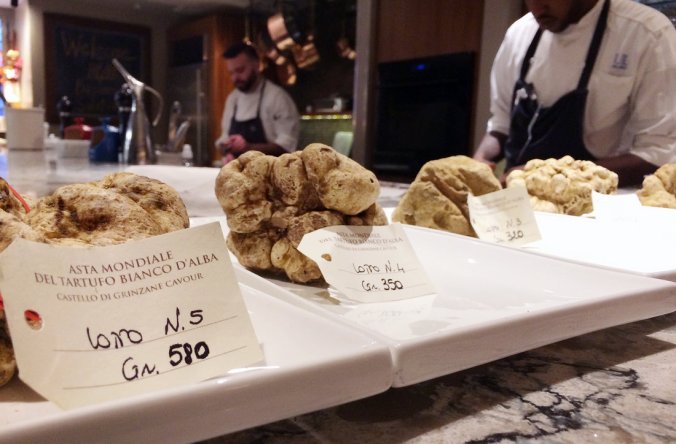
Five lots of white truffles on display entice bidders in both Philadelphia and Italy. Kristen Hartke for NPR
It is that time of year again. We are reminded of those expensive mounds that come out of leafy loamy earth in Croatia, Italy, France and we few other fortunate places:
A $112,000 White Truffle?! At Auction, Philly Embraces Fungi Mania
KRISTEN HARTKE
Bowtie-bedecked auctioneer Samuel Freeman was faced with the unusual task of convincing a crowd to buy something he admits he knows nothing about: the Tartufo Bianco d’Alba, or Alba White Truffle.
“I’ve never auctioned food before,” Freeman says, “and I’d never even eaten a truffle until two days ago.” Apparently that first taste won him over. “It was unbelievable.”
At $458 per ounce once the bidding got underway, those truffles better knock your socks off. Continue reading

Bangalore, Karnataka
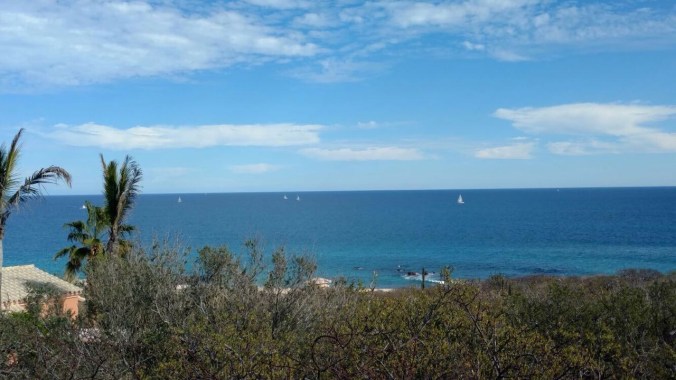
Seth sent a snapshot he quickly took on his phone yesterday late morning at Villa del Faro. He had already told me the day before that they were seeing whales in the same vicinity of where the boats are in this photo, but he had not had his phone handy to snap a picture. So this would have to do. It looked as though a regatta was passing by. Continue reading
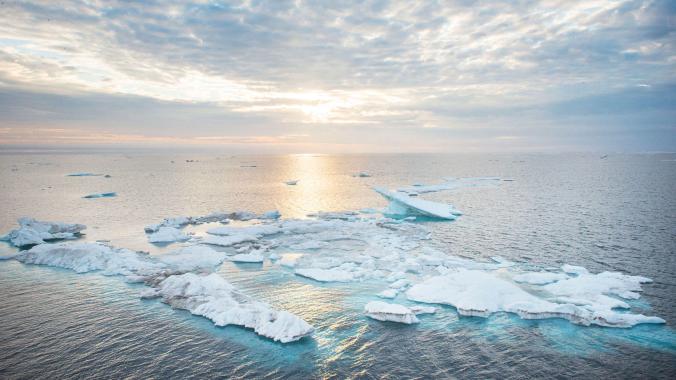
Melting sea ice in the Chukchi Sea, one of the areas included in the ban. Photo: Esther Horvath
Thanks to Audubon Magazine for their coverage of this news:
U.S. Offshore Drilling Banned Along Arctic and Atlantic Coasts for Next Five Years
A new federal leasing plan released today outlines where energy companies can look for oil while protecting vital bird habitat.
by Martha Harbison
After months of deliberations, the Bureau of Ocean Management announced its final five-year plan for offshore energy-exploration leases today. In that plan, no drilling leases would be available in U.S.-held Arctic and Atlantic waters from 2017 to 2022, meaning that no new drilling could happen in those areas until at least 2022. Continue reading
Thanks to Cool Green Science:
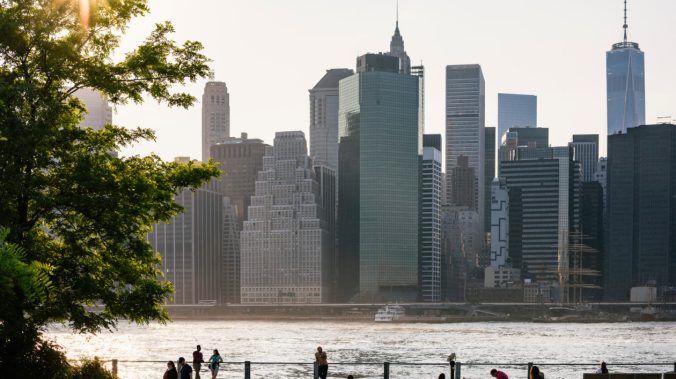
Using Cloud Computing to Untangle How Trees Can Cool Cities
BY TIMOTHY BOUCHER
We’ve all used Google Earth — to explore remote destinations around the world or to check out our house from above. But Google Earth Engine is a valuable tool for conservationists and geographers like myself that allows us to tackle some tricky remote-sensing analysis.
After having completed a few smaller spatial science projects in the cloud (mostly on the Google Earth Engine, or GEE, platform), I decided to give it a real workout — by analyzing more than 300 gigabytes of data across 28 United States and seven Chinese cities. Continue reading
 This post from yesterday reminds me of an early morning walk I took a few days ago with Seth and Jocelyn, when these two donkeys came wandering down the road. One seemed determined to get his head and shoulders portrait in the best possible light.
So I indulged him, and both seemed happy with a bit of nose-petting. No carrots, but never mind. When we continued our walk they started to follow, but then, nope. They wandered off in the opposite direction.
 Donkeys do that. A walk at dawn is the best way to know a place–at its quietest, and as per donkey logic, in the best possible light. I had arrived at Villa del Faro after a visit at Chan Chich Lodge, where dawn greets you with howler monkeys howling, and on a walk you will definitely hear a symphony of birdsong. At Villa del Faro you will hear birdsong, but different; at most it will be chamber music, more likely solos and duets. Continue reading
 We were led to this by a news/feature story, but the background material is even more interesting than the feature in the news. Here is a note worth a moment of your time:
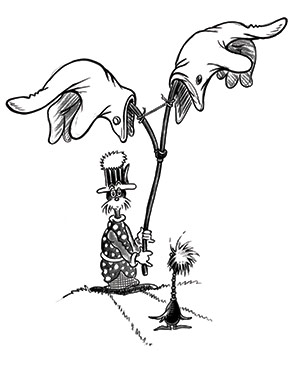
Dr. Seuss was a storyteller in the grandest sense of the word. Not only did he tell fantastical tales of far-away places but he also gave us a unique visual language that carried his stories to new heights of artistic expression. Surrealism provided the foundation from which he built his career, but like a launch pad sitting idle just before liftoff, surrealism was soon to be engulfed in the flames of ridiculous fun and its launch tower thrown to the ground with each new editorial cartoon, magazine cover, painting, or children’s book. Continue reading

Bolin Bay in the Great Bear rain forest near Klemtu, on the central coast of British Columbia. CreditRuth Fremson/The New York Times
There is an excellent article about old treaties and new alliances empowering indigenous people in North America, which this excerpt captures well:
…In Idaho last summer, tribal representatives from 19 states met for what organizers said was the biggest Native American workshop on climate change, and they concluded that global environmental changes transcended national boundaries.
“This is how land resource decisions are going to be made in the future — through co-management with people who have been on the land forever,” said Hadley Archer, the executive director of the Nature Conservancy Canada, which helped put together the Great Bear forest agreement. To that end, the University of Victoria law school in British Columbia will begin enrolling students next year in a degree program that will combine the traditional study of court precedents and legislation with the study of tribal law. Continue reading
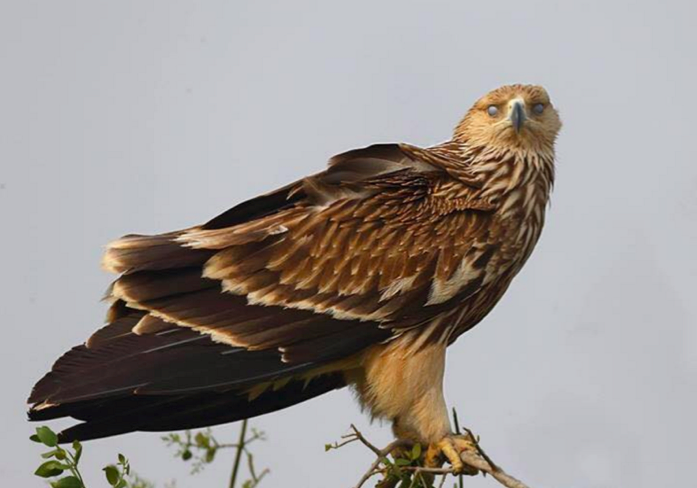
Little Rann of Kutch, Gujurat
 Organikos