Extinction As Impetus For Travel?

header-image

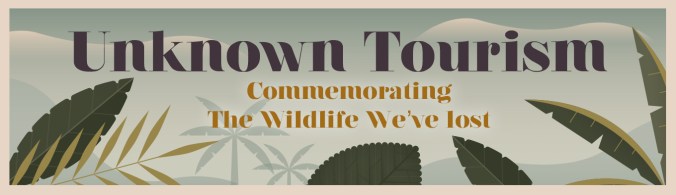
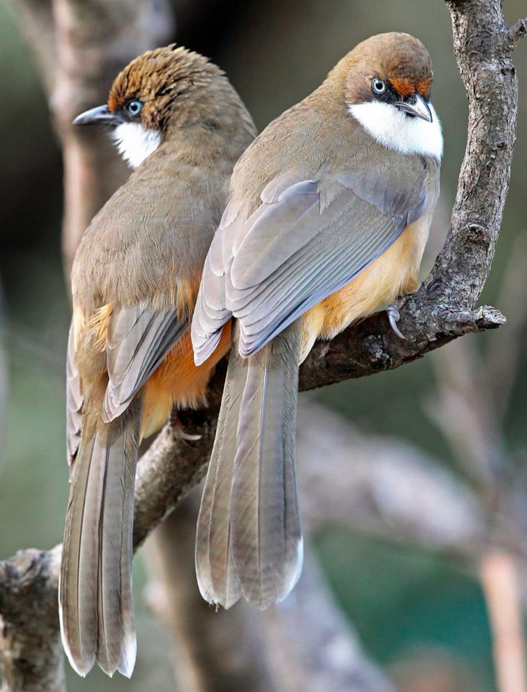
We are all used to looking at guidebooks to learn more about a country before we visit – but how often do we stop and think about the things we can’t see there anymore? We’ve created Unknown Tourism, a series of vintage-style travel posters to commemorate some of the wonderful creatures we’ve lost, and are in danger of forgetting.

We try to be glass half full, so we will wait and see where this campaign (click the banner above) is going. I am drawn to anything that raises awareness of the need for conservation. It helps that the illustrations are evocative. Bravo to Expedia UK for thinking outside the box and making it look good.

But a travel company highlighting extinction to encourage travel is certainly going to strike some as problematic. Even there, I say bravo to them for taking a step in an unusual direction, and I hope it leads somewhere meaningful (as opposed to just attractively intriguing). Continue reading

Hotel As Showroom

Merrick-West-Elm-1200 (1).jpg

A prototype for a room in the hotel chain that the furniture retailer West Elm plans to launch in Charlotte, North Carolina, and other cities. PHOTOGRAPH COURTESY WEST ELM

This article goes on to make a very specific point about the experience of this company, in the state where it is based, which is not so much what caught my attention (more on which below):

Jim Brett, the president of West Elm, the furniture chain that sells what you might call mainstream modern furniture, was looking for the brand’s next act. He didn’t think he’d find it at the mall; West Elm already has more than a hundred stores. Children’s furniture might have been a logical next step, but it is burdened by complex safety regulations. Where else do lots of people sleep and sit? Brett, a frequent traveller, had spent countless nights in sterile, unwelcoming rooms. Hotels seemed like a good opportunity.

Last year, West Elm opened a commercial division for office furniture, and the company is now making furniture for Marriott’s SpringHill Suites hotels. More significantly, West Elm also signed a deal with a partner to open its own branded hotels. Brett and other executives discussed design ideas and scouted locations in mid-tier U.S. cities whose hotel markets seemed underdeveloped. Charlotte, North Carolina, was especially promising. Continue reading

Veggies Punching Above Their Weight

161003_r28779-1200x857-1474580933

PHOTOGRAPH BY ERIC HELGAS FOR THE NEW YORKER

When scanning the hard news, feature stories, reviews and profiles we are on the lookout for stories that address any of a group of themes, generally related to better treatment of the planet we live on. We are interested in creative approaches to making better human treatment of the natural world more likely, more palatable, so to speak. After reading this article about magnificent results from modest parcels of land cared for by relatively common folk, we see a parallel theme in this restaurant review; it qualifies:

DINING FOR THE MODERN HERBIVORE

“Vegan” evokes two images: judgment for abstemious virtue or scarcity on meat-centric menus. Neither happens at Ladybird.

By Jiayang Fan

…Of some two dozen tapas, the most successful were the least expected and the most unassuming. The olives and cornichons—perfectly pert, coated in seasoned rice flour and gently fried in chili oil—proved to be the kind of addictive nibblers that make you forget the etiquette of communal dining. Continue reading

If You Happen To Be In New York City

Finch.jpg

SPENCER FINCH LOST MAN CREEK

October 1, 2016 – March 11, 2018

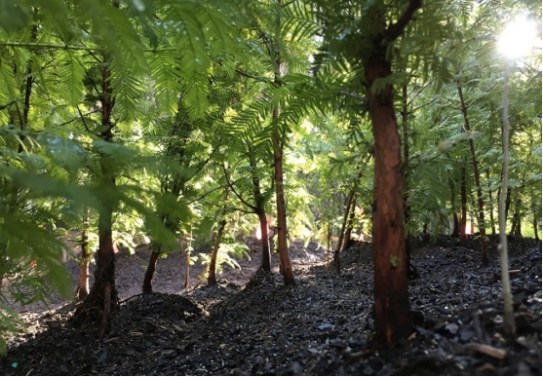
SPENCER FINCH TO CREATE A MINIATURE REDWOOD FOREST IN THE HEART OF DOWNTOWN BROOKLYN

See the website of the exhibit at Public Art Fund for this description and more:

Lost Man Creek is a miniature forest. But rather than growing naturally and of its own accord, this undulating landscape populated by some 4,000 Dawn Redwoods is a recreation. Artist Spencer Finch partnered with the Save the Redwoods League to identify a 790-acre section of the protected Redwood National Park in California. Significantly scaling down the topography and tree canopy heights, he reimagined this corner of the California forest for MetroTech at a 1:100 scale. While the original trees range from 98 to 380 feet – taller than the buildings that surround the plaza – the trees in the installation are just one to four feet in height. Continue reading

Magnificent Ecological Services From Modest Parcels Of Trees

27FOREST1-superJumbo.jpg

Eve Lonnquist examining trees on her property with Logan Sander, a consulting forester. Credit Leah Nash for The New York Times

An excellent article, whose title says it all, in the Science section of the New York Times this week:

How Small Forests Can Help Save the Planet

By

BIRKENFELD, Ore. — Eve Lonnquist’s family has owned a forest in the mountains of northwest Oregon since her grandmother bought the land in 1919. Her 95-year-old father still lives on the 157-acre property. And she and her wife often drive up from their home just outside Portland.

But lately, Ms. Lonnquist, 59 and recently retired, has been thinking about the future of her family’s land. Like many small-forest owners, they draw some income from logging and would like to keep doing so. But they would also like to see the forest, with its stands of Douglas fir, alder and cherry, protected from clear-cutting or being sold off to developers. Continue reading

An Unusual Travelogue

9780374710750.jpg

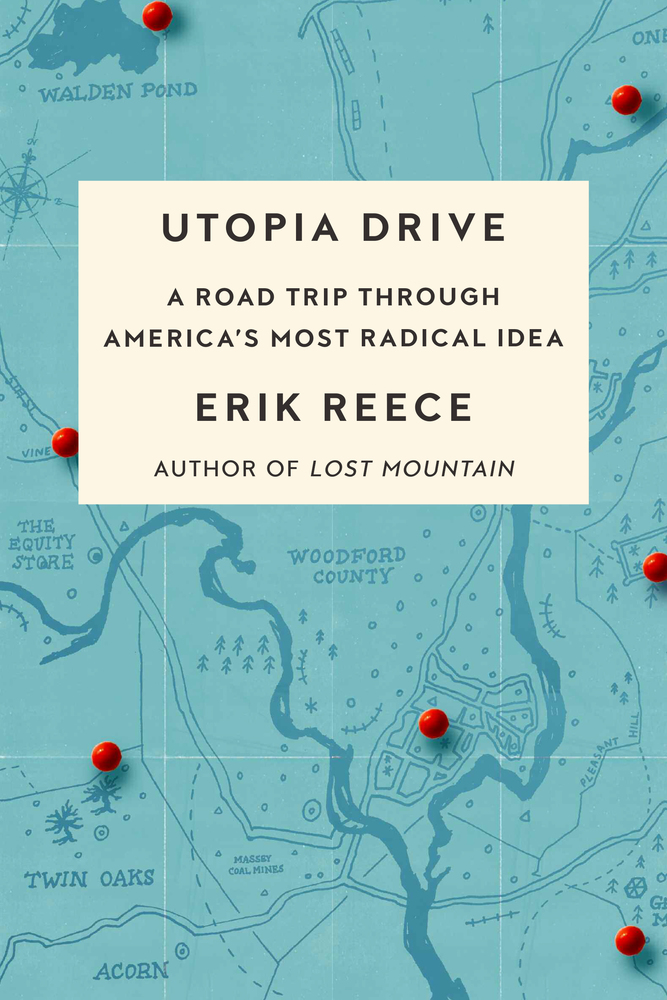
Publishers’ blurbs are sometimes much better than the sound of the word blurb would imply, and anyway I always trust them more than I could possibly trust Amazon’s tricky sales methods. Reviews in trusted publications are best, but they take much longer to read; this blurb has my attention, especially after pondering two decades of life online:

For Erik Reece, life, at last, was good: he was newly married, gainfully employed, living in a creekside cabin in his beloved Kentucky woods. It sounded, as he describes it, “like a country song with a happy ending.” And yet he was still haunted by a sense that the world–or, more specifically, his country–could be better. He couldn’t ignore his conviction that, in fact, the good ol’ USA was in the midst of great social, environmental, and political crises–that for the first time in our history, we were being swept into a future that had no future. Where did we–here, in the land of Jeffersonian optimism and better tomorrows–go wrong? Continue reading

Smart Reading, 20 Years On

screen-shot-2016-09-26-at-10-09-24-amThere is a 5-10 minute read in the upcoming issue of the New Yorker that helps put two decades into a narrow but interesting perspective. 20 years ago I was in the process of moving my family to Costa Rica for a job I had accepted one year earlier. I remember the period described below, which could be considered the transition to life online, as we now know it. Odd to think it was happening just as we moved to a kind of Garden of Eden. Slate has been a part of “life online” ever since. I was mainly drawn to Kinsley, one of the sharpest of thinkers and communicators. He is long, long gone from Slate. But the experiment was fruitful; Slate is alive and well even as the media landscape is oversaturated with copies of copies of copies:

TWENTY YEARS OF SLATE

The digital magazine’s founding editor-in-chief and his successors got together to survey its history and its contributions to online journalism.

It’s been twenty years since Michael Kinsley, the former editor of The New Republic, undertook a novel adventure: the creation of a magazine, underwritten by Microsoft, that was to exist primarily in what was then known as “cyberspace.” “There will be efforts to update it, perhaps on a daily basis,” the Times noted, in a report that appeared below the fold on page D1 of its issue of Monday, April 29, 1996, two months before the launch of Slate.

Recently, Kinsley, who was the editor-in-chief of Slate from 1996 until 2002, and his three successors—Jacob Weisberg, David Plotz, and Julia Turner—gathered in Washington, D.C., to record a podcast: a five-way conversation with Josh Levin, the magazine’s executive editor. It was a nostalgic and forgivably self-regarding celebration of what Turner characterized as Slate’s “smarty-pants, curious journalism, opinion, and analysis.” The editors posed, grinning, for a group photo. Continue reading

Fly-Fishing In The Rockies

25VOCATION-superJumbo.jpg

Scott Tarrant is the fly-fishing manager at the Broadmoor resort and hotel in Colorado Springs. Credit Ryan David Brown for The New York Times

We always think we have the best occupations, but occasionally we see what someone else is doing and start having second thoughts. But, as we know, there is a reason why it is called work:

The Curative Power of Water, Waders and a Fly Rod

 As told to

Scott Tarrant, 46, is manager of fly-fishing at the Broadmoor, a resort and hotel in Colorado Springs. Continue reading

National Park of the Week: Ruaha National Park, Tanzania

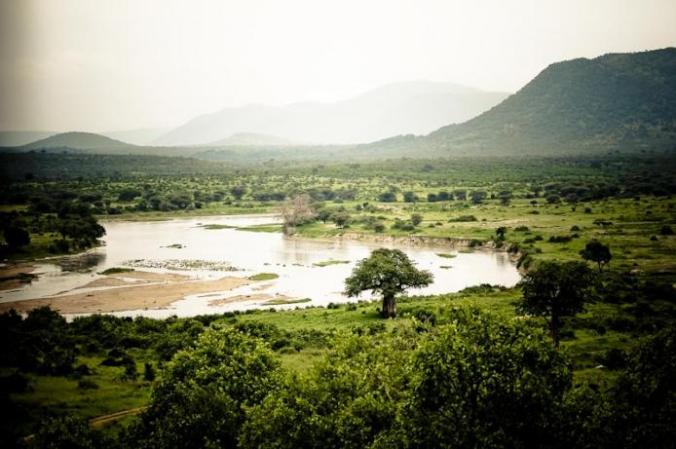
As Tanzania’s largest national park, Ruaha National Park boasts of untouched and unexplored ecosystems at the center of Tanzania. The 20,226 sq km park is the watershed between the Mzombe and the Great Ruaha rivers, with a distinctive escarpment, above which are large stretches of miombo woodland. Below lie undulating plains of dry bush country to treeless grasslands, swamps and evergreen forests, all with sand rivers intersecting through them. Continue reading

About The Roses

lueders-slide-odmi-jumbo

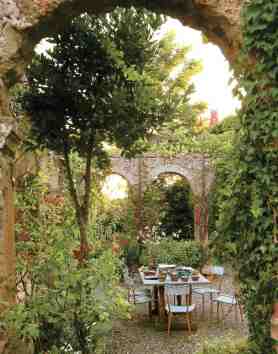
It is difficult to resist a story like this when you have recently completed a multi-year restoration.

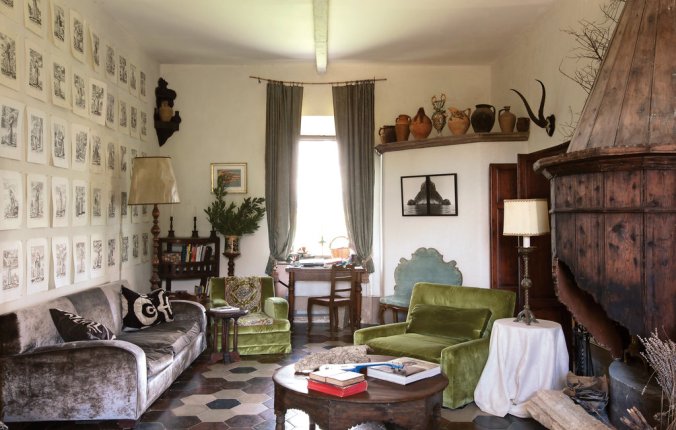
lueders-slide-vg4p-superjumboWhen it involves a former convent I have a particular reason to be interested. This article had me at the mention of Patmos, one of my favorite islands, but there is more. It is that cloister, with the rose garden seen in part in the photo to the right, that intrigues me. I have noticed that in European convents, the older the better, there are rose gardens that contain strains of rose that are difficult to find elsewhere. Presumably “antique” roses, they have a fragrance that is incomparable:

Restoring a Run-Down Convent in Tuscany

A mother-daughter duo brought back to life a centuries-old house in the countryside.

By

For 60 years, a 16th-century Franciscan convent designed by the Florentine architect Antonio da Sangallo the Younger, a creator of both the Palazzo Farnese and the Villa Madama in Rome, had existed in a state of abandoned decrepitude. Situated on the edge of the town of Pitigliano, in southern Tuscany, with vegetation engulfing its cloisters, the house had no electricity, almost no running water and no windows. It was exactly what the mother-and-daughter duo Holly Lueders and Venetia Sacret Young had been looking for: “the perfect ruin.” Continue reading

Down An Amazing Rabbithole

Yesterday’s post got us looking through the MacArthur Foundation’s website, and lots of worthy material there to investigate, including this news we missed a couple months back. In some ways the findings are intuitive, and maybe seem not surprising; but the scientific evidence of the challenges facing biodiversity on the planet are certainly useful for policy planning, not to mention strengthening our resolved commitment to entrepreneurial conservation:

screen-shot-2016-09-25-at-3-23-18-pmMost Biodiverse Countries Spending the Least on Conservation, Study Finds

biodiversity-200.jpg.580x580_q85.jpgCountries that contain most of the world’s species biodiversity are also spending the least on a per-person basis to protect these natural assets, according to a MacArthur-supported study by theWildlife Conservation Society and the University of Queensland. Countries near or in the tropics, where most of the world’s diversity is located, spent the least on biodiversity conservation. The report recommends engaging leadership of these countries and promoting conservation through existing social traits within cultures that do not currently prioritize conservation.  Continue reading

Beadwork Worthy Of A Genius

scott-intwined-neckpiecehi-res

Political beadwork.

We enjoy this time of year when the John D. and Catherine T. MacArthur Foundation “Genius” grants are awarded, since they invariably make for great reading, and usually great viewing or listening as well. Here is another one, thanks to Quartz for this summary and short profile to accompany the images of this recipient’s work:

Photos: The jewelry and sculptures about racism and sexism that earned Joyce J. Scott a MacArthur “genius” award

Lila MacLellan

A beaded necklace is an unlikely place to find a narrative about race, history, and slavery, says Lowery Sims, curator emerita at the Museum of Arts and Design (MAD) in New York. But that surprise factor is part of the allure of Joyce J. Scott’s art. “Technically it’s breathtaking, it’s intimate, it’s intricate—but it’s also a very powerful statement about the world and some of the issues we face as human beings,” Sims says. Continue reading

Beauty Is A Beast

3029

Culling could undermine the viability of the entire Norwegian wolf population, say conservationists. Photograph: Roger Strandli Berghagen

We love sheep, and sheep farmers, and shepherds, and wool, and so on. But we cannot read this without feeling more sympathy for the wolves, at this moment:

Norway’s wolf cull pits sheep farmers against conservationists

Norway’s recent decision to destroy 70% of its tiny endangered population of wolves shocked conservationists worldwide and saw 35,000 sign a local petition. But in a region dominated by sheep farming support for the cull runs deep

Elisabeth Ulven and Tone Sutterud in Oslo

Conservation groups worldwide were astonished to hear of the recent, unprecedented decision to destroy 70% of the Norway’s tiny and endangered population of 68 wolves, the biggest cull for almost a century. Continue reading

Better To Have Fizzled Than To Have Never Tried

20threlkeld-web1-master768

Hikers on Blencathra, in the Lake District in England. Two years ago, ramblers, climbers and hill-lovers banded together to try to buy the peak, but the effort has now fizzled. Credit Phil Moore for The New York Times

I admit to being partial to the idea of rewilding, as I have come to know about it, which I admit is limited; but with our bias for restoration of wildlife habitat clearly stated I find this story worth sharing:

In English Lake District, Tradition and Conservation Clash

By

THRELKELD, England — It was to have been a grand gesture, a deal that would transfer a mountain in the fabled English Lake District from the landed gentry to those who roam its heights, reversing a centuries-old pattern of ownership by the upper-crust few. Continue reading

Bring Back The Green!

allegheny_custom-5d30decc2d7e48cf9bd714983a1d1d5d45b3d014-s1100-c85

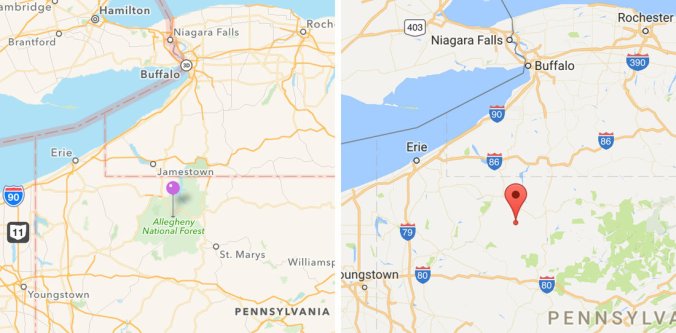
The Allegheny National Forest is absent from Google Maps (right) but displayed on Apple Maps (left). Apple & Google/Screenshots by NPR

We lose more than enough green in the real world, so when the cartographical world starts compounding the problem, we must shout in protest:

Where Did National Forests Go? Green Spaces Disappear From Google Maps

Erin Ross

If you looked at Google Maps this week, you might have noticed something strange: less green. Continue reading