A Pouncing Tradition

20160715_110556_zpsb3jygeqb

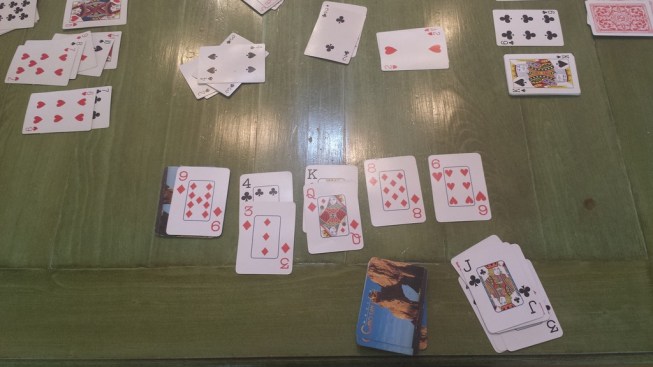
On one of my first days at Villa del Faro, the subject of card games came up during a dinner meal and my ears perked up. Everyone at the table seemed eager to learn a new card game so I pounced at the opportunity to share the story of the epic card game that I can confidently say characterizes a Toll family member.

In general terms, Pounce is like Solitaire but with three to five people playing all at once and playing on the same stack that you are trying to play out your cards toward. It’s a very fast-paced game that does not cater to the faint of heart. Continue reading

A Dawn Excursion Continued

The main building in dawn light

My last post on this topic involved the ocean, but the bulk of that morning earlier this week was actually spent out in the chaparral: scrubby, thorny, and sparse vegetation in the desert just outside of Villa del Faro. Right before I exited the property I spotted a black-tailed jackrabbit warily watching me as I descended the hill–these hares are a common sight on the side of the dirt coastal road out here.

Continue reading

A Tetra Pak Social Experiment

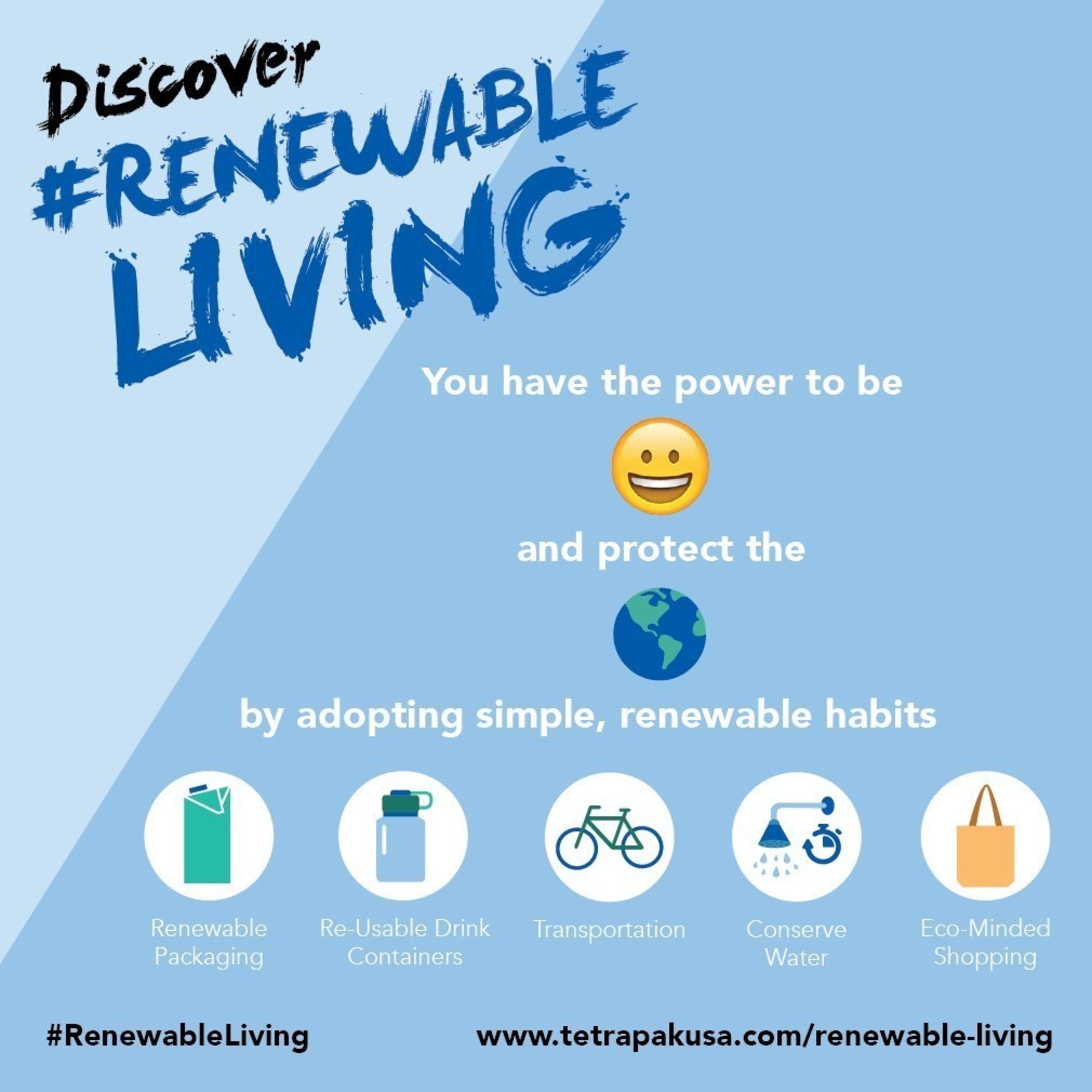
The packaging company Tetra Pak, perhaps best known for its milk cartons, is also dedicated to eco-efficiency and recyclability of its materials. Recently, they put together a study with the participation of ten women who maintain lifestyle blogs while also being mothers. Tetra Pak wanted to explore the sense of happiness that comes from practicing a small renewable habit every day, like using reusable bottles, choosing renewable product packaging, switching one outdoor habit to an indoor one, and others. Here are their key takeaway points from a white paper they released:

1. Start small and start now. Don’t over plan or procrastinate. Choose a habit you can change today and begin. Immediate, incremental changes can quickly become more automatic and result in increased happiness.

2. Cues are the key. Choose a behavior associated with a situational cue and make it more renewable.

3. Make a pact with yourself. Like a New Year’s resolution, commit to a goal and set out to achieve it. A personal contract may help to solidify the commitment, i.e. “When I encounter situation X, I will perform behavior Y.”

Continue reading

Museums, Things, Epiphanies

Reading the review, and the museum’s description of this show, I immediately thought of a museum that Amie and I had the chance to visit in Istanbul, which had been on our to-do list for some time; and the next click through the museum’s website led me to this:

THURSDAY 09/29 /16 7PM 

Orhan Pamuk in Conversation with Massimiliano Gioni

Which just seemed right because the museum in Istanbul was create by Orhan Pamuk. I will do my best to find a recording of this conversation, if they make a recording or transcript available and but for now the best I can do is direct you to the website of the museum in Istanbul which, hopefully, will lead you to the actual museum, easily the most moving museum experience of my life:

slider-1

The Museum of Innocence is both a novel by Orhan Pamuk and a museum he has set up. From the very beginnings of the project, since the 1990s, Pamuk has conceived of novel and museum together. The novel, which is about love, is set between 1974 and the early ’00s, and describes life in Istanbul between 1950 and 2000 through memories and flashbacks centred around two families – one wealthy, the other lower middle class. The museum presents what the novel’s characters used, wore, heard, saw, collected and dreamed of, all meticulously arranged in boxes and display cabinets. It is not essential to have read the book in order to enjoy the museum, just as it is not necessary to have visited the museum in order to fully enjoy the book. But those who have read the novel will better grasp the many connotations of the museum, and those who have visited the museum will discover many nuances they had missed when reading the book. The novel was published in 2008, the museum opened in Spring 2012.

Be sure that you read the explanation for this floor motif.
Reflections On Collecting Things

Museum.jpg

This exhibition, brought to our attention by a lengthy respectful review here, is the first time we have heard of this museum, but now that it is on our radar we stay tuned. This looks like our kind of show:

Object Lessons: The New Museum
Explores Why We Keep Things

Curators at the New Museum have created an exhibit with over 4,000 objects that examines the various ways we collect and own items.

By

We live in a sharing economy of collaborative consumption — services, not stuff. Crowdsourcing, peer-to-peer rentals like Airbnb: An interest, exemplified by millennials, in a temporary ownership of goods.

Apps, not objects. Continue reading

What Can Be Done with eBird Data?

Brighter colors indicate higher relative abundance. © Cornell University

The Western Tanager is a species I have yet to see, but which will be unmistakeable once I do, with the male’s red-and-orange head and bright yellow body contrasting with black wings striped with white bars. Based on the animated map above, I expect to spot some of them down in Baja California Sur by September or October, and I look forward to it. As I’ve written here before in the case of another moving map, citizen science makes this sort of illustrative prediction of a species’ moving presence possible, and it’s one of the reasons why I contribute to eBird as often as I can.

A paper titled “Using open access observational data for conservation action: A case study for birds” was published in the scientific journal Biological Conservation by a team of researchers at the Cornell Lab of Ornithology, several of whom I was just down the hallway from when I worked there. Although I haven’t gotten through their findings yet myself, Victoria Campbell chose nine interesting examples of how eBird data created tangible conservation in several countries.  Continue reading

A Fishy Excursion

img_9262_zps6rndumkn

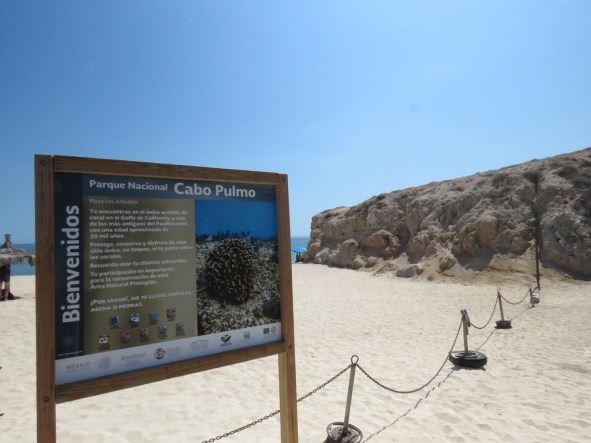
Thirty minutes north from Villa del Faro is a place called Los Arbolitos, which translates to “the little trees,” and is part of Cabo Pulmo National Park. I will just state from the beginning that this area does not have any trees, or small trees for that matter, only a sturdy watchtower on top of a sandbank that from a distance could perhaps look like the outline of a tree, and some scrubby bushes. Los Arbolitos is a small, secluded bay with crisp white sand and smooth crystalline waters, making it an ideal spot for snorkeling. Continue reading

Big Butterfly Count Coming Up in UK

Photo from bigbutterflycount.org

Starting this Friday and continuing through the first week of August, the largest survey in the world for butterflies and day-flying moths will take place in the United Kingdom. We’ve featured lepidopterists and citizen scientists here before, including today and for last year’s event, which involved over fifty thousand people counting more than half a million lepidopterans.  It’s great to see such a simple yet complete chart/app to ID the more common butterflies that people may encounter –– I would have really appreciated something like that for Costa Rica! Read more about the project below:

Why count butterflies?

Butterflies react very quickly to change in their environment which makes them excellent biodiversity indicators. Butterfly declines are an early warning for other wildlife losses.

That’s why counting butterflies can be described as taking the pulse of nature.

Continue reading

And In Other Office Space News

GoogleHQ

After this post reflecting on one big architectural adventure, somehow not too surprising that another related news story pops up almost immediately. Is it an arms race or an incredible burst of creativity that will have a positive impact beyond the companies involved?

Google may get its futuristic new campus after all

After a property swap with LinkedIn

By Nick Statt

Google’s grand plans for a futuristic new campus in the North Bayshore district of Mountain View, CA may finally become a reality thanks to a new real estate deal struck with LinkedIn. According to the Silicon Valley Business Journal, the two tech companies came to an agreement on a property swap that puts to rest a longstanding feud over lucrative current and unused square footage in Silicon Valley. Google paid $215 million for the swap, while LinkedIn paid $331 million, the report states. Continue reading

Expeditions In The Interest Of Science (Secondary Discovery, Nature’s Majesty)

p03xtfz4

The survey crew inventories the park for butterfly habitats (Credit: John McLaughlin)

This BBC article, featuring butterfly hunters in the very northwestern-most spot in the lower 48 of the USA, reminds us of an expedition we tracked not long ago:

Equal parts academic and mountain man, wildlife biologist John McLaughlin has scaled mountains and traversed snowbound passes to identify more than 40 butterfly species.

It’s best to bring an ice axe when counting butterflies in North Cascades National Park. Located on the Canadian border in the US state of Washington, the park is renowned for its jagged peaks, limited trails and annual snow pack.

“Before my census crew could learn to identify over 40 butterfly species,” John McLaughlin recalled, “they had to know how to safely traverse snowbound, steep passes and – if necessary – to self-arrest using an ice axe.” Continue reading

Dawn Rays at Villa del Faro

Yesterday morning I got up early to see the sun rise from the balcony at the hotel, and was pleased to see the full golden orb rise from the watery horizon to the east. While facing the ocean, I heard some distant slaps, like someone smacking their palm against the surface of the water, and looked across the kilometer or so (less, most likely) between the balcony and the shore to see some rays––eagle rays, I think––leaping out of the water, but also just poking the tips of their “wings,” or side fins, into the air without leaving the waves themselves.

Continue reading

Food Waste, Remarkably Grotesque

5451

Discarded food is the biggest single component of US landfill and incinerators, according to the Environmental Protection Agency. Photograph: Alamy

We have known for some time the problem is serious, and we are always looking for counter-balancing stories that also highlight solutions. And we are constantly learning more details on just how serious the problem is getting; in short, worse rather than better. Now, new words come to mind. Grotesque is probably the most appropriate (thanks to the Guardian’s ongoing attention to this problem):

The demand for ‘perfect’ fruit and veg means much is discarded, damaging the climate and leaving people hungry

Americans throw away almost as much food as they eat because of a “cult of perfection”, deepening hunger and poverty, and inflicting a heavy toll on the environment.

Vast quantities of fresh produce grown in the US are left in the field to rot, fed to livestock or hauled directly from the field to landfill, because of unrealistic and unyielding cosmetic standards, according to official data and interviews with dozens of farmers, packers, truckers, researchers, campaigners and government officials.

Continue reading

Almond Versus Cow Versus?

RippleAt first, the name does not help me think anything useful. I do not only mean the name of the contents of the bottle; I mean the brand name on the bottle. So I am showing only the information side of the label. Looks like milk inside. Good start.

If you compare it to almond milk, this one has 8 times the protein. If you compare it to 2% cow milk, this one has half the sugar and 50% more calcium; plus 32mg DHA Omega 3’s Vitamin D & Iron. If this were an advertisement I would face the bottle forward, but it is more an appreciation of how products like this come to be. I like startup stories and particularly the stories of co-founders of startups (which is why I have been listening to this podcast). According this company’s website:

Neil and Adam are committed to making a difference. Adam created Method to bring the world sustainable, beautiful cleaning products. Before trading in his lab coat to start Continue reading

Largest Lithium-ion Storage Battery for L.A.

Downtown Los Angeles and the San Gabriel Mountains via Wikimedia Commons

Our posts about solar power normally include some mention of the batteries involved, since that’s where the electricity is stored for actual domestic or commercial use. Lithium-ion batteries in particular are some of the more powerful ones on the market, but sustainable options are on our radar too. This week, we learned about the proposal for a set of over 18,000 lithium-ion batteries to be put together as a super-battery in Los Angeles to meet peak demand. John Fialka reports for Scientific American:

By 2021, electricity use in the west Los Angeles area may be in for a climate change-fighting evolution.

For many years, the tradition has been that on midsummer afternoons, engineers will turn on what they call a “peaker,” a natural gas-burning power plant In Long Beach. It is needed to help the area’s other power plants meet the day’s peak electricity consumption. Thus, as air conditioners max out and people arriving home from work turn on their televisions and other appliances, the juice will be there.

Continue reading

Ginseng Memories

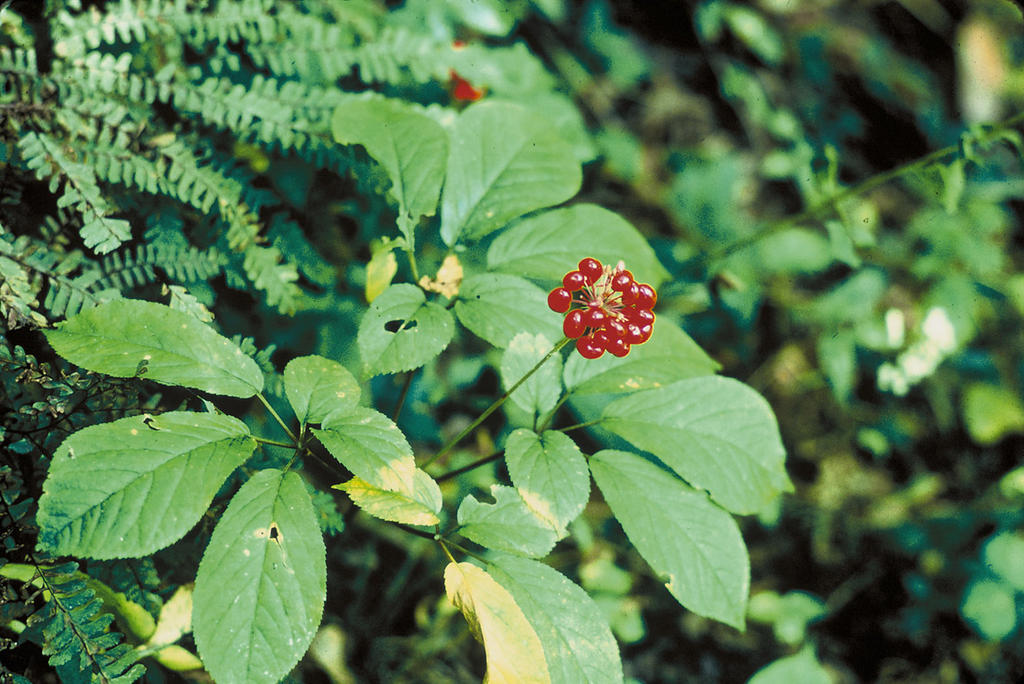
Ginseng with berries. Photo by US FWS via Wikimedia Commons

We first heard of ginseng in the New Yorker, where Burkhard Bilger wrote an article titled “Wild Sang” that explored the history of ginseng hunting and the very modern efforts to protect remaining plants from poaching in the Smoky Mountains. This week in Cool Green Science, the nature writer and conservationist Hal Herring reflects about his own personal experiences hunting ginseng in Alabama, and thinks about the future of the root:

I grew up in the flat-topped foothills of the Cumberland Mountains in north Alabama, and my mother was a student of wild herbs, wildflowers, and native medicinal plants. On my desk right now is a book called Tales of the Ginseng that my parents gave me for my twelfth birthday in 1976. It is a book of collected lore, of Manchurian folktales, of kings who become ginseng roots, of ginseng plants that withdraw, just ahead of the digger, to lure them into a deep-earth spirit-world from which they never return.

Continue reading