Endangered Natural History

The Spectrum of Life, at the American Museum of Natural History, an evolutionary trip through the amazing diversity of life on Earth. Credit Matthew Pillbury/Benrubi Gallery

We’ve said often that we’re die-hard supporters of natural history museums before, and even quite recently. So it’s nice to see yet another article championing the role these institutions can have in scientific discoveries, education, and more. Here’s an op-ed in last Sunday’s New York Times by Richard Conniff, highlighting some threats to some US museums:

When people talk about natural history museums, they almost always roll out the well-worn descriptive “dusty,” to the great exasperation of a curator I know. Maybe he’s annoyed because he’s spent large sums of his museum’s money building decidedly un-dusty climate-controlled storage sites, and the word implies neglect. (“Let me know,” the curator advises by email, “if you want to hear me rant for an hour or so on this topic.”)

Worse, this rumored dustiness reinforces the widespread notion that natural history museums are about the past — just a place to display bugs and brontosaurs. Visitors may go there to be entertained, or even awe-struck, but they are often completely unaware that curators behind the scenes are conducting research into climate change, species extinction and other pressing concerns of our day. That lack of awareness is one reason these museums are now routinely being pushed to the brink. Even the National Science Foundation, long a stalwart of federal support for these museums, announced this month that it was suspending funding for natural history collections as it conducts a yearlong budget review.
Continue reading

Interview with a Jurassic Park Paleobiologist

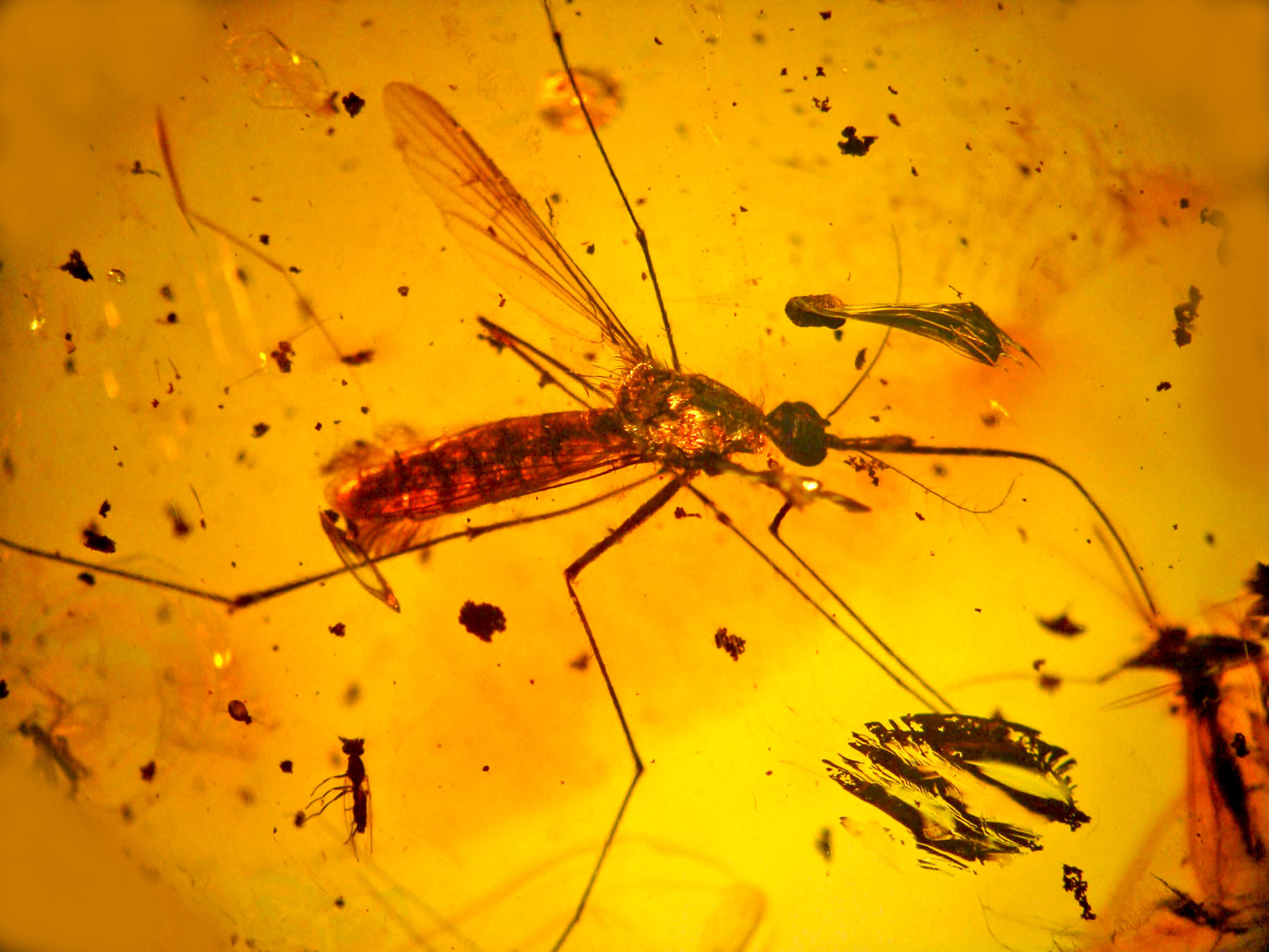
An elephant mosquito from Poinar’s collection. Photo by George Poinar, Jr. via Science Friday.

Many of our readers have likely read or watched Jurassic Park, or one of the sequels of the film, and know that the DNA for the fictionally first-recreated dinosaur came from the blood sample within a giant mosquito trapped inside prehistoric amber. Well, Michael Crichton actually got this idea from a true scientific discovery, although it didn’t revolve around dinosaurs. We’ve discussed de-extinction on the blog before, and actually featured the paleobiologist referred to in this post’s title a couple months ago. Now, Chau Tu at Science Friday has interviewed the scientist, George Poinar, Jr., regarding his experience working with amber-clad specimens from millions of years ago, his thoughts on de-extinction, and more:

Poinar would find, among other specimens, the oldest known bee, the first known bat fly fossil, and the most complete flower from the Cretaceous Period. And just this past February, he co-authored a paper in Nature Plants describing a new species of neotropical flower found in amber from the mid-Tertiary Period.

Science Friday recently spoke with Poinar, 79, now a courtesy professor in the Department of Integrative Biology at Oregon State University, about what led him to investigate specimens trapped in amber, his thoughts on de-extinction, and his inspirations.

Continue reading

Threats to Monarch Butterflies and How We Can Help

A Monarch butterfly caterpillar feeding on the leaves of a milkweed plant. Photographed at the Grapevine Botanical Gardens. Photo © TexasEagle/Flickr through a Creative Commons license, via TNC

We’ve covered monarch butterflies plenty of times in the past, whether it was reporting survey results showing that many households in the US would pay to help create habitat for the species, showcasing a citizen science project by the Xerces Society to count the winged invertebrates during their migration, or simply highlighting the needs of the orange butterfly in general and how to become involved. Now, given increased media coverage of the Monarch, the Cool Green Science blog for The Nature Conservancy is summarizing hazards and helpers of the species:

Twenty years ago, monarch butterflies occupied so much area in Mexico during the winter you could see it from space. It totaled about 20 hectares, or almost 50 acres, with millions if not billions of butterflies clinging to trunks and branches of trees.

Today, that area is around 4 hectares. The previous year had 1.1 hectares, says Brice Semmens, Assistant Professor at the Scripps Institution of Oceanography at the University of California San Diego.

Semmens was the lead author on “Quasi-extinction risk and population targets for the Eastern, migratory population of monarch butterflies” published recently in the journal Scientific Reports. It is one paper in a long line of sobering butterfly news.

Continue reading

Meander


Welcome! Walk barefoot in the sand…you know you want to!

Stroll through the meandering pathways and wander past curated views of trees rustling in the wind.

Fundamentally, Xandari Pearl is an invitation to relax and rest, pearl-like, in the arms of curved walls, to the lullaby of the sea.

Come see for yourself…


Digiscoping in the Tropics

IMG_20160328_161007193_zpsc015qsss

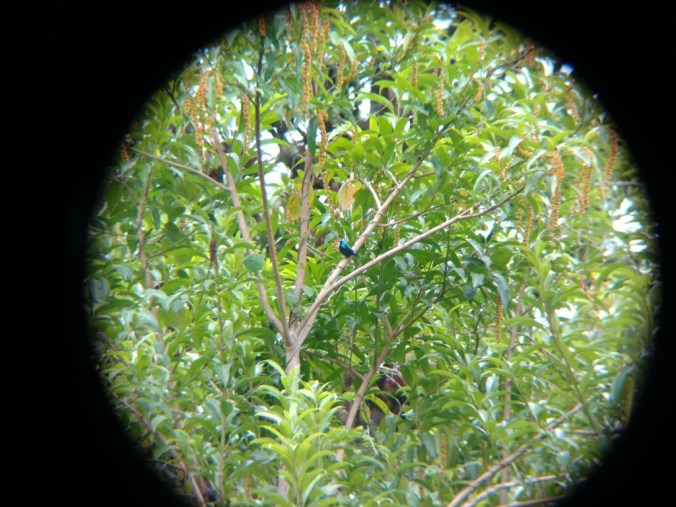
A male Scarlet-thighed Dacnis before zooming in with the camera in the digiscope setup

The first time I digiscoped, I wasn’t aware of the term, and I was using a small, borrowed point-and-shoot camera with a guide’s spotting scope. The results ended up here on the blog, though the images are, in retrospect, fairly low quality. In certain cases, however, digiscoping–basically the pairing of a scope with a camera for photography–can yield quite good shots of wildlife, and is arguably more versatile than having a big camera with a telephoto lens attached. Just check out Sharon Stiteler’s photos in her digiscoping article on Audubon’s webpage last year, or simply look up “digiscoping birds” to find some stunning images. Note, however, that digiscoping almost always refers to using a scope, or, in other words, a high-end piece of optic technology that costs anywhere between $400 and $3000–and that’s without the tripod.

This slideshow requires JavaScript.

Continue reading

Biodiversity May Protect Against Wildfires

Photo of a Southern brown bandicoot by John O’Neill via Wikimedia Commons.

New research in Australia’s forests and bushlands indicates that terrestrial biodiversity–or more precisely, a higher number of different mammal species–can help prevent wildfires given the way the critters alter their ecosystem. We’ve heard about different creative management options for fires before, and we care deeply for biodiversity preservation efforts, so this seems like one of those win-win scenarios if it can be implemented. Jason Goldman reports for UW’s Conservation Magazine on research published in Animal Conservation:

One factor leading to increased wildfire susceptibility might be surprising: biodiversity loss. In particular, the extinction of small, ground-dwelling mammals may prime Australia’s bush to burn.

Wildfires certainly threaten biodiversity in some cases. According to the IUCN, 179 mammal, 262 bird, 146 reptile, 300 amphibian, and 974 plant species can count wildfire (and fire suppression) among their existential threats. More wildfires means less wildlife, even accounting for the many ecosystems that are already fire-adapted. But according to a new study published in the journal Animal Conservation, it works the other way around too.

Matt Hayward, a conservation ecologist at Australia’s Bangor University and the Australian Wildlife Conservancy, argues that restoring biodiversity could reduce the likelihood of a wildfire starting—or of spreading rapidly once it’s begun.

Continue reading

Ornithological Climate Change Indicators

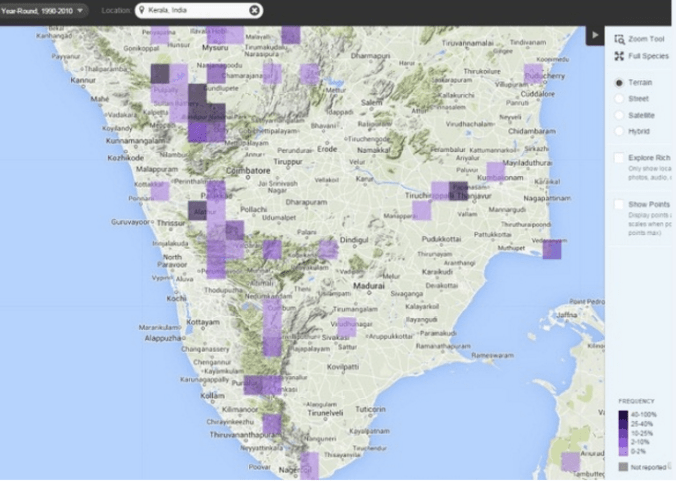
Map showing peafowl-sightings between 1990-2010 (Source: Cornell Lab of Ornithology and the National Audubon Society)

Map showing peafowl-sightings between 1990-2010 (Source: Cornell Lab of Ornithology and the National Audubon Society)

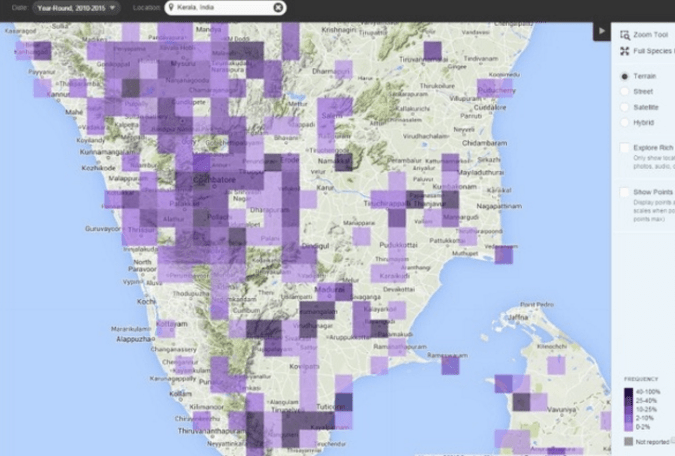
Map showing peafowl-sightings in Kerala between 2010-2015 (Source: Cornell Lab of Ornithology and the National Audubon Society)

Map showing peafowl-sightings in Kerala between 2010-2015 (Source: Cornell Lab of Ornithology and the National Audubon Society)

Few of our readers will fail to notice that eBird and Citizen Science are important elements of the RAXA Collective DNA. Stories related to Kerala and the state’s healthy birding population are equally on our radar.

The folks at India Climate Dialogue recently turned to eBird observations to document changes in climate patterns in Kerala, an important watershed state for the Indian subcontinent using peafowl population as one of the indicators. Especially during mating season, the birds find it difficult to move their trailing feathers in areas of dense foliage, so they’re attracted to drier climactic areas. The eBird data above illustrates their movement into Kerala, meaning more areas are opening up.

High heat in February-March is not unusual in Kerala, and in reality it is this heat trough that pulls the monsoon from Indian Ocean into the Indian subcontinent. The heat epicentre heralds the monsoon and runs like a pilot car through the peninsula, taking the same path that the southwest monsoon will follow a few months later. Since the southwest monsoon starts from the coast of Kerala, it is the state that has to feel the heat first, so that pre-monsoon showers start in May and the monsoon arrives in June. Continue reading

Boquete and Barú

waterfall_zpszydkbpmv

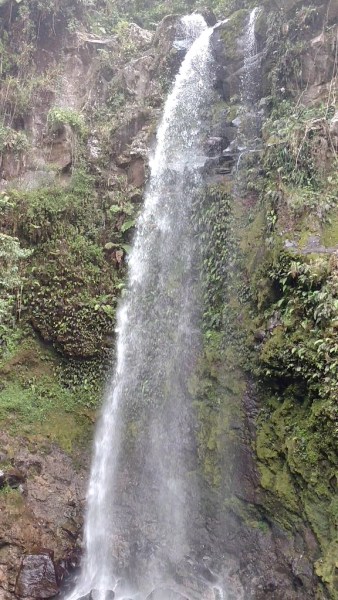
The first waterfall on the Lost Waterfalls Trail

During Easter weekend, I took an eight-hour bus ride from San José, Costa Rica to David, Panama, and then a 45- to 60-minute bus ride from David to Boquete, a mountain town in the foothills of Barú, Panama’s only volcano and the country’s highest peak at 3,474 meters above sea level. Barú Volcano National Park is adjacent to the international park that Costa Rica and Panama share, called La Amistad (The Friendship), though it is far smaller than La Amistad, at around 14,000 hectares compared with 207,000. I was joined on the four-day weekend trip by my friend and coworker, Jocelyn, who had never been to Panama before, and we enjoyed hiking the conservation areas above the town of Boquete, admiring the many waterfalls in the region and also looking for the high-elevation bird species native to the cloud forest, many of which are endemic to Costa Rica and western Panama, as I wrote in my previous volcano-related post.


IMG_20160327_140448935_HDR_zpsjgqp1kax

In addition to the national park, which charges $5 for entrance and has two main trails (one to the peak of the volcano, which takes about five hours to ascend, and one across the forest and part of the mountain ride, called Sendero Los Quetzales), there are some private forest reserves that charge a small admission fee. One is called the Lost Waterfalls Trail, which features three cascades and costs $7; another is called the Pipeline Trail, which follows a series of water tubes to the source and costs $3.

Continue reading

Medicine Crow, Last War Chief of his Tribe, Dies at 102

Barack Obama reaches around the headdress of chief Joseph Medicine Crow to place a 2009 presidential medal of freedom around his neck. Photograph: Alex Brandon/AP/The Guardian

The history and rights of Native Americans in the United States have held interest for us over the years, with our last story mentioning a tribe being early last month, in reference to buffalo hunting near Yosemite. Yesterday, the great Crow tribe historian, war chief, and historian Joseph Medicine Crow, who was also a second world war veteran, a holder of the presidential medal of freedom, and a nominee for the congressional gold medal, passed away at 102 years old. Aisha Gani reports for the Guardian:

Medicine Crow, who was raised by his grandparents in a log house in a rural area of the Crow Reservation near Lodge Grass, Montana, wore his war paint beneath his second world war uniform.

As a child, Medicine Crow listened to stories about the Battle of Little Bighorn – the conflict that pitted federal troops led by Lt Col George Armstrong Custer against native Lakota Sioux and Cheyenne warriors. He translated for his great uncle, White Man Runs Him, when white reporters came to interview him about the battle, and would go on to become a lifelong emissary between the Crow community and white Americans.

Continue reading

Fighting Food Fraud

foodfraud_custom-b67f54921c2a663e3c5857d50ecc0a5e732a7c5c-s1400-c85.jpg

Food fraud is a common issue all over the world. Inspectors of veterinary services and fraud inspect seafood products at the Rungis international market, located near Paris. Martin Bureau/AFP/Getty Images

In just under four minutes, this story (National Public Radio, USA) gives a cogent briefing on one dimension of food transparency, a topic commonly addressed in these pages:

If you’ve been following any of the big news stories on food fraud lately — you’ll know that it’s tough to know what exactly is in our food — and where it’s been before it makes onto our dinner plates.

Earlier this year, Wal-Mart was sued for stocking tubs of Parmesan cheese that contained wood pulp filler. Olive oil is often mixed with sunflower oil and sold as “extra virgin.” And you might recall the great European horse meat scandal of 2014: Traces of horse meat were found in Ikea meatballs and Burger King beef patties, in cottage pies sold at schools in Lancashire, England, and in frozen lasagna sold all over Europe.

And that’s “just the tip of the iceberg,” says Chris Elliott, the founder of the Institute for Global Food Security, a laboratory in Northern Ireland that tests food from all over the world in order to uncover fraud. Continue reading

Sumatran Rhino Siting In Borneo

2rhino_750-copy.jpg

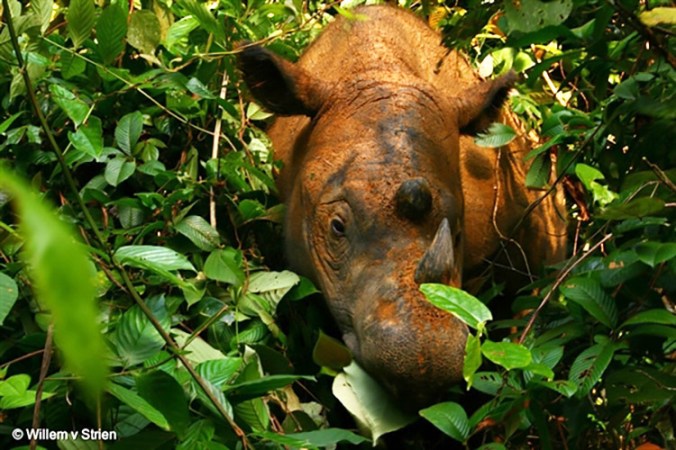
A rhino in the Sumatran Rhino Sanctuary in Way Kambas National Park, Indonesia (2008). Photo credit: Willem v Strien / Greenpeace

Thanks to EcoWatch for this remarkable news:

An excited World Wildlife Fund (WWF) team released details of how the female rhino was safely captured in East Kalimantan (part of Indonesian Borneo) last month and has now been transported to a more protected region. Over the last few years, evidence from camera traps and footprints has indicated that these rhinos still survived in Borneo’s forests, but this is the first known encounter with a live animal since the early 1970s. Continue reading

Strange Brew

160404_r27913-690

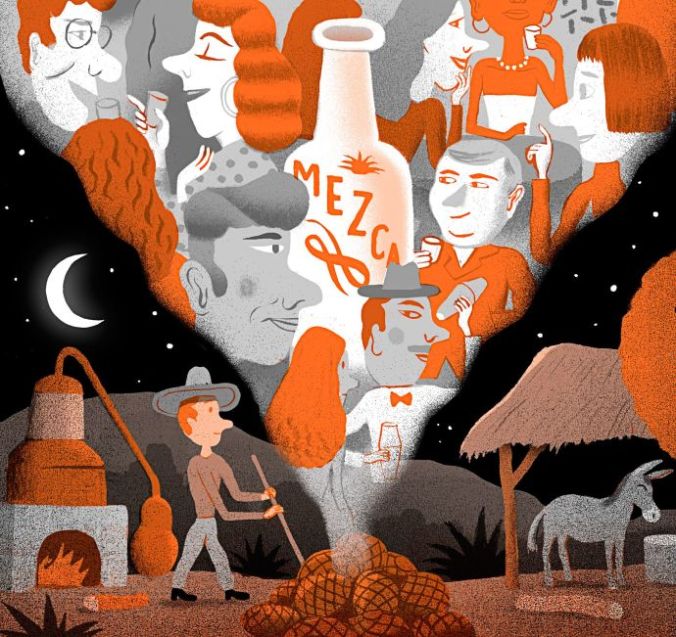
“Mezcal makes you cry, sing, dance, hug the neighbor you just met an hour ago.” ILLUSTRATION BY BJORN LIE

One more gem from the magazine issue that most recently also brought you this, and this:

Mezcal Sunrise

Searching for the ultimate artisanal distillate.

BY DANA GOODYEAR

Bricia Lopez is the mezcal queen of Los Angeles. Five years ago, Lopez, who is thirty-one and imposingly savvy, persuaded her father to let her build a mezcal bar at Guelaguetza, the restaurant that he opened when the family moved north from Oaxaca, a center of mezcal culture, in the mid-nineties. He didn’t know if Americans would like mezcal, or if Mexicans would admit that they did. But he decided to trust Bricia, and she focussed her offerings on premium mezcals—high proof, small lots, no worm. At that point, there were only a handful of brands on the market. Since then, mezcal imports have spiked, and labels have proliferated. Lopez now carries thirty. When I visited her at the bar the other day, she was in the midst of a renovation, doubling its size. Continue reading

Architectural History, Revised

Screen Shot 2016-04-03 at 8.17.32 AM

Thanks to the Guardian for this unexpected revision to our architectural history–click above to go to a four and a half minute video explaining:

Fifty-seven years after Jørn Utzon commissioned the work, a 6.5-square-metre wool tapestry by the Swiss-French architect, designer and painter Le Corbusier has been finally unveiled in its intended home. Jan Utzon (the son of Sydney Opera House architect Jørn Utzon), Lasse Andersson (Head of Exhibitions, Utzon Center) and others reveal the untold story of a collaboration between two of the 20th century’s greatest architects, for one of the 20th century’s greatest buildings

Not A Cute Cat Video

Screen Shot 2016-04-02 at 5.57.51 PM

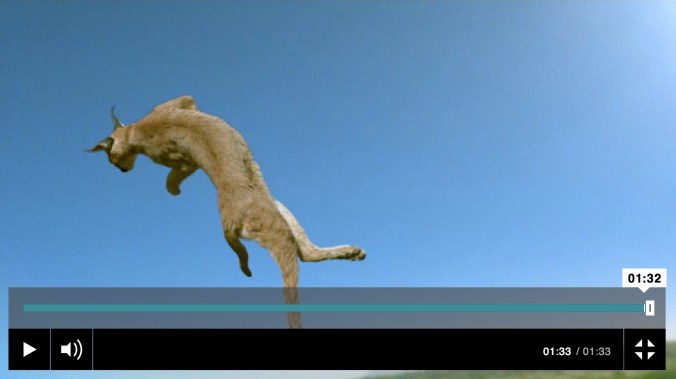
It is science, folks. Thanks to BBC Earth, here we ask for a minute and a half of your time in the interest of understanding exactly how cats do what they do. As we see it, this may translate into your future action in the interest of conservation of their natural habitat (the wild cats, of course, not the backyard bird-eating domestic variety):

How do cats always land on their feet?

This cat not only defies gravity but lands again safely and it all happens in less than a second

Caracals are expert bird hunters, capable of catching them in mid-flight with incredible leaps. Continue reading

Waste Not, Want Not Tiger Habitat

4047

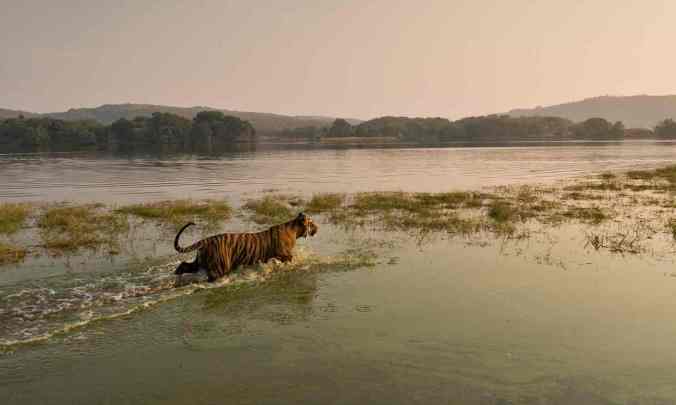
A tiger wades into the waters of Raj Bagh lake in Ranthambhore tiger in Rajasthan, India. Conservationists warn ‘tiger corridors’ connecting habitats across Asia are crucial for the survival of the species. Photograph: Aditya Singh/Alamy

From today’s Guardian in the Environment section, some welcome news on one of our most posted-on topics:

Forests still large enough to double the world’s tiger population, study finds

Satellite maps show tiger habitat is being lost but still adequate for meeting international goal of doubling tiger numbers by 2022

Forests that harbour tigers are being lost but are still large enough to take double the world’s tiger population in the next six years, according to a study using new satellite mapping technology. Continue reading