
Thattekkad Bird Sanctuary, Kerala
Thattekkad Bird Sanctuary, Kerala

Group of volunteers for the community clean-up on September 20th.
In spite of the daily downpours that mark the true beginning of the rainy season (and might discourage certain outdoor activities), September has been an eventful month to say the least. Costa Rica celebrated its 194th anniversary of national independence on the the 15th and the preparations at Xandari and around the country leading up to the date were very visible and audible. At the beginning of the month a few of us decorated the lobby and restaurant areas with red, white and blue streamers and ribbons, national flags, and historic photographs. Given the variety of colorful paintings and ornaments that already adorn the lobby and restaurant areas, we were cautious not to be unnecessarily generous with the patriotic decorations – so as not to over-excite the sensibility of the guests of course! Continue reading

The African baobab, though, is most widely distributed both in its home continent and in the neo-tropics where enslaved Africans were brought to work. PHOTO: Gavin Evans
In the French novella The Little Prince, the titular prince comes from a very small asteroid planet called B612 where soil is full of baobab seeds. He tells the author that if left to grow, the baobabs would become so numerous and huge that they could make the little planet explode.On Earth, though, baobabs are quite the opposite. Anyone living in Africa where baobabs grow to enormous sizes would be able to tell you about the numerous benefits the trees provide for humans and animals.They would probably describe the marvellous generosity of its trunk and its hospitality to many creatures, and extol the hardy and light fruit pod with its deliciously powdery pulp and nutritious seeds that remain fresh and edible over long periods of time.
But there is a mystery to baobabs, as they are also found in India. How did they get there?

Traditional temple gardens, called Nandavanam, are strewn along the banks of the river Tamaraparani that originates in the Western Ghats, India. Each is attached to one of the 150-odd temples in the region, some as old as 1,000 years. PHOTO: Scroll
Sacred texts are guides to living while temples and the religious community teach a thing or two about what has been and what will be. But do temple gardens move beyond their aesthetic value and stand for something greater? Yes, their valuable insights into living ecosystems.
Some of these old surviving forest patches are invaluable when it comes to shining a light on what a forest might have been like in the area several thousand years ago, like a relic to an ancient civilisation. Considering the Indian government’s rapid march towards creating new forests to combat deforestation, sacred groves, their histories and regeneration can be a blueprint to such plans. “In short, one could say sacred groves provide a small window into an ecosystem’s past,” said Osuri. “They might even provide a source population and a reference library.”

The Stanford Encyclopedia of Philosophy now contains nearly 1,500 entries, and changes are made daily. (Installation by Marcos Saboya and Gualter Pupo. Photo by Reuters/Olivia Harris)
The Internet is a goldmine of information, yes. In a parallel dimension, it lags in providing authoritative, rigorously accurate knowledge, at no cost to readers. The Stanford Encyclopedia of Philosophy has changed all that, beginning two decades ago.
The story of how the SEP is run, and how it came to be, shows that it is possible to create a less trashy internet—or at least a less trashy corner of it. A place where actual knowledge is sorted into a neat, separate pile instead of being thrown into the landfill. Where the world can go to learn everything that we know to be true. Something that would make humans a lot smarter than the internet we have today.

Pucusana, Peru
This July we shared the first news we had of the proposed western wildlife conservation plan as it related to the sagebrush habitat, and yesterday Sally Jewell, the Secretary of the Interior, announced that the US Fish and Wildlife Service has determined that the charismatic bird species will not be placed on the endangered species list due to the collaborative efforts in place to protect “the great empty.”
Here’s what John Fitzpatrick, director of the Cornell Lab of Ornithology, had to say on the matter:
This decision by USFWS is an important milestone in the history of the Endangered Species Act. It shows how the Act can be effective, not only when it calls for emergency regulations to save a species, but also as an incentive for governments, conservation groups, and private landowners to collaborate towards conserving a species before its populations become critically endangered. To all of those in the West who are working together, amidst so much controversy, to preempt a listing through proactive conservation, we say, ‘Great progress so far–please stay the course.’
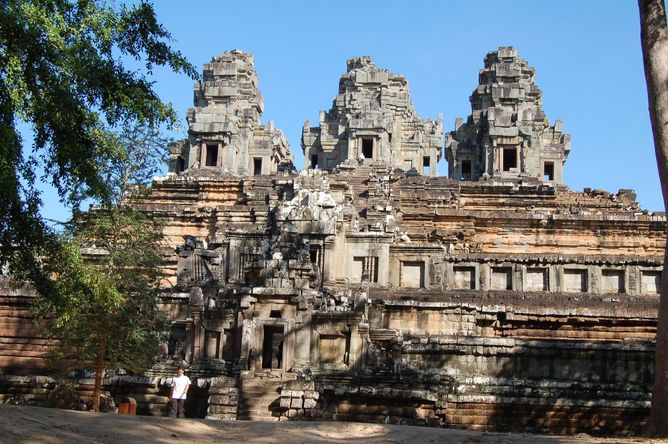
Ta Keo temple in Angkor, Cambodia. Source : China, Singapore, CC BY-SA
The idea of creating an international movement for protecting heritage emerged after World War I. The 1972 Convention concerning the Protection of the World Cultural and Natural Heritage developed from the merging of two separate movements: the first focusing on the preservation of cultural sites, and the other dealing with the conservation of nature. But what comes with the World Heritage tag?

Caritra Rama, in romanised Malay with many Javanese elements, copied at Surabaya in February 1812. PHOTO: British Library, MSS Malay D 7, f. 5r (detail).
The epics of Ramayana and Mahabharata find their meaning and origin on Indian soil but their reach goes beyond the subcontinent. And the British Library’s archives find evidences of these in Malay literary traditions.
The great Indian epics the Ramayana and Mahabharata were known throughout Southeast Asia, but it was the Ramayana that most profoundly influenced Malay literary tradition. One of the oldest Malay manuscripts in a British collection is a copy of the Hikayat Seri Rama in the Bodleian Library, Oxford, which bears the ownership inscription of Archbishop Laud dated 1633. The British Library holds a manuscript of Caritra Rama, “The story of Ram”, in romanised Malay, which was copied in Surabaya in 1812.

Bokkapuram, Tamil Nadu
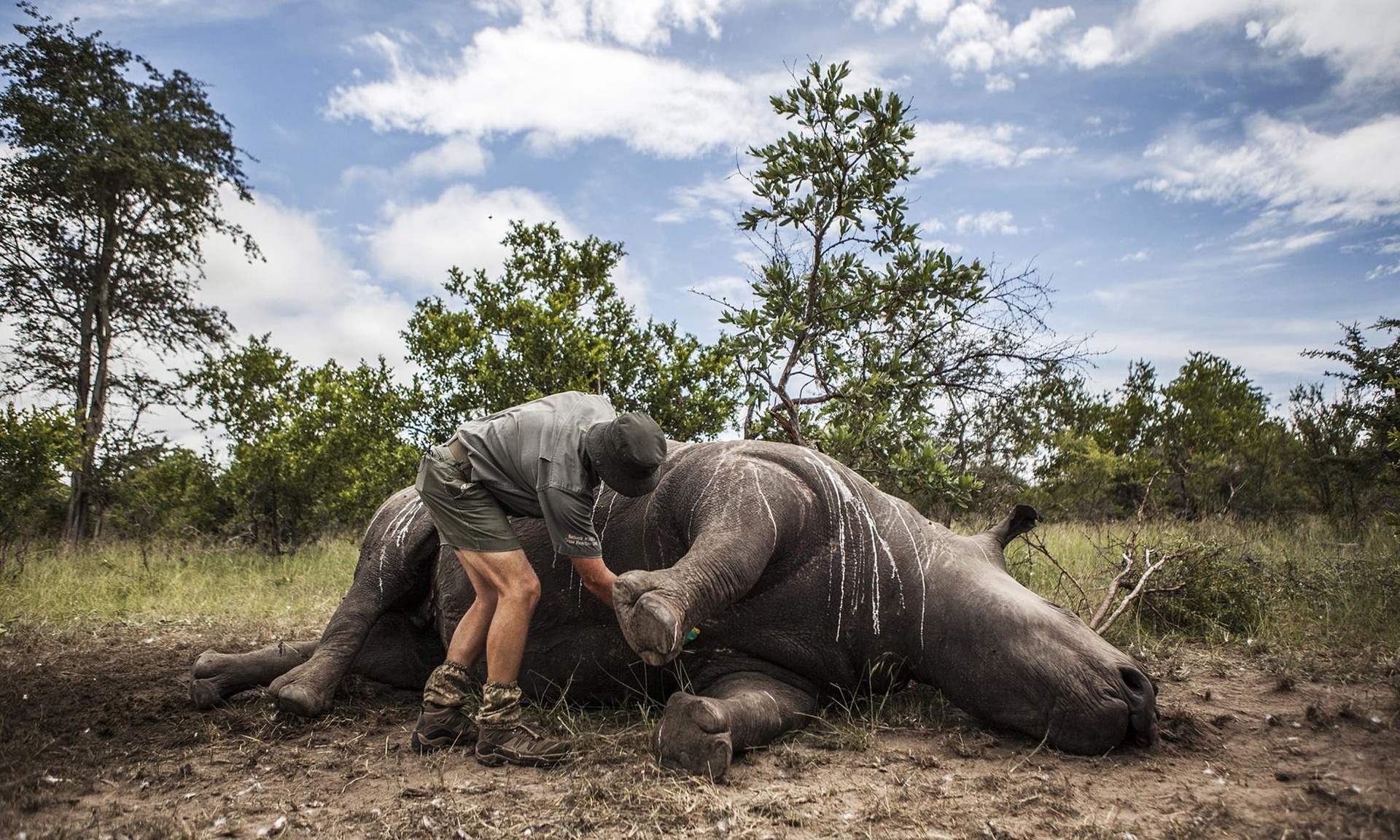
An investigator prepares the carcass of a rhino killed for its horn for postmortem in the Kruger national park. PHOTO: Salym Fayad/EPA
Today is World Rhino Day. It celebrates all five species of rhino: Black, white, greater one-horned, Sumatran and Javan rhinos and was first announced by WWF-South Africa in 2010. South Africa is home to over 70 percent of African rhinos, the endangered species whose number dropped sharply to under 20,000 due to rampant poaching. Poaching has become the leading threat to the rhinos’ survival, with official statistics indicating 1,215 rhinos were killed for their horns in South Africa in 2014.
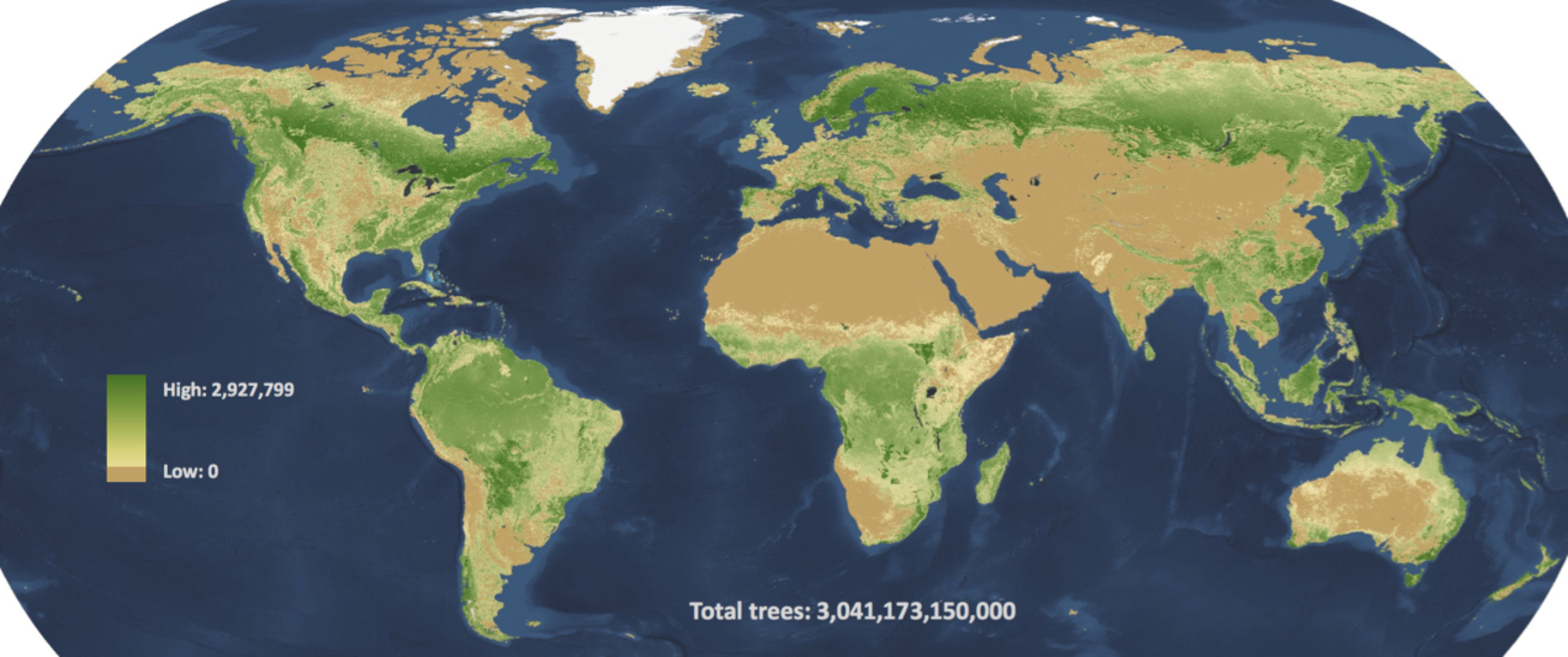
Three trillion trees, mapped to the square kilometre. Source: Crowther et al / Nature
Three trillion trees live on Earth, but there would be twice as many without humans. Each year more than 15 billion trees are lost worldwide, according to a major new study. Previous estimates for the total number of trees on Earth have been much lower. The new study is important not only because it gives a higher number, but how it was produced. As well as using remote sensing data such as images taken by satellites that can classify land type, the research also integrated 429,775 ground-based assessments of tree density.

Nainital, Uttarakhand
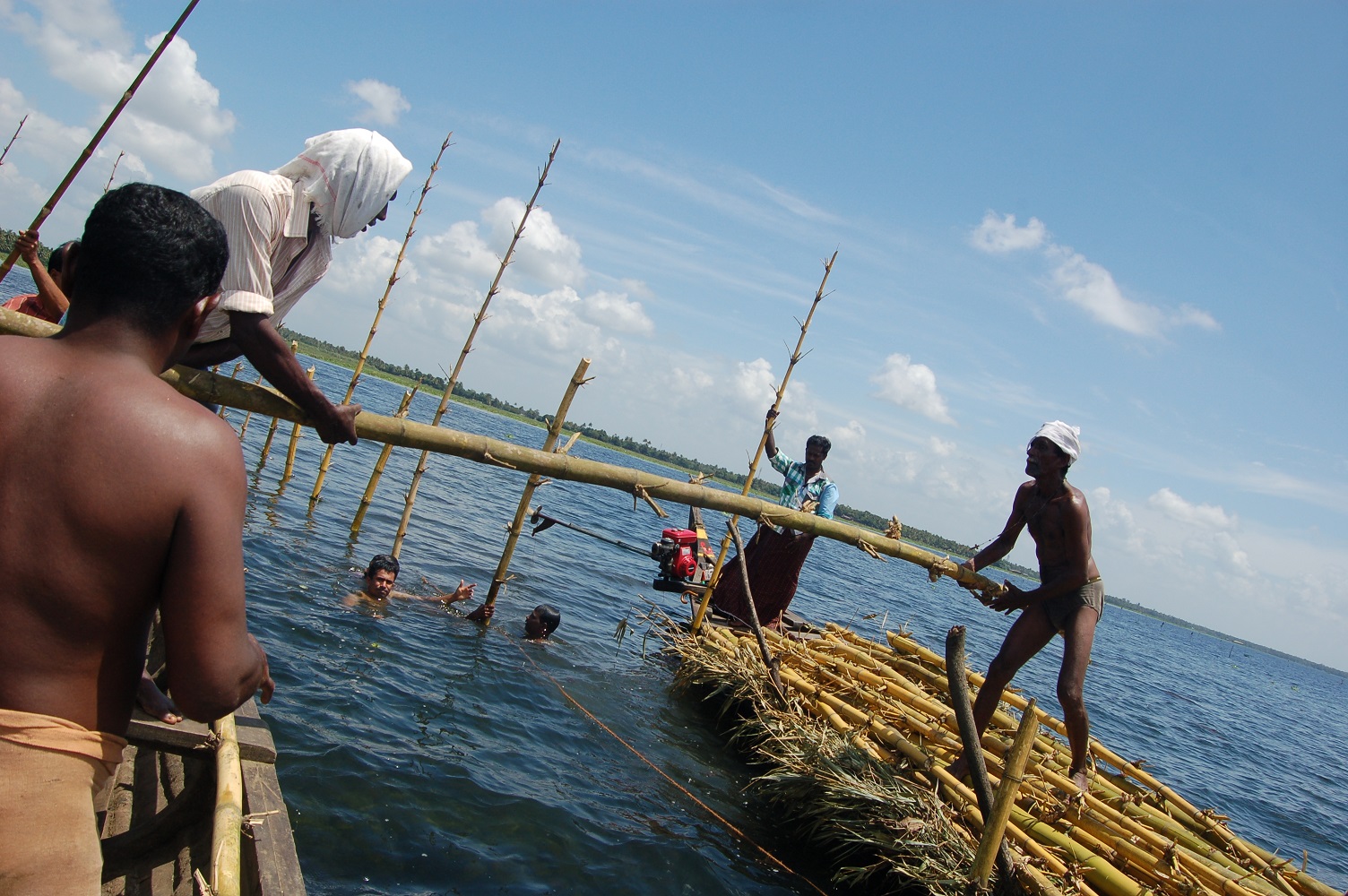
A fish sanctuary in the making on Lake Vembanad, Kerala, India. PHOTO: Scroll
We love the backwaters. Period. Every single time one of our Xandari Riverscapes houseboats puts out into these deep waters, our hearts swell with pride. Responsible showcasing the charm, the timelessness of these waters and its people brings us much joy. And when we come across conservation efforts to maintain the quintessence and soul of this stretch of paradise, we can’t help but let you know.
Spread over 36,000 hectares and three districts in Kerala, this is the kind of landscape that gives conservation ecologists a blinding headache – a resource-rich, highly-productive area that is pulled apart in several directions (waste-dumping, tourism, livelihoods, water security) and depended upon by conflicting communities who have no other alternatives. Lakes have been straddling this intersection all across India – from Chilika in Odisha, to the Bengaluru urban lakes, to Loktak in Manipur, to Vembanad.
Such heavy-use landscapes outside protected areas, however, also might hold answers to the future of conservation. Whether it is a large lake system, or forest fragments that serve as the refuge of a few species or a corridor for wild animals, or a forest fringe, or large agricultural swathes that also host biodiversity, a section of conservationists believes that the future lies in teamwork between nature and mankind.
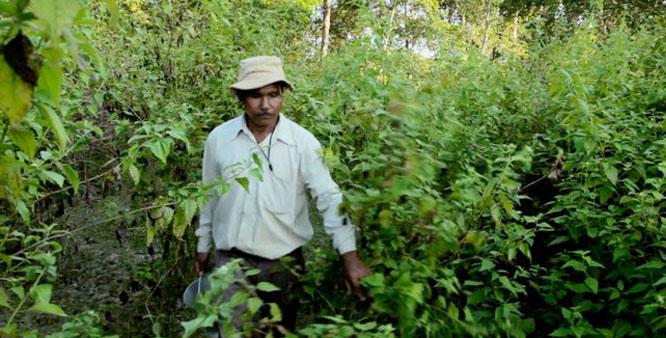
Indian man, Jadav “Molai” Payeng, has single-handedly planted a 1,360 acre forest In Assam. PHOTO: Jagran
For many people the sight of a dead snake would be an unpleasant but not tragic image, but for Indian activist Jadav “Molai” Payeng it was a call to action that inspired him to create an entire forest. When Payeng was just a teenager in 1979 he came across a bed of dead snakes on the sun-baked shores of the Brahmaputra river. The limbless beasts had been stranded on the barren banks and perished in the unmitigated heat due to the lack of shade or tree cover. Payeng wept over the corpses but resolved to turn his sadness into action.

Photo credit: Pallavi Kaiwar

A few years ago the Ministry of Environment included the Sagano Bamboo Forest on its list of “100 Soundscapes of Japan” — a selection of everyday noises intended to encourage locals to stop and enjoy nature’s music. PHOTO: CNN
What does it take for a government to officially recognize a natural soundscape? The bamboo forests of Kyoto. Growing tall on the edges of Kyoto, the Sagano Bamboo Forest is a once tranquil nature spot that is now a series of tourist-packed pathways, but if one can escape the sounds of camera shutters and boorish visitors, they can hear the rustling, creaking, and swaying of one of Japan’s governmentally recognized soundscapes.
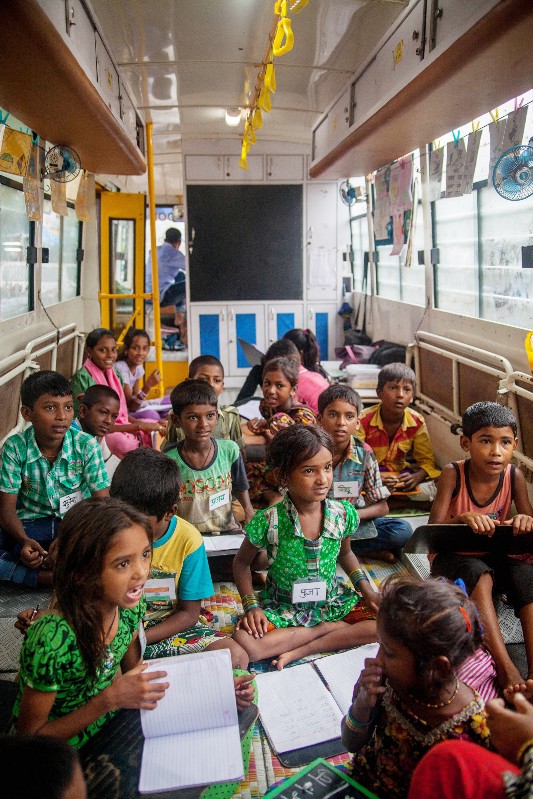
The buses can only hold 20 students, without much space to wiggle around or store books. But they have unique benefits — like their ability to reach many of Mumbai’s poorest migrants who live on illegal plots of land where schools can’t be built. PHOTO: Karen Dias
Mumbai’s education system has fallen gravely short of absorbing its children. Only 400,000 children were enrolled in municipal schools in 2014, according to a report by Praja, a non-partisan research and advocacy organization. That number actually dropped 11 percent since 2009, despite increased government spending on education.That leaves more than half of the children in Mumbai either out of school or learning in private institutions. At least 37,000 kids in Mumbai live on the streets and work with their parents to earn a few cents a day, according to advocacy organization Action Aid.
Medium brings you more on how a collaborative system of volunteers, activists and NGOs is transforming the darkness of ignorance in one of India’s largest cities.

A completed field postcard, posted on 22 March 1916. PHOTO: BBC
When was the last time you put paper to pen and saw your writing come to life? The last time you held a piece of card so small but held news and feelings from across seven seas? Writing and receiving mail is quite the experience, all the more now in the age of keypads and instant messages. It was important, too. Like in the time of the World War. When the mail was recognized as the biggest tool of maintaining morale.
BBC brings some interesting facets:
The most effective weapon used during World War One wasn’t the shell or the tank, it was morale. The British Army believed that it was crucial to an allied victory, and it looked to the Post Office for help.
The delivery of post was vital for two reasons. Firstly, receiving well wishes and gifts from home was one of the few comforts a soldier had on the Western Front. The majority of them spent more time fighting boredom than they did the enemy, and writing was one of the few hobbies available to them. For some, it was a welcome distraction from the horrors of the trenches.
Secondly, letters served a propaganda purpose as everything that soldiers sent back was subject to censorship. The British Army claimed this was to prevent the enemy finding out secret information, but really it was to prevent bad news from reaching the home front. Letters from serving soldiers had a powerful role, not just in keeping families informed of the well-being of their loved ones; they also helped to sustain popular support for the war across the home front. Nothing could be allowed to jeopardise that.

Between August and November in 2014, Chinese dredgers created a land mass on Fiery Cross that spans 3,000 meters long and 200 to 300 meters wide. PHOTO: Washington Post
Here are some figures for China’s military strength. Here is also the fact that much of the country’s military building is concentrated in the high seas. Especially in waters that once hosted biodiversity hotspots in coral reefs.
As China races to extend its military reach, it is turning pristine habitats into permanent islands. Satellite images of the South China Sea show rapid destruction of some of the most biodiverse coral reefs in the world. The reclamation of land in the contested Spratly archipelago to build runways, military outposts and even small towns is endangering ecosystems that are key to maintaining world fish stocks and biodiversity.
 Organikos