Sloths’ and Armadillos’ Sight Stinks

Photo credit: Mwcolgan8. Via National Geographic.

Watching the pair of nine-banded armadillos in this video root around the forest floor looking for food, you’d think that in addition to their snuffling and sensitive noses, the armored mammals would also be using their eyes to spot scurrying insects or the white flash of a grub in the dirt. And a three-toed sloth like the one in this other video should definitely be able to scan the skies for predatory birds when it is taking care of its vulnerable young, right? Well actually, as NatGeo contributor Ed Yong reports, scientists at UC Riverside believe the genes that build color-detecting cone cells in eyes are broken in sloths, armadillos, and several other mammal species descended from the same burrowing ancestor:

Armadillos have terrible vision. In 1913, American zoologists Horatio H. Newman and J. Thomas Patterson wrote, “The eyes [of the nine-banded armadillo] are rudimentary and practically useless. If disturbed an armadillo will charge off in a straight line and is as apt to run into a tree trunk as to avoid it.”

The three-toed sloth isn’t much better. “If an infant sloth is placed five feet away from its mother on a horizontal branch at the same level, at once the young sloth begins to cry, the mother shows that she heard it calling and turns her head in all directions. Many times she looks straight in the direction of her offspring but neither sight, hearing nor smell apparently avail anything,” wrote Michel Goffart in 1971. And more comically: “Infuriated male [sloths] try to hit each other when they are still distant by more than a metre and a half.”
Continue reading

Australian Emissions Drop With New Carbon Tax

Via The Guardian

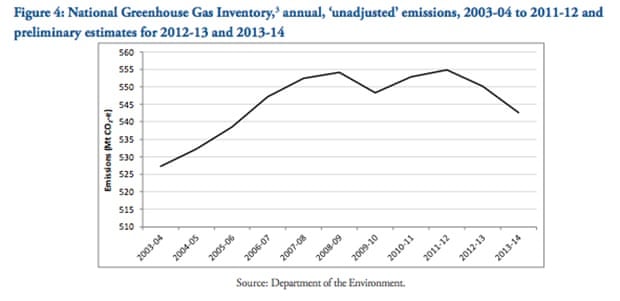
In 2012, Australia introduced a carbon tax, or carbon “price,” with the goal of reducing the country’s greenhouse gas emissions. Then, this July, the Australian government — under a different party than in 2012 — abolished the carbon tax to fulfill an election promise, since they argued that the tax was too much of a burden on homeowners and also discouraging industry. But data released this month by the Department of the Environment shows that Australia’s emissions dropped 1.4% during 2013 (the second year of the tax), which is the highest annual decrease in the country’s emissions within the last decade. Oliver Milman reports for The Guardian:

The latest greenhouse gas inventory showed emissions from the electricity sector, the industry most affected by carbon pricing, fell 4% in the year to June.

Electricity emissions account for a third of Australia’s emissions output, which stood at 542.6m tonnes in the year to June, down from 550.2m tonnes in the previous 12 months.

Emissions from transport dropped 0.4% in the year to June, with gases released by the agriculture industry decreasing by 2.6%. Industrial processes emitted 1.3% less greenhouse gas during the year, although fugitive emissions, such as those from mining, rose 5.1%.

Electricity emissions peaked in 2008 and have steadily decreased ever since, driven by a number of factors such as the winding down of parts of Australia’s manufacturing base and energy efficiency initiatives.

Continue reading

Finger Lakes, Just Say No

It is not a simple matter to resist all the various ways in which our natural environment is being threatened in insidious manner on a regular basis, especially proposals that appear to solve energy needs. Please, no snickering about chardonnay-sipping liberals while you read the latest such proposal in the region a number of our contributors call home, because these are actually salt of the earth farmers and craft level producers of a sacred beverage (yes, we can pour it on when properly motivated) who will suffer most if this project is implemented as proposed:

WATKINS-slide-WT0Z-thumbStandardWhat Pairs Well With a Finger Lakes White? Not Propane, Vintners Say

Local vintners are fighting a project under which tens of millions of gallons of liquefied petroleum gas, and up to two billion cubic feet of natural gas, would be stored in caverns near Seneca Lake.

Christmas Tree Facts From the BBC

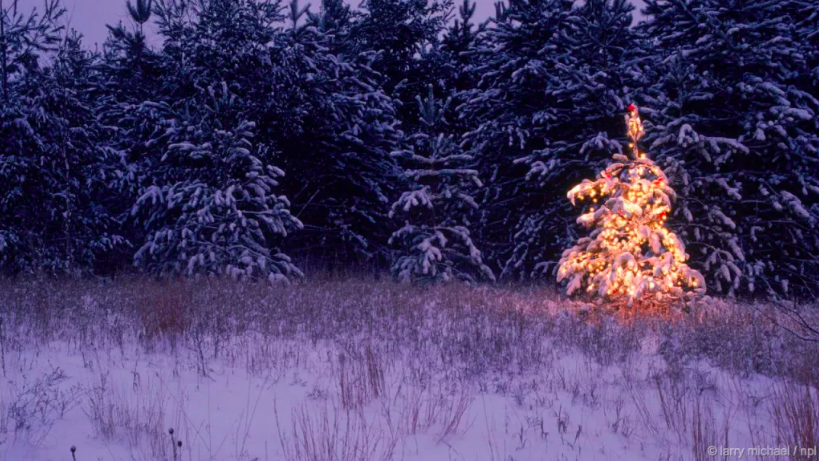
Credit: Larry Michael / NPL. Via the BBC

Although Organikos is a non-denominational blog, there is no doubt that Christmas is an important holiday in many of the places we work, like Kerala and Costa Rica. This year, Stephanie Pappas from the BBC shares some interesting secrets about Christmas trees that you probably didn’t know, and can read below:

Each Christmas, families gather around evergreens, real or fake, to celebrate the season.

But what holiday revellers may not realise is just how incredible these spruce, fir and pines can be.

In the wild, evergreen conifers survive drastic temperature swings, grow to towering heights and create ecosystems that shelter strange and wonderful creatures.

Here are some the secrets of Christmas trees and their tough, tenacious lives.

Christmas trees can turn to glass

Here’s a party trick not to try without the proper safety equipment: drop a sprig of Siberian spruce (Picea obovata) or Scots pine (Pinus sylvestris) in a vat of liquid nitrogen, at a temperature of -196 degrees Celsius. Providing you’ve pre-chilled the plant to -20 degrees Celsius or so, the sprig will survive.

Continue reading

Bambi, or Rudolph?

Woodland caribou in the United States were decimated by overhunting and logging. Now they face additional challenges. Photo: Joseph N. Hall under a Creative Commons license. Via Cool Green Science.

Cool Green Science, The Nature Conservancy’s blog that we have started visiting to find more of our kind of news, has re-run their post from last year on the conflict between populations of caribou and white-tailed deer in North America. Matt Miller reports:

Rudolph-the-Red-Nosed Reindeer versus Bambi: yes, it sounds like a really bad holiday special. Maybe the worst ever.

Don’t worry; that’s not the case here. But along the Canada border in northern Idaho and eastern Washington, a struggle is playing out pitting the real-life counterparts of Rudolph (caribou) and Disney’s Bambi (white-tailed deer).

The quick version: woodland caribou, the rarest large mammal in the “lower 48” states have faced dramatic changes in forest habitat. White-tailed deer, drawn by the new habitat, have moved in and thrived.

The large numbers of deer have drawn more predators, notably mountain lions. And those mountain lions prey on the less wary, easier-to-kill caribou. An already beleaguered caribou population faces what may be its final straw.

In this case, Bambi wins. But there is nothing simple about this story, not really. For conservationists, it raises far more questions than answers.

Continue reading

Biomechanics Exhibit at the Field

Animals that move through air and water have evolved a variety of wing and fin forms, as well as sleek, streamlined shapes that harness the power of fluid dynamics for propulsion. © Ernie Cooper 2012, macrocritters.wordpress.com

Every day, just using any part of our bodies to move, see, talk, or eat — among countless other activities, we are enjoying the biomechanics that have evolved to perform the functions necessary to survive. An exhibit at the Field Museum in Chicago called, “The Machine Inside: Biomechanics” will be closing on January 4th, so this post is more of a celebration of the exhibit than an invitation to check it out. If you won’t be in Chicago before the 4th, they have a great website with photos and a good video.

Imagine if your jaws could crush over 8,000 pounds in one bite, your ears could act as air conditioners, and your legs could leap the length of a football field in a single bound. From the inside out, every living thing—including humans—is a machine built to survive, move, and discover.  Beginning March 12, 2014, investigate the marvels of natural engineering in The Machine Inside: Biomechanics. Explore how plants and animals stay in one piece despite the crushing forces of gravity, the pressure of water and wind, and the attacks of predators. Using surprising tactics, creatures endure the planet’s extreme temperatures, find food against fierce competition, and – without metal, motors or electricity – circulate their own life-sustaining fluids.

Continue reading

Teaching, Reading, Books, And The Art Of Heroic Generosity

teacher-dorchester_wide-e26ec96b4bf01b90583733bad7518f51e86db66b-s1300-c85

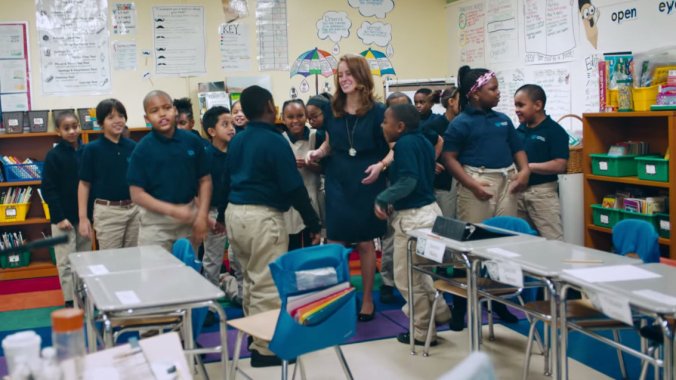
Third-grade teacher Nikki Bollerman, 26, won a contest that gave her students books for the holidays. When she also won $150,000, she decided it should go to her school. YouTube

No matter how much we talk about books, or libraries, or teachers, or reading, we are not sure. We hope we would do the same as Ms. Bollerman. The fact that we are not sure is the real reason why this story is a must share, must read. We like her decision very much and will do our best to follow her lead:

One thing’s for sure: Nikki Bollerman believes in her school and the kids who go there. How else to explain Bollerman, 26, giving a $150,000 windfall to the Boston area public charter school where she teaches third grade?

The story comes to us from member station WBUR, which reports that Bollerman’s generosity got the attention of Mayor Marty Walsh, who met with her and some of her students Monday.

“I want to thank Nikki for your kindness and your humility, and you are certainly a shining example of great things to the city of Boston,” Walsh said. “We are grateful for your hard work and generosity. You have inspired lots of people with your selfless act.” Continue reading

Forests Are Life

23FOREST-slide-O45T-mediumFlexible177We are happy, for the sake of the next generation(s), to read this news:

Restored Forests Aid Climate Change Efforts

Driven by a growing environmental movement, corporate and government leaders are making a fresh push to slow the cutting of rain forests — and eventually to halt it.

Winning Wildlife Photography of 2014

2014 Wildlife photographer of the Year invertebrate category winner: ‘Night of the deadly lights’ by Ary Bassous (Brazil). Photograph: Ary Bassous/2014 WPY. Via The Guardian.

We’ve always loved wildlife photography, and the explosion of competitions over the web in the last decade has created the type of arms race for the best shot in which the audience always wins. Folks over at The Guardian know what’s up: they’ve compiled some of the most amazing wildlife photographs from various competitions over the course of 2014, so we have an even greater pool of shots to enjoy.

Continue reading

Wilbur, Come To Kerala!

Wilbur Sargunaraj sings about life in his family's ancestral village in India. Produced by Wilbur Sargunaraj for NPR and John W. Poole/NPR.

Wilbur Sargunaraj sings about life in his family’s ancestral village in India. Produced by Wilbur Sargunaraj for NPR and John W. Poole/NPR.

Tirunelveli, as the crow flies, is not so far from the Raxa Collective office in Cochin.  Much closer than the location of the average reader of National Public Radio (USA)’s website, or the typical viewer of these videos on YouTube. They ring true with southern Indian sense of hospitality, so we hereby invite Wilbur to our neck of the woods:

Who is that man in a white shirt, black necktie and what appear to be blue plaid pajama pants? And why is he running around a village tasting and drinking all kinds of food?

That’s Wilbur Sargunaraj. He calls himself “India’s first YouTube star.” His videos about life in India have drawn more than a million views. And now he’s made some very first-class videos for NPR’s Goats and Soda blog: “Dunk-A-Chicken: The Village Way” and “The Village Way: Food.” (Well, he says they’re first-class, and who are we to argue?) Continue reading

Humans Have DNA For Making Feathers

Siberian Turkamanian Eagle Owl by Chris Paul. Via NatGeo.

We’ve always found feathers fascinating, both from an aesthetic and a biological perspective. Recently, the Cornell Lab of Ornithology’s bird guide website AllAboutBirds uploaded an interactive page solely focused on feathers, which is quite a wonderful mine of interesting information, cool animation, and amazing videography. But now, about a month late, we’ve learned that DNA researchers working on the genetic recipe for feathers have found that the sequences responsible for most of the steps involved in creating feathers are actually much, much older than feathers themselves. This indicates that we humans should have a sizable chunk of the feather-making genetic recipe as well! Carl Zimmer reports for the Phenomena section at National Geographic’s website:

Feathers are like eyes or or hands. They’re so complex, so impressive in their adaptations, so good at getting a job done, that it can be hard at first to believe they evolved. Feathers today are only found on birds, which use them to do things like fly, control their body temperature, and show off for potential mates. The closest living relatives of birds–alligators and crocodiles–are not exactly known for their plumage. At least among living things, the glory of feathers is an all-or-nothing affair.

Continue reading

The Second Annual Thevara Badminton Tournament

Thevara2014Badminton2

The 2014 edition of our neighborhood sporting event of the year officially kicked off this evening, with two Raxa Collective representatives sharing the stage with two politicians, a priest and the neighborhood association’s leadership (who graciously invited Raxa Collective to join in again) prior to the first match.  We look forward to announcing the champion on December 31. Continue reading

The Oceans’ Invertebrates, Inveterately Out of This World

Clockwise from top left: a white phantom crab, a fuzzy red-spot crab, a frilled anemone Phymanthus, a red-eye Medusa Polyorchis penicillatus, a tiger cowrie Cypraea tigris and a three-lined nudibranch Flabellina trilineata. Credit Susan Middleton via NYTimes

We are no strangers to the fantastic sights of the deep sea — not only because of shallower personal experience but certainly also due to the wonders of the web. But the images captured by Susan Middleton look to be confirmation of how amazing invertebrate life can be in the oceans. Her new book, Spineless: Portraits of Marine Invertebrates, the Backbone of Life, includes around 250 photographs of these magnificent creatures, and we look forward to exploring them more in person. You can read Dana Jennings’ review of the book for the New York Times below:

As we stand on the thin crust of this watery planet, our gaze tends to roam from horizon to heavens. We often neglect the riot of life that seethes and thrives below us, especially in the still mysterious depths of our oceans.

Continue reading

A New Break for Alaska’s Bristol Bay

Helicopter view of the area surrounding Bristol Bay, Alaska. Still image extracted from WH.gov video linked below.

We’ve hosted a good number of Alaskan “bird of the day” photos here, and we share the near-universal affinity for the charismatic Arctic mammal that is the polar bear. Two years ago, Carol Browner and John Podesta wrote an open letter on Bloomberg.com opposing any more drilling in the Arctic, and now we’re happy to announce that President Obama signed an executive order last week that bans exploration for oil and gas in Bristol Bay until another president chooses to counteract the order in the future. Read coverage by Peter Baker for the New York Times below:

Mr. Obama first put the ecologically sensitive area of the Bering Sea — home to an important population of whales, seals and sea lions — off limits to oil rigs in 2010, but that restriction was set to expire in 2017, several months after he leaves office. With the new executive memorandum that he signed in the Oval Office on Tuesday, Mr. Obama made the ban permanent unless a future president acts to reverse it and allow leasing of the waters of the bay.

“It is a beautiful natural wonder, and it’s something that’s too precious to us to just be putting out to the highest bidder,” Mr. Obama said in a one-minute video announcing his decision, which was posted on the White House website.

Continue reading