Let Them Eat Cake

This slideshow requires JavaScript.

Thanks to NPR we learned that Kerala isn’t the only state with a history of Plum Cakes and Fruit Cakes in late December. We love this facinating non-sectarian history!

Cake knows no religion…. Jewish bakeries and Muslim bakers in a predominantly Hindu city, baking Christmas cakes round the clock. You could call it a triumph of capitalism. Or a slice of peace and goodwill for all. With almond icing.

The Beauty of Life With X-Ray Vision

Python and protea flower. The snake’s trachea is visible (credit: Arie van ’t Riet / SPL)

Thank you to the BBC’s Earth section for sharing Dutch medical physicist and artist Arie van ’t Riet’s work, which he accomplishes with his home x-ray machine and dead flora and fauna.

Arie van ’t Riet has a unique view of life on earth.

As a medical physicist based in the Netherlands, van ’t Riet teaches radiographers about radiation physics and safety. As part of his teaching program, van ’t Riet searched for an example to demonstrate and visualise the influence of x-ray energy on the contrast of an x-ray image. The higher the x-ray energy, the lower the contrast.

“I arrived at flowers. After some years I started to edit and partly colour these x-ray images. And I added animals,” he says.

Continue reading

Canadian Outdoor Hockey – Threatened by Climate Change?

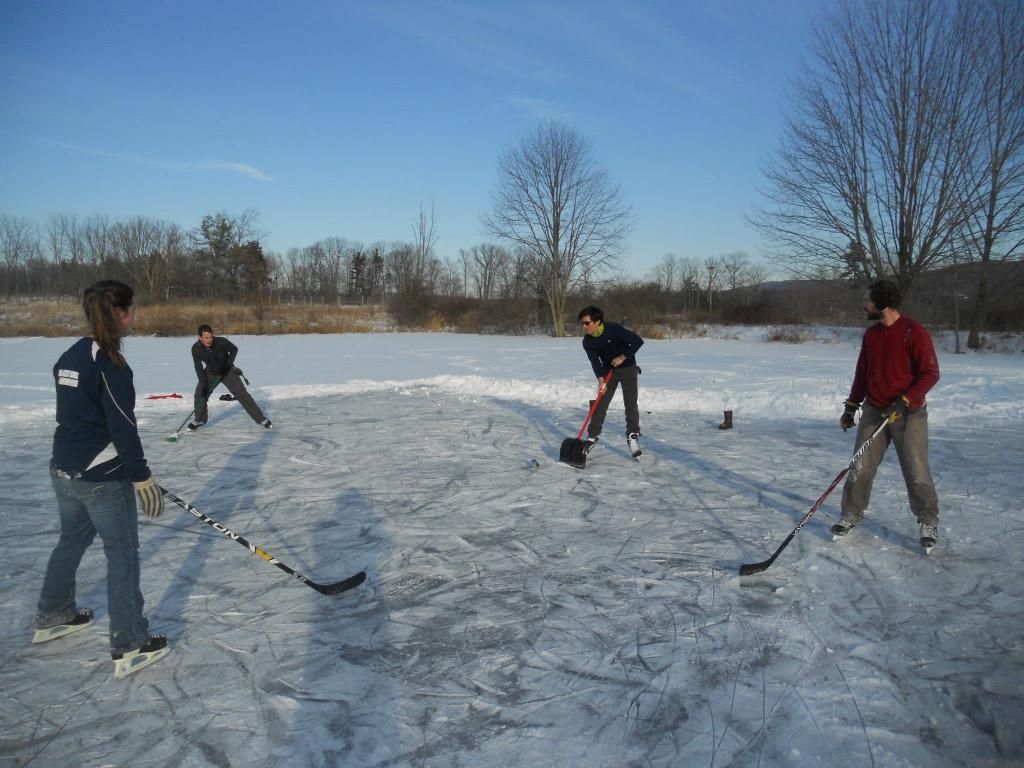
Photo of Cornell students playing outdoor hockey somewhere in NY, by Miles Luo

While a student at Cornell University, I played hockey out on a pond multiple times, and always had fun even on the occasions when several of us needed to use brooms or shovels as hockey sticks, and a crushed pineapple juice can as a puck. In recent years, it’s been a little tougher to find a good time to play since temperatures have fluctuated so wildly sometimes. Since my friends and I like to stay very conservative with our estimates on the ice’s thickness, an unusually warm day after a series of extremely cold — and typical Ithaca — ones can set us back a bit as we wait for a safer time to get on a pond.

So I at least partly understand the angst of all outdoor hockey-loving Canadians as described by Dave Levitan for Conservation Magazine:

Take anything from Canadians, anything at all—anything except hockey.

Few countries have such a relationship with an individual sport; cricket in India, soccer (football) in Brazil or various others, hockey in Canada. And while the Maple Leafs and the Canadiens aren’t going anywhere, the sport as it is played by millions of others in Canada is in serious danger thanks to climate change.

Continue reading

Algae Could Turn Toxic Water Into Metal and Biofuel

Contaminated water at Wheal Jane, where the Department for Environment is spending £2m a year on combating pollution. Photograph: Rex Features. Via The Guardian.

We’ve featured pieces on different biofuels before, though probably not enough of them. We’ve also recently seen an example of how science can help clean up the messes that other scientifically informed — but less environmentally scrupulous — activities create, like the new carbon-scrubbing structures that might be used in coal plants. The topic of bioremediation is one of great interest and which we plan on sharing more about, especially in the mycological realm. For now we’ll start with this story of algal bioremediation and resource recuperation in Cornwall, one of England’s most historically important mining regions. Jamie Doward reports for The Guardian:

A groundbreaking research project to clean up a flooded Cornish tin mine is using algae to harvest the precious heavy metals in its toxic water, while simultaneously producing biofuel.

If the project, which is at a very early stage, is proven to work, it could have huge environmental benefits around the world.

Continue reading

The Glossiness of Tinamou Eggs

Eggs from tinamous being used for research at Hunter College. Tinamou eggs are up to 14 times as glossy as the average chicken egg. Credit Fred R. Conrad/The New York Times

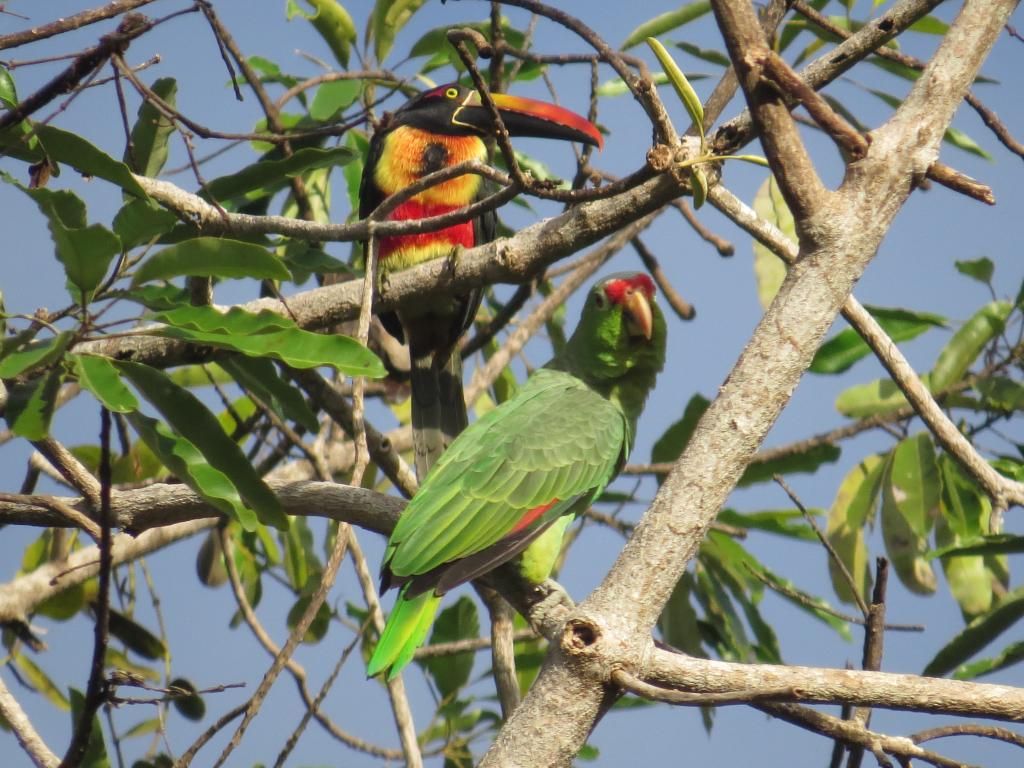
Readers of the blog who have visited in recent months will know that I do a lot of work with chicken eggs for artistic purposes, and readers from years ago might remember that I worked with Celebrate Urban Birds at the Cornell Lab of Ornithology, and I often wrote about bird-related topics (and still do!). During one of CUBs’ photo competitions called Funky Nests, I posted on egg coloration, and looking back on that post I am very surprised to see that I didn’t mention the eggs of a family of birds called tinamous. I’m puzzled as to why I wouldn’t have written about tinamou eggs because they are curiously glossy. In addition to having quite pretty colors, the eggs are extremely shiny to the point of looking fake, or varnished by wood elves after they’re laid.

Perhaps I didn’t include tinamou eggs in my post because very little is understood about why their glossiness exists, as Rachel Nuwer reports for the New York Times this week in an article with a title that obviously caught my eye:

Easter Eggs Without a Kit

The Shy, Drab Tinamou Has a Stunning Palette That Still Holds More Mysteries Than Answers.

When it comes to shell color, most birds’ eggs conform to one of four motifs: colored with spots, colored without spots, white with spots or pure white.

Continue reading

Sloths’ and Armadillos’ Sight Stinks

Photo credit: Mwcolgan8. Via National Geographic.

Watching the pair of nine-banded armadillos in this video root around the forest floor looking for food, you’d think that in addition to their snuffling and sensitive noses, the armored mammals would also be using their eyes to spot scurrying insects or the white flash of a grub in the dirt. And a three-toed sloth like the one in this other video should definitely be able to scan the skies for predatory birds when it is taking care of its vulnerable young, right? Well actually, as NatGeo contributor Ed Yong reports, scientists at UC Riverside believe the genes that build color-detecting cone cells in eyes are broken in sloths, armadillos, and several other mammal species descended from the same burrowing ancestor:

Armadillos have terrible vision. In 1913, American zoologists Horatio H. Newman and J. Thomas Patterson wrote, “The eyes [of the nine-banded armadillo] are rudimentary and practically useless. If disturbed an armadillo will charge off in a straight line and is as apt to run into a tree trunk as to avoid it.”

The three-toed sloth isn’t much better. “If an infant sloth is placed five feet away from its mother on a horizontal branch at the same level, at once the young sloth begins to cry, the mother shows that she heard it calling and turns her head in all directions. Many times she looks straight in the direction of her offspring but neither sight, hearing nor smell apparently avail anything,” wrote Michel Goffart in 1971. And more comically: “Infuriated male [sloths] try to hit each other when they are still distant by more than a metre and a half.”

Continue reading

Australian Emissions Drop With New Carbon Tax

Via The Guardian

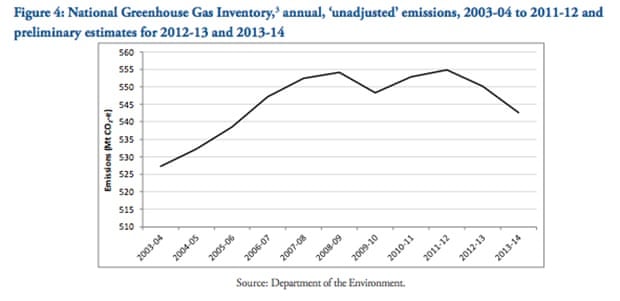
In 2012, Australia introduced a carbon tax, or carbon “price,” with the goal of reducing the country’s greenhouse gas emissions. Then, this July, the Australian government — under a different party than in 2012 — abolished the carbon tax to fulfill an election promise, since they argued that the tax was too much of a burden on homeowners and also discouraging industry. But data released this month by the Department of the Environment shows that Australia’s emissions dropped 1.4% during 2013 (the second year of the tax), which is the highest annual decrease in the country’s emissions within the last decade. Oliver Milman reports for The Guardian:

The latest greenhouse gas inventory showed emissions from the electricity sector, the industry most affected by carbon pricing, fell 4% in the year to June.

Electricity emissions account for a third of Australia’s emissions output, which stood at 542.6m tonnes in the year to June, down from 550.2m tonnes in the previous 12 months.

Emissions from transport dropped 0.4% in the year to June, with gases released by the agriculture industry decreasing by 2.6%. Industrial processes emitted 1.3% less greenhouse gas during the year, although fugitive emissions, such as those from mining, rose 5.1%.

Electricity emissions peaked in 2008 and have steadily decreased ever since, driven by a number of factors such as the winding down of parts of Australia’s manufacturing base and energy efficiency initiatives.

Continue reading

Finger Lakes, Just Say No

It is not a simple matter to resist all the various ways in which our natural environment is being threatened in insidious manner on a regular basis, especially proposals that appear to solve energy needs. Please, no snickering about chardonnay-sipping liberals while you read the latest such proposal in the region a number of our contributors call home, because these are actually salt of the earth farmers and craft level producers of a sacred beverage (yes, we can pour it on when properly motivated) who will suffer most if this project is implemented as proposed:

WATKINS-slide-WT0Z-thumbStandardWhat Pairs Well With a Finger Lakes White? Not Propane, Vintners Say

Local vintners are fighting a project under which tens of millions of gallons of liquefied petroleum gas, and up to two billion cubic feet of natural gas, would be stored in caverns near Seneca Lake.

Christmas Tree Facts From the BBC

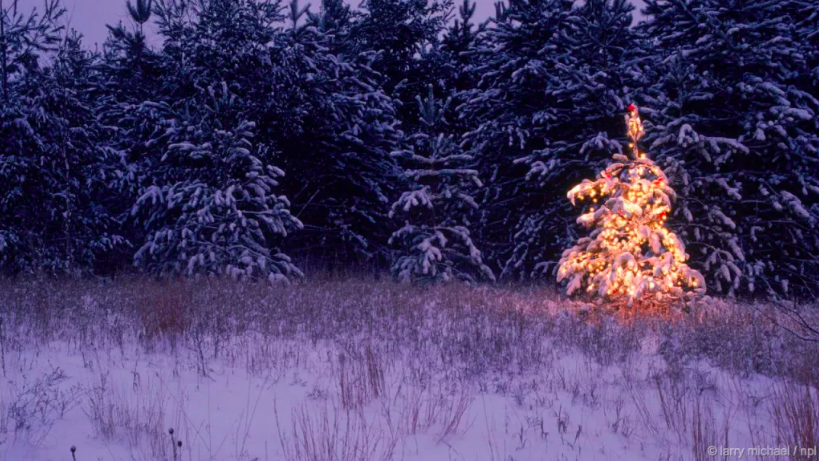
Credit: Larry Michael / NPL. Via the BBC

Although Organikos is a non-denominational blog, there is no doubt that Christmas is an important holiday in many of the places we work, like Kerala and Costa Rica. This year, Stephanie Pappas from the BBC shares some interesting secrets about Christmas trees that you probably didn’t know, and can read below:

Each Christmas, families gather around evergreens, real or fake, to celebrate the season.

But what holiday revellers may not realise is just how incredible these spruce, fir and pines can be.

In the wild, evergreen conifers survive drastic temperature swings, grow to towering heights and create ecosystems that shelter strange and wonderful creatures.

Here are some the secrets of Christmas trees and their tough, tenacious lives.

Christmas trees can turn to glass

Here’s a party trick not to try without the proper safety equipment: drop a sprig of Siberian spruce (Picea obovata) or Scots pine (Pinus sylvestris) in a vat of liquid nitrogen, at a temperature of -196 degrees Celsius. Providing you’ve pre-chilled the plant to -20 degrees Celsius or so, the sprig will survive.

Continue reading

Bambi, or Rudolph?

Woodland caribou in the United States were decimated by overhunting and logging. Now they face additional challenges. Photo: Joseph N. Hall under a Creative Commons license. Via Cool Green Science.

Cool Green Science, The Nature Conservancy’s blog that we have started visiting to find more of our kind of news, has re-run their post from last year on the conflict between populations of caribou and white-tailed deer in North America. Matt Miller reports:

Rudolph-the-Red-Nosed Reindeer versus Bambi: yes, it sounds like a really bad holiday special. Maybe the worst ever.

Don’t worry; that’s not the case here. But along the Canada border in northern Idaho and eastern Washington, a struggle is playing out pitting the real-life counterparts of Rudolph (caribou) and Disney’s Bambi (white-tailed deer).

The quick version: woodland caribou, the rarest large mammal in the “lower 48” states have faced dramatic changes in forest habitat. White-tailed deer, drawn by the new habitat, have moved in and thrived.

The large numbers of deer have drawn more predators, notably mountain lions. And those mountain lions prey on the less wary, easier-to-kill caribou. An already beleaguered caribou population faces what may be its final straw.

In this case, Bambi wins. But there is nothing simple about this story, not really. For conservationists, it raises far more questions than answers.

Continue reading

Biomechanics Exhibit at the Field

Animals that move through air and water have evolved a variety of wing and fin forms, as well as sleek, streamlined shapes that harness the power of fluid dynamics for propulsion. © Ernie Cooper 2012, macrocritters.wordpress.com

Every day, just using any part of our bodies to move, see, talk, or eat — among countless other activities, we are enjoying the biomechanics that have evolved to perform the functions necessary to survive. An exhibit at the Field Museum in Chicago called, “The Machine Inside: Biomechanics” will be closing on January 4th, so this post is more of a celebration of the exhibit than an invitation to check it out. If you won’t be in Chicago before the 4th, they have a great website with photos and a good video.

Imagine if your jaws could crush over 8,000 pounds in one bite, your ears could act as air conditioners, and your legs could leap the length of a football field in a single bound. From the inside out, every living thing—including humans—is a machine built to survive, move, and discover.  Beginning March 12, 2014, investigate the marvels of natural engineering in The Machine Inside: Biomechanics. Explore how plants and animals stay in one piece despite the crushing forces of gravity, the pressure of water and wind, and the attacks of predators. Using surprising tactics, creatures endure the planet’s extreme temperatures, find food against fierce competition, and – without metal, motors or electricity – circulate their own life-sustaining fluids.

Continue reading

Teaching, Reading, Books, And The Art Of Heroic Generosity

teacher-dorchester_wide-e26ec96b4bf01b90583733bad7518f51e86db66b-s1300-c85

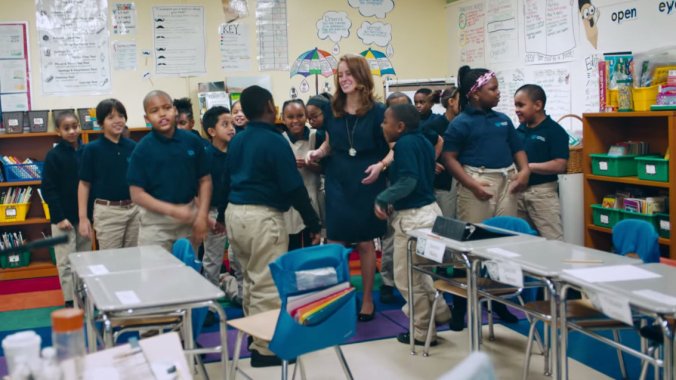
Third-grade teacher Nikki Bollerman, 26, won a contest that gave her students books for the holidays. When she also won $150,000, she decided it should go to her school. YouTube

No matter how much we talk about books, or libraries, or teachers, or reading, we are not sure. We hope we would do the same as Ms. Bollerman. The fact that we are not sure is the real reason why this story is a must share, must read. We like her decision very much and will do our best to follow her lead:

One thing’s for sure: Nikki Bollerman believes in her school and the kids who go there. How else to explain Bollerman, 26, giving a $150,000 windfall to the Boston area public charter school where she teaches third grade?

The story comes to us from member station WBUR, which reports that Bollerman’s generosity got the attention of Mayor Marty Walsh, who met with her and some of her students Monday.

“I want to thank Nikki for your kindness and your humility, and you are certainly a shining example of great things to the city of Boston,” Walsh said. “We are grateful for your hard work and generosity. You have inspired lots of people with your selfless act.” Continue reading

Forests Are Life

23FOREST-slide-O45T-mediumFlexible177We are happy, for the sake of the next generation(s), to read this news:

Restored Forests Aid Climate Change Efforts

Driven by a growing environmental movement, corporate and government leaders are making a fresh push to slow the cutting of rain forests — and eventually to halt it.

Winning Wildlife Photography of 2014

2014 Wildlife photographer of the Year invertebrate category winner: ‘Night of the deadly lights’ by Ary Bassous (Brazil). Photograph: Ary Bassous/2014 WPY. Via The Guardian.

We’ve always loved wildlife photography, and the explosion of competitions over the web in the last decade has created the type of arms race for the best shot in which the audience always wins. Folks over at The Guardian know what’s up: they’ve compiled some of the most amazing wildlife photographs from various competitions over the course of 2014, so we have an even greater pool of shots to enjoy.

Continue reading