Pots Calling Kettles Black

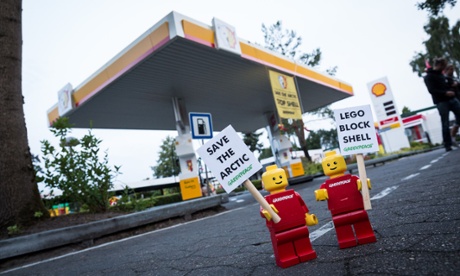
Mini activist figures at a Shell gas station in Legoland in Billund, Denmark, part of a global campaign targeting Lego and highlighting Shell’s plans for Arctic oil exploration. Photograph: Uffe Weng/Greenpeace

Mini activist figures at a Shell gas station in Legoland in Billund, Denmark, part of a global campaign targeting Lego and highlighting Shell’s plans for Arctic oil exploration. Photograph: Uffe Weng/Greenpeace

Lego is easy to love. Anyone who had these toys as a child, or who has children who have these toys, can testify to the joy they bring.

Shell is easy not to love, for reasons that do not really need to be explained here.

And yet, Lego is a product made up primarily of petroleum, so what we learn in this story in today’s Guardian seems odd as much as it seems good:

Lego will not renew its marketing contract with Shell after coming under sustained pressure from Greenpeace to end a partnership that dates to the 1960s.

The environmental campaign group, protesting about the oil giant’s plans to drill in the Arctic, had targeted the world’s biggest toy maker with a YouTube video that attracted nearly 6m views for its depiction of a pristine Arctic, built from 120kg of Lego, being covered in oil. Continue reading

World Wildlife Week: Tigers & Territories!

habitat


As a part of celebrating World Wildlife Week I was sharing information about the importance of saving our Natural Heritage, trying to create awareness among the growing population of nature lovers and wildlife photographers.

In the previous posts I discussed the relationships between healthy ecosystems, the well-being of wildlife and humans.

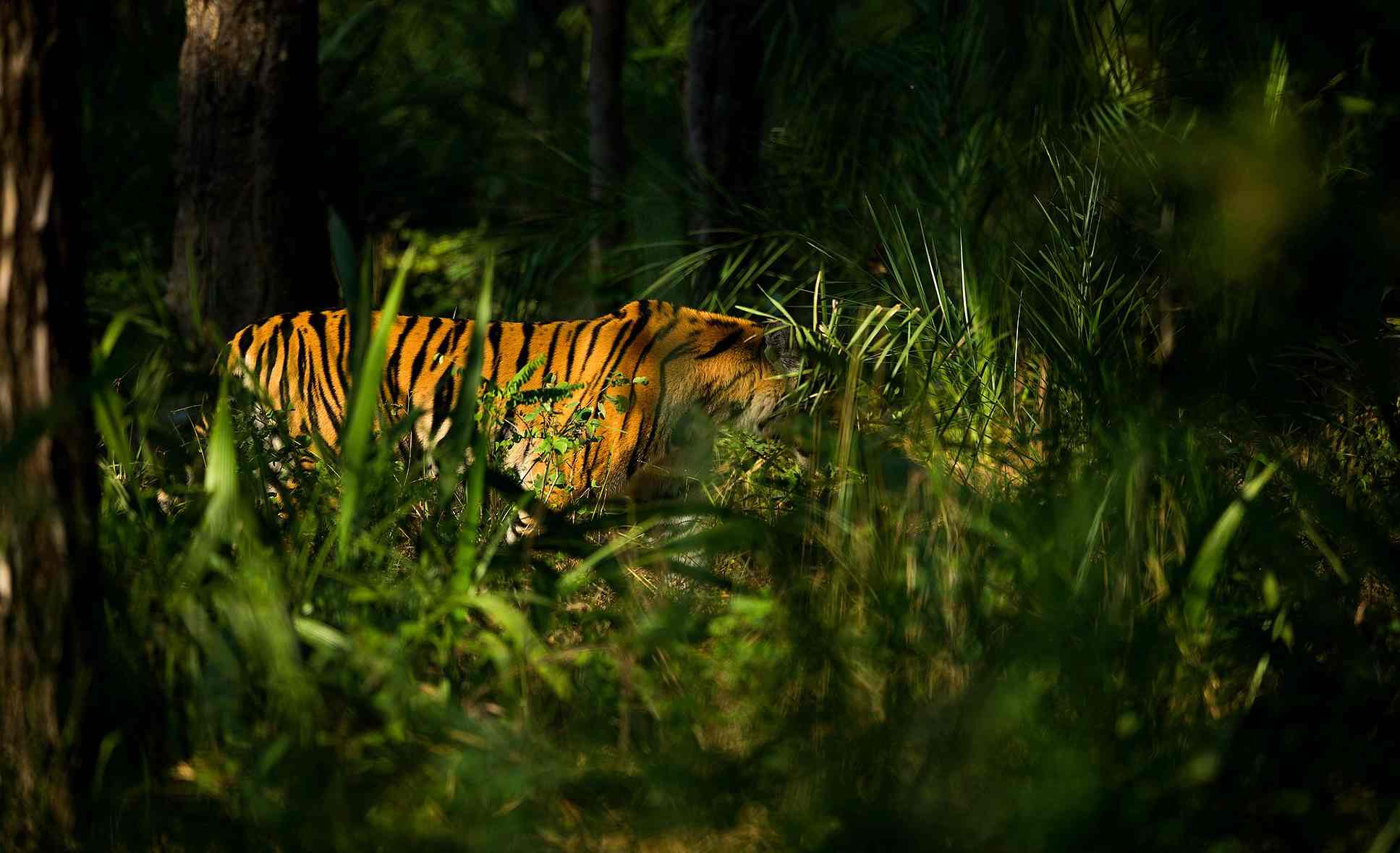
Here I’ll address another essential element for a healthy tiger population – territories!

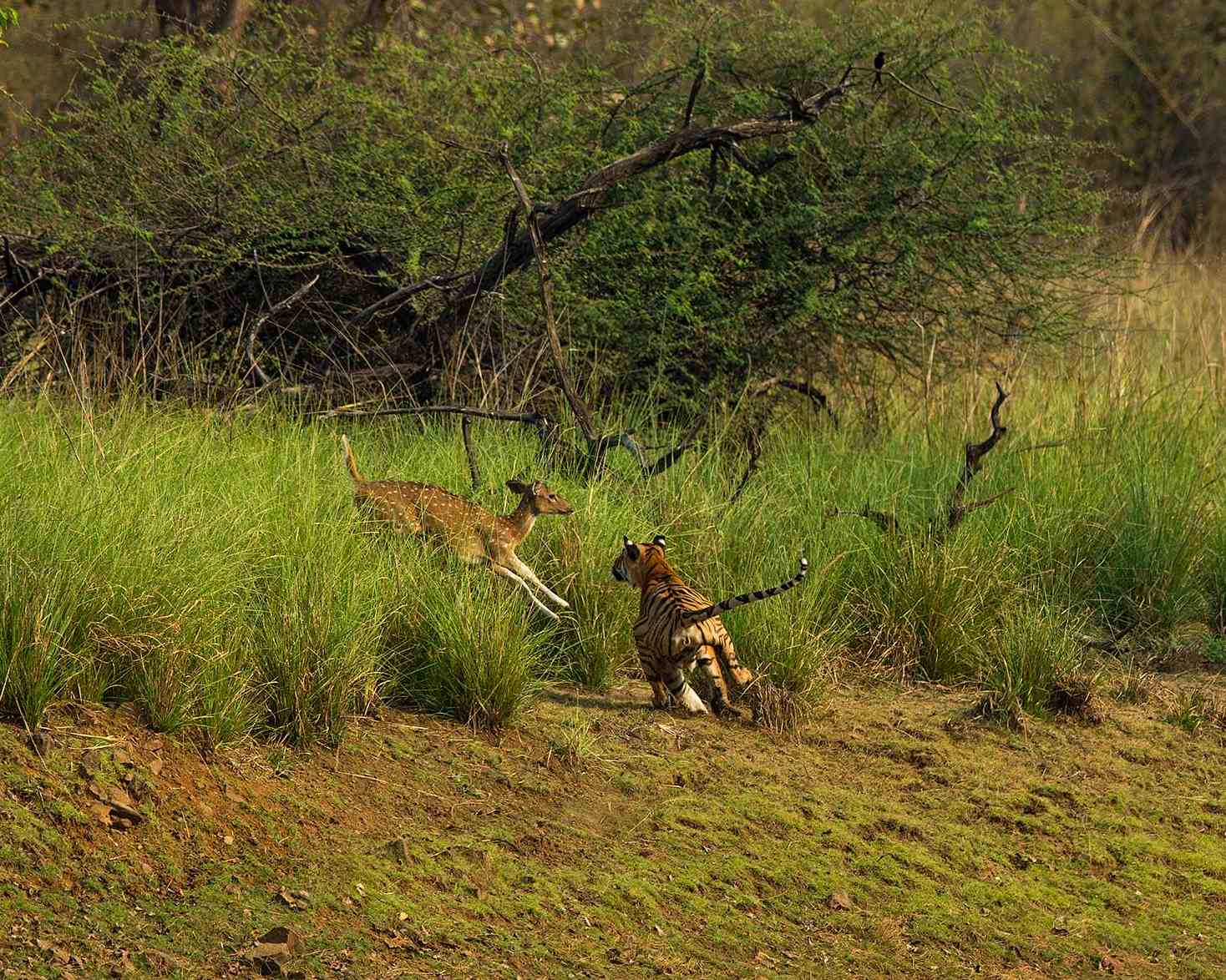
Next to food, the most important requirement for a tiger is territory. A male tiger with a territory encompassing those of several females has more mating opportunities. A female in control of a ‘home range’ with abundant prey has the best chance of raising more cubs.

With so much at stake, tigers are fiercely possessive of their turf, and scent-mark and defend their territories from rivals.

There is increased pressure on the Tiger territories from the development front. Environmental and forest clearances have been delinked to allow work on linear projects, such as highways, on non-forest land without waiting for approvals for the stretches that require forest land.

India has ONLY 4.9% of total geographic area established as protected area (PAs). If we are not able to increase this, we need to see how we can at least protect that. But look at this news published in hindustantimes:

In a boost to the real estate sector, the environment ministry may soon allow state governments to take a call on setting up new townships, information technology and developmental parks near tiger reserves, national parks, eco-sensitive zones and critically polluted areas.

The ministry has already issued draft rules proposing delegation of its power to decide on construction projects within 10 kms of wildlife areas and critically polluted areas to the state governments.

Till now, the Centre used to examine such projects to consider their impact on wildlife before giving a go-ahead. But now, the ministry has proposed the “general condition” for construction projects including information technology parks, hotels and offices will “not” apply. Continue reading

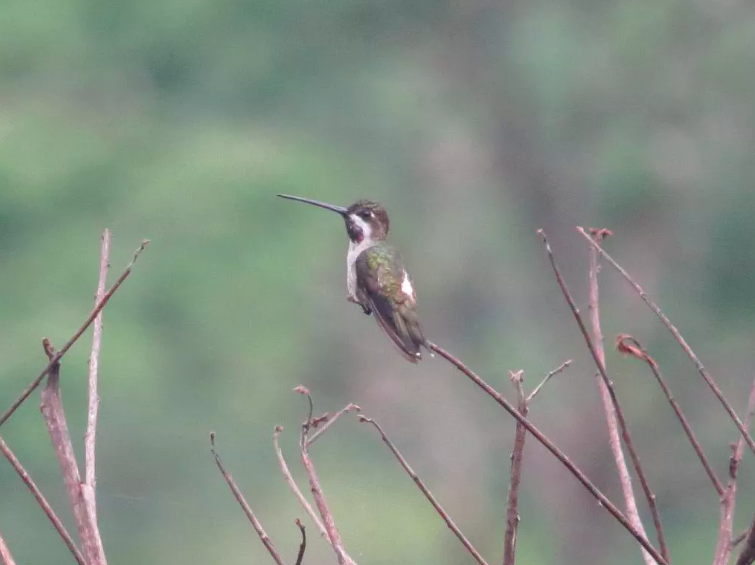
Bird Behavior at Xandari II

I recently accrued enough videos of birds doing interesting things at Xandari to make a new video to share here. By chance, all the footage I’ve gotten over the last few months has followed a common theme: pecking and pulling. In the video above, you’ll notice that all five species of bird — Rufous-naped Wren, Hoffmann’s and Lineated Woodpeckers, Lesser Greenlet, and Rufous-capped Warbler — were either pecking or pulling at something in an effort to get some food.  Continue reading

Reasons Not To Eat Certain Things

PHOTOGRAPH FROM PIEPENBURG / LAIF / REDUX

PHOTOGRAPH FROM PIEPENBURG / LAIF / REDUX

For those of us on a recent reconnaissance mission in Greece, this post from the Elements section of the New Yorker‘s website seems just a bit late, but nonetheless an excellent thought exercise:

Ben Lerner’s new novel, “10:04,” opens with a meditation on a decadent and expensive lunch in Chelsea, prominently featuring baby octopus. The narrator is supposed to be celebrating the six-figure sale of his book, but instead he focusses on the absurdity of the meal: “the impossibly tender things” had been “literally massaged to death.” He wonders about eating “an animal that decorates its lair, has been observed at complicated play.” Afterward, he and his agent walk out onto the High Line to watch the traffic on Tenth Avenue, and he experiences an empathic response to the once sentient octopuses now curdling within him:

I intuited an alien intelligence, felt subject to a succession of images, sensations, memories, and affects that did not, properly speaking, belong to me: the ability to perceive polarized light; a conflation of taste and touch as salt was rubbed into the suction cups; a terror localized in my extremities, bypassing the brain completely. Continue reading

Giraffes Deserve Science As Much We Need Good Science Writers

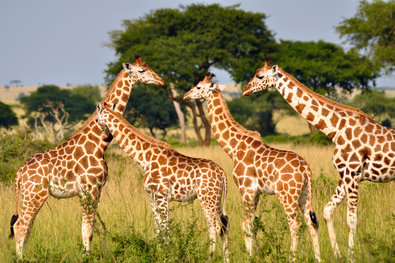
Julian Fennessy. Giraffes are the “forgotten megafauna,” said the  executive director of the Giraffe Conservation Foundation.

Julian Fennessy. Giraffes are the “forgotten megafauna,” said the executive director of the Giraffe Conservation Foundation.

We have been highlighting science writers since our outset as a blog, following a longstanding respect from our contributors for their particular talent, which has made us richer by reaching fruit that is sometimes too high on a tree to reach and bringing it where we can reach it.

From the current New York Times weekly section highlighting and explaining scientific matters of interest to us with one of the greatest writers in the genre, we now turn our attention to giraffes for the first time in our several years sharing (and as pointed out in the article we can only wonder why we have not paid more attention to such a creature prior to now):

SCIENCE TIMES: OCT. 7, 2014

Our Understanding of Giraffes Does Not Measure Up

By NATALIE ANGIER

Giraffes may be popular — a staple of zoos, corporate logos and the plush toy industry — but until recently almost nobody studied giraffes in the field so there is much we don’t know about them.

A Conversation with Bill Gates

Screen Shot 2014-10-06 at 3.43.23 PMLast week, Bill Gates visited Cornell University for a question and answer session after attending the dedication of Bill & Melinda Gates Hall, the new Computing and Information Science building that was supported by a $25 million gift from the Bill & Melinda Gates Foundation. You can read a summary of Mr. Gates’s discussion here.

World Wildlife Week: Spotted and Sambar Deer

tiger hunt

As a part of celebrating World Wildlife Week I will be sharing information about the importance of saving our Natural Heritage, hopefully trying to create awareness among the growing population of nature lovers and wildlife photographers. My first post makes the correlation between a healthy tiger habitat with our own well-being.

Now let me talk about the importance of deer in our forests.

One of the primary reasons why large areas of forest in India no longer have tigers is because local people have hunted and eaten away most of the prey animals. While the direct poaching of tigers is contributing to their rapid decline now, it is the steady erosion of the tiger’s prey base that has resulted in low numbers of tigers to start with.

An adult tiger needs about 3000 kg of food a year. This translates roughly into one deer-sized animal every week.

Continue reading

If You Have No Problems

Mother and kids at Kayal Villa

Goats have been on our radar recently for various reasons, mainly dairy. Kayal Villa got its first family of goats a few months ago and the herd has expanded organically, so to speak. And we have expanded it by bringing in new individuals from various locations to expand the gene pool.

We do so with some awareness of the challenges ahead, all in the interest of better dairy for our kitchens. We have heard it said that “if you don’t have any problems, get a goat” — the humorous meaning of which is related to goats being notoriously troublesome in their eating habits, devouring everything in sight and very cleverly finding their way to go where they should not go and do things they should not do (i.e. if you have no problems, you will if you get a goat).

But this briefing in Conservation gives us more reason to appreciate these hooved creatures:

Where herbicides and mowers have failed, goats might succeed. In a new study, scientists have found that these humble herbivores can devour 12-foot-high invasive plants, allowing native species to regain a foothold in wetlands.

Continue reading

World Wildlife Week: Why Save the Tiger?

tiger by Sudhir Shivaram

As a part of celebrating World Wildlife Week I will be sharing information about the importance of saving our Natural History, hopefully trying to create awareness among the growing nature lovers. Lets start with why we need to save the Tiger.

The tiger is at the top of the food chain. Therefore, the healthy presence of tigers indicates healthy forests. The presence of tigers in a forest has dual benefits, firstly, it keeps the ungulate (hoofed animals like deer and wild boar) population in check and also keeps humans at bay as most people are scared of venturing into a tiger or lion forest. This mostly applies to poor villagers and not poachers and hunting tribes. If there is no apex predator, herbivores wreak havoc and humans enter the forest for farming, logging, and poaching of smaller animals with less fear. The existence of tigers is vital for the survival of forests. But why do we need forests? Think of the forest as a gigantic sponge. A sponge absorbs water and stores it until and unless you squeeze it out.

Continue reading

Don’t Just Sit There!

The WeBike cycling desk can be found at airports and train stations across in Western Europe. WeWatt

The WeBike cycling desk can be found at airports and train stations across in Western Europe. WeWatt

Do something! That is a call to action everyone has heard at some moment in their life, from a drill sergeant, a coach, a parent…and it turns out there is good reason to heed the call for the sake of longevity. And entrepreneurs are doing something about it to give you options in unexpected ways and places, as we learn in this story from National Public Radio (USA):

Amsterdam is famous for its laissez-faire attitude about extracurricular activities, its beautiful canals and of course, its bicycles. Now, even if you only have a layover at Amsterdam’s Schiphol Airport, you can get in some pedaling, and power your phone and other devices at the same time. Continue reading

Reversing Extinction Risk

extinctiontimes

Thanks to Conservation for this note on the relationship between the proper identification of a species’ extinction risk and the amount of time practically required to do something about it:

Congratulations, you’ve made the IUCN Red List of Threatened Species! Now what? Is that enough to promise your salvation? Or will the increasing press of climate change on your vulnerable/endangered/critically endangered back spell your doom anyway?

A new study aimed to answer this question, of just how long placement on the Red List gives conservationists to try and save a species on its way to oblivion thanks to climate change. Continue reading