World Tourism Day

September 27th is World Tourism Day! As the UNWTO Secretary-General Taleb Rifai said in his address this year,
Tourism is a people-based economic activity built on social interaction, and as such can only prosper if it engages the local population by contributing to social values such as participation, education and enhanced local governance. At the same time, there can be no real tourism development if such development damages in any way the values and the culture of host communities or if the socio-economic benefits generated by the tourism sector do not trickle down to the community level.

Continue reading

Lionfish, Prized Case Study In Innovative Environmentalism

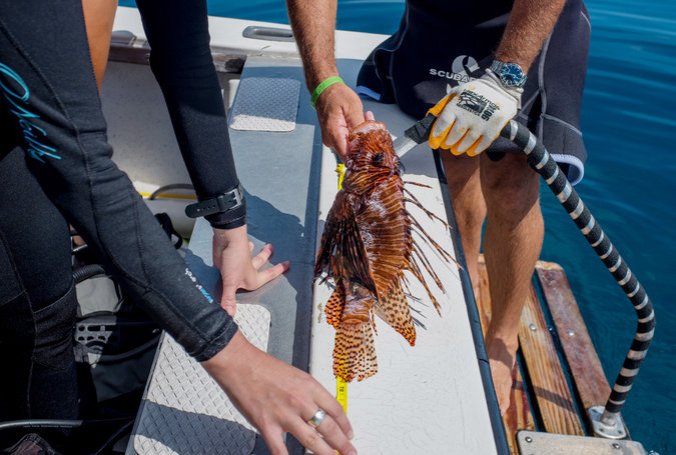
A lionfish caught near Homestead, Fla., by researchers for the Reef Environmental Education Foundation, which is trying to curb the species’ proliferation. Credit Angel Valentin for The New York Times

A lionfish caught near Homestead, Fla., by researchers for the Reef Environmental Education Foundation, which is trying to curb the species’ proliferation. Credit Angel Valentin for The New York Times

We have hosted a series of posts from Raxa contributor Phil Karp, with citizen science and entrepreneurial conservation angles to the story; and now the New York Times considers the story fit to print in a well-detailed reportage:

A Call to Action Against a Predator Fish With an Import Ban, an App and Even Rodeos

Continue reading

Pysanky (Part Three)

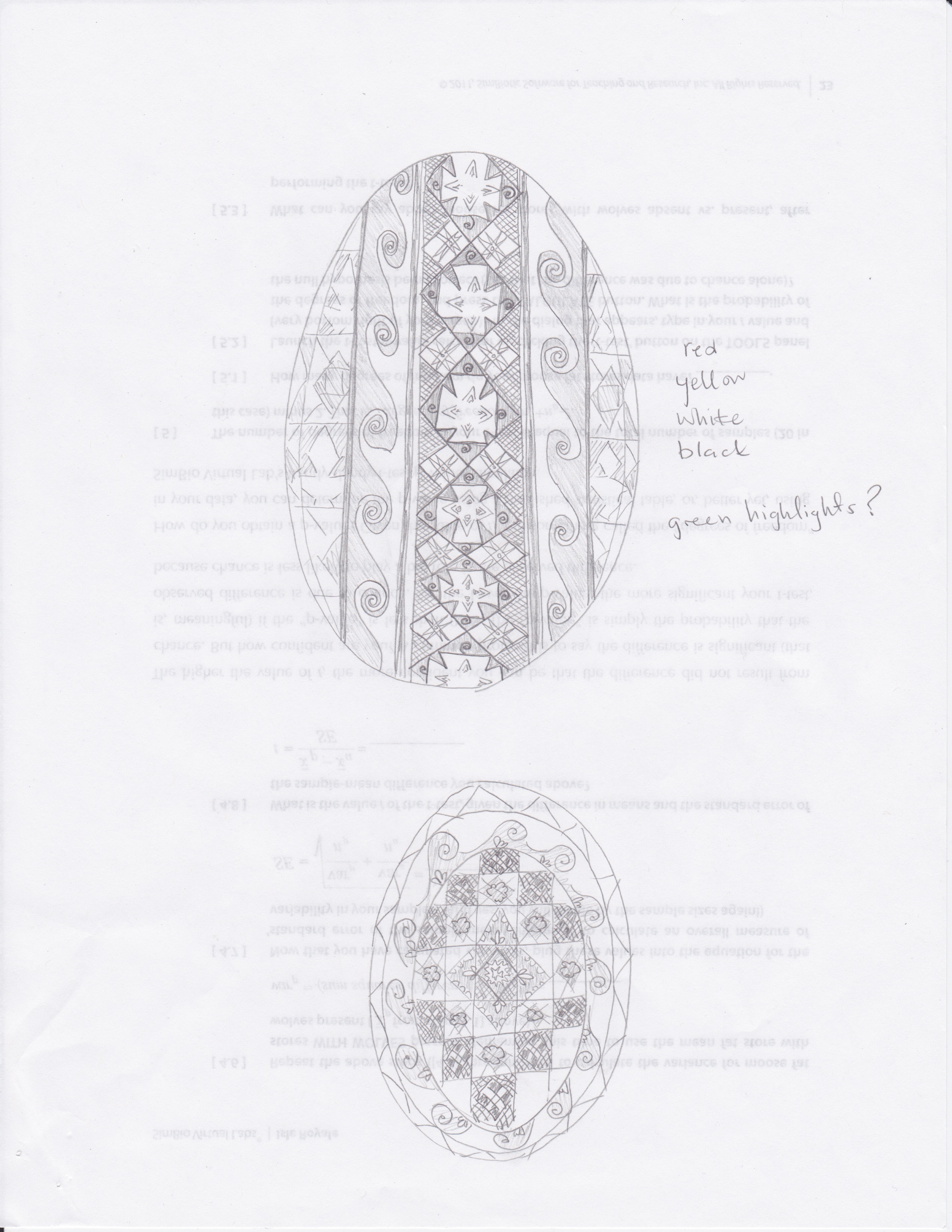
Egg blueprints

Egg blueprints for a previous project

Access Part One and Part Two if you haven’t checked them out yet!

As we reach the end of September, it may seem strange to be posting about a traditional art form that generally revolves around the festivities of Easter. Even though none of my egg creations have had religious foundations behind them, I’ve still always worked on them in the springtime around holy week because that’s the accepted time to be fashioning and gifting “Easter eggs.” Being at Xandari for the past several months, however, where the gift shop could always use another little shelf of locally-crafted artwork souvenirs, I’ve been thinking about making a round of trial eggs to put up for sale and see how it goes. After all, we could dedicate any profits to more artwork supplies for the Tacacorí school or another good local cause.  Continue reading

Radio Simplified

public-radio-w-typewriter-small_slide-96cb44cba3000a97d7787e78953e7f58e9060639-s4-c85

The Public Radio can be programmed to one station and one station only. Courtesy of Zach Dunham


National Public Radio (USA) can be forgiven what seems like a potential conflict of interest, giving media attention to a product that shares key brand attributes. There are enough distractions in the world that we can but pick and choose those to pass on here, and this one passes the test due to its innovative simplicity relative to its capacity to induce a smile:

Mason jars have been riding a huge wave of popularity thanks to hipsters who embrace them for pickling projects, cake containers and all sorts of craft creations. Now, two engineers from Brooklyn are turning Mason jars into simple sound machines, to play your favorite FM radio station. Continue reading

Pysanky (Part Two)


To continue learning about the process of creating pysankyContinue reading

Advances In Solar-Based Flight

We do not expect this to mean we will board such a plane anytime soon, but anyway thanks to the New York Times for this news about advances in in our ability to harness the sun in ever-better ways:

SOLAR-01-thumbStandardSwiss Pilots to Fly Solar Plane Around World

The trip, which will begin and end in Abu Dhabi, will involve about 25 days of flying over four to five months, with stops in Asia, the United States and Southern Europe or North Africa.

National Clean-up Day in Costa Rica

This Sunday, while thousands of people were marching in NYC and other major cities around the world, Costa Rica had its national clean-up day in communities, rivers, lakes, beaches, and oceans. Designed to collect recyclable material as well as trash, the program was organized in part by the Ocean Conservancy and Terra Nostra, and sponsored by relevant government agencies. Xandari invited community members to join in to work around the roads in Tacacorí and the neighboring town of Tambor, and including four hotel employees and myself we had forty-five people come out from 7am-11am to pick up and sort trash. Many of these individuals were young children and teenagers, which was an encouraging sight!

Part of the street before trash pick-up

On Saturday, a team of thirteen hotel employees had also gone out along the Tacacorí river, and they collected a total of twenty-two pounds of plastic, forty-four pounds of glass, ninety pounds of scrap metal (tins, car parts, etc.), two-hundred pounds worth of car tires, and four-hundred and sixty-two pounds of just trash (clothing and other non-recyclable waste). The next day, the group of forty-five combing the streets found a hundred and twenty-seven pounds of plastic, a hundred and nineteen pounds of glass, sixty-six pounds of paper and cardboard, and six-hundred and six pounds Continue reading

Pysanky (Part One)

Several years ago, my aunt gave my mom and me a starter kit to make Ukrainian Easter eggs, knowing that the two of us enjoyed art and working on detail-oriented things. Included in the package was this book, which contains a great history of the tradition as it evolved in communities around the US through the work of Ukrainian immigrants. The book also, of course, explains how to make the eggs and includes many fantastic photos of eggs that the authors or their friends have created over the years, in countless patterns and color schemes. These exemplary eggs have served as perfect inspirational diving-boards for my mom and me as we create our own pysanky every year (when we have the time).

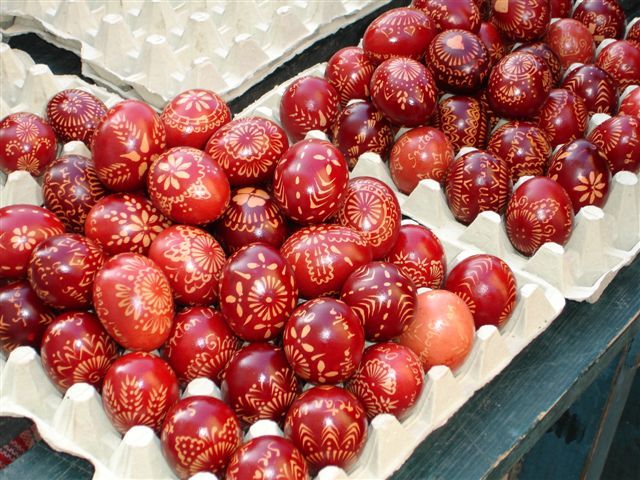
Croatian Easter eggs made for neighbors, friends, and family

The process always starts with creating the dyes. In Croatia, on the island of Koločep where my family lived for a year, we learned that villagers use a boiling water bath of red onion skins, walnuts, roots, and herbs. This creates a reddish dye that stains the egg a reddish color. The problem is that the boiling water also removes the wax that covered the egg before it was placed in the dye, so you only get two shades on the egg, but that’s Continue reading

Let’s Consider Meat Free Monday

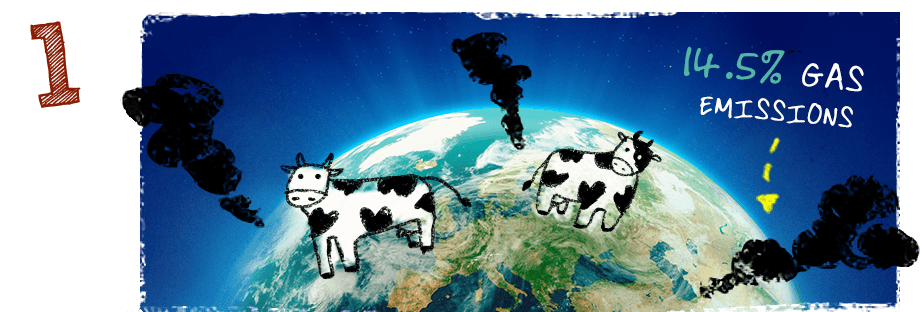
MFM-LogoAs a former Beatle urges, let’s consider a simple mechanism for doing something other than taking to the streets or publishing an op-ed item–both of which we also encourage if your location and clout allow–in advance of the Climate Change conference. Why this particular mechanism? Well, to start with it is easy. Also, the impact could add up if enough of us participated. You probably already know about meat’s carbon footprint, but here is a message from Meat Free Monday to refresh your memory:

Fact1

Meat production is responsible for 14.5 per cent of global greenhouse gas emissions, according to the United Nations Food and Agricultural Organization1, with some scientists saying the percentage is higher. Continue reading

From the Flora-Files, Part 4

This little gem can be found along the path to the art studio.

And so the flora-files march on (see past posts, starting from the most recent here). Continuing these posts has become a way for me to reflect on the wonderful opportunities I had at Xandari and around Costa Rica to come into contact with a lot of fascinating and beautiful flora and fauna. As I peruse my photo catalogs and look for pictures to post, I feel like I’m back there, even briefly. Continue reading

Animals Out Of Place

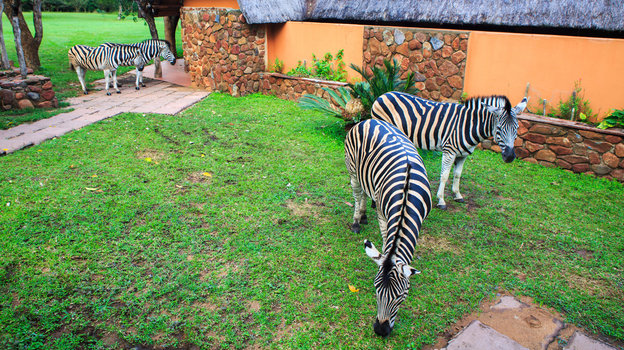
zebra_ozy_2_wide-db72ef84345cb602749821526cdb930e0e4ee129-s4-c85

Sure, they’re cute. And owning them is legal in more places than you might think. That doesn’t mean buying a zebra is a good idea. Ozy.com

National Public Radio (USA) shares a story about animals in places where they do not belong:

It’s a hot, dry day in Kerrville, Texas, and more than a hundred people have gathered in a small circular barn. The crowd is mostly men, tan and weathered from working outdoors, but three little girls perch on a bench in the front. The littlest, who wears a Frozen T-shirt emblazoned with Elsa’s face, leans forward, her eyes wide, and announces to her friends: “I really want a zebra!” Continue reading

Night Train, Climate Change, Action

Illustration by Otto


If you did not happen to be in New York today, but agreed that small sacrifices are necessary even if insufficient conditions for battling climate change, consider signing the petition mentioned in the following (a guest editorial, in today’s Guardian), which you should read all the way through before deciding:

Back in May I was on a sleeper train between Paris and Berlin, chewing on a biro and filling out a questionnaire. As the sun set across the rolling hills of the French countryside, I assiduously answered question after question about how often I used night trains and how I felt about the standard of service. I was hopeful that the questionnaire heralded a new era of growth in this crucial service. I couldn’t have been more wrong.

This month Germany’s state railway provider, Deutsche Bahn, confirmed it has decided to terminate a large number of overnight services, including the lines from Copenhagen to Basle/Amsterdam/Prague, and Paris to Hamburg/Berlin/Munich. The network cites low income, high overheads, losses of millions of euros and slow growth. Continue reading

Licensed to Kill: A Look at Noble Rot

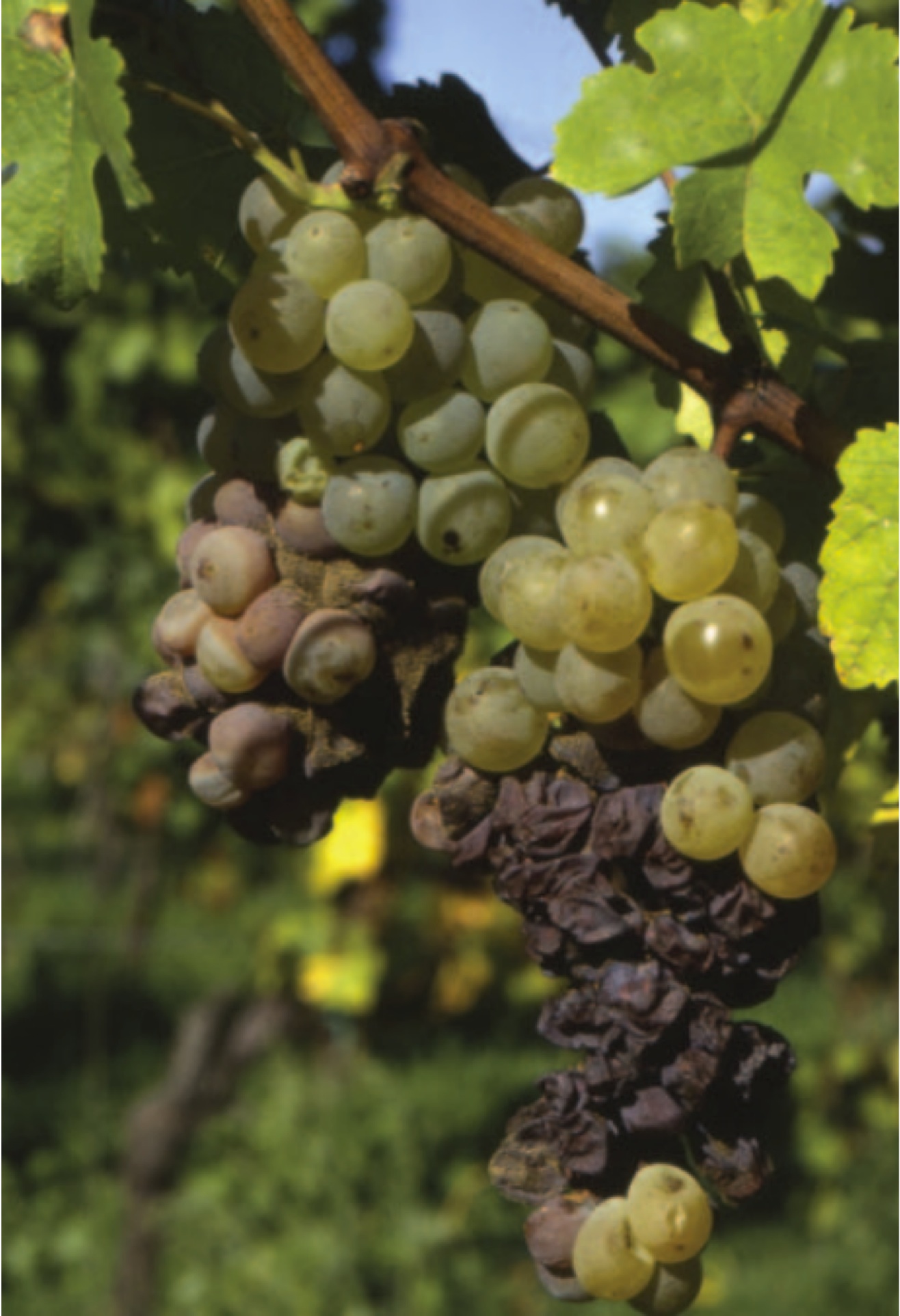
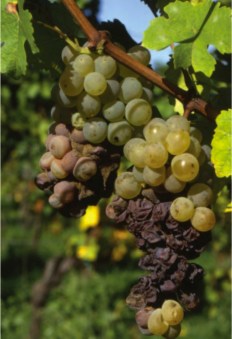
Jackson, Ron. Wine Science Principles and Applications Plate 9.1 - Cluster of grapes at different stages of rot.

Jackson, Ron. Wine Science Principles and Applications Plate 9.1 – Cluster of grapes at different stages of rot.

The fungus Botrytis cinerea — a type of gray mold — is the kind that grows on the old berries in your fridge, but in the vineyards of Europe (and more recently some other wine-producing regions artificially infected, but more on that later) B. cinerea doesn’t always turn valuable fruit into a furry mush. Also known as noble rot, B. cinerea has the potential to positively change wine grapes, in the right conditions. Depending on a vineyard’s microclimate, infection can result in either gray rot, which essentially ruins the grapes, or noble rot, which leads to unique dessert wines such as the Tokaji Aszú of Hungary, the higher Prädikat wines of Germany, and the Sauternes of France (the most prized of which can fetch $750 a bottle!).

In a single vineyard there can be completely healthy grapes, grapes with gray rot, and grapes with noble rot, all in close proximity to each other. The required conditions for noble rot formation are incredibly narrow. Like with most fungi, humid conditions favor formation. However, alternating dry and rainy periods, particularly frequent morning fogs, are necessary for the formation of asexual conidia (spores). Therefore, noble rot seldom occurs in hot and dry areas, since sunny and windy conditions allow more water evaporation. Continue reading

If You Happen To Be In New York City

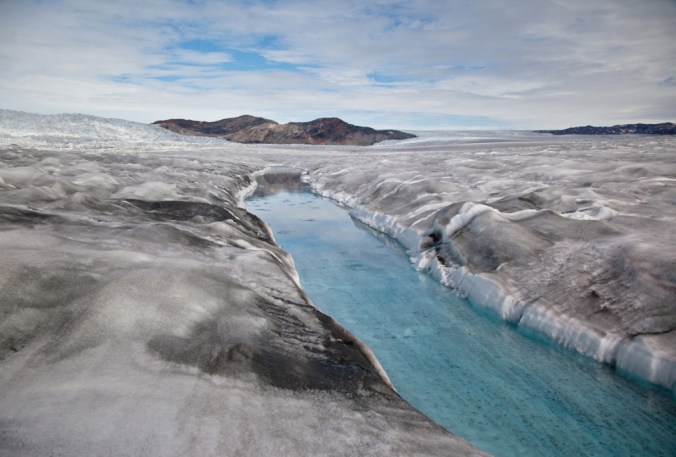
Henrik Egede Lassen/Alpha Film/Arctic Monitoring and Assessment Programme Global warming is already wreaking havoc on human civilization.

Henrik Egede Lassen/Alpha Film/Arctic Monitoring and Assessment Programme
Global warming is already wreaking havoc on human civilization.

The New Yorker interviews a former staff writer, now an activist, about an event today in New York City that looks worthy of attendance if you are in town. We have noted several of this fellow‘s earlier activities, and do not tire of doing more of the same. Click the image above to go to the original invitation in Rolling Stone in May:

On Sunday, tens of thousands of demonstrators are expected to join the People’s Climate March through midtown Manhattan; its Web site describes it as the “largest climate march in history.” In May, Bill McKibben wrote an article in Rolling Stone, “A Call to Arms: An Invitation to Demand Action on Climate Change,” which laid some of the groundwork for this weekend’s events. We spoke about the march with McKibben, one of its lead organizers, and a former New Yorker staff writer.

According to the Los Angeles Times, anywhere between a hundred thousand and four hundred thousand people are expected to come to New York City for the People’s Climate March. Can you tell us about how you, and others, came up with the idea for a large demonstration and how you turned it into what it is now?

Continue reading