Conquering Iceland’s Mountains: The Alpine Club (Part 1)

Aerial view of Iceland © Sarah Martinet

It has been months since I’ve mentioned Iceland on the blog, partly because I was exhausted with the subject after completing my thesis in mid-April, but also because I’ve been occupied with less academic matters over the summer. Another reason for revisiting the topic is that over the summer I had the honor of learning that my thesis was added to the Kroch Library Rare and Manuscript Collections–hopefully somebody will find it useful eventually! Now that the volcanic dust has settled and the borrowed library books have been returned, I feel there are a couple facets of nineteenth-century British travel to Iceland left to explore here.

I’ve written about some of the qualities exhibited by British travelers to Iceland before, but Continue reading

Throwback Thursday: Anteating Howler Butterflies

This post was originally published on August 2nd, 2011.

While walking to Morgan’s Rock’s lobby yesterday morning, Pierre heard some rustling in the bushes on our right. We looked for the source and were stunned to see an anteater standing on its hind legs, spreading its arms and swaying about like a drunkard but in fact trying to dissuade us from attacking it by trying to appear larger (it was bigger than a very fat house cat, but not by much). I immediately pulled my video camera from my pocket and started filming, and although the anteater had ceased his humorous movements and started climbing a very thin sapling, the footage was incredibly fortunate and very entertaining.

Since the tree he decided to grasp was so young, it started to bend as he climbed higher, reminding me of cartoons where characters are catapulted out of the branches after a certain point. The anteater was less than a meter away and at times looked like a teddy bear, but as a wild animal—and one with claws in full display at that—we refrained from touching him and were satisfied with a video. Eventually, the formicary raider descended the sapling and chose a better escape tree (in a pose reminiscent of the boa’s in a previous post), and we left happy with the sighting of what I thought I’d only be able to see in the summer when foliage was less dense. Continue reading

51 Spice

The video above follows the process of acquiring, drying, and blending a mix of Indian spices to create the 51 spice mixes that head chef Ghanshyam Giri will be using for special chicken or fish dishes.

This slideshow requires JavaScript.

Back in January, I shared another spice video (which I didn’t Continue reading

Marine Reserves And Their Discontents

mpafisheries

Thanks to Conservation magazine for this:

MARINE RESERVES BENEFIT ONLY BADLY MANAGED FISHERIES  September 9, 2014

When you’re close to hitting bottom, there’s a whole lot more room for success. This appears true with regard to a long-held belief about the benefits of marine reserves, protected areas where fishing of many species is illegal: the commonly cited idea that the reserves provide spillover benefit to neighboring fisheries may only be true when that fishery is poorly managed. Continue reading

Early Audubon

Box 8. L'avocette de Buffon. Near Nantes, France, [1805 or 1806]. 1 drawing : pastel, graphite, and ink on paper ; 47 x 31 cm. Depicts the Avocet (Recurvirostra avosetta) standing on the ground with no background details. Unsigned. Audubon no. 117.

Box 8. L’avocette de Buffon. Near Nantes, France, [1805 or 1806]. 1 drawing : pastel, graphite, and ink on paper ; 47 x 31 cm. Depicts the Avocet (Recurvirostra avosetta) standing on the ground with no background details. Unsigned. Audubon no. 117.

Thanks to correspondent Kate Kondayen for this item, possibly of interest to our Cornell Lab of Ornithology friends, in the Harvard Gazette this week:

Growing up in the late 18th century, John James Audubon regularly skipped school and headed to the fields, spending his early years developing the techniques that led to his career as a famed naturalist who made pioneering contributions to art and science. Continue reading

Art, Mission-Driven & Philanthropy-Facilitated

withcap21


There is enough here to think we may be looking at a first cousin of entrepreneurial conservation. But with philanthropic channeling of initiatives and required resources, rather than straight business doing the channeling. We like it. The mission is to activate through art:

Project Perpetual harnesses the creative energy of the world’s leading contemporary artists and global influencers to raise funds and facilitate advocacy for children who are identified as high-risk by the United Nations Foundation.

Each project personally engages influencers in government, business, entertainment, and culture to part with an object of particular significance. Prominent artists then use these as inspiration to create unique works, transforming meaningful gestures into everlasting statements.

Continue reading

Stories from the Field: The Western Ghats In Search of the Bright-headed Cisticola


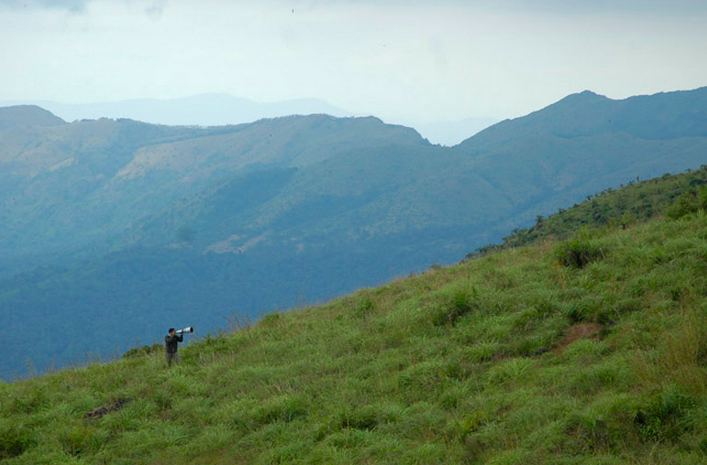
Habitat of the Bright Headed Cistola. That’s me trying to capture one! photo credit: Yathin

I always wanted to visit the Western Ghats and was looking for an opportunity to do so. The weather was a bit cloudy and was drizzling, so we were a bit worried about the weather in Kemmangundi, a hill station in the Chikkamagaluru district in the state of Karnataka. But what the heck, rain or shine, we decided to go ahead with the trip.

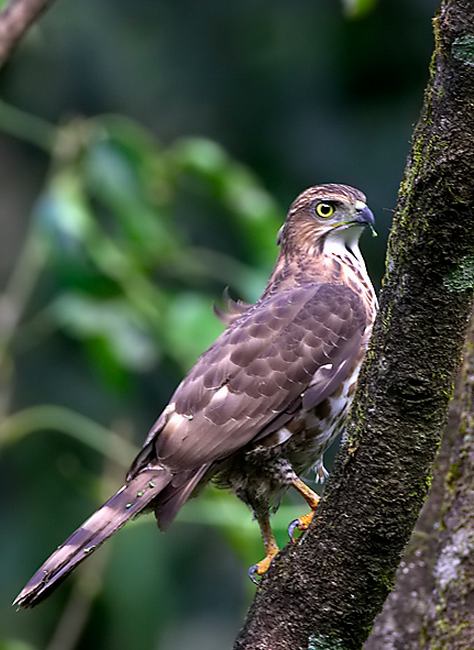
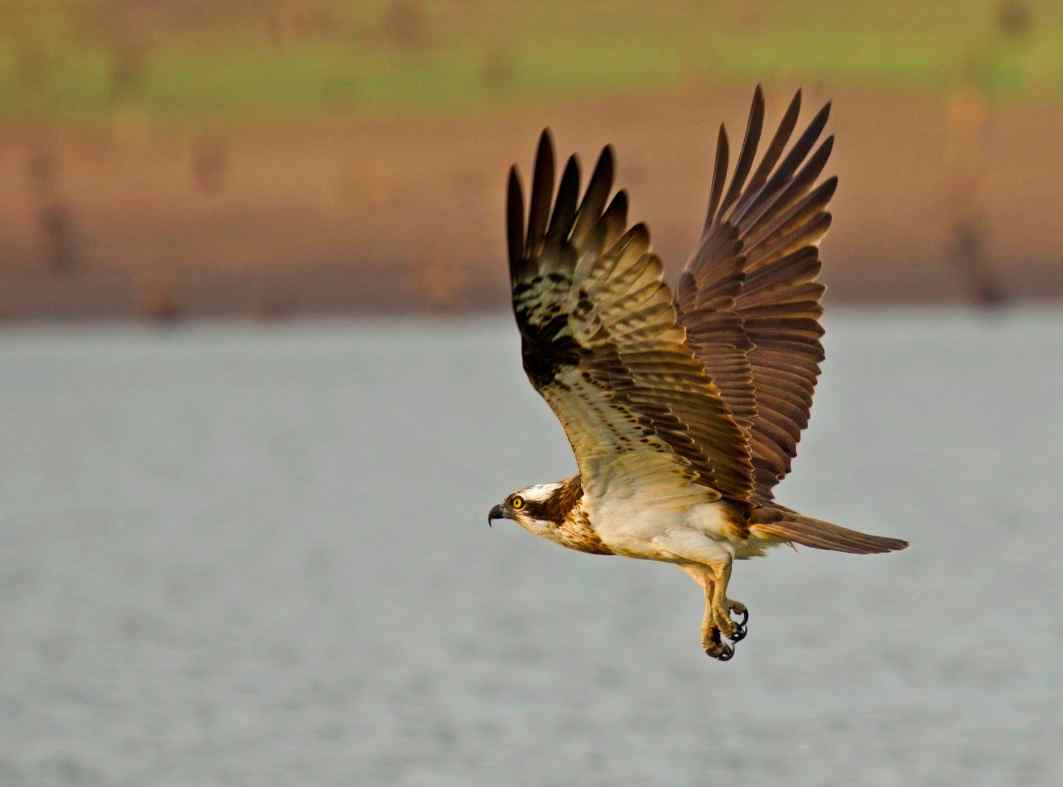
Crested Goshawk

The next morning we were all set to go and capture the brilliant Bright-headed Cisticola. After all, that was the reason for the trip. We decided to visit the same place where Yathin had shot it previously. We took it easy and shot at what ever moved in the sholas. I was a lucky to get an accipiter which we thought was the Besra. But it was later confirmed as Crested Goshawk. Continue reading

Food Rebels

From guerilla gardeners, to food foraging, to our own movement toward preserving food biodiversity and farm to table sustainability, we love to write about the food we eat and how it reaches our plate.

Luckily for all of us we’re not alone in either our interest or speaking out about it. Generations since Rachel Carson‘s seminal book there have been people writing about, and more importantly, acting upon the need to re-embrace the old methods of food production while sometimes using technology to our more healthy advantage.

Food Forward opens the door into a new world of possibility, where pioneers and visionaries are creating viable alternatives to the pressing social and environmental impacts of our industrial food system. Continue reading

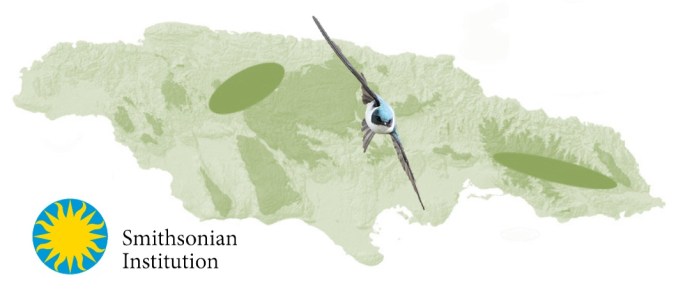
Golden Swallows, Jamaica Expedition

Article BannerIt was in 1844 that English naturalist Philip Henry Gosse arrived in Jamaica for his first time. Gosse would ultimately spend 18 months on the island, where he became fascinated in studying the local birdlife he found there. After returning back to London, he went on to publish a book entitled, “The Birds of Jamaica,” in which can be found the first formal descriptions of many birds still cruising about the Caribbean landscape today. The encounters he had with one bird in particular inspired Gosse to write the following:

This exceedingly lovely little Swallow, whose plumage reflects the radiance of the Hummingbirds, is found, as I am informed by Mr. Hill, in the higher mountains formed by the limestone range of the very centre of the island, as in Manchester, and St. Ann’s. It is not until we ascend this central chain, that we meet with this sweet bird, occasionally in the more open dells, but principally confined to the singular little glens called cockpits.

In this passage Gosse speaks of the Golden Swallow, a small passerine that has only been historically known from two islands, Hispaniola and Jamaica.  And while populations of this species continue to persist in several mountain ranges of Haiti and the Dominican Republic, the beautiful bird that Gosse describes in his Jamaican travels has not been seen on that island for more than 25 years.

Continue reading

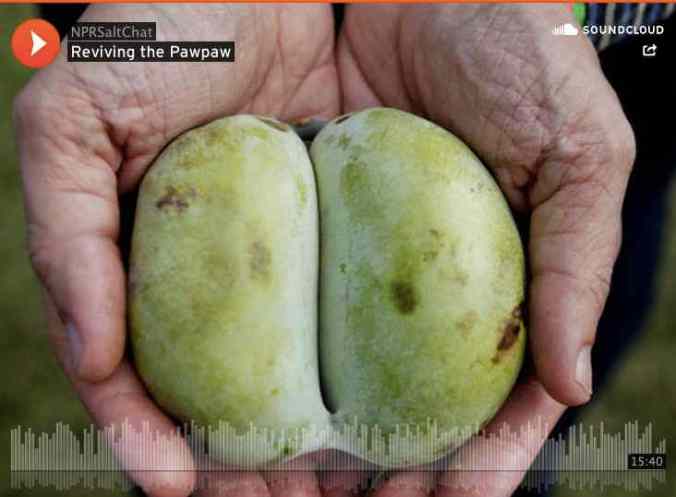
Bring On The Pawpaw!

Pawpaw


We are always interested in innovative methods for resuscitating the value of heritage, whatever form it may take, the fruity included so listen to this short podcast about the nearly lost pawpaw (thanks to National Public Radio, USA):

food for thought

A Coming-Out Party For The Humble Pawpaw, Native Fruit Darling

September 05, 2014 3:59 PM ET

If you’ve never tasted a pawpaw, now is the moment.

Continue reading

Ambling, Thinking, Progress

PHOTOGRAPH BY ALEX MAJOLI/MAGNUM

PHOTOGRAPH BY ALEX MAJOLI/MAGNUM

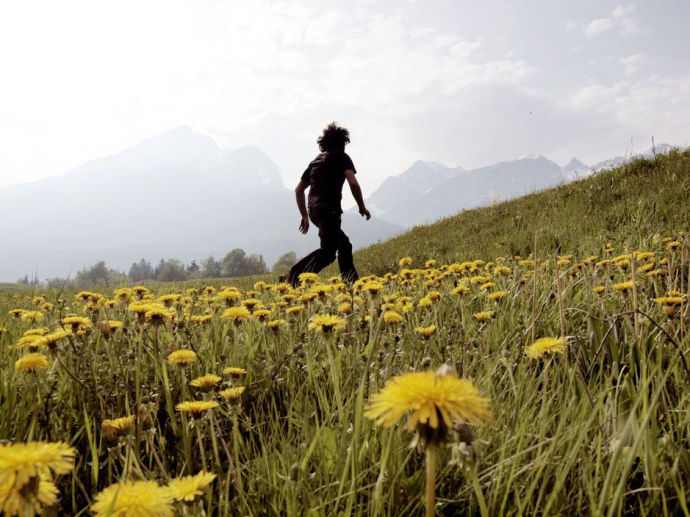
We are all for it.  We post here about walking frequently for a reason. When travelers join us, whether in Africa, Latin America or Asia there is a common thread in conversations about their journeys, with walking be essential to the value of the experience of new places. Otherwise, it is just site-seeing. This New Yorker post expands on the theme well, linking walking to thinking, which we stretch to imply (for our own work) the source of progress:

In Vogues 1969 Christmas issue, Vladimir Nabokov offered some advice for teaching James Joyce’s “Ulysses”: “Instead of perpetuating the pretentious nonsense of Homeric, chromatic, and visceral chapter headings, instructors should prepare maps of Dublin with Bloom’s and Stephen’s intertwining itineraries clearly traced.” He drew a charming one himself. Several decades later, a Boston College English professor named Joseph Nugent and his colleagues put together an annotated Google map that shadows Stephen Dedalus and Leopold Bloom step by step. The Virginia Woolf Society of Great Britain, as well as students at the Georgia Institute of Technology, have similarly reconstructed the paths of the London amblers in “Mrs. Dalloway.” Continue reading

Onam Redux

This slideshow requires JavaScript.

The most spectacular event of all Kerala festivals, Onam epitomises a new found vigour and enthusiasm about everything. The festival celebrates the return of King Mahabali, who is said to visit his subjects each year. To convince their beloved King that Kerala continues to be prosperous land of milk and honey people decorate their homes and celebrate to the fullest sometimes even faking prosperity to present a happy and flourishing facade to their King. Continue reading