More Civic Responsibility In 2024, Please

THR illustration.

Civic responsibility, short in supply in 2023, is worth pondering. The always interesting Hedgehog Review gets our vote for this final article link of 2023:

No Exit

The Uncivil Folly of Libertarian Flight
David Bosworth

Of all 36 ways to get out of trouble, the best way is—leave. —Chinese proverb

One of the scandalous revelations of the COVID pandemic was just how many of America’s superrich—our digerati, venture capitalists, corporate monopolists, hedge fund managers—had long been planning to abandon their fellow citizens should a dire national crisis arise. While poorly paid EMTs and other frontline health workers were risking their lives caring for the desperately ill, wealthy Americans who had amassed their fortunes during our tech-driven Gilded Age were fueling their private jets and stocking their remote shelters in unabashed displays of their proudly vaunted libertarian creed. Continue reading

Franzen, In The Interest Of Birds, Debunks A Myth

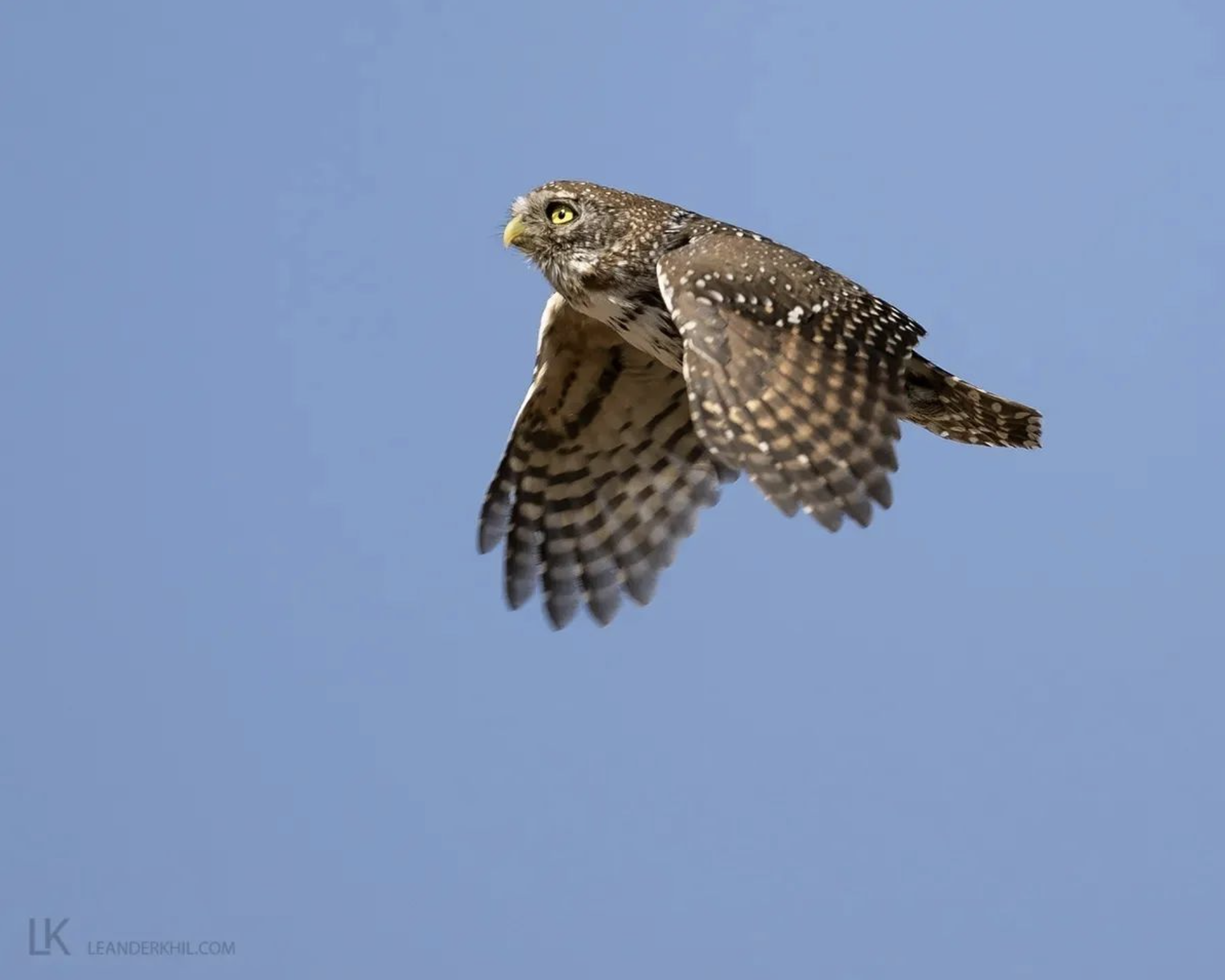
A long-serving animal-control officer described a system intensely pressured to keep animals moving through it. “No Kill sounds great,” the officer said. “But it’s a myth.”Illustration by Antoine Maillard

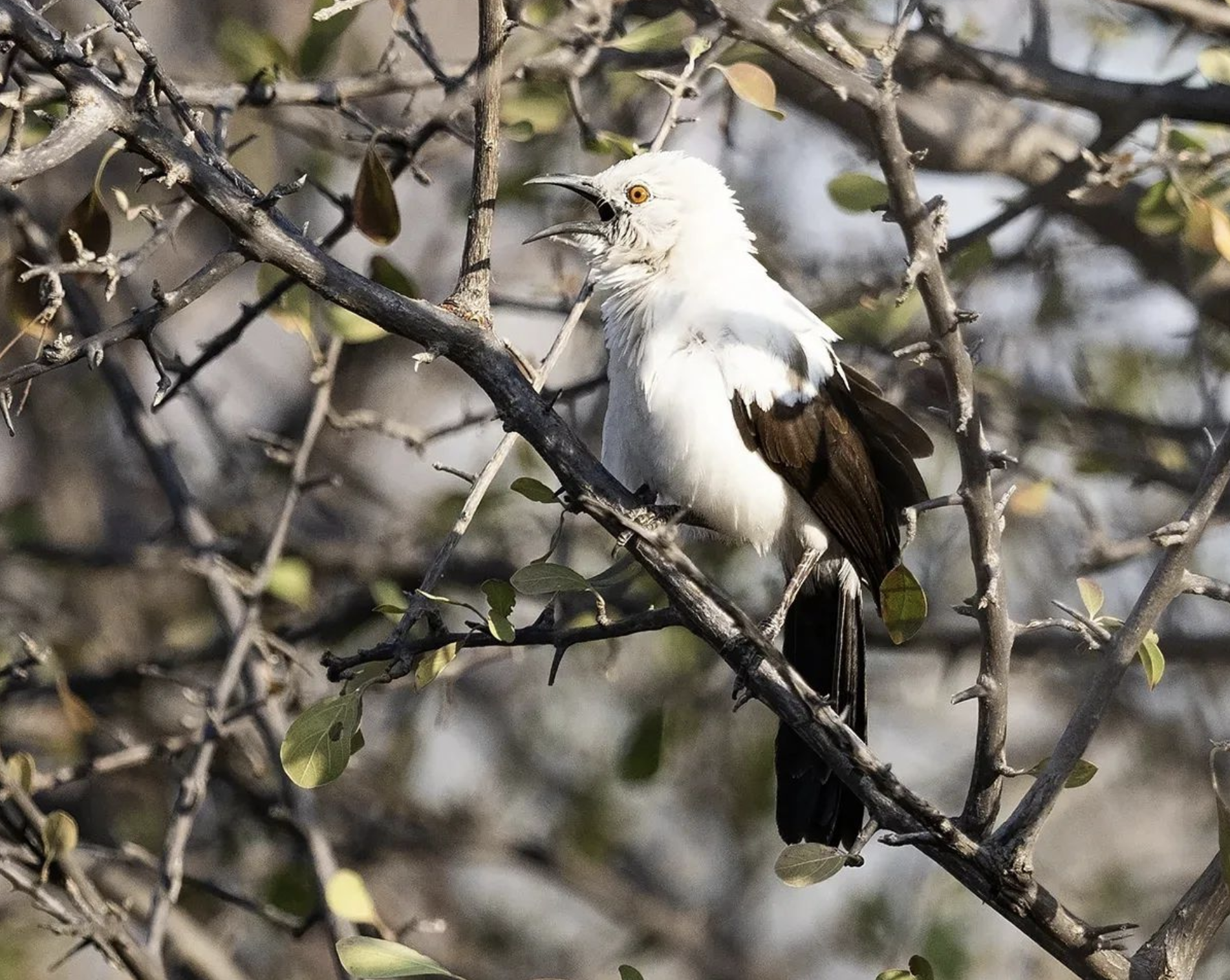
We have Jonathan Franzen to thank for some of the best writing on caring more about birds, and he helps close out 2023 with a detailed look at the implications and complications of a cat population explosion:

How the “No Kill” Movement Betrays Its Name

By keeping cats outdoors, trap-neuter-release policies have troubling consequences for city residents, local wildlife—and even the cats themselves.

This past June, at the height of kitten season in Los Angeles, Gail Raff got a call for help from the neighborhood of Valley Glen, where a young woman had trapped a cat that needed fixing. Although the City of Los Angeles subsidizes the sterilization of unowned cats, appointments at clinics are hard to come by, and Raff was known in the animal-rescue world as a trapper who secures as many appointments as she can. Continue reading
Avocados & Michoacán

An avocado farm in Yoricostio, Michoacán. All photographs from Mexico, August 2023, by Balazs Gardi for Harper’s Magazine © The artist

A decade ago we thought we should source from Harper’s more, but its blog no longer exists to read the whole story that prompted that idea. Still going strong after 173 years of publication, this recent article in the magazine helps us understand what is wrong with one of our favorite farm products:

Forbidden Fruit
by Alexander Sammon

The anti-avocado militias of Michoacán

Phone service was down—a fuse had blown in the cell tower during a recent storm—and even though my arrival had been cleared with the government of Cherán in advance, the armed guard manning the highway checkpoint, decked out in full fatigues, the wrong shade to pass for Mexican military, refused to wave me through. My guide, Uli Escamilla, assured him that we had an appointment, and that we could prove it if only we could call or text our envoy. The officer gripped his rifle with both hands and peered into the windows of our rental car. We tried to explain ourselves: we were journalists writing about the town’s war with the avocado, and had plans to meet with the local council. We finally managed to recall the first name of our point person on the council—Marcos—and after repeating it a number of times, we were let through. Continue reading
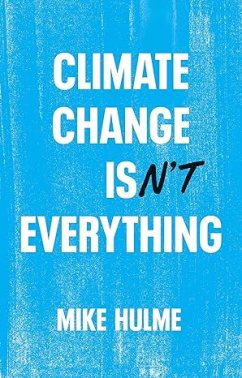
Mike Hulme’s Climate Change Isn’t Everything, Reviewed

Nicholas Clairmont reviews the book in this publication we have recently been following:

Warm Planet, Cool Heads

A new book warns against pushing all the world’s problems into the climate bucket.

Mike Hulme, a Cambridge professor of human geography who has served on the U.N.’s Intergovernmental Panel on Climate Change and holds a certificate for his contributions to that body’s climate science from when it was awarded the 2007 Nobel Peace Prize, is no climate denier. And yet time and again in his new book he is at pains to preempt the charge that, actually, he is. “Again, don’t misread me,” he writes at one point, “climate kills and climate change is real.” Elsewhere in the book he describes human-caused climate change as a “scientifically well-established fact.” So why the anxiety that readers will say, as he anticipates, “you sound just like a climate denier”? Continue reading

Bird-Friendly Architecture

The New York Times building uses fritted glass clad with rods, which make its facade more visible to birds. Photograph: Daniel Slim/AFP/Getty Images

Birds fall victim to carelessly designed buildings. Bravo to the New York Times for building a bird-friendly HQ. Also to the Guardian for reporting on their competitor’s leadership, and on the architects leading the way with careful design:

Buildings kill a billion US birds a year. These architects want to save them

Highly transparent glass can lead to devastating collisions. But innovations in design are creating safer skylines – without sacrificing beauty

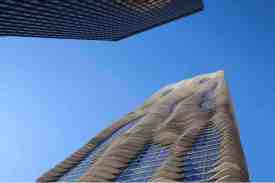
Chicago’s Aqua Tower was designed with birds in mind. Photograph: Radomir Rezny/Alamy

Chicago’s 82-story Aqua Tower appears to flutter with the wind. Its unusual, undulating facade has made it one of the most unique features of Chicago’s skyline, distinct from the many right-angled glass towers that surround it.

In designing it, the architect Jeanne Gang thought not only about how humans would see it, dancing against the sky, but also how it would look to the birds who fly past. The irregularity of the building’s face allows birds to see it more clearly and avoid fatal collisions. “It’s kind of designed to work for both humans and birds,” she said.

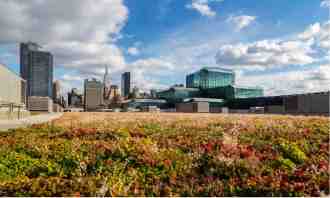
A green roof on the Javits Convention Center serves as a sanctuary for birds. Photograph: David Sundberg/Courtesy of Dan Piselli

As many as 1 billion birds in the US die in building collisions each year. And Chicago, which sits along the Mississippi Flyway, one of the four major north-south migration routes, is among the riskiest places for birds. This year, at least 1,000 birds died in one day from colliding with a single glass-covered building. Continue reading

McKibben On The LNG Methane Problem

Exporting LNG to China helps no one but frackers

Not as cheerful as Mr. Grouse, but this week’s newsletter is important reading in the interest of progress of this looming LNG problem (a gentle way of putting it, since it is more a PROBLEM than a problem):

Different Kinds of Winning

Helping Biden Help Himself–and the Planet–on Climate

We are, I think, edging towards a win on LNG exports, which would be a very good thing: a pause on the biggest fossil fuel expansion plan on earth. The question, I think, is if it will be the kind of win that makes it easier to boost the beleaguered presidential campaign of Joe Biden—which has got to be a central focus for anyone worried about the planet’s (and our democracy’s) future. And that is largely up to the White House. Continue reading

Holiday Cheer From Mr. Grouse

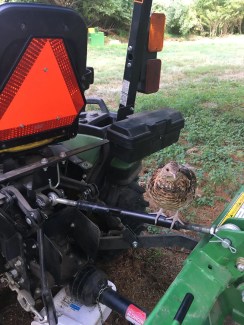
Bill Hartline and Mister Grouse. “He can be a pain, too,” Mr. Hartline said. Bill Hartline

Apart from bird-feeders, habituating wild animals among humans is troublesome. The Cornell Lab of Ornithology promotes birdfeeders so we trust that there is science supporting the practice. The science behind this grouse’s behavior represents another good exception:

Ruffed grouse are elusive and stealthy, but scientists are seeking a genetic explanation for why some of the birds become best buddies with people.

Mister Grouse helping with chores around the property. Bill Hartline

When Bill Hartline bought 50 acres of forested land outside Muncy, Pa., he was looking for a bit of solitude and a place to eventually build a new home in retirement. But during a camping trip there in early 2020, he discovered the wooded plot wasn’t as lonely as he thought. That evening, a ruffed grouse — a crow-size bird with a tiny mohawk and mottled feathers — appeared at his feet.

“I crouched down and said, ‘Hello.’ He cooed back and started following me around,” Mr. Hartline, 66, said. “Three years later, he’s still following me around.” Continue reading

The American Chestnut, Reconsidered

Illustration by The Atlantic. Source: Millennium Images / Gallery Stock; Bettmann/Getty

Katherine J. Wu reminds us of what it means to love something too much, and not enough:

America Lost Its One Perfect Tree

Lumber, shelter, delicious nuts—there was nothing the American chestnut couldn’t provide.

Across the Northeast, forests are haunted by the ghosts of American giants. A little more than a century ago, these woods brimmed with American chestnuts—stately Goliaths that could grow as high as 130 feet tall and more than 10 feet wide. Nicknamed “the redwoods of the East,” some 4 billion American chestnuts dotted the United States’ eastern flank, stretching from the misty coasts of Maine down into the thick humidity of Appalachia. Continue reading

Kelp & Life

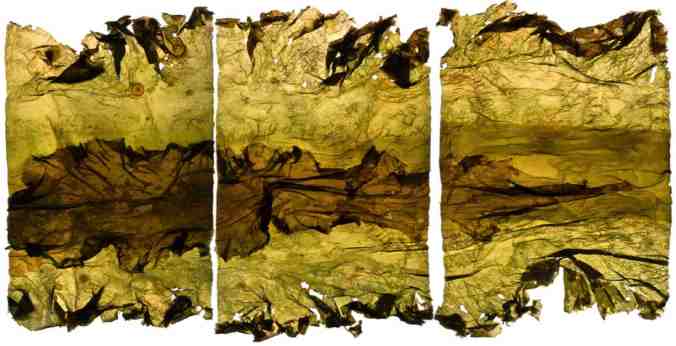
Sugar kelp from Penobscot Bay, Maine. Photograph: Josie Iselin

We have featured the promise of various seaweed schemes many times, and we find it evergreen for further exploration:

Could I live and breathe seaweed – and reduce my use of plastics – for 24 hours?

Seaweed Day starts at 8am. Haunted by pervasive news that so many of our everyday habits harm our planet, I wonder how to minimize my personal use of plastics. I embark upon a day of replacing the microplastics that pollute our atmosphere, our water and even our bloodstreams.

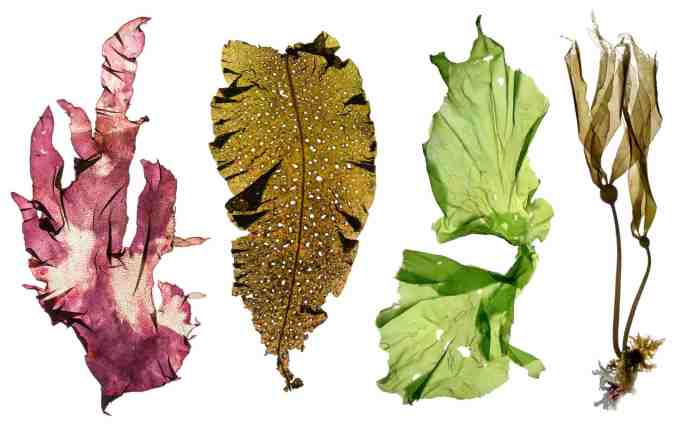
From left to right, Chondracanthus, Agarum, Ulva (sea lettuce), Nereocystis (juvenile bull kelp). Photograph: Josie Iselin

How much of my daily life can I accomplish with seaweed? Eating, washing, dressing? Armed with a budget of $500, I set out on a seaweed-based product shopping spree. Continue reading

Bikes Connected To The Grid

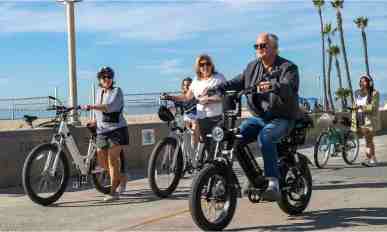
A man rides an ebike in Hermosa Beach, California. Photograph: Mel Melcon/Los Angeles Times/Getty Images

From one point of view ebikes could be viewed as just one more form of entertainment drawing energy from the grid. But an argument can be made that this increase in load on the grid is decreasing other carbon footprints. On top of that, maybe more people on bikes is its own gain:

Sales surge as cities and states look to cut pollution from cars and improve options for Americans to get around

After several years of false starts, electric bikes are finally entering the American mainstream, amid booming sales of a multiplying number of models on offer and as more states offer incentives for people to ditch their cars and shift to two, motor-assisted, wheels. Continue reading