
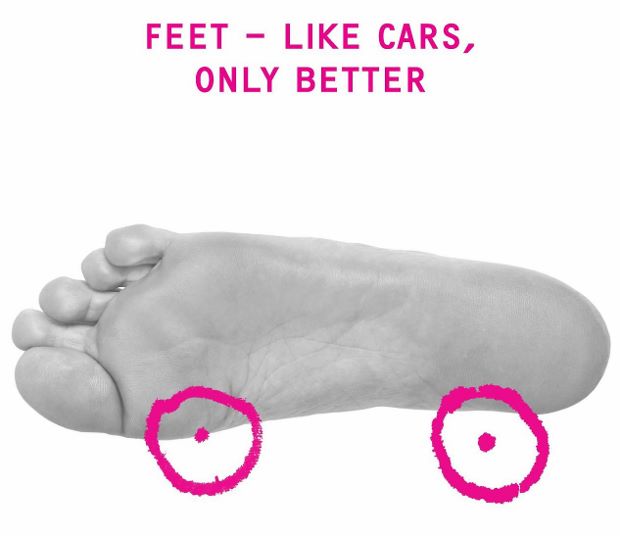
Walk the Walk by Marina Willer for 29 Posters for the Planet
We appreciate collaborative efforts to raise awareness about environmental issues, especially when they come from places where the focus is not normally on conservation. Design agencies are generally designed to sell more stuff. Publishers are generally designed to use ex-trees to communicate stuff. But some designers are on the other side of the consumer behavior-influencing fence. And some publishers use those ex-trees to publicize a more tree-centric future. Ethics sometimes prevail over ambition. Education sometimes jumps the line.
Professional communities–whether design firms, publishers, hotel companies or take your pick–all have latent collective action lurking in their futures. We hope nature and culture are the beneficiaries. Thanks in particular at this moment to publisher Phaidon, which is in itself worthy of a post on its series of environmentally-friendly books and initiatives, for bringing this initiative of design firm Pentagram to our attention:
Pentagram’s carbon free foot print
Design agency works with Do The Green Thing charity on environmentally friendly posters
The gulf between our high-consumption lifestyles and the kind of sustainable world many of us hope to inhabit is vast. Yet the changes that could take us there aren’t unthinkable, as our recent book, The World We Made, makes clear. Continue reading

Photo credit: Sanjayan
A Unesco World Heritage Site and considered one of the eight wonders of the world, the Taj Mahal is in Agra in the Indian state of Utterpradesh. Twenty-two thousand laborers and craftsmen worked on the mausoleum complex between A.D. 1631 and 1653, to the cost of what is believed to be thirty-two crore (320 million) rupees. Continue reading
It has been a while since we extended one of these invitations. More frequently than we realized, these invitations have some connection to water. This exhibit on Sophie Olsen’s website, which came to our attention due to a blog post by Jessie Wender on the New Yorker’s website, leaves us wanting to learn more about the people she has photographed. With the photograph featured in Wender’s post there is just a small bit of context:
OLSEN: Diving down to the ocean bed without any equipment, Ngui is searching for fish to bring home to his family, on the Surin Islands, off the coast of Thailand. This photograph is part of a larger series about the sea nomads called the Mokens. Traditionally, one Moken family lives for as many nine months of the year on a boat; their children learn how to swim before they can walk.
So, what better than to invite Sophie to come to Kerala and tell us more in person. Until then, on the Dazed website there is an archived blurb about this exhibit that looks like about as much as we will learn for now: Continue reading

A while back I was exposed to the wonder of Nākd bars, and I shared some reasons why you should eat them. Now, I’ve had the luck to try several more of their creative and delicious flavors. Before I dive into those, a quick aside: along with seven hundred other students, this semester I’m taking one of the most popular classes at Cornell University, Introduction to Wines. One of the course goals is learning how to parse the different aromas and their combination with the wine’s acidity, alcohol, and other elements, all of which come together to make a complex liquid.

As I tasted more Nākd bar flavors this year, I thought to myself that if I was being taught how to judge and analyze such a complicated thing as wine, then there was no reason I couldn’t apply the same process to something as naturally simple as a Nākd bar, and write some brief thoughts on the new flavors I tried! Continue reading

Photo credits : Surus
Banasura Sagar Dam is situated about 16 Km from Kalpetta in Wayanad district. It is constructed in the Banasura Lake and the nearby mountains are known as the Banasura hills. It is the largest earth dam in India and second largest in Asia. Continue reading

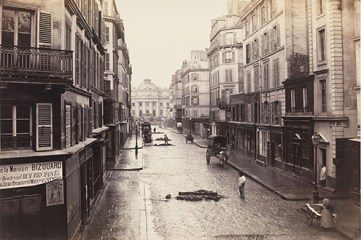
Charles Marville: Photographer of Paris
January 29 – May 4, 2014
…As the exhibition of his photographs at the Metropolitan Museum makes clear, Marville was the right man for the job. For starters, he was a local. His father was a tailor, his mother a laundress. He grew up on a cramped street near the Louvre that later vanished to make way for one of Haussmann’s imperial avenues. Like Baudelaire, his contemporary, Marville honed his eye on Paris; the city taught him to see…
Brought to our attention by a post on the New Yorker’s website today, from which the snippet of text above is taken (and where you can see 10 excellent images from the collection the text describes), this exhibit catches our eye because it has to do with both the history of photography and the cultural heritage of a lost form of Paris:
Exhibition Location: Galleries for Drawings, Prints, and Photographs, Second Floor, Galleries 691-693
Press Preview: Monday, January 27, 2014, 10 a.m.–noon Continue reading

Photo credits: Dileep
Kovalam Beach is situated outside the capital city of Kerala, Thiruvananthapuram. Comprised of three adjacent crescent beaches and a massive rocky promontory, the beach forms a beautiful bay of calm waters ideal for sea bathing. For all these reasons it has been a favorite for tourists from around India and the world. Continue reading
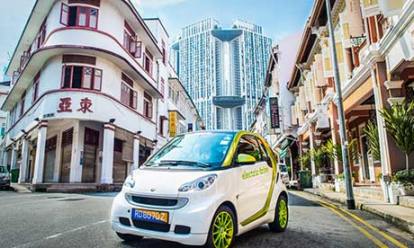
Bosch is testing the viability of electric cars in Singapore. Photograph: Samuel He/Bosch
Normally we avoid articles that look strictly like press releases promoting a PR firm’s client. However, in this case, a couple of exceptions were allowed. First, we like the storyline because of its relevance to three years’ worth of posts on our site. Second, there is not one iota of obnoxious flimflam, which is what normally forces us to avoid press releases.
But, an additional component to this one really made the difference. Nearly one year ago two of Raxa Collective’s contributors had the opportunity to visit Duke University and sit in the office of the founder and director of their Center for Energy, Development and the Global Environment. A conversation that was meant to last 15 minutes continued for hours that day, because of the credible commitment that Center and its leadership are making to ensure that future business leaders see sustainability as serious business. So, we gladly pass this newsworthy article on:
When it comes to sustainability ambitions, Singapore might take the prize. The island nation, which currently relies on neighboring Malaysia for its water, is aiming for water self-sufficiency by 2050, with 55% of its water needs met via recycled water and 25% from seawater desalination. Continue reading


Since I am a new writer for RAXA Collective, here is an introduction. My name is Kayleigh Levitt and I am currently a Sophomore at Soka University of America in Southern California. My major is in Environmental Studies with a focus in urban sustainability. I am an avid gardener and biophiliac. I believe in the transformative power of community.
I love when I meet people who show me that there are different ways to live than what is expected of us. Guisepi Spadafora serves free tea out of a mini-school bus that runs off recycled vegetable oil and biodiesel. There is a solar panel on the roof of his bus that powers his refrigerator, lights, outlets, water pump and anything he needs electricity for. He gets herbs for his tea donated on a continual basis, so he is able to have a steady menu. The companies give to him freely because they believe in what he does and he believes in what they do.He travels the land, and during a tea party, he opens up his bus and sets out chairs and rugs and serves tea for people.
The way he got started serving free tea for people was not actually on purpose. He honestly started because of loneliness in a big city. He was living in Los Angeles, in his pick-up truck, working full time and did not really have friends other than the friend he was working for. He started going to Hollywood Boulevard and would open up his tailgate, pull out his camp stove and cook a bit of dinner. He would cook a little bit of extra dinner because inevitably someone would say ‘What are you doing?’ and he would say, ‘Oh, I’m cooking dinner, would you care to join me?’ and people would then sit and eat with him, and to keep those interactions going he would just make tea for hours. Every walk of life would sit down with him, from street performers to Japanese tourists to television producers. He got really excited about the actual genuine human interactions he was having.
He had tried to go to the bars, one of the only places where you can know no one and meet people. Girls would come up and talk to him and ask him to buy them a drink, which he considered as the least genuine type of interaction one could have because the only thing they were looking for was his money.
He realized so many of his interactions with strangers were over money. Continue reading

Photo credit: Faisal Magnet
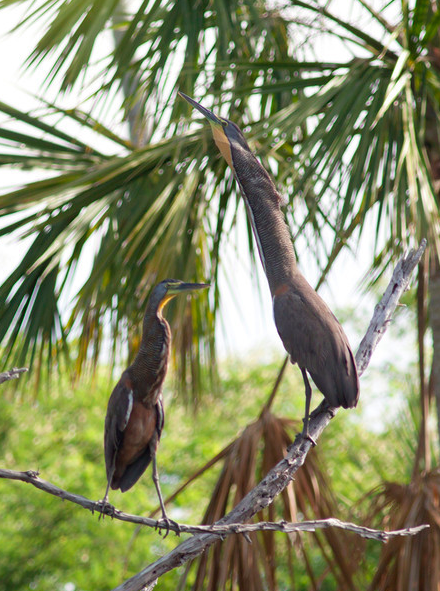
The Blue-bearded Bee-eater, Nyctyornis athertoni is found in the Western Ghats of India. This species prefers openings in patches of dense forest. Continue reading

We are always on the lookout for more information about counter-intuitive relationships between various communities of outdoor enthusiasts–including those involving people with guns, bows & arrows, and fishing rods–and their collaboration with/as conservationists. An op-ed article today on the Atlantic‘s website, by Tovar Cerulli, got us thinking about posting something we would title “Hunters, Anglers, Conservationists:”
For many environmentalists, the word “hunter” suggests a mindless brute, an enemy of nature who loves guns, kills for fun, and cares nothing for biodiversity or ecological integrity. For many hunters, the word “environmentalist” suggests a self-righteous tree-hugger, an enemy of freedom who hates guns, has no respect for hunting, and imagines nature as a Disney-like fantasyland where humans should not tread.
Though these stereotypes contain grains of truth, hunters and environmentalists aren’t as separate as many imagine. The Nature Conservancy counts many hunters among its members and staff and works closely with hunting-conservation organizations. Likewise, Pheasants Forever has thousands of non-hunting members who appreciate the organization’s work on behalf of native prairie habitats, wetlands, butterflies, and clean water.
Then we clicked through his byline to see that he is affiliated with this organization that is hosting an event this weekend in Denver and decided this would make a more interesting post: Continue reading
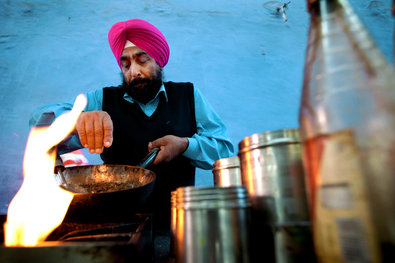
Kuni Takahashi for The New York Times
Food in India, and regional specialties in particular, are on our mind currently during kitchen tests for 51, so this article from the Travel section of the New York Times this week (click on the image to the left to go to the story) catches our eye:
Cooking at Surjit Food Plaza in Amritsar, India.
The author heads to northern India for a tasting tour of dhabas, casual restaurants famous for their inexpensive and remarkably tasty cuisine. Continue reading

Despite being “God’s Own Country,” Holi isn’t commonly celebrated in Kerala or much of South India. But that doesn’t mean we don’t think it’s a fun activity. This year at Cardamom County we helped our foreign guests embrace the festival spirit of India with colorful vegetable dye powders.

Vincent Bollore, CEO of investment group Bollore, poses by an electric car following a news conference in London March 12, 2014. CREDIT: REUTERS/OLIVIA HARRIS
Various reports in the last year or so of sharing means of transportation focused on bicycles, which itself seemed remarkable; now reports of car-sharing schemes make it seem almost impossible to believe. Whether it is altruism, rational economics, or something else at work here we will soon find out:
First it was pedal power; now Londoners are being offered electric transport to dodge their way around the city.
French billionaire Vincent Bollore on Wednesday unveiled plans to park 3,000 electric cars on London streets by 2016, as part of a car share project that emulates the popular bike hire scheme started in 2010 under Mayor Boris Johnson.
Bollore, chief executive of the group bearing his name which set up the Autolib electric car-sharing program in Paris in 2011, said electric car hire could help cut congestion and reduce pollution in the British capital. Continue reading

The New York Times Dining section has this video to ponder “another” white meat for those so inclined:
Rabbit is no harder to cook at home than chicken. Melissa Clark shows how to enhance this lean meat with olives, lemon and feta cheese.
 Organikos