
David Foster, director of the Harvard Forest, speaking at a news conference to announce the launch of a new Harvard Forest Study on future scenarios for the Massachusetts Landscape, looking as forests as infrastructure. Rose Lincoln/Harvard Staff Photographer
An article in the Harvard Gazette illustrates one kind of collaboration we hope to see more of in our home state of Kerala, India. The state of Massachusetts, USA is fortunate to be home to Harvard University and a wealth of resources–financial, yes, but more importantly ideational–that Harvard generates. Kerala has its own wealth of resources, and we hope to see here more collaboration between the public and private sectors, as well as academic institutions, such as we see in this article:
For the last two years, researchers, nonprofit representatives, and state officials have put their heads together to figure out how to maintain Massachusetts’ status as one of the nation’s most densely populated yet most heavily forested states.
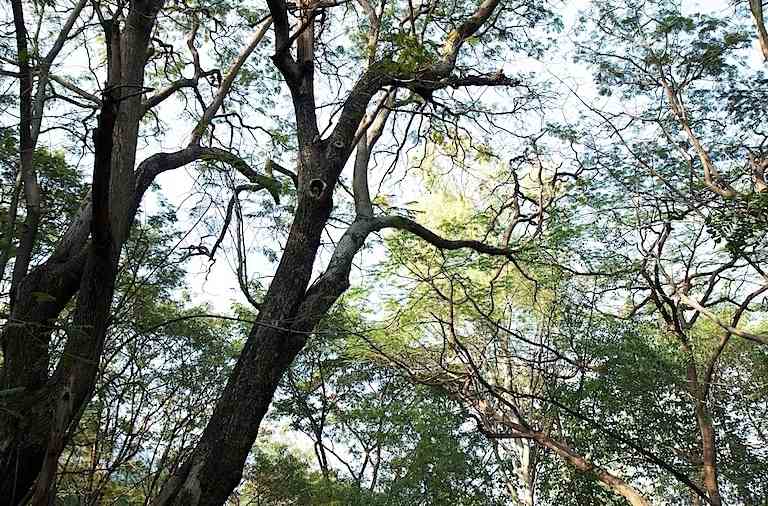
Massachusetts’ forests expanded for 150 years as people abandoned farms for urban life and reached a high-water mark in the 1970s, when they covered nearly 70 percent of the state. In the face of expanding development, however, forest cover has since declined, down to 60 percent, with further declines likely.
The result of the collaboration is a report by the Harvard Forest and the Smithsonian Institution. It lays out four possible futures for the state’s forests and highlights one, called “forests as infrastructure,” that would dramatically increase both logging and land conservation, while also encouraging clustered development to minimize forest loss. Continue reading →













 Organikos