Cake Mixing Ceremony

A Kerala Christmas season always includes a plum cake and throughout the state people begin the preparations well in advance of the holiday itself. It’s considered auspicious to invite friends to mix the ingredients that must “marinate” for 2 months prior to the actual preparation of the cakes. Cardamom County’s Cake mixing ceremony took place yesterday, 16th October. It’s a tradition at the hotel to welcome the holiday season with a fruit soaking ceremony that included staff and guests from around the world.

Property Manager Naveen Mohan described the event perfectly:

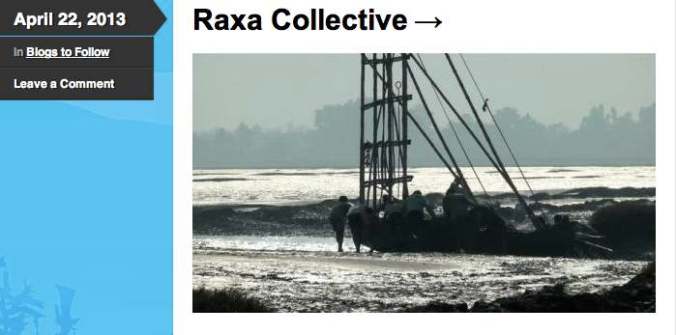
This Cake mixing ceremony happened at Raxa Collective, Cardamom County, Thekkady yesterday. The warm, friendly staff of the hotel led everyone to the ceremony. It’s a tradition at the hotel to welcome the holiday season with a fruit soaking ceremony ahead of Christmas. There were massive steel basins with candied ginger strips lining the bottom, and huge trays filled with fruit – raisins, black currants, candied orange peel, candied cherries, etc. And of course the all important ‘spirit of the season‘ in bottles – wine, rum and whiskey to soak the fruit. To set the ceremony off, we were each handed gloves, aprons and chefs hats. We set to work with handfuls of fruit ceremoniously dumped into the steel basins and started mixing the fruit. Once all the fruit was in and well mixed, ladles of the liquor were flambéed over the dried fruit and then the bottles were emptied in one by one. Continue reading

A Camera Trap By Any Other Name

Humpback whales lunge feeding in the Inside Passage of Southeast Alaska during summer on an overcast day. Photograph by Mark Kelley, Alaska Stock Images/National Geographic Creative

Humpback whales lunge feeding in the Inside Passage of Southeast Alaska during summer on an overcast day. Photograph by Mark Kelley, Alaska Stock Images/National Geographic Creative

A sweet invention, that camera trap.  Call it what you will, but the more we capture on film, it seems, the better we understand:

Humpback whales are known for their bubble nets. In Cape Cod Bay (map), the marine mammals spend the summer blowing bubbles in circles under the water and then lunging through roiling schools of fish for a mouthful of water and sand lance, a skinny, finger-length fish.

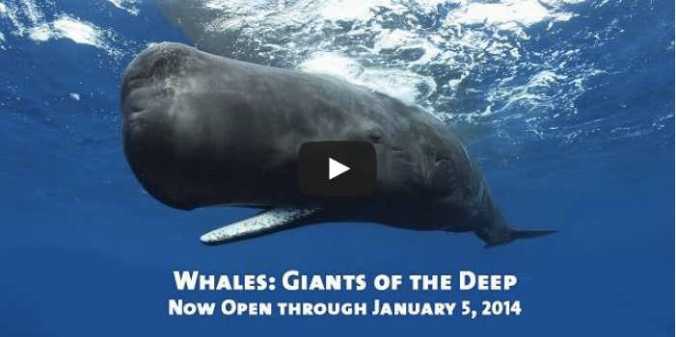
If you watched humpbacks only from the surface, you’d think that was how they got all their food. But a team of scientists has been putting tags on the whales to snoop on them underwater. They found something surprising: Humpbacks actually spend a lot of time feeding at the bottom. (Watch video of humpback whales blowing bubble nets.) Continue reading

The Hut of Romulus

Hut of Romulus (Post holes where arrow is pointing.)

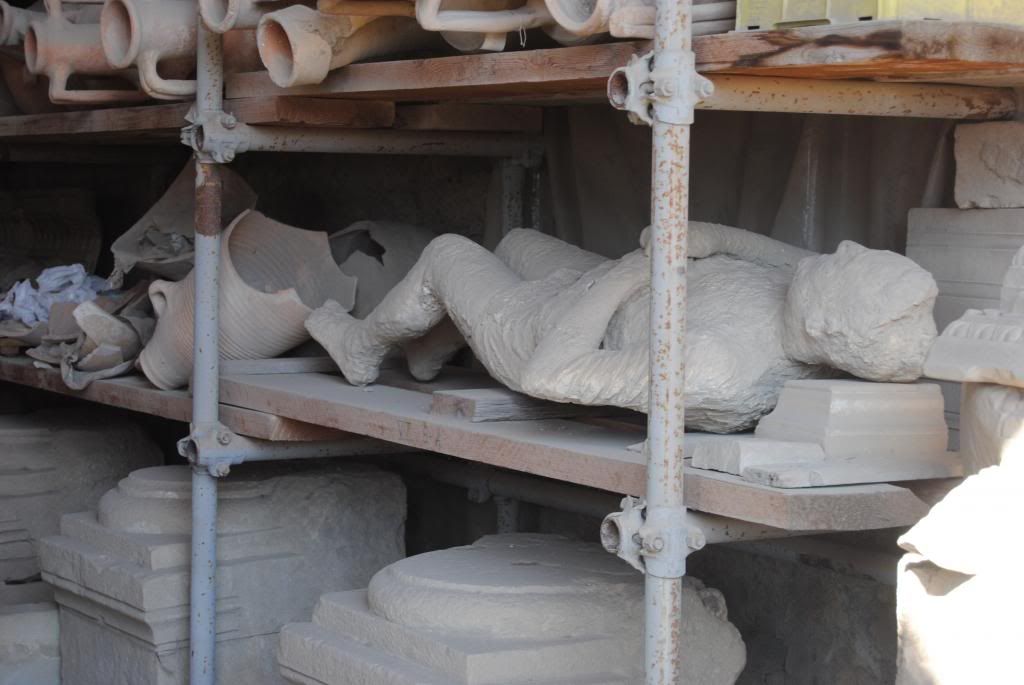
Today, all that remains of the so-called “Hut of Romulus” are the holes you see in the picture above (the slight indentations on the platform where the arrow is pointing). When intact, Romulus’ humble wattle-and-daub dwelling, located in the southwest corner of the Palatine Hill in Rome, might have looked something like this. One might have expected that the passing of nearly three millennia would not have treated well the wood, straw, and twisted bark ties of the hut, but even in its own day the Hut was prone to accidental destruction. One particularly ignominious story has a crow dropping Continue reading

Algal Jazz

The radio show Living on Earth, produced by Public Radio International (thanks to their contributors and sponsors!), first carried this story about a biologist who intuited an interplay between marine microbes and jazz music.  The interview with that biologist is here, both as podcast and transcript. Thanks to the University of Washington’s Conservation magazine for bringing it back to our attention before it floated off on the horizon:

Music in the key of algae

In the age of Big Data, making sense of the information deluge is no small feat. But biologist and jazz-music fan Peter Larsen of Argonne National Lab thinks he has a powerful way to capture the complex interplay between microbial life and the physical environment: bebop music.

Larsen’s data-driven compositions are generated by observations collected at the L4 marine monitoring station, a data buoy operated by the U.K.’s Plymouth Marine Laboratory and Marine Biological Association. The buoy records weekly measurements of temperature, salinity, nutrient levels, and other parameters. In addition, researchers classify and measure the abundance of zooplankton and phytoplankton from samples collected at the site. Continue reading

Vidyarambham – Word of Learning

Photo credits : Ramesh Kidangoor

Photo credits: Ramesh Kidangoor

Vidyarambham is a traditional Hindu ritual conducted in the first week of October at the time of Navaratri, Vijayadshami day. Vidyarambham means the beginning of education. The Goddess Sarasvati is worshiped all over the country as the Goddess of learning. Continue reading

A 3-Way Intersection As Puzzle: Property Rights, Community Rights, Conservation

We will leave surfing topics to the resident expert, Jake. But this short documentary poses a conundrum that, while we instinctively side with the surfers, challenges us as stewards of property on India’s coast line. We want everyone to have access to the beach, but we want to prevent the kind of “tragedy of the commons” that is evident when no one has clear responsibility and authority for stewardship.

As we prepare to open Pearl Beach in a few months on a pristine section of Kerala’s coast, we have taken an approach that minimizes our footprint on the land while allowing us to do what we do, hosting guests from around the world, giving them an authentic taste of local nature and culture, and channeling the profits to conservation.

Continue reading

A Thesis Hypothesis

Shutterstock

This week, the time has come for me to officially lay out some of the terms of my honors history thesis that I have been writing about for a few months now. Although this “hypothesis,” or explanation of what I expect to argue, won’t set my focused topic in stone, it will certainly be instrumental in guiding me at least in a broad sense as I move forward with writing this semester, and it will also help show my advisors what path I plan to take. Without further ado, here is my thesis hypothesis in a 400-word nutshell. Continue reading

Reading, Libraries & Good Citizenship

'We have an obligation to imagine' … Neil Gaiman gives The Reading Agency annual lecture on the future of reading and libraries. Photograph: Robin Mayes

‘We have an obligation to imagine’ … Neil Gaiman gives The Reading Agency annual lecture on the future of reading and libraries. Photograph: Robin Mayes

Libraries still have enough friends that we do not yet count them out, but the challenges they face are undeniable. Thanks to the Guardian‘s coverage of one prominent writer’s address on this important topic:

Neil Gaiman: Why our future depends on libraries, reading and daydreaming

A lecture explaining why using our imaginations, and providing for others to use theirs, is an obligation for all citizens

It’s important for people to tell you what side they are on and why, and whether they might be biased. A declaration of members’ interests, of a sort. So, I am going to be talking to you about reading. I’m going to tell you that libraries are important. I’m going to suggest that reading fiction, that reading for pleasure, is one of the most important things one can do. I’m going to make an impassioned plea for people to understand what libraries and librarians are, and to preserve both of these things. Continue reading

Charles C. Mann, Come To Kerala!

Screen Shot 2013-10-15 at 9.47.30 AMMagazines are increasingly opening their archives, and the Atlantic has been at the forefront of sharing centuries’ worth of great writing. This particular great piece of writing is one whose author would no doubt appreciate the 1491-ness of Kerala. He joins a list of others we have already invited, for one reason or another. Click the image about to go to this writer/editor’s website and here for the 2002 article that begat the book:

1491

Before it became the New World, the Western Hemisphere was vastly more populous and sophisticated than has been thought—an altogether more salubrious place to live at the time than, say, Europe. New evidence of both the extent of the population and its agricultural advancement leads to a remarkable conjecture: the Amazon rain forest may be largely a human artifact
CHARLES C. MANN MAR 1 2002, 12:00 PM ET Continue reading

Periyar Sightings – October 15th, 2013

Photo Credits : Manoj Vasudevan

Photo Credits: Manoj Vasudevan

Mr. Manoj Vasudevan, the leader of a visiting tour group, joined the nature walk last week at the Periyar National Park. We love it when our guests share their  shots with us ! Continue reading

High Tide in New York City

This slideshow requires JavaScript.

(all photos ©Ken Brown)
In India, as with the rest of the world, sometimes life gets the best of us and we miss out on the cyclical events that have marked time for millennia. Once again we have Ken Brown to thank for both bringing this event to our attention and documenting it so well.
I know it sounds like something from the Discovery Channel, but a truly remarkable event takes place each year when a 460 million year mating ritual is enacted on the beaches of New York City during a full moon high tide. Continue reading

Parents, Kids, Travel

Whether it is to India or somewhere less far afield geographically, culturally, culinarily this advisory essay is well taken:
Taking a child out of the country is no small feat. Heck, taking a child to grandma’s house for the holidays can be exhausting! Not only is it important to prepare logistically for your trip—plane tickets, passports, itineraries, etc.—it is important to prepare your child emotionally, physically, and awesomely. Your mini-me is about to become a citizen of the world, and you are already nailing it.

Disconnected

A usual day in States starts out with me waking up to the ear-drillingly loud alarm on my Samsung Galaxy, checking my email and Facebook, surfing the web and reading the news. Then I soullessly get out of bed and proceed to breakfast, during which I also constantly fidget with my phone, jotting down everything I need to do for that day and texting my friends, usually to vent about how tired we are and who has gotten less sleep. Then in class, I take notes on my laptop as I constantly browse through my email and simultaneously type things I don’t understand into the Google search bar. As soon as I get out of class, I go back to staring at my phone, browsing through Instagram and Facebook, walking to my next class or lunch. (I have once literally run into a door because I had my head in my phone and didn’t see the door at all.) Bottom line, I am always connected, always online, and always ready to access everything on the Web. A ridiculous amount of my life is consumed by my phone and my laptop.

However, on my second day in India, I went on a houseboat—my fellow intern Jake has written about it a few posts back—and it did not have Wifi! I felt disconnected and nervous. I cannot even remember the last time I didn’t have access to Internet or my phone. After a couple of hours, I simply didn’t know what to do with myself. I didn’t even have music to listen to since I always stream it from Spotify or Youtube. In hopelessness, I lay down on the cushioned sun deck, hoping to take a nap, which would kill some time. So I sat there, directionlessly looking into the backwaters, the rice farms, and the tiny villages clustered up in the narrow grounds next to the river. I watched little naked boys taking a bath in the river and running away in embarrassment as they saw me staring at them on the boat. I also watched the birds hover right on top of the river surface, meticulously and gracefully snatch the fish out of the water, and fly away gobbling it down. I watched the sun slowly setting, painting the whole sky orange and pink with its radiance.

Before I knew it, it was pitch black outside and we were called down for dinner. Continue reading

Thenmala – Ecotourism

Photo credits : R R Renjith

Photo credits: R R Renjith

Thenmala is India’s first planned ecotourism destination. Located 500 metres above sea level in the foothills of the Kollam district of the Westeren Ghats, Thenmala’s 10 satellite ecotourism attractions create a colourful canvas of diverse flora, fauna and vast tracts of forests. Continue reading

Shark Basks In Glow Of Recovery

Mystery creature: basking sharks are increasingly seen in British waters during the summer, but little is known about where they go in the winter. Photograph: Alex Mustard

Mystery creature: basking sharks are increasingly seen in British waters during the summer, but little is known about where they go in the winter. Photograph: Alex Mustard

Not everyone will be uniformly happy, perhaps, but we count ourselves happier upon seeing this news:

This summer, on the western edges of Britain and Ireland, was a time of gentle monsters: great black fins parading sedately off the beaches, leviathans floating in warm sea as docile as Granddad on a lilo. From Cornwall to Donegal, local papers ran stories of swimmers’ and kayakers’ encounters with sharks “Bigger than Jaws!” “The size of a bus!” But most of the reports went on to say that the fish – which can indeed grow to 11m, a double-decker’s length – were strangely blasé about the panicky, flapping humans. In fact, they didn’t seem interested at all. Continue reading