

Parotta is a layered flat bread of Kerala, related to the Lacha Paratha of north India. Although it is found in many roadside restaurants, it is often served in special events and festivals. Parottas are eaten with chicken, mutton, beef and vegetable gravy. The main ingredients of parottas are Maida (white flour), baking powder, egg, vegetable oil (or ghee) and water. Continue reading

Avid consumers of Malcolm Gladwell’s scientific gumshoe writings for the masses, occasional consumers of Daniel Kahneman‘s constant illuminations of cognitive science, and those who just watch out for randomly passing-by phenomenal thinker/researcher/writers, will likely appreciate this from the Cornell Alumni Magazine profile of Watts:
A central part of Watts’s argument is that hindsight isn’t 20/20; it’s reductive and unreliable. In a section on the Mona Lisa, for example (see excerpt), he discusses how the painting languished in relative obscurity for centuries, only becoming world famous after it was stolen from the Louvre in the early 1900s—but since the idea of its greatness owing to a fluke is so inherently unsatisfying, people ascribe post-facto “common sense” explanations. (It’s the smile! It’s the fantastical background! It’s the genius of Leonardo da Vinci!) Continue reading


Northern Saw-whet Owl from Rustler Park
As we pulled up to the Rustler Park Campground parking lot in the Coronado National Forest a light rain began to fall. Graham and I turned to each other upon arrival and with the same quizzical tone wondered, “Why is there someone else up here?” The lights of another car illuminated the area and once we parked a man approached us. There was a knock on my window as his flashlight blinded me. I began the conversation puzzled and slightly alarmed, “Hey…how you doing?” He announced himself as Portal’s lieutenant police officer and he asked to see our identification. As I got out of the car to retrieve my id I noticed another ten or so officers standing behind the car. When he asked what we were doing there at this hour and I replied “Birding” we received an expected response: “Birding? It’s midnight”.
This was hardly the way I imagined our Big Day would begin, but I suppose being searched to see if we were drug traffickers was an appropriate way to start our 24-hour birding adventure in the Chiricahua Mountains of Southeast Arizona. After trying to explain what a Big Day was (a whole day of non-stop birding in an attempt to see as many species as possible during that time) the officer hesitantly departed.
We didn’t have much time to think about this interaction, because our day was about to begin.
I gave Graham the countdown as my phone read, 11:59:45, 15 seconds, 10 seconds, 5 seconds, and Go. We immediately cupped our hands to our ears. There were three night birds we desperately needed at high elevation, and each was just as hard as next. A “sweep” of these three species would be unlikely to say the least. We did have one thing going for us though. For the past two months we had been interning at the Southwest Research Station just up the mountain from Portal. For those two months we had done almost nothing but bird. We knew specifically, sometimes down to a certain tree, where we could find each bird on our target list.
So as the clock struck midnight we were standing at the bathroom at Rustler Park listening for the rarest owl in the Chiricahuas, the Northern Saw-whet Owl. Graham and I used double playback, meaning I played the bird’s call and he would respond as a second bird; this strategy usually has a higher success rate of eliciting a call. To our delight we heard the tooting call of the owl echoing off the canyons. On a normal day we would want to see this bird, but today was far from normal. We were solely after numbers, and in the birding world an aural identification is sufficient. Once we got the Saw-whet we headed up the trail to the Forest Service cabins and began playing the Flammulated Owl. Our recordings weren’t loud enough, so I had to do it the old fashioned way and emulate the call myself. Based on my experiences in these mountains this particular owl is the most sought-after bird because it is the hardest to find. During the summer internship I received numerous emails from fellow birders asking where to spot it. But at the moment those other birders were certainly not our problem—getting this owl to respond was! Continue reading

Photo credits: Ramesh Kidangoor
Vadam Vali is a traditional game played by both men and women during the Onam festival. In this team event each team works to show their strength and unity by pulling their opponents across the center line. Continue reading
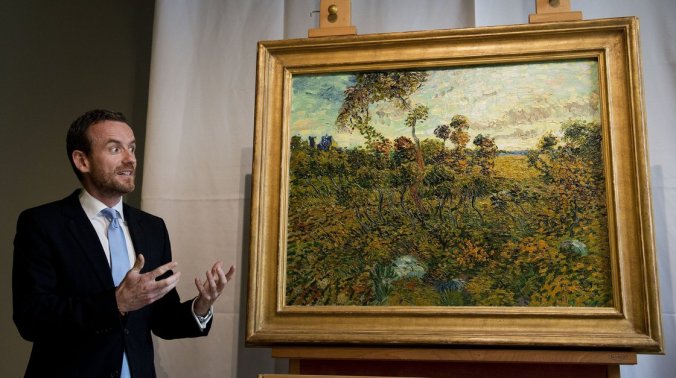
Alex Ruger, director of the Van Gogh Museum in Amsterdam, at the unveiling Monday of Vincent Van Gogh’s Sunset at Montmajour. Olaf Kraak /AFP/Getty Images
National Public Radio in the USA picks up this remarkable story, which makes us think of Amsterdam in the autumn as a wonderful place to be:
A painting that had earlier been thought to be a fake and had been stored for decades in the attic of a Norwegian home has now been identified as a long-lost work by Vincent Van Gogh.

Photo credits: Ramesh Kidangoor
Vinayaka Chathurhi is celebrated throughout India by Hindus with a great enthusiasm on the birthday of Lord Vinayaka (Lord Ganesha) the elephant-headed son of Lord Shiva and Goddess Parvathi. This year Chathurhi fell on September 9th. Continue reading
We are frequently late to the party. Fortunately it is often just in the nick of time. This time, thanks to one of the podcasts we regularly listen to for exactly this purpose, we re-discovered Rose George (having first learned of her through her book previous book, The Big Necessity) and discovered her new book as it hits the market. There does not appear to be much in direct relation to community, conservation or collaboration within this book, but we appreciate the author’s dedication to a topic that helps us understand better how our world works:
On ship-tracking websites, the waters are black with dots. Each dot is a ship; each ship is laden with boxes; each box is laden with goods. In postindustrial economies, we no longer produce but buy. We buy, so we must ship. Without shipping there would be no clothes, food, paper, or fuel. Without all those dots, the world would not work.
Freight shipping has been no less revolutionary than the printing press or the Internet, yet it is all but invisible. Away from public scrutiny, shipping revels in suspect practices, dubious operators, and a shady system of “flags of convenience.” Continue reading
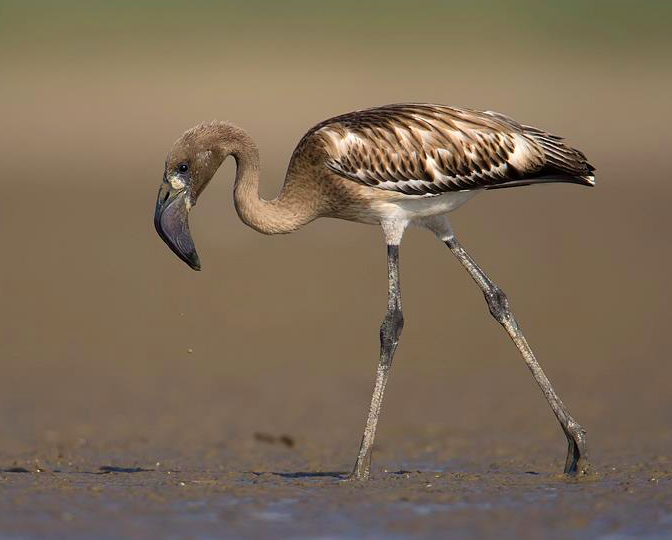
Little Rann of Kutch, Gujarat
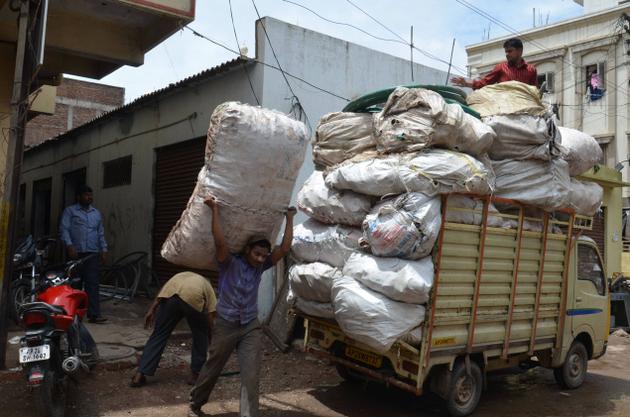
Scrap waste collected in Bholakpur
Photo Courtesy of The Hindu
What happens to obsolete computer or the animal skins from meat factories?
The majority of people couldn’t answer whether these items are recycled or landfilled. A recent article in The Hindu gives some insight into what happens to these items in Bholakpur, a small area of Hyderabad, and it is a surprisingly important industry. Much of what might be considered trash in the Hyderabad area plays an important role in in the community being recycled by families, and resold on the secondary market.
Once inside (Bholakpur), the animal skins go to one of the 200 skin processing units and the plastic and iron scrap to one of the 500-odd plastic or 300-odd iron scrap dealers. There it is sorted and either cleaned up and resold, or ground, melted and transformed into raw material for industrial use. Thus giving new life to waste and also earning a living for the people involved in the process. This includes over 60 per cent of the ward’s 36,000 voter population.
These recycling communities don’t just exist in the Hyderabad area, but also in many of the large metropolitan areas in India. Continue reading
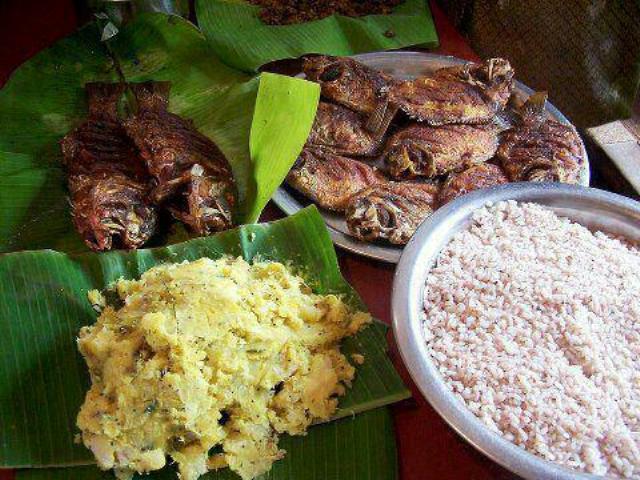
Fish fry with Tapioca and boiled rice
Fish in Kerala is called meen and Fish Fry is commonly known as meen varuthathu. Traditionally it is served with boiled rice and tapioca. Continue reading

Krafla, Iceland. Photo © Land & Colors
In the Middle Ages, Iceland’s Mount Hekla was commonly thought of as a mouth of Hell, from whence one could hear the cries of the damned and even see their spirits haunting the peak — if the raging flames of hellfire weren’t blocking your view, that is. A few hundred years later, describing imagery as infernal or unearthly was still popular in travel accounts, as we saw in the case Reverend Sabine Baring-Gould’s thoughts on Námarskarð. Given the image above and those from the mud pits in the linked post, it really isn’t too surprising, especially after you consider that to reach these chthonic scenes the travelers had been riding ponies over a “tortuous and wretched” landscape of lava.

Thanks to a friend’s travels to the southern tip of Africa, a story from the field about colleagues we hope to meet soon. The friend learned of this program during a visit to a Cape Town winery (cheers to them and that; click the logo to the right to read more than we can share here):
Cheetah Outreach
Promoting the survival of the free ranging, Southern African cheetah through environmental education and delivering conservation initiatives.
As a result of the success of Cheetah Conservation Fund’s livestock guarding dog programme in Namibia, a trial programme was launched by De Wildt’s Wild Cheetah Management Project (WCMP) and Cheetah Outreach in 2005 to introduce the Anatolian shepherd to serve farmers in South Africa. To give this trial the best possible chance of success, farmers Continue reading

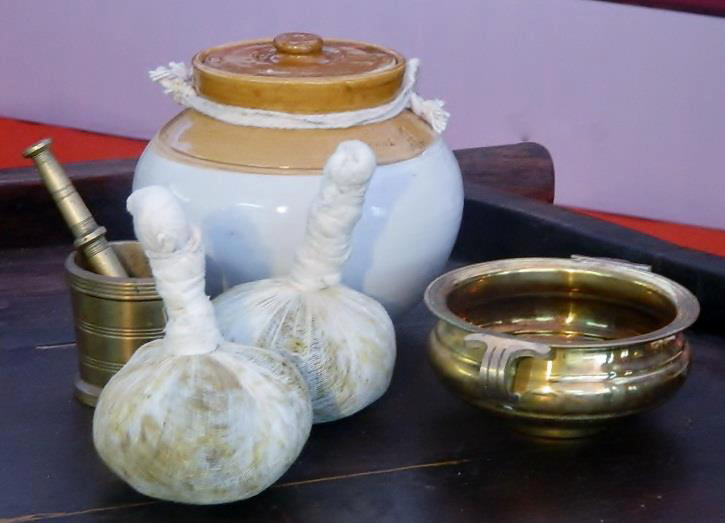
Kizhi
Ayurveda is the science of life. Mythology says that this science of healing originated in the cosmic consciousness of Brahma – The Creator. Kizhi Treatment is a therapy where heated herbs and medicinal oil is tied in cloths and used as a bolus on the effected body part. Continue reading
Nowadays people are sitting 9.3 hours a day, which is more than we’re sleeping, at 7.7 hours. Sitting is so incredibly prevalent, we don’t even question how much we’re doing it, and because everyone else is doing it, it doesn’t even occur to us that it’s not okay. In that way, sitting has become the smoking of our generation.
If business innovator Nilofer Merchant had her way there would be a “surgeon’s general warning” placed on desk chairs around the world. But she isn’t only referring to the health reasons why we shouldn’t be sitting as much as we are. Continue reading
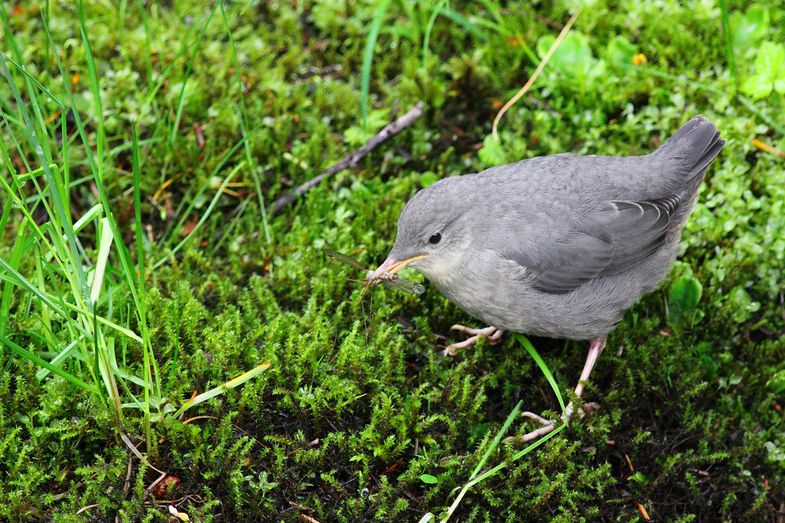
Steep Creek, Alaska

 Organikos