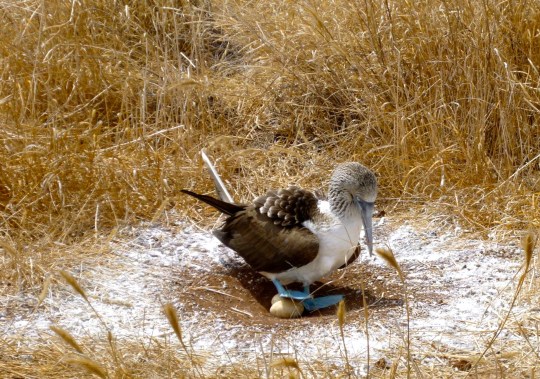

Mr. Shaji, a local photographer, joined one of the morning treks and shared his photos. According to him these are the common sightings he experiences early in the day, which is always the best time for wildlife viewing. Continue reading

Near Market Road, Ernakulam
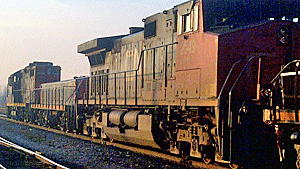
A CN freight train is shown leaving Sarnia for Port Huron in Michigan. (Dave Seglins/CBC)
Thanks to the CBC for some old fashioned investigative journalism. Click the image to go to their report. In the macro view, considering the scope and scale of the challenge of weaning off of fossil fuels, the credits at the center of this story are small and seemingly minor parts of a bigger puzzle. Perhaps. But playing with smoke and mirrors and mystery trains crossing borders in the night? Time to bring back tar and feathers for these Enron-ish slick vendors:
…”If the facts in your story bear out, there needs to be some people go to prison,” said Joe Jobe, CEO of the U.S. National Biodiesel Board. “It’s not a victimless crime. [RIN fraud] has impacted the livelihoods and jobs of absolutely everybody in this industry, and it has cost the folks in the petroleum industry who have to comply with this, millions and millions of dollars and it has put small- and medium-sized biodiesel producers completely out of business. Continue reading
Photo Credit: Stephen Crafts

Fresh maple syrup in two maple leaf-shaped bottles, with other bottles behind. Police officials have arrested three men who allegedly siphoned the sweet treat from 16,000 storage barrels stored in a Quebec warehouse.
We were not sure what to think at first, and were not sure anyone would believe it either. But seeing is believing thanks to this NPR follow up story:
After months on their sticky trail, Canadian police have finally fingered the people allegedly involved in the great Canadian maple syrup caper Bill Chappell told us about in August. Continue reading

Sandalwood (santalum album) is a small evergreen tree that can grow up to 15 metres high. This hemiparasitic tree (feeding off the roots of other plants) is found widely in the Periyar Tiger Reserve, although is considered threatened in many parts of the world. Continue reading

Read the Scientific American blog post from the beginning by clicking the image to the left:
… It costs $5,500, recharges its battery with its own rooftop solar panels, can legally take you on the road,
on the sidewalk,*and on greenway trails, and has a 30-mile-per-charge range. Then you can either rely on those solar panels or you can take the little battery out and plug it in. And though it’s designed to carry me and up to 800 pounds of payload (guitar, amp, and groupie?), I can retrofit a little jumpseat so I can just haul around the groupie if I need to. You can read all about it in this story by the News & Observer of Raleigh. Continue reading

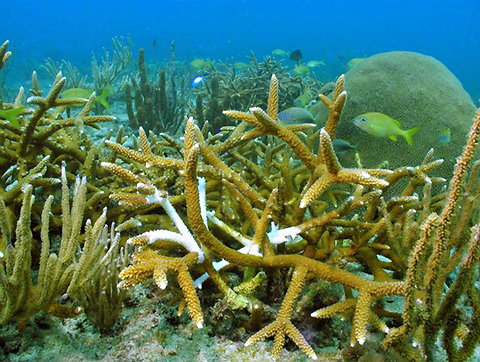
Image: NOAA. Staghorn coral afflicted by whitening, which is associated with ocean acidification and rising ocean temperatures.
We care about both genotypes and phenotypes when it comes to finding solutions to endangerment. And in case you are reading this you should hear the truth: we selected the word phenotype among many possibilities for the post title, mainly for its alliterative value. We need a bit of lingual levity from time to time to balance out the accumulated weight of the days’ environmental news. This particular wordplay is nonetheless a fine fit to the purpose of the story. Thanks to Green Blog for the view on farming as one solution to the various types of endangered coral whose traits, including their morphology and development, may be replicated using techniques from agriculture:
In the international trade in live coral, most of which ships to the United States for ornamental marine aquariums, the source is quickly shifting from wild harvesting to farming, researchers report in a new study. Continue reading
Kattikulam, Tamil Nadu
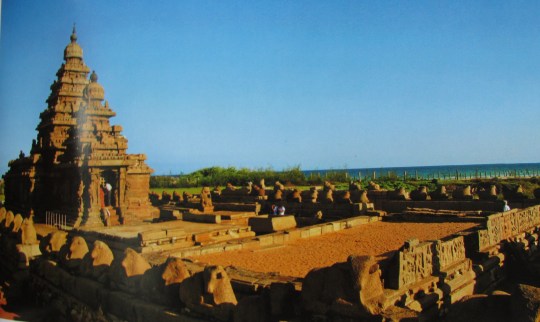
Photo Credits: Salim Pushpanath
The Shore Temple is one of the oldest temples in South India. Built during the 8th Century A.D., it is a good example of the Dravidian style of temple construction. Continue reading
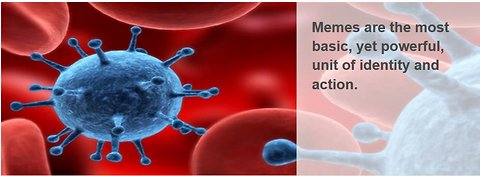
Memes matter. You know it. Know why:
Yes we can! Ermahgerd. Occupy. I had a dream. Haters gonna hate. Tear down this wall! Gangnam Style. Drill, baby, drill.
We are constantly bombarded by memes in our daily lives. Some spontaneously flare up and then burn out as quickly as they appeared, while others stick around for decades. We hardly consider their presence, much less contemplate their possible influence on our lives. Continue reading

Chikmagalur, Karnataka
From the collaborative film Waste Land about the catadores (trash pickers) of Jardim Gramacho to the new documentary Trashed, there are film makers and organizations talking about the growing and overpowering problem of waste. Waste Land talks about the transformation of trash into art. The documentary film Landfill Harmonic is about “people transforming trash into music; about love, courage and creativity.”
With the ethos of reuse and recycle there are those who grab the creative spirit along with our attention with programs like the Paraguayan Sonidos de la Tierra (Saving Children Through Music) and Favio Chávez, director of the orchestra of recycled instruments on the Catuera Landfill on the banks of the Paraguay River. Continue reading

We believe governments and NGOs, supported by research in academia and elsewhere, are the institutions best designed to establish, enforce and monitor environmental protection schemes. NGOs can also play a philanthropic role. Enterprises such as ours have evolved in the last couple decades to approach conservation challenges better suited for market solutions. Now, another random variation in this never-ending evolution of ideas.
What is the implication of conservation NGOs getting into business deals with the very businesses that are causing environmental problems? We favor innovation, but also evaluation of those new approaches. We have only recently been paying attention to this relatively new phenomenon, so do not have the answers, but each time we see questions being raised we take note (and will share them here). This, from the excellent Yale Environment 360 site:
Like plastic bags, coal, and SUVs, beef has few friends in the environmental community. Most environmentalists would point to beef — in particular, beef cattle that spend their final days in confined feedlots — as being responsible for an array of ills — the greenhouse gas emissions that the cattle generate; the groundwater pollution from their manure; the use of antibiotics in animal feed; the vast quantities of monoculture corn grown to feed the cattle; and the enormous amount of chemical fertilizers and water needed to grow the corn. As advocacy group Food and Water Watch put it in a 2010 report, “The significant growth in industrial-scale, factory-farmed livestock has contributed to a host of environmental, public health, food safety and animal welfare problems.” Continue reading

Mangroves are an essential element of healthy coastal environment. They provide excellent habitat for migratory birds, serve as breeding ground for many species of fishes, control pollution through natural filtration and protect the shoreline from heavy waves. The important Mangroves plants are Acanthus cillicifolious, Acrostichum aurem and Avicennia officinalis, several of which are found in Kerala. Mangroves are salt-tolerant plants found in tropical and subtropical regions of the world. Continue reading

Photo Credit: Stephen Crafts
Food is an important indicator of a region’s history. The diversity that one sees today in Kerala’s food evolved from its past, when profound historical and social events influenced the diet of the inhabitants. Only the end section of the banana leaf is used due to the precise method of serving a Sadya. Starting at the narrow end, individual items are carefully added from left to right with the curries above the dividing spine so they don’t get mixed with the rice which will be placed on the bottom half later. Continue reading

 Organikos
