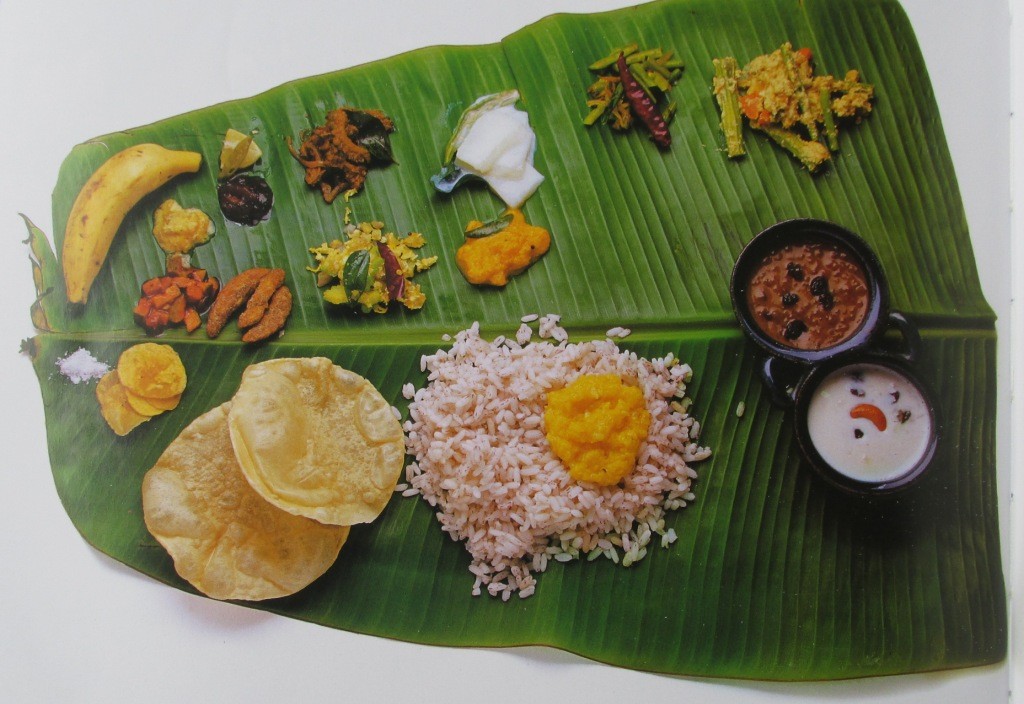
Food is an important indicator of a region’s history. The diversity that one sees today in Kerala’s food evolved from its past, when profound historical and social events influenced the diet of the inhabitants. Only the end section of the banana leaf is used due to the precise method of serving a Sadya. Starting at the narrow end, individual items are carefully added from left to right with the curries above the dividing spine so they don’t get mixed with the rice which will be placed on the bottom half later. Continue reading
Come To India, Alan Moore!

The wedding of Alan Moore and Melinda Gebbie. Photograph: Neil Gaiman/Writer Pictures
Please bring your bride, too. We extend this type of invitation to the too few happy few who clearly work for the pleasure of their craft (or so it seems, observing them), rather than the money. In our own small way, 180+ full time members of Raxa Collective in Kerala–not to mention contributing photographers, interns and other friends to our purpose–are all attempting the same. For whomever might have missed it, this profile is worth the read:
…Moore has a complicated relationship with money. “Pure voodoo,” he says now. “Only there as long as we believe in it.” Challenged, during a television interview this year, about why he would sign away the movie rights to a comic such as Watchmen if he didn’t ever want it to become a movie, Moore said he gave up the rights because he never expected any adaptations to happen; he called it making money for old rope. Continue reading
From Behind the Wheel: A Vehicle With A Sting

Maradu, Cochin
Mongering Marine Merchandise Mendaciously
Click here to go to Oceana’s report, which documents a study in which, through sampling and DNA testing, it is found that 39% of seafood peddled in major metro markets is fraudulently labeled:
Executive Summary
Seafood fraud can happen anywhere – even in the Big Apple. Fraud includes any false information accompanying seafood, from short weighting to swapping out one species of fish for another. Oceana’s investigation focused on species substitution, or the swapping of a lower value or lower quality fish for a more desirable species. This “bait and switch” hurts our oceans, our health and rips off consumers. And most importantly, it is illegal. Continue reading
Refreshing Airflow With A Smaller Footprint
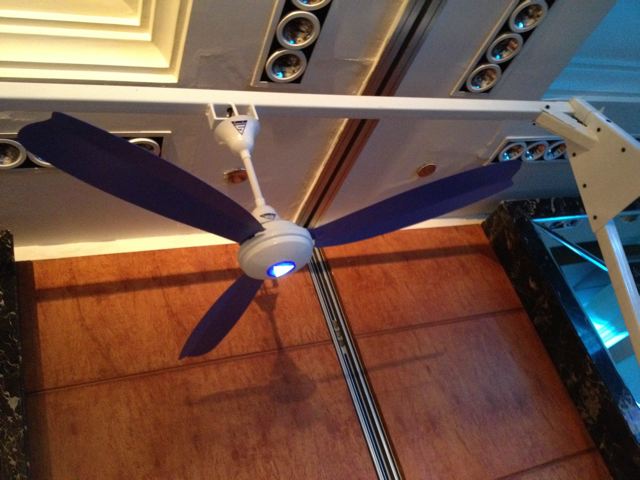
The Superfan, complete with colorful blades and LED power indicator. Photo credit: David Ferris
One of the least likely publications to cover ecological or social issues with any true concern, to our pleasant surprise occasionally runs an interesting story like this one (click the image above to go to the source):
…The fan is the first venture into consumer products for Versa Drives, a Indian manufacturer of alternating-current drives. Managing Director Sundar Muruganandhan said that the Superfan uses 35 watts of electricity in a country where the standard efficient fan is rated at 75 watts. In fact, Muruganandhan said, the fan blows past the country’s existing ratings system so thoroughly that a new index might be required. Continue reading
Bird of the Day: Hoopoe
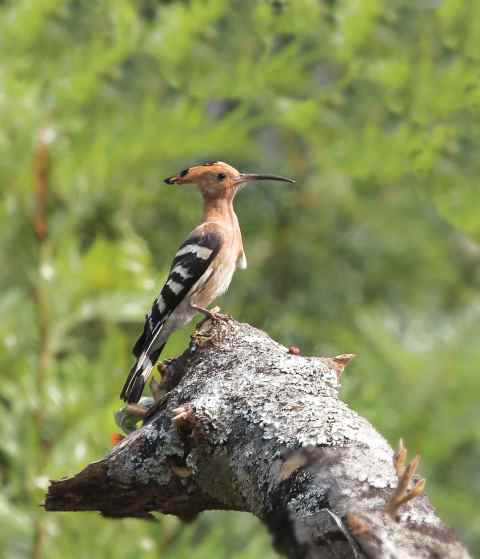
Chickmagalur, Karnataka
Thanjavur Brihadeeswarar Temple – Tamil Nadu
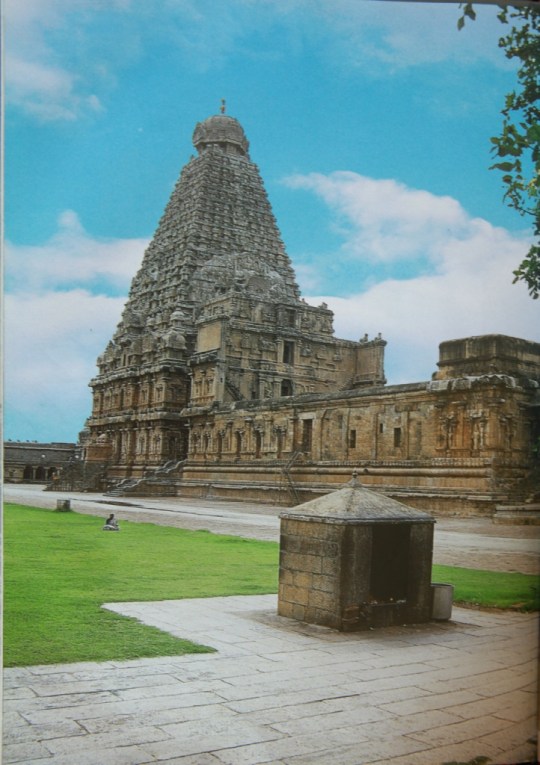
Brihadeeswarar Temple in Tamil Nadu is one of the greatest artistic accomplishments of the Late Chola period. At 216 feet in height, the shrine of this UNESCO World Heritage Site is the largest and tallest in India. This was an imperial monument to Chola power, built without using bricks, lime mortar or clay. The stones are placed one above the other and are held in place due to sheer weight. Continue reading
Turkeytails & Time
Trametes versicolor is a fascinating mushroom on many fronts – as a specialized organism within an ecosystem, as a beautifully variable natural art piece, and as valuable medicine. Fungi are an untapped resource in many scientific fields, and are vastly underappreciated as an entire natural kingdom. Food, medicine and art can all be created from but a single species alone, and the Kingdom of Fungi is one inhabited by thousands upon thousands of unique species, each of which has its own human uses and limitations.

Human uses and limitations. Mushroom hunters (including myself) often inadvertently train themselves to ignore categories of fungi that don’t hold any immediate interest. Small, white polypores, for example, tend to be tough as bark, tasteless, or crumbly, so one simply doesn’t pick them. Little brown gilled mushrooms, on the other hand, are soggy and crumbly, and could be any of a million species. One usually does not pick these. However, human knowledge of fungi over the ages has waxed and waned – several ancient traditional medicines have made use of fungi with huge medicinal potential, but which modern scientists are unable to understand. That said, human industry has improved the lot of frustrated medical researchers by refining the process of mushroom cultivation to the point that almost any species is accessible for study.
Thank You, Mr. Who Did Not Have To
Jeremy Irons is comfortable enough, surely, that he could rest on his laurels and not give a hoot about all this. He is more than likely removed from the subject of the film he has just completed, most if not all the time. So why bother? But he got off his duff and did something, and for that we are impressed and give thanks:
A new documentary about the ultimate fate of just about everything we lug home from the mall opens on Friday in limited release in the United States. “Trashed,” directed by Candida Brady and starring Jeremy Irons, delves into the less festive side of consumerism and waste disposal — overflowing landfills in England, a toxic trash incinerator in Iceland, a hospital for children with birth defects in Vietnam.
We sat down recently with Mr. Irons to talk trash. Following are excerpts, edited for brevity and clarity. Continue reading
Bird of the Day: White Browed Bulbul (Bangalore, Karnataka)

More Flower Power
We previously mentioned this book here. Sometimes you cannot get enough of a good thing.
Just Say No

Golden Cap holiday park is on the edge of Dorset’s world heritage-listed Jurassic coast, which includes Studland Bay, above. Photograph: Adam Burton/Robert Harding World Imagery/Corbis
Does the world really need another five-star holiday village? Maybe. But does it need one in Studland Bay? No way. Click the image above to go to the story in today’s Guardian:
One of Britain’s most popular beauty spots could be disfigured by the expansion of a modest caravan park into a five-star holiday village, say opponents of a scheme in Dorset.
Golden Cap holiday park, at the foot the highest point on the south coast, is in England’s only natural Unesco world heritage site and in an area of outstanding natural beauty. It is also surrounded by National Trust inalienable land. Continue reading
Seethankan Thullal – Art of Kerala
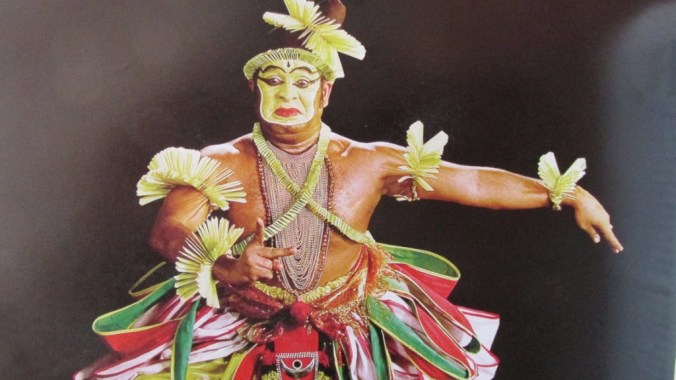
The story of Kerala is mirrored in the evolution of its art and culture and offers a veritable array of performing arts. Thullal is a solo performance combining dance and the recitation of stories in verse. Introduced in the 18th century, Seethanankan Thullal is the slowest of the three forms of the Thullal. Continue reading
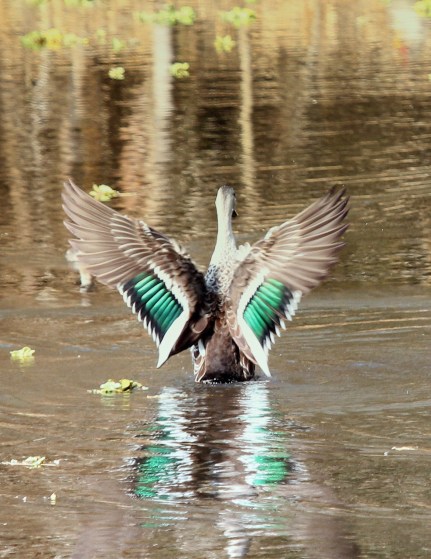
Bird of the Day: Spot-billed Duck (Bandipur National Park, Karnataka)
Writing With A Sense Of Place
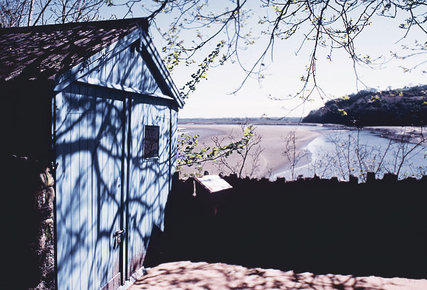
Jonathan Player for The New York Times. Dylan Thomas’s writing shed in Laugharne.
If writers should write, and they should, then where should they do it? Perhaps a philosopher knows best (click the image above to read the full item):
…One does not have to be a Thoreau or a Rousseau for one of these modest spaces to supply what is needed to write. Identification with nature is not required (if indeed it were possible); a certain harmony with nature is already broken by putting pen to paper. Continue reading
Mamallapuram – Arjuna’s Penance

In South India Temple worship has been a glorious tradition; over the years there have been many schools of Temple building: the Ddravadin, Chalukya, Pallava, Hoysala and Pandya. The Temples were constructed with strict observance of the rules put down in the Agama Silpa Shastras (the book of Architectural techniques). Continue reading
Flower Power
Bird of the Day: White-throated Kingfisher
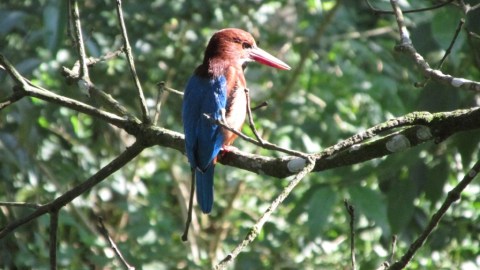
Kumily, Kerala
Patterns Of Illegal Wildlife Trade
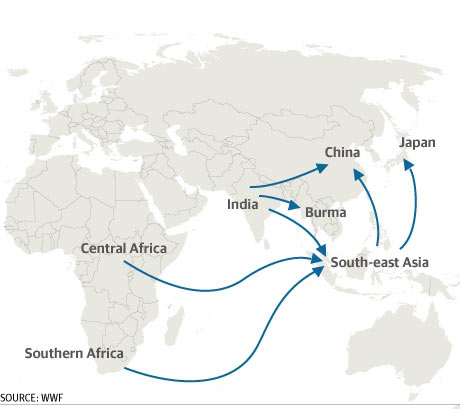
This earlier post touched on WWF’s use of military technology to take on an increasingly militaristic illicit trade. In today’s Guardian, an article with an insightful video embedded (click the map above) touches on approaches to disrupting these patterns. According to a new study commissioned by WWF and conducted by Dalberg, illegal wildlife trade is increasingly mapping on to the patterns of trade for illicit drugs and arms globally:
Organized crime syndicate members at levels 4 and 5 are often located in consumer countries, beyond the reach of enforcement authorities in range countries. For this reason, increased international cooperation is vital. Continue reading
From Behind the Wheel: Art, Meet Reality
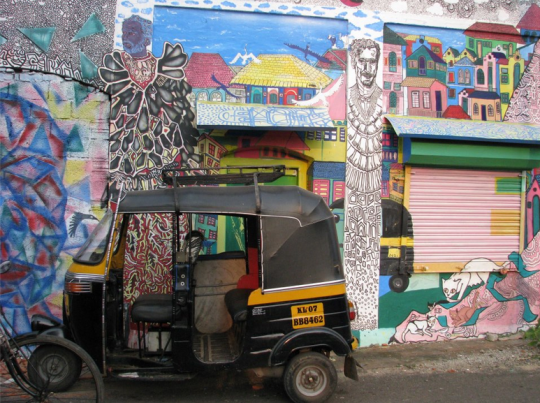
Mattancherry
 Organikos
