5 Reasons I See India’s Potential to Produce A Stararchitect

“Stararchitect” conjures up a cloud of thoughts (Star architecture. Star power. Architecture as a symbol. The North Star for architectural design. Brand. Design. Fame. Architecture prowess. Household name.), but above all, I think of The Pritzker Prize. I feel like the weather channel for  announcing the next “big thing” in architecture is The Pritzker Prize. The weather channel is telling you “you better keep this in mind ’cause you’ll need that umbrella!” The Pritzker Prize is telling you “you better keep this name in mind ’cause you’ll need that knowledge to understand the state of the world you live in.”
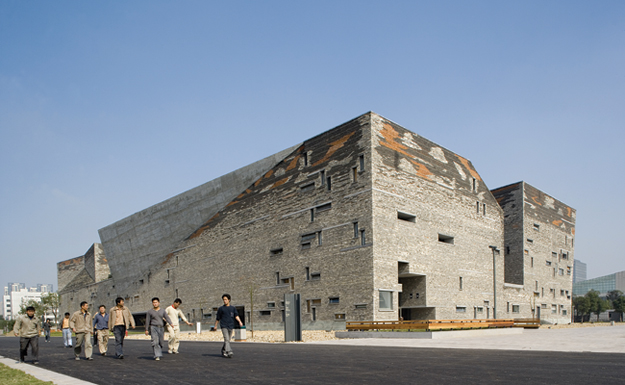
Ningbo History Museum by architect Wang Shu

Ningbo History Museum by architect Wang Shu

2012’s Pritzker Prize Laureate was Wang Shu, a Chinese architect famed for his re-use of building rubble in his designs. Expansive facades feature roof tiles and bricks from the demolished village that previously existed on that very site. The Pritzker Prize choice of Wang Shu tells us:

1.) Sustainability is important. The reappropriated construction refuse reminds us of the Three Four Rs: Refuse, Reduce, Reuse, and Recycle. It also reminds us that sustaining heritage and history is important.

2.) China is a powerful country with a powerful new identity. This is the first time a Chinese architect has been named. The closest the Pritzker has ever gone to a Chinese architect before was when I.M. Pei was recognized as a Chinese-American architect.
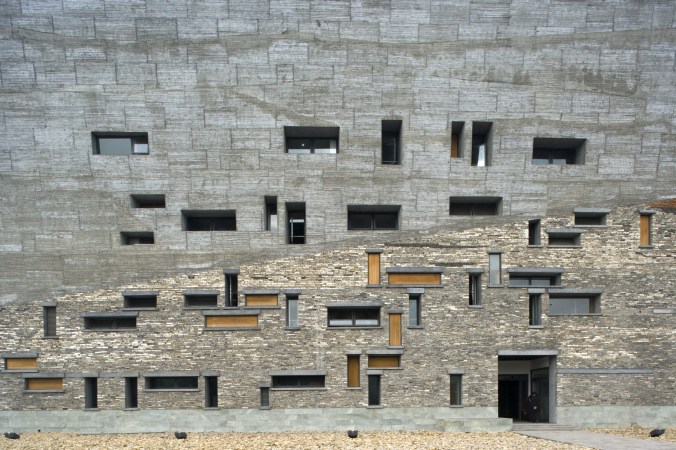
Detail of reused rubble in the facade of the Ningbo History Museum by architect Wang Shu

Detail of reused rubble in the facade of the Ningbo History Museum by architect Wang Shu

It’s rare to see a non-western architect. So I thought, has there been an Indian Pritzker Prize winner before?

The answer is no. (But I wouldn’t be surprised if Indian architecte Charles Correa is a nominee soon!)

While it may still be a long time before we see an Indian Pritzker Prize winner, I feel that India has the potential will definitely produce a stararchitect in the future. Here are 5 reasons why I see India’s potential to produce a starachitect.
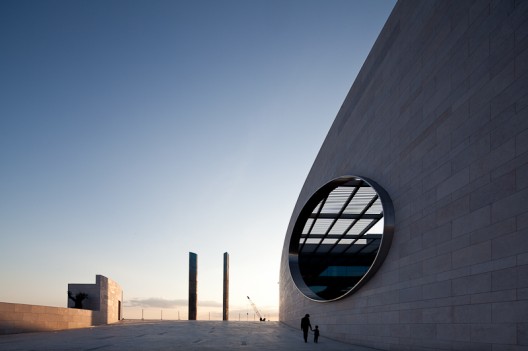
Champalimaud Centre for the Unknown in Lisbon, Portugal by Charles Correa Architects, photographed by José Campos of arqf architectural photography

Champalimaud Centre for the Unknown in Lisbon, Portugal by Charles Correa Architects, photographed by José Campos of arqf architectural photography

5 Reasons I See India’s Potential to Produce A Stararchitect
Continue reading →
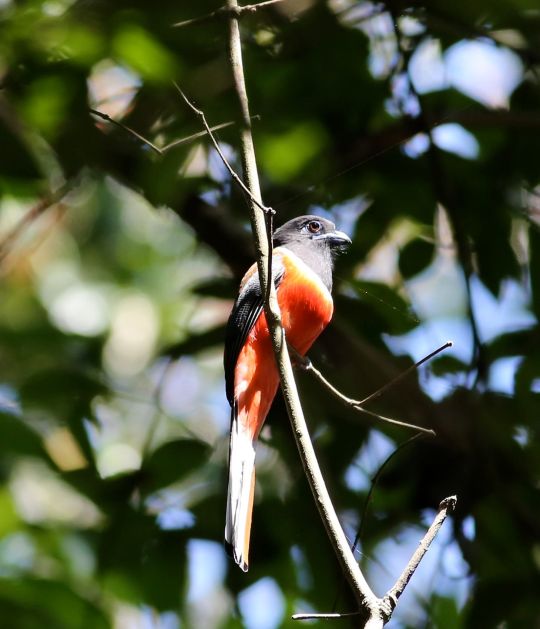
Cassia – Cinnamomum tamala

Cassia is a moderate sized evergreen tree widely growing in the evergreen and semi-evergreen forests of Western Ghats. One of the  popular spices commonly used in the Indian diet, Cassia is generally considered inferior to Cinnamon, but is often used as its substitute. Continue reading →

Bike, Paper, Scissors

Although not quite in the category of “Don’t Try This At Home”, it looks like this bicycle animation is much more than the sum of its laser cut parts. Artist Katy Beveridge writes that the action must be filmed to animate as it isn’t visible with the naked eye.

The final results certainly impress!

See Sophie, Support Story

Forest ranger Klaus Echle tells us about befriending a wild female fox in Germany’s Black Forest. The fox wasn’t shy, and allowed him to follow her around and take astonishingly close-up photographs.

Love of a good story is the backstory of our site.  The backstory to that backstory–from before the time of Seth’s decade-old camping experience in Nicaragua, is one I have started telling here and there and intend to continue telling in the coming weeks of the new year.  Reading and listening to accomplished authors on the topic of writing can be inspiring or daunting to the would-be story-teller with more modest telling skills.  But tell we will, if only because practice makes perfect, and in the process we will also point out as many good stories as we can find.

Yesterday guests of Raxa Collective in Kerala, visiting from the USA, shared with Amie and me their enthusiasm for a radio show and podcast called The Story.  We found it.  We loved the first story we listened to, which brought to mind my own recent wild young animal experience.  Find The Story, and Sophie’s story, by clicking the image above.

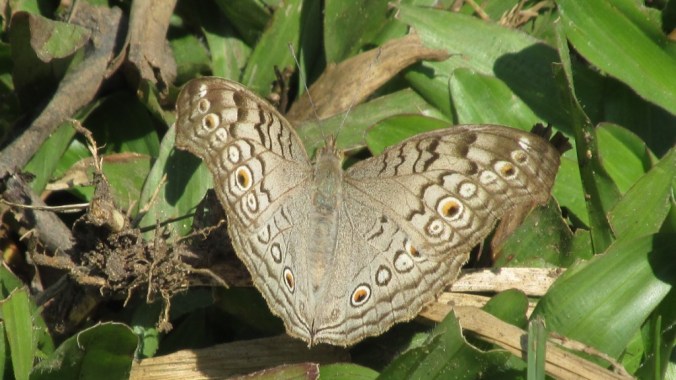
Grey Pansy Butterfly- Junonia atlites

The impressive diversity of more than 150 butterfly species in Periyar underscores the crucial relationship between plants and animals. The Grey Pansy butterfly are one of the larger varieties found commonly in the reserve, usually near riversides and open grasslands. Continue reading →

Writers Write, But How?

eugenides-writer-233Hemingway was, characteristically, brief and to the point about writing: eternity, or its absence, compels. Others recommend where, or with whom, as they comment on the craft of writing. But the best, according to Eugenides, in simultaneous commendation of and recommendation to this group of writers, keep Papa’s black and white truth ever in perspective:

…To follow literary fashion, to write for money, to censor your true feelings and thoughts or adopt ideas because they’re popular requires a writer to suppress the very promptings that got him or her writing in the first place. When you started writing, in high school or college, it wasn’t out of a wish to be published, or to be successful, or even to win a lovely award like the one you’re receiving tonight. It was in response to the wondrousness and humiliation of being alive. Remember? Continue reading →

Chile’s Zones Of Sacrifice

Thanks again to Oceana for countering mendacity as it impacts oceans, especially among politicians made fabulously wealthy from extraction businesses, who dare redefine the otherwise honorable word, sacrifice.  Thanks also for their educational contributions on the value of seamounts and ongoing efforts to get this law passed.

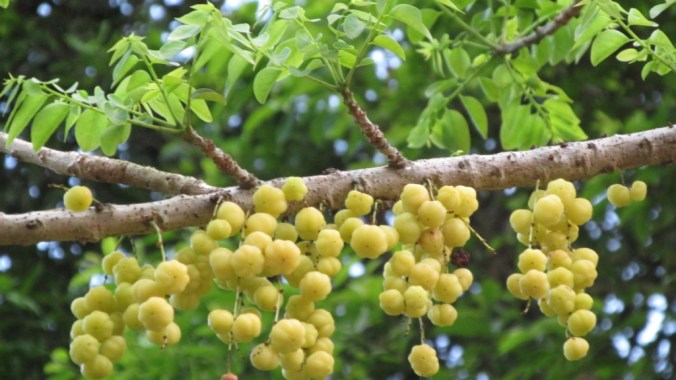
Star Gooseberry – Phyllanthus acidus

Star Gooseberry is a medium-sized deciduous tree that grows up to 7-8 metres high in the tropical and sub-tropical regions of Asia. The round scalloped fruits are mainly used for making pickles in Kerala. Continue reading →

An Essay On The Essay, Disguised As A Book Review

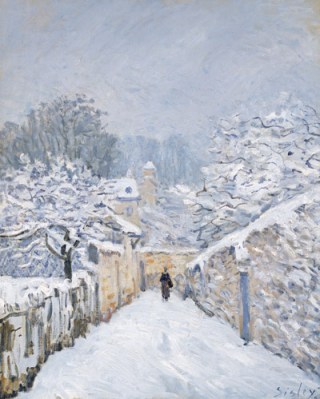
Sisley-Snow

‘Snow at Louveciennes’ by Alfred Sisley, 1878

It had not occurred to me that an essay, let alone a collection of essays, on this particular topic was needed.  But then, perhaps it helps make the point about the importance of essays, and here we have one of the finest living essayists in the English language at work making the case:

Winter Adam Gopnik
Quercus, pp.288, £18.99, ISBN: 9781780874449
Adam Gopnik’s dazzlingly knowledgeable and beautifully told essays on winter began life as the Massey Lecture Series on Canadian National Radio, the Canadian Reith lectures. But dismiss from your mind any of the rather  Continue reading →

Cats Caught Candid

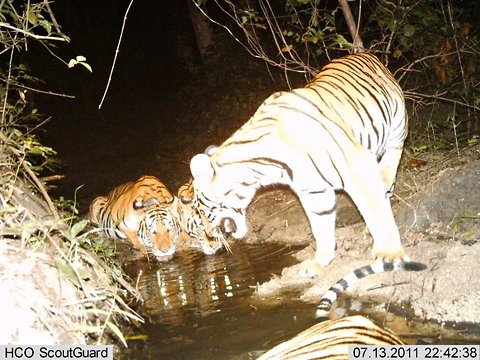
Thanks to Green Blog for attention and link to some rather unexpected news, and to Rachel Nuwer for titling her news–“Protected Tigers, Burning Bright”–in a manner we appreciate for its allusion as much as its information:

Tigers have delivered a bit of holiday cheer: populations are on the upswing, it turns out, in some protected areas in India and Thailand. In a field often dominated by news of felled forests and population declines, wildlife conservationists have taken heart from this development, while noting that tigers have a long, long way to go if they are to claw their way off the endangered species list. Continue reading →

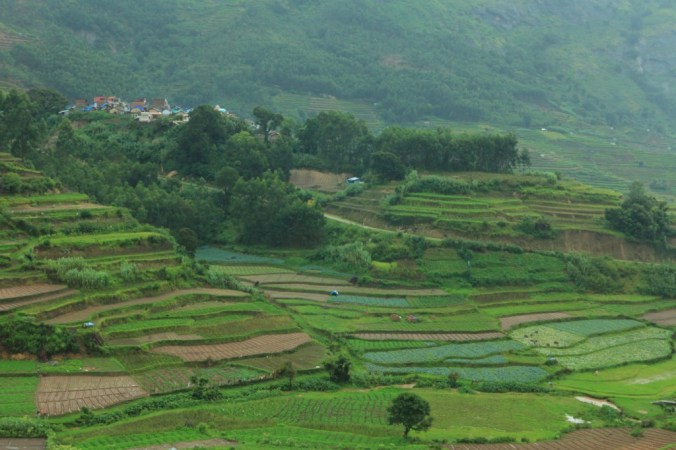
Vattavada Munnar

Vattavada is a serene village situated near Munnar at an altitude of 6000 ft above the main sea level. It is a high range agricultural zone but instead of tea plantations vegetables are predominantly cultivated on the terraced slopes and valleys of the area. Carrot, cabbage, beans, onion, chillies, beetroot, potatoes  and leafy vegetables are the famous crops from Vattavada. Continue reading →

Newly Discovered Species

This slideshow requires JavaScript.

A bit of synchronicity accompanies this post, following Seth’s post about Quagmire, and the post just prior to that about our efforts to balance out doom and gloom with as much evidence as we can find of “how to” or “there is still time and it is worth making the effort” stories.

Case in point: while Seth’s book review covers a certain delta in a certain country at a certain moment in history–all with pretty challenging consequences environmentally–the Guardian had just posted a sampling of 12 images of the 126 species of animal and plant life newly identified by biologists working in the same region  in the last year or so.  Those came from a new publication of WWF, whose press release we quote here:

126 new species have been discovered in the Greater Mekong in the past year. The total newly identified by scientists in 2011 includes 82 plants, 21 reptiles, 13 fish, 5 amphibians, and 5 mammals.

Continue reading →

Quagmire

In his environmental history of the Mejong River Delta in Vietnam, David Biggs analyzes the influential trend of forced—and often failed—attempts to control the water and earth of the landscape, with various effects on local populations. Looking back even farther than the mid-19th-century colonization of the area by the French, Biggs considers the traditional identities of human “improvements” of the delta such as dikes, canals, and dams essential to habitation and agriculture. The imposed land and water use projects enforced by the French colonists, with their newer, large-scale technologies, expanded what Biggs calls the colonial grid, which colonial officials endeavored to push beyond inhabited areas in ways often contrary to Vietnamese custom or ecological wellbeing.

Canal-digging, road-building, railroad-setting, river-dredging, forest-clearing, and swamp-draining, all part of the colonizing and pioneering process, were frequently carried out without fully considering the ecological and political effects such “nation-building” would have on the Vietnamese people and landscapes, or their relationships to each other. Although the environmental consequences for these earlier projects are not quite as severe as his case studies, Paul Josephson might label these activities as milder brute force technologies—if not these earlier efforts then perhaps those pushed forth by American agencies later in the 1960s and 1990s. The planting of methods tried and tested in quite different locations from the Mekong River Delta, and the frequent disregard or ignorance of the diverse intricacies in ethnic groups or soil and water types, impacted how effective the colonial and post-colonial programs of hydroagricultural reform were. Unlike Johnson, however, Biggs does not represent these technologies as overwhelmingly or constantly negative for the environment.  Continue reading →

Mayan-Like Patterns

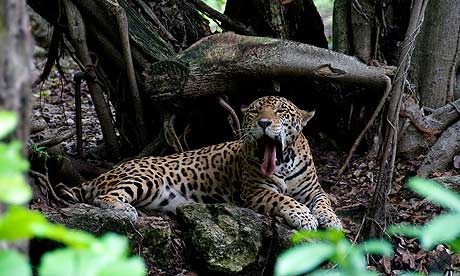
A jaguar – a symbol of Mayan royalty – is endangered but roams free in the Maya Biosphere Reserve, Guatemala. Photograph: Larry Larsen/Alamy

A jaguar – a symbol of Mayan royalty – is endangered but roams free in the Maya Biosphere Reserve, Guatemala. Photograph: Larry Larsen/Alamy

We make frequent links and comment on topics meant to raise awareness about innovative, fun and sometimes loony efforts—from the humble to the grand– to avert environmental collapse.  The dangers are real enough that we assume readers get enough of the doom and gloom elsewhere, so that we can focus our efforts on evidence of potential solutions, and encourage collective action.

The photo above accompanies a story in the Guardian worth a read, to put in perspective why it is that the Mayan calendar doomsdate hoopla, or at least some of the accompanying history, was worth a bit of attention:

…Today, much of the Mayans’ ancient homeland is a 7,700-square mile protected area in Guatemala called the Maya Biosphere Reserve. With an area greater than the states of Connecticut and Rhode Island combined, the reserve protects the largest remaining forest in Central America. Beneath the canopy, monumental vestiges of temples and palaces attest to past splendour. Similar magnificence is found in the reserve’s wildlife. The jaguar, once a symbol of Mayan royalty, still roams free in one of Central America’s last wild places. Continue reading →