Art & Climate Change

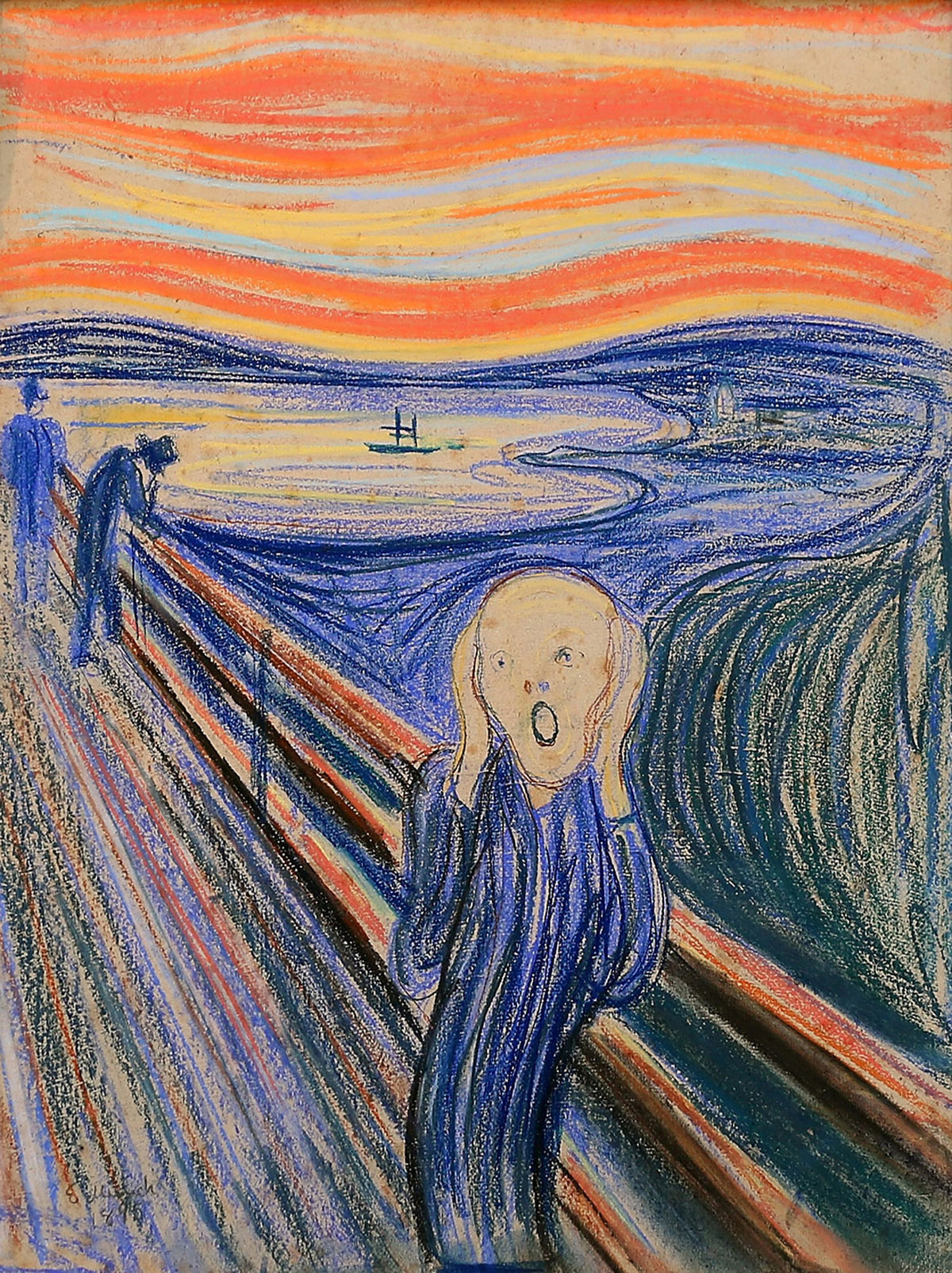
‘The Scream’ at MoMA. (Spencer Platt/Getty Images)

Click the image above to go to the article in full:

Until visiting The Scream two weeks ago at the Museum of Modern Art, to which it has been loaned for six months by its new, anonymous owner, I had forgotten that it has three figures: besides the alarmed man who gets all of the attention, there is another man in a top hat, his head bowed as if in deep despair, and a third man, further in the distance, who stares out at the landscape, strangely unaware—or in denial—of the fact that the world is coming undone around him. Factoring in those other two, it’s easier to follow Mr. Olsen’s thinking: when it comes to the effects that humans are having on nature, most of us are the second or third person.

In the United States, at least, most politicians and even many businesspeople (who would seem to have a vested, profit-driven interest in staving off climate change) have been incapable of addressing, or even acknowledging, the problem.

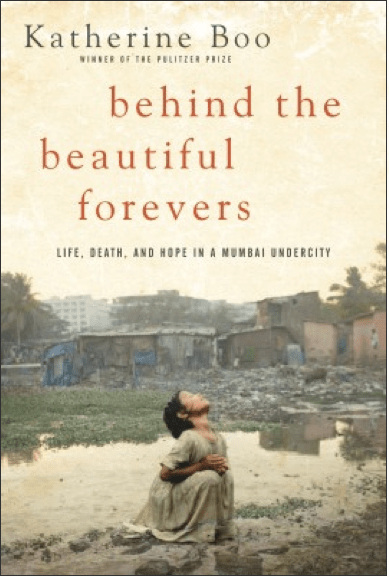
2012 National Book Award For Non-Fiction: Small Stories Matter

Click the image of the book to the right to read about it.  Click here for a podcast interview with Katherine Boo, which we first heard earlier this year. At that time, for several of us non-Indians living in Kerala, the story Boo told in the interview was fiercely captivating — we live small stories of India’s humanity every day.

It was also something else: many non-Indians who we hope will visit India (for reasons we try to make plain every day on this site) are already so saturated with images of India’s poverty that we are inclined to talk about anything but poverty.

And yet, this book is too important to not shout about it from the roof top. Coverage in the New York Times of the National Book Awards ceremony contained the following (midway through the article):

…The nonfiction category was every bit as competitive and featured established authors like the biographer Robert Caro and the late Pulitzer Prize-winning journalist Anthony Shadid, who wrote for The Washington Post and The New York Times. Continue reading

Chocolate & Nobel Prizes

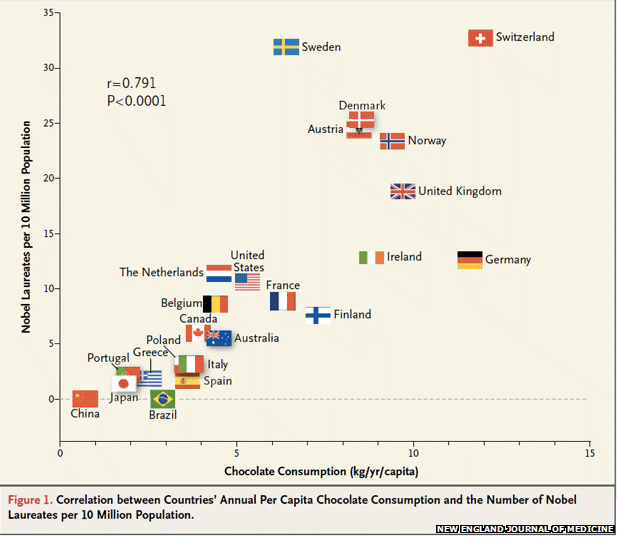
Most reporting on this recent scientific finding had a fun spin, for obvious reasons.  But was it Ig-worthy work?  While only subscribers to the New England Journal of Medicine can access the study directly, the most serious review (and the most entertaining illustration) of its significance is here:

In the study, Messerli explains:

“It seems most likely that in a dose-dependent way, chocolate intake provides the abundant fertile ground needed for the sprouting of Nobel laureates.  Continue reading

Okra

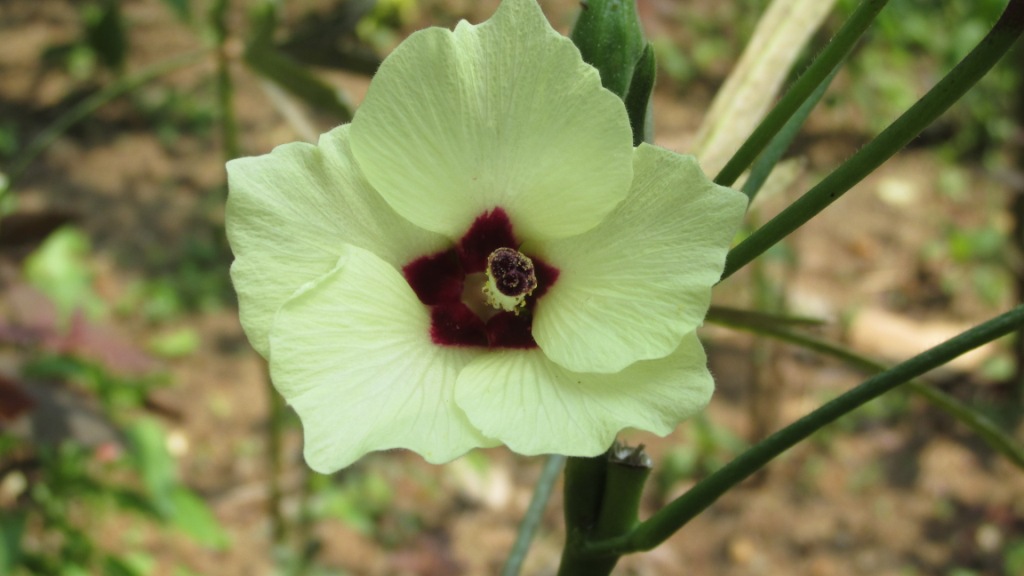
Okra is a flowering perennial plant that belongs to the mallow family with green edible pods that are widely used as a healthy vegetable throughout the world. These plants are cultivated in tropical, sub-tropical and warm regions.

Continue reading

Yale Environment 360 On Burma’s Wilderness And Its Development Options: Beauty And The Beast

We have been watching this website for some time now, looking for the right opportunity to link to a story of relevance to the work we do.  Huge, unspoiled wilderness area?  Tigers?  Development threats? This article by science writer Charles Schmidt hit the spot, relevant portions excerpted below:

As Myanmar Opens to World, Fate of Its Forests Is on the Line

Years of sanctions against Myanmar’s military regime helped protect its extensive wild lands. But as the country’s rulers relax their grip and welcome foreign investment, can the nation protect its forests and biodiversity while embracing development?

…The country’s Northern Forest Complex, a 12,000-square-mile tract that runs along the border from India to China in Myanmar’s Kachin State, is home to tigers, bears, elephants, and hundreds of bird species. The heart of that forest, at nearly 8,500 square miles, is Myanmar’s Hukaung Valley Wildlife Sanctuary, the largest tiger preserve in the world. Continue reading

Innovation In Sustainable Agriculture: Home Edition

Speaking of the wisdom of crowds, our most viewed post for the longest time was about volcano sand-boarding, which was something of a viral big bang in our early days setting up this site.  But this post from Tim about vacationers’ food choices and related carbon footprint, which had gone up about a week before Seth’s sand-boarding post, recently became our most viewed post ever (4,040 views for Tim’s treatment of sustainable diets as the new cool, versus 3,667 for Seth’s account of that hot adventure, as of this writing).

Seth’s received most of its views within one day of posting it, whereas Tim’s is the slow growth wonder story: nearly every day for the last year it has been viewed one or two dozen times.  Cool, indeed. So, in tribute to Tim, a post on a related topic, with gratitude to the designers at Vakant:

The Fogger is a highly efficient, vertical planting unit that is suitable for any indoor and outdoor applications. Just take some pre-germinated fruit or vegetable seedlings of your choice and insert them with the neoprene plugs into the pillar, fill up the tank with water and the included organic fertilizer, connect the cable to an external power supply and you are ready to start Continue reading

Can A Billion Viewers Be Wrong?

Large numbers of people have thought and done all kinds of wrong things.  But as TED recently passed the milestone of one billions views, they took count of their most viewed talks.  This was the single most viewed talk (13,344,405 views on the TED website, another 4,004,785 here on Youtube, and then some…).  And for good reason.

Ambience, Raxa & You

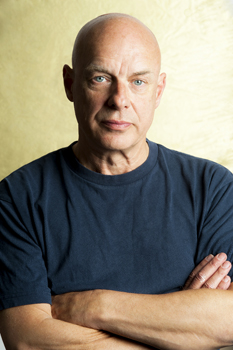
Photograph by Michiko Nakao accompanying “The Discreet Charm Of Ambient Music” from the New Yorker website’s Culture Desk

Raxa Collective, an affiliation of conservation-oriented enterprises employing 180+ people serving 25,000+ travelers each year, looks from some angles like it is in the resort business.  It is.  But it also is not.  Among its several founders there was much discussion at the outset along the lines of: does the world really need another of those?

Not really.  So it is not a resort business any more than it is a conservation NGO (which it is also not, but from some angles it might look like one), a learning laboratory (which it is and is not) or a distribution channel for ornithologically-inclined photographers (ditto).

If there were to be a book called Resort Confidential it would be an insider’s view of all that should change in the resort industry globally.  We would hope to write a seminal chapter in that book.  We would not want to write the whole book.  We love company.

One inspiration is Brian Eno. A reminder of this is in Joshua Rothman’s review of Eno’s pioneering role in the evolution of, and his most recent contribution to, ambient music. Excerpting that review, it could be said that we hope to accomplish with our activities at Raxa Collective what “Lux” accomplishes musically:

…Ambient music isn’t like pop music. It doesn’t want the spotlight, or to conscript your body and mind. Instead, it aims to transform and divide your attention in more subtle ways…At the ideal, low volume, you’re aware of the music. But you’re equally aware of the way that it frames the other sounds you’re hearing and making: the traffic in the street, your own breathing, the keys on the keyboard, the creaks in the floorboards, the rustle of your clothes when you move. You’re also more in touch with the small inflections in your own moods. Each key change, and each new instrument, with its new timbre, is an opportunity to measure the difference between the feeling of the music and your state of mind. “Lux” is fascinating as music. But it also makes the world more fascinating. It’s a catalyst for consciousness and self-awareness…

Loving company, we invite you to sample.

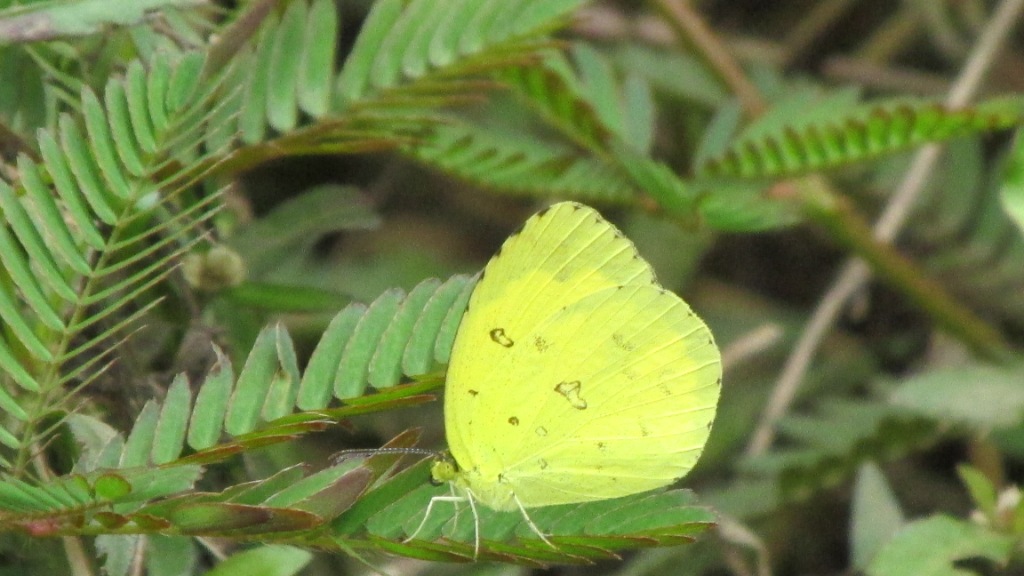
Common Grass Yellow (Eurema hecabe)

The Common Grass Yellow butterfly is one of the most common and abundant butterflies in India recognizable by its bright lemon yellow wings with black bordering on the upper side and brown markings on the lower side. The females are larger than males. These butterflies are found flying close to the ground along grassy patches.Cassia fistula, Cassia lora, Albizzia, Cassia alata, Cassia sothera and Cassia mimosoides are the favorite food plants for this species.

Continue reading

Really, Canada?

Click above for the video and related article from CBC News.  Click here for the original source of the open letter reprinted below:

OTTAWA, ONTARIO–(Marketwire – Nov. 6, 2012) –

We, the undersigned, are independent scientists with expertise in marine biology and marine mammals in Atlantic Canada.

We have reviewed the Senate Fisheries Committee report ‘The Sustainable Management of Grey Seal Populations: A path toward the recovery of cod and other groundfish stocks’.

We call upon the Minister of Fisheries and Oceans to reject the recommendation to cull grey seals in Atlantic Canada. Continue reading

There Is No Accounting For The Difference

Small segment of a German farming village showing how pervasive solar panels are throughout the country. Credit: Osha Gray Davidson, InsideClimate News

From InsideClimate News (click the image to the right to go to the full story:

I’ve come to learn about what a majority of Germans believe is their future—and perhaps our own. There is no better place to begin this adventure than the Reichstag, rebuilt from near ruins in 1999 and now both a symbol and an example of the revolutionary movement known as the Energiewende.  Continue reading

Treatments of the Frontier

Whether merely traveling or settling down to start new lives, American emigrants to the Western frontier held certain beliefs about the “salubrity,” or health, of the land and how it could affect their own wellbeing. Such is the subject material of Conevery Valenčius’ book The Health of the Country, which explores the realm of eighteenth-century settlers as they struggled to cope with new and changing environments—primarily in Missouri and Arkansas.

Like Ann Greene in her book about horses that I reviewed last week, Valenčius does not discuss environmental degradation or change on a scale anywhere close to some other authors I’ll refer to in future posts (partly due to the limited temporal scope of the work but also given the text’s narrower subject of “medical geography”), but both The Health of the Country and Horses at Work share the distinction of being a creative sort of environmental history that readily utilizes some of this new field’s best characteristics: use of interdisciplinary evidence and modes of analysis, reconstruction of past landscapes through culture (e.g. myth, law, perception) and science, and concentration on the two-way discourse between man and nature.

Continue reading

Art From The Insanely Curious

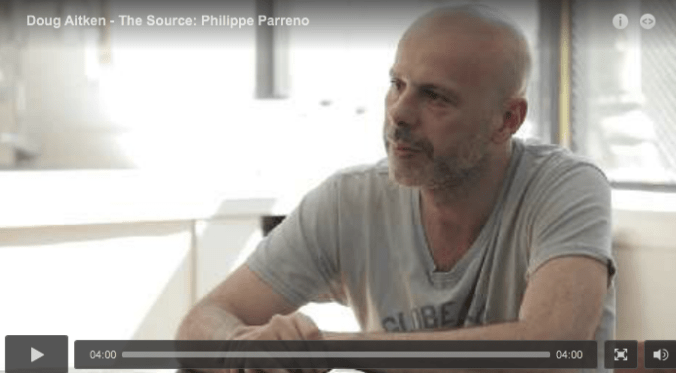
Artists of many varieties stay mum about their craft and intent, perhaps for reasons best captured in these words. Whether you are interested in the arts or not, the individual pieces in this video installation provide a unique view into the process of creativity–a subject any of us can make use of, or simply appreciate. Click the image above for the video.

Wild Periyar – Elephant Paradise

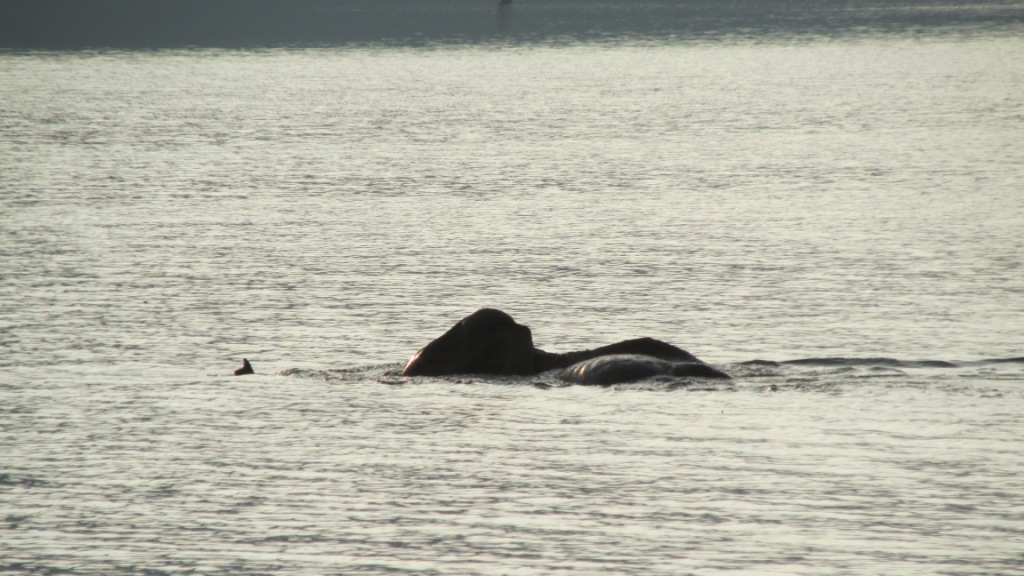
Although the Periyar dam reservoir had cut off the traditional migratory paths of elephants way back in 1899, four years after construction of the dam had started the world’s largest land animals had learned how to overcome the watery impediment. Entire herds, calves in tow, now routinely swim across the reservoir, presenting lucky visitors with one of Periyar’s more unforgettable and thrilling spectacles.

Continue reading

Support Your Local Marine Ecologist: They Uncover These Delightful Little Surprises

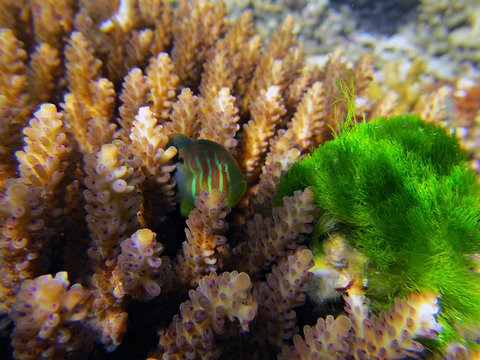
Danielle Dixson/Georgia Tech. Gobidon histrio, a goby fish species, protects coral from the menacing seaweed Chlorodesmis fastigiata.

Click the image to go to the story at Green Blog:

In the waters surrounding the Fiji Islands, the coral reef has vigilant defenders. Researchers have discovered that when alerted by chemical signals transmitted by corals, two resident species of the goby fish will swing into action and limit a growth of seaweed that contributes to the bleaching of precious reefs.

The gobies, inch-long gemlike creatures, report to the affected areas of the corals and nibble the aberrant seaweed back into place, making it look “like somebody went out there with little hedge trimmers,” said Mark Hay, a marine ecologist at Georgia Tech. Continue reading