Butterflies Forever

Damien Hirst in front of one of his butterfly canvases, part of his retrospective at Tate Modern. Photograph: Ray Tang/Rex Features

He has his detractors (is he an artist or merely a shrewd entrepreneur?), but anyone who gives butterflies their due gets our attention:

Butterflies made Damien Hirst’s career and this is how he repays them: Continue reading

Nadodinrithem (Folk Dance)

There are more than 50 well- known folk dances in Kerala.  Although they are often related to religious rituals and mythological stories, they are also very much the languages of the people. Watching folk dance is an unforgettable experience for their dramatic costumes, vibrant colours and throbbing music.

Continue reading

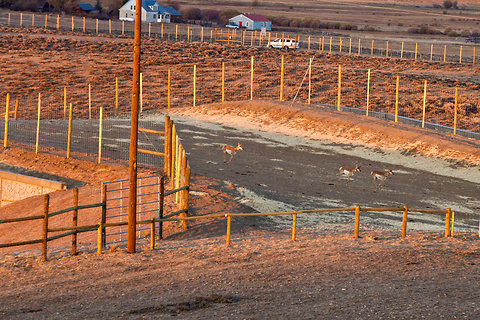
One Small Step For Pronghorns

Jeff Burrell/Wildlife Conservation Society

For a small good news story, click the image above.  It is from the Green Blog of the New York Times, and is the kind of story you would not read about in India because there are no states quite like Wyoming:

Until recently, the population of pronghorn — a small antelope-like mammal endemic to North America — outnumbered people in its native Wyoming. The Cowboy State may be the nation’s least populous, but the two groups still manage to come into conflict. Pronghorns numbering in the tens of thousands cross Highway 191 each year during their annual migration, and collisions between animals and cars are costly for all involved. Continue reading

From West to East: A Road Trip Journal (Part 1)

This is the first in a series of posts on a summer trip. Sorry it’s not quite summer anymore; things have been busy, but hopefully I’ll get the rest of these out before too long!

A little bit of background: I spent this summer studying ancient Greek language at the University of Berkeley. In late May, a few days before I was scheduled to catch my plane at Hartsfield-Jackson airport for Berkeley, I invited a few of my best friends over to bid them a fond farewell for the summer. Suffice to say, we ended up on the roof at three a.m. discussing how incredible it would be to do a cross-country road trip after my class was over. Now, we had thrown around this possibility dozens of times before, but this time, everything was a bit different. For one, none of us was a kid anymore; Tyler, my next door neighbor, had just graduated from University of Georgia; my brother, Carl, is going into his senior year at Emory University; and Nick, a good friend from high school, and I are both going into our junior years (Emory for me, Haverford for him). Moreover, all of us were itching to get out of our quiet suburbs and see some of the world before the relentless march of years and responsibility would make it impossible for us to take the trip together.  Before we knew it, we were taking solemn oaths that we’d be hitting the road in shortly more than two months. Obviously, we did, or I wouldn’t be writing this now.

Continue reading

Mysore Fruit Market

Photo credit: Ramesh Kidangoor

One of the most colorful and oldest fruit markets in India, Mysore Fruit Market is famous for the freshness and purity of the produce available here. Just off the city’s main thoroughfare, this market is used by the locals daily. Continue reading

Cornell’s Silicon Island

From the New Yorker’s website (click the image above to go to the story):

Can photovoltaics ever be romantic? Morphosis Architects’ design for a new academic building for the Cornell NYC Tech campus, scheduled to open on Roosevelt Island in 2017, suggests the answer could be yes. Continue reading

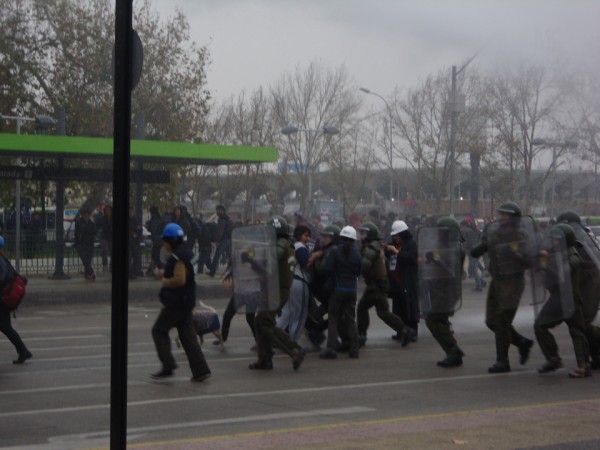
Dispatch From Santiago

We do not know him (yet) but he has written an insightful article, worthy of some of our own favorite writers (where is Michael, you might reasonably ask):

Two particular days have helped me appreciate the variability and unexpected nature of reporting. One morning during my first week on the job at The Santiago Times (a English-language newspaper in Chile’s capital that covers Chilean and Latin American news), I picked up a pitch to go to a press conference the next day concerning homelessness in Chile. I was working on a different article when, an hour later, my editor poked his head into the writers’ room. Continue reading

Young Explorers

I recently discovered that National Geographic offers grants to researchers, conservationists, and explorers between 18 and 25 years old to pursue projects around the world in archaeology, filmmaking, biology, adventure, and exploration, to name a few fields. These Young Explorers Grants, which generally range between $2000 and $5000, can often be a perfect catalyst for more or future funding for people trying to fulfill a lifelong research dream or experiment with a concrete fieldwork idea — after all, having National Geographic’s name on your list of supporters is pretty impressive, and a sign of great potential!

This morning, I attended a workshop given by several members of the National Geographic team hosted by Cornell University and sponsored by the Lab of Ornithology, The North Face, and other groups, which gave an overview of NatGeo’s mission as well as quite specific examples of research possibilities from past and current Young Explorer Grantees. Continue reading

Understanding Atlantic Bluefin Declines

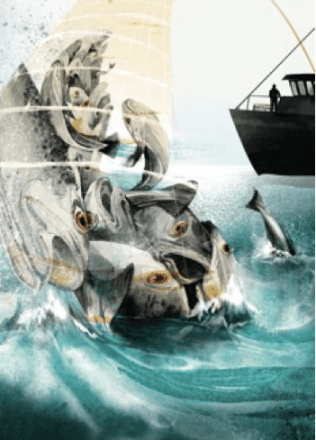
An excellent book review in this week’s New Yorker, about a topic we write on and link to from time to time:

Last year, in an effort to save the Atlantic bluefin from annihilation, Monaco proposed that the fish join animals like the giant panda and the Asian elephant on a list of creatures that cannot be traded—either alive or cut up for parts—across international borders. When the proposal came up for a vote at a U.N. meeting in Doha this past March, the U.S. voted in favor of it. “The science is compelling,” Tom Strickland, the Assistant Secretary of the Interior for Fish, Wildlife, and Parks, told the Times. “That species is in spectacular decline.” Nevertheless, the measure was defeated.

Tropical Wasps

Wasp belongs to the Order Hymenoptera, which includes bees and ants also. It is in fact one of the largest insect groups. Tropical wasps build their hives in tall trees and steep corners of the mountain edges, all habitat commonly found in the Periyar Tiger Reserve. The wasps lay their eggs and hatch their young in beautiful hives made out of clay mixed with their saliva.  Continue reading

The “What’s Different?” Series: Good Hotel, San Francisco

Good Hotel in San Francisco is a proper city hotel quite deserving of its name. Located in a charmingly seedy area of town, it is linked with the hotel across the street where you can make use of the pool or gym, or dine in its burger restaurant. SoMa, as the neighborhood is called for its location South of Market Street, can be a rough side of town, complete with vagrants and other unique individuals that make people-watching there a veritable adventure. The Good Hotel embraces this inner-city vibe, and is designed with attention to enriching the environment and local community.

Continue reading

Favored Food Journalism

One of our favorite annual food-related publishing traditions has come to pass, again.
Mark Bittman (“California’s Central Valley is our greatest food resource. So why are we treating it so badly?”) has an excellent contribution.

And Michael Pollan (“Is this the year that the food movement finally enters politics?”) covers a topic that, four years ago, got us thinking he might be tapped for a [Hope + Change] Cabinet position.

Both of these are worth the click (among your 20 free clicks per month if you are not a subscriber) and the read time:

1.  Vote for the Dinner Party

2.  Everyone Eats There

Mysterious Bird, Carefully Studied

This slideshow requires JavaScript.

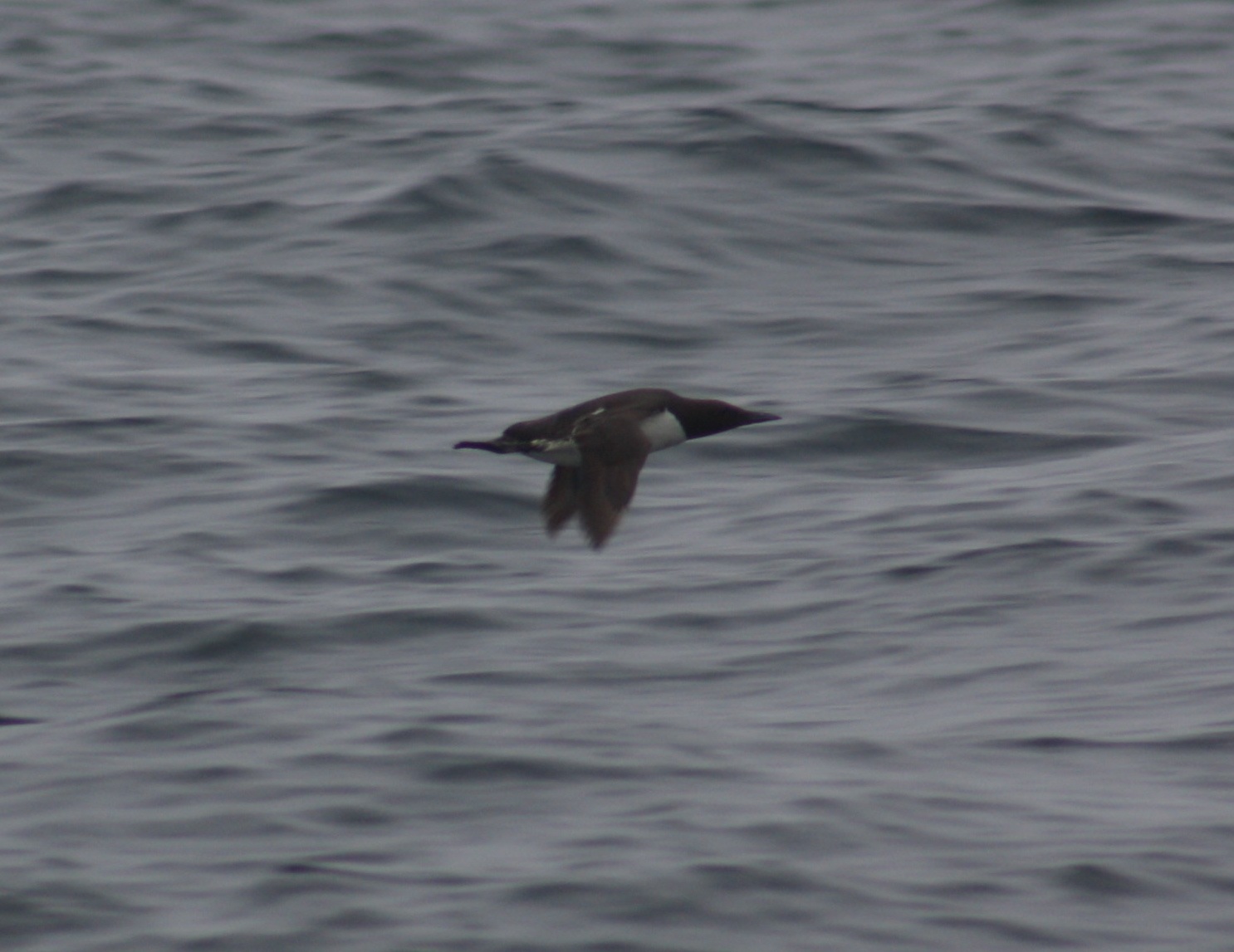
From Smithsonian‘s website a story about the most mysterious bird in North America:

Black swifts, Cypseloides niger, are among the most enigmatic birds in North America. Continue reading