Trivandrum
Trivandrum
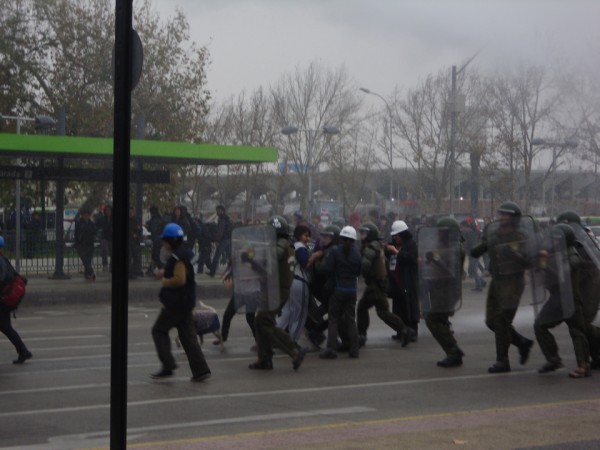
We do not know him (yet) but he has written an insightful article, worthy of some of our own favorite writers (where is Michael, you might reasonably ask):
Two particular days have helped me appreciate the variability and unexpected nature of reporting. One morning during my first week on the job at The Santiago Times (a English-language newspaper in Chile’s capital that covers Chilean and Latin American news), I picked up a pitch to go to a press conference the next day concerning homelessness in Chile. I was working on a different article when, an hour later, my editor poked his head into the writers’ room. Continue reading

Nuwara Eliya, Sri Lanka
I recently discovered that National Geographic offers grants to researchers, conservationists, and explorers between 18 and 25 years old to pursue projects around the world in archaeology, filmmaking, biology, adventure, and exploration, to name a few fields. These Young Explorers Grants, which generally range between $2000 and $5000, can often be a perfect catalyst for more or future funding for people trying to fulfill a lifelong research dream or experiment with a concrete fieldwork idea — after all, having National Geographic’s name on your list of supporters is pretty impressive, and a sign of great potential!
This morning, I attended a workshop given by several members of the National Geographic team hosted by Cornell University and sponsored by the Lab of Ornithology, The North Face, and other groups, which gave an overview of NatGeo’s mission as well as quite specific examples of research possibilities from past and current Young Explorer Grantees. Continue reading
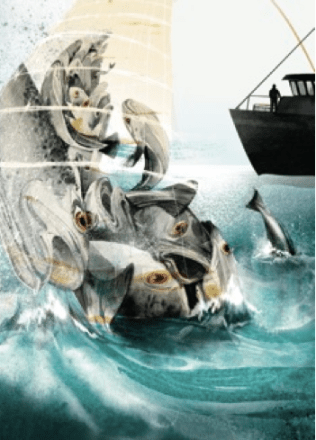
An excellent book review in this week’s New Yorker, about a topic we write on and link to from time to time:
Last year, in an effort to save the Atlantic bluefin from annihilation, Monaco proposed that the fish join animals like the giant panda and the Asian elephant on a list of creatures that cannot be traded—either alive or cut up for parts—across international borders. When the proposal came up for a vote at a U.N. meeting in Doha this past March, the U.S. voted in favor of it. “The science is compelling,” Tom Strickland, the Assistant Secretary of the Interior for Fish, Wildlife, and Parks, told the Times. “That species is in spectacular decline.” Nevertheless, the measure was defeated.

Wasp belongs to the Order Hymenoptera, which includes bees and ants also. It is in fact one of the largest insect groups. Tropical wasps build their hives in tall trees and steep corners of the mountain edges, all habitat commonly found in the Periyar Tiger Reserve. The wasps lay their eggs and hatch their young in beautiful hives made out of clay mixed with their saliva. Continue reading
Good Hotel in San Francisco is a proper city hotel quite deserving of its name. Located in a charmingly seedy area of town, it is linked with the hotel across the street where you can make use of the pool or gym, or dine in its burger restaurant. SoMa, as the neighborhood is called for its location South of Market Street, can be a rough side of town, complete with vagrants and other unique individuals that make people-watching there a veritable adventure. The Good Hotel embraces this inner-city vibe, and is designed with attention to enriching the environment and local community.
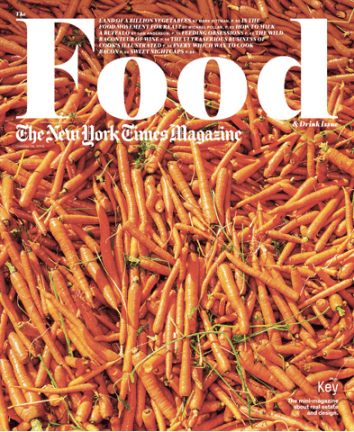 One of our favorite annual food-related publishing traditions has come to pass, again.
Mark Bittman (“California’s Central Valley is our greatest food resource. So why are we treating it so badly?”) has an excellent contribution.
And Michael Pollan (“Is this the year that the food movement finally enters politics?”) covers a topic that, four years ago, got us thinking he might be tapped for a [Hope + Change] Cabinet position.
Both of these are worth the click (among your 20 free clicks per month if you are not a subscriber) and the read time:
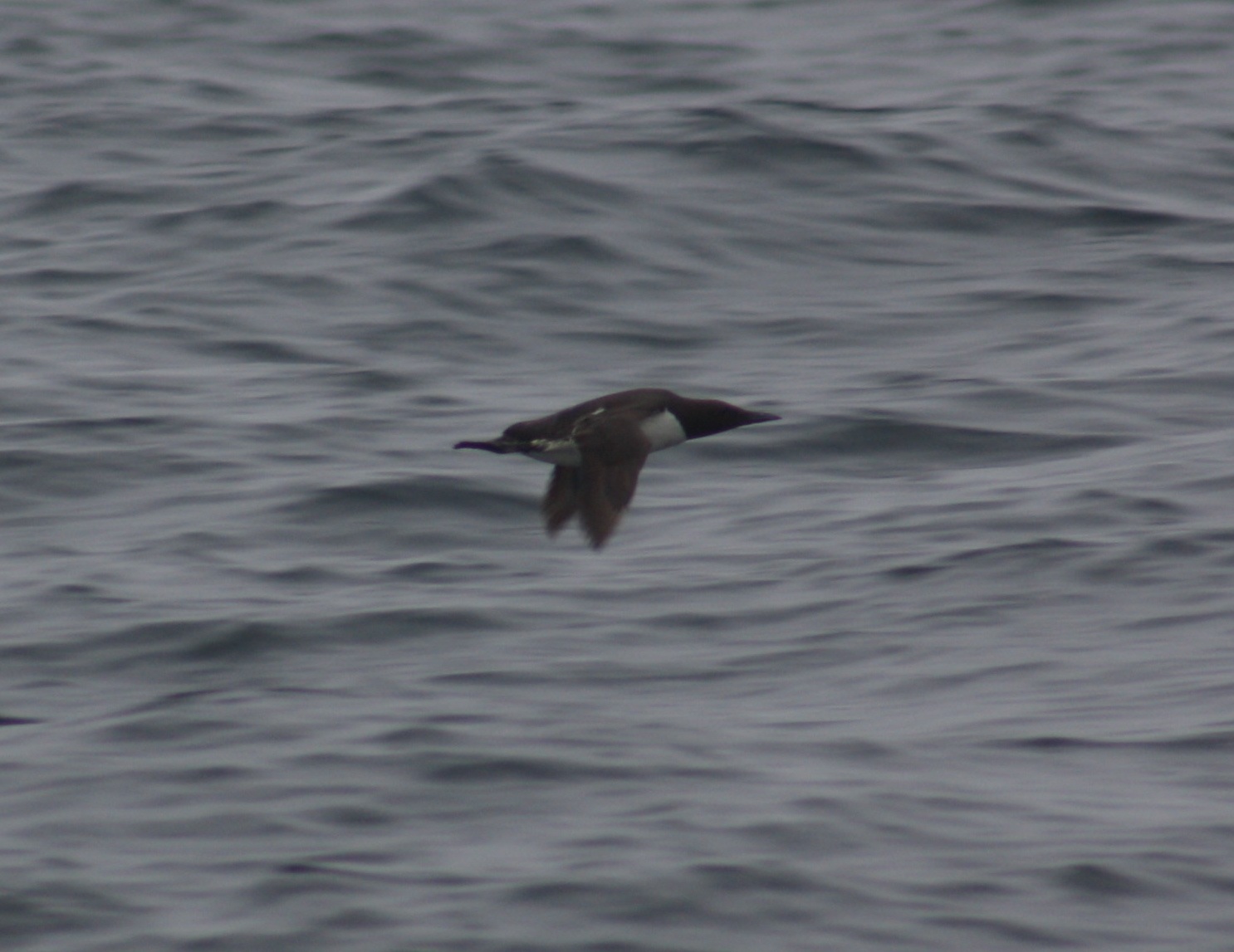
Monterey, CA

From Smithsonian‘s website a story about the most mysterious bird in North America:
Black swifts, Cypseloides niger, are among the most enigmatic birds in North America. Continue reading

Photo credit: Ramesh Kidangoor
With more than 100 years of history, Mysore city market is well knitted in the heritage of Mysore, which is the imperial city of Royal Palaces. This market is a good sample of a traditional Indian market; colourful, noisy and vibrant. Continue reading

Photo Credit: Mr. Vijay Mampilly
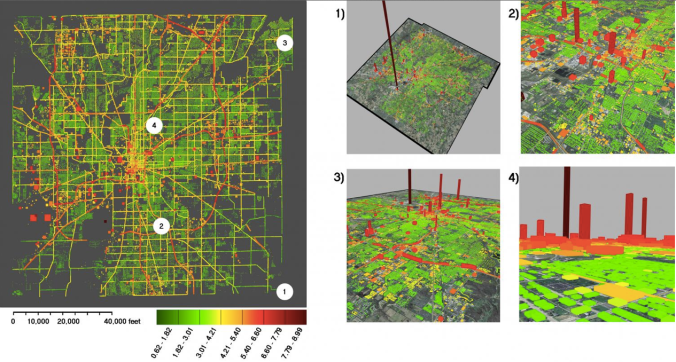
With Hestia, researchers from Arizona State University have a detailed understanding of where CO2 is being emitted from the urban landscape. This map shows where CO2 is emitted across the city of Indianapolis, Indiana, and combines data from sources including factories, automobiles on roadways, homes, and power plants. Credit: Bedrich Benes and Michel Abdul-Massih
Click the image above to read more about this at Phys.org:
Dubbed “Hestia” after the Greek goddess of the hearth and home, researchers presented the new system in an article published October 9 in Environmental Science and Technology. Hestia combines extensive public database “data-mining” with traffic simulation and building-by-building energy-consumption modeling. Its high-resolution maps clearly identify CO2 emission sources in a way that policy-makers can utilize and the public can understand. Continue reading
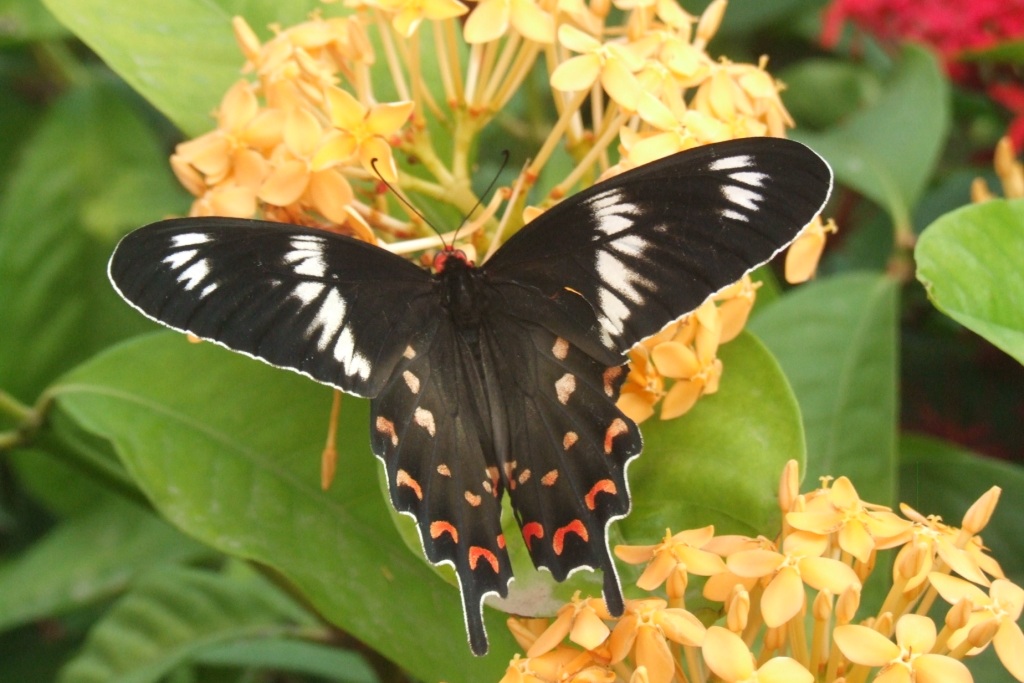
photo by Ramesh Kidangoor
With a wingspan of 80-120 mm, the Crimson Rose Butterfly is one of the most spectacular species of swallowtail. It is commonly found along the Western Ghats, especially in small mountain tops and open plain lands. Ixora, lantana and pagoda flowers are favorite for this butterflies. The upper side of the wings are shining black with red and white markings that include a fine white line outlining the distinctive swallowtail wing shape. Its body is red in colour.

This website is on nominally and practically about bird life, but is also more broadly about the health of the planet where birds live. This is a great resource on how to value the services that ecosystems provide. Click the banner above to go to the source:
Ecosystem services are the benefits we receive from nature, such as provision of crops or medicinal plants, the control of pests (
), the regulation of climate, the reduction of flood risk (
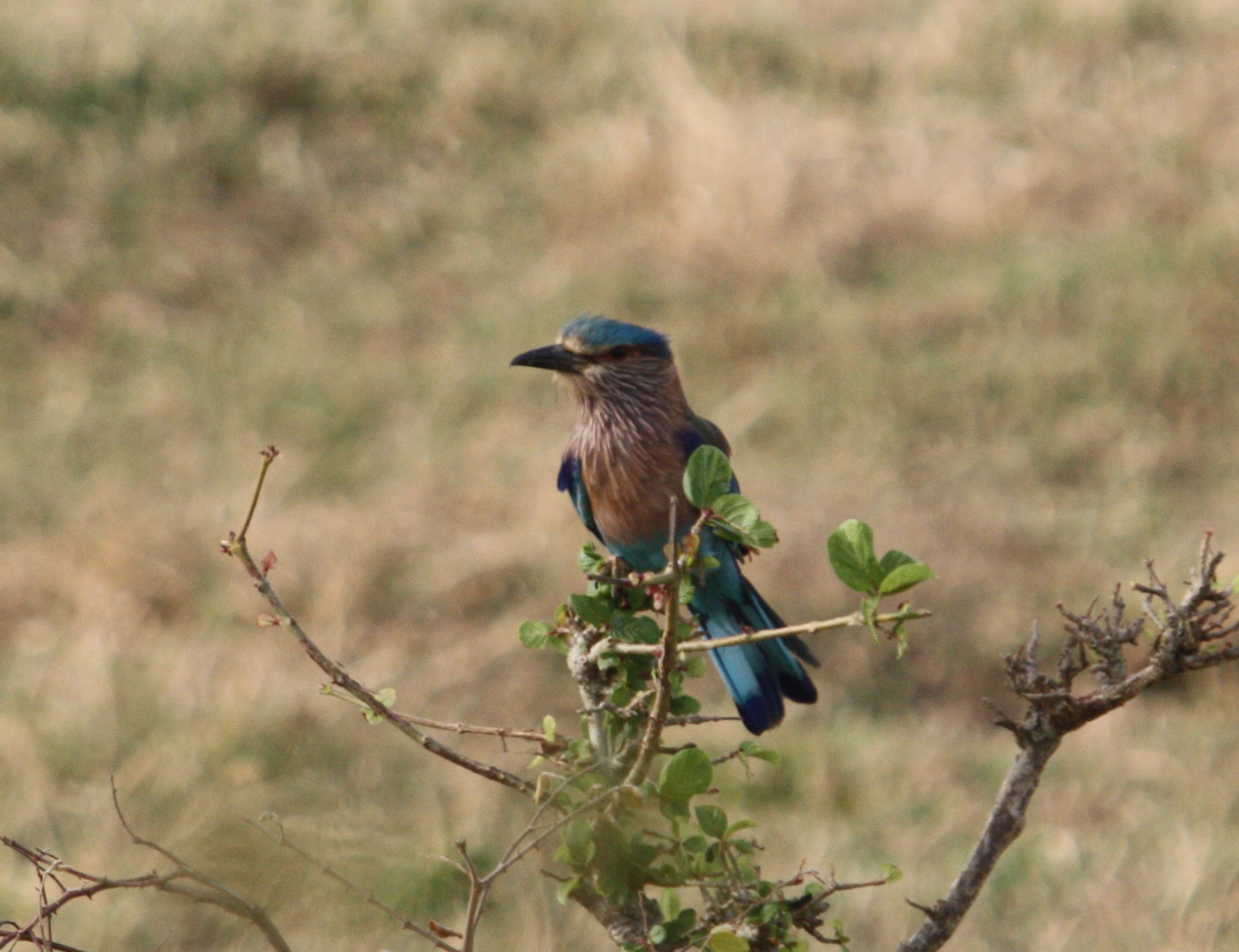
Uda Walawe, Sri Lanka

You must be a subscriber to Science or have access through a library in order to read beyond the Abstract (or you can purchase it here) of what is clearly a good explanation and rationale for the meeting currently under way in Hyderabad:
World governments have committed to halting human-induced extinctions and safeguarding important sites for biodiversity by 2020, but the financial costs of meeting these targets are largely unknown. Continue reading
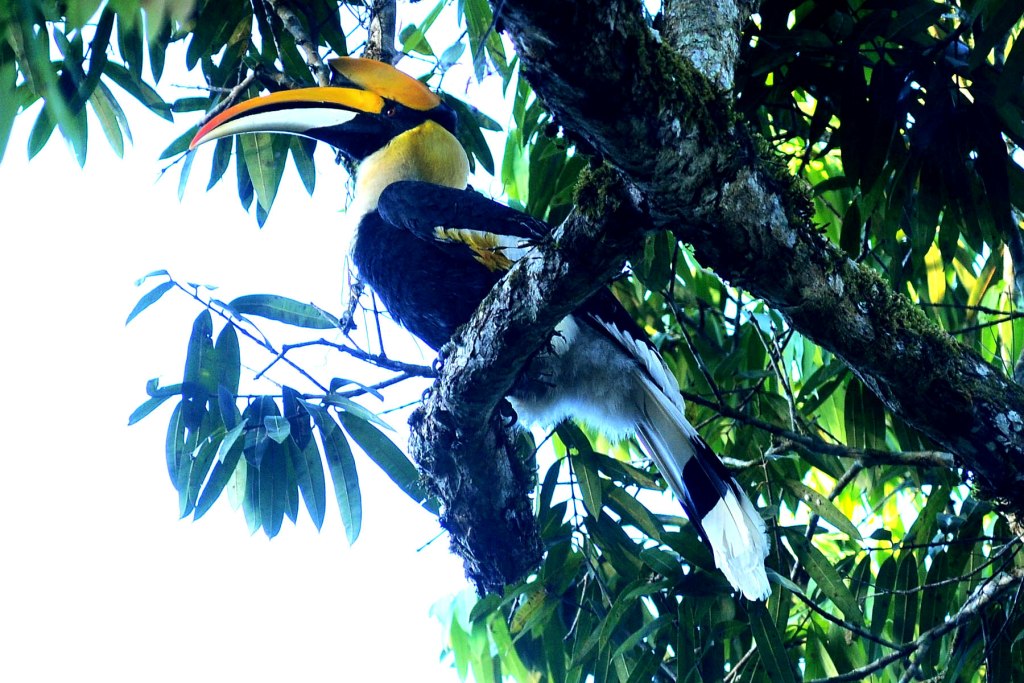
The heaviest of the 54 species in the family, the Great Pied Hornbill (Buceros bicornis) is one of the main attractions in Periyar, among the most fascinating birding destinations in the entire Western Ghats. Towering old-growth forests are a must for their breeding. Ficus fruits are the main diet for the growing chicks. Continue reading
 A couple of years ago a powerful essay by Jonathan Franzen in the New Yorker made us aware of and horrified about this practice.
It is so full of disgusting detail related to this practice that, should you survive the nausea you will want to click the banner below and sign the petition.
Better late than never. Exactly six weeks after this petition was started, we have stumbled onto it. Now, nothing to do but act: