Thank You to All Cardamom County Staffs & Friends

Even though I’m truly happy to be back at school, saying farewell to the staffs that I have been working with for more than 2 months was not easy. Every day I would pass by them saying “Namaskaram” which is “hello” in Malayalam or “Sukamano?” which is “how are you?” For every encounter, they kindly answered back to my poor Malayalam greetings and made my Kerala experience SUPER (as Indians often say)! To show my gratitude to all resort staffs, I drew some sketches as thank you notes. Thank you all, and I hope to see you soon. 🙂
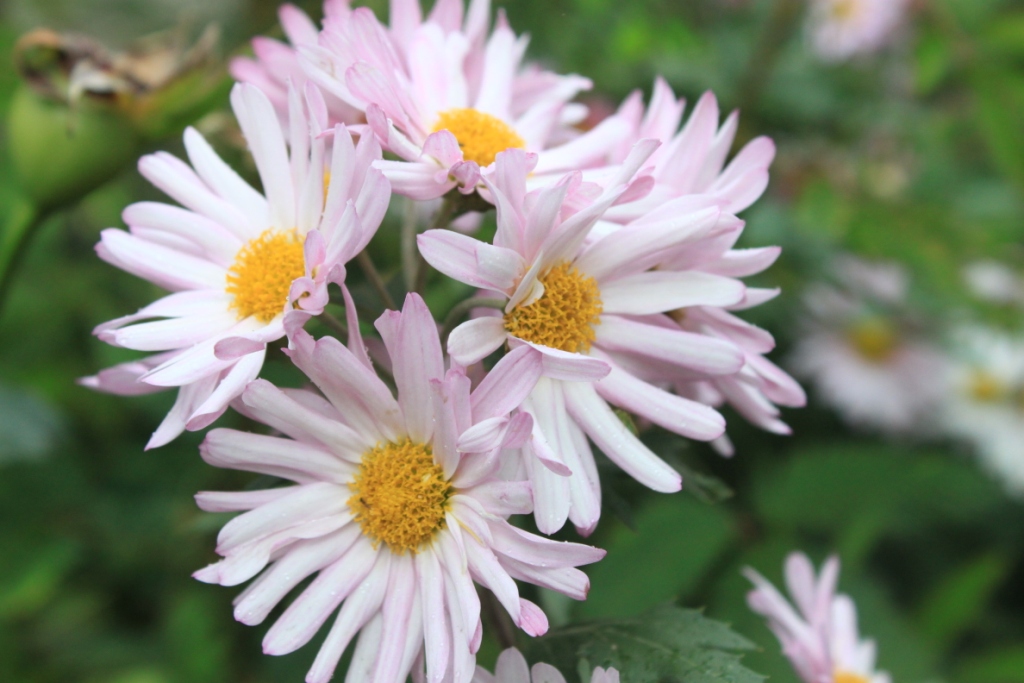

Jamanthi Flowers

Jamanthi Flowers are native to Southern India and grow widely in and around Kerala. These flowers are found in different colors such as yellow, white, cream and pale red. Jamanthi flowers blooms throughout the year and in Kerala these flowers are popular in all types of gardens.  An additional attraction is that the chemical content of this flower is used as a mosquito repellent. Continue reading →

Bluefin Activism

Click on the logo image below to go to the main page of this activist organization.  Click here for the story where the text below the logo and after the jump comes from.

…The company which owns the tuna farm where the fish were released is called Kali Tuna and is part of the US based company Umami Sustainable Seafood. Umani is a major player in the bluefin tuna industry with operations in US, Mexico and Croatia. The firm went public last year with shareholders from around the world now cashing in on the company’s lucrative bluefin tuna trading, which is set to have landed them with over $54.000.000 US in profits last year. With slogans such as ‘Aquaculture – Growing to the tune of Mother nature’ and ‘Keeping Bluefin tuna stocks thriving’, the company is keen to portray itself as a ‘sustainable’ bluefin tuna trader. Continue reading →

August 22, A Big Day For Tigers

Click the headline above to go to the story, in advance of tomorrow’s ruling in India about a controversial ban.  These issues are at the core of the entrepreneurial conservation concept:

“If the ban on tourism continues, it will be the end of the tiger in India,” he said. “We’re the ones who put energy into tracking them. We deter poachers. Tourists are only allowed in the park for six hours every day, but we guides take it in turns to patrol the park from sunrise to sunset. Voluntarily.” Continue reading →

Wax Begonia

Begonia flowers are particularly popular for planting in flowerbeds and window-boxes. These bushy plants produce single or double blooms in wonderful strong colors like white, yellow, orange and pink. In high-ranges  these flowers are  popular in all gardens.

Rethinking Good & Evil

Activists launch a long-range drone from the deck of the Steve Irwin to locate a Japanese whaling ship. Photograph: Observer

If cormorants can possibly be defined as evil, can drones be re-redefined in the opposite sense in which we commonly think of them–namely related to death and destruction, including innocent “collateral damage.”  Click the image above to see what these environmental activists are doing with drones:

They are better known as stealthy killing machines to take out suspected terrorists with pinpoint accuracy. But drones are also being put to more benign use in skies across several continents to track endangered wildlife, spot poachers, and chart forest loss. Continue reading →

From Behind the Wheel

Road sign in Kerala’s Parambikulam Wildlife Sanctuary

Driving in India can be an eye opening experience.  Or you can close your eyes if you have the confidence. We’ve written about it several times over the past year, usually from the point of view of the passenger’s seat, but occasionally from the “right-hand seat” as well.

Continue reading →

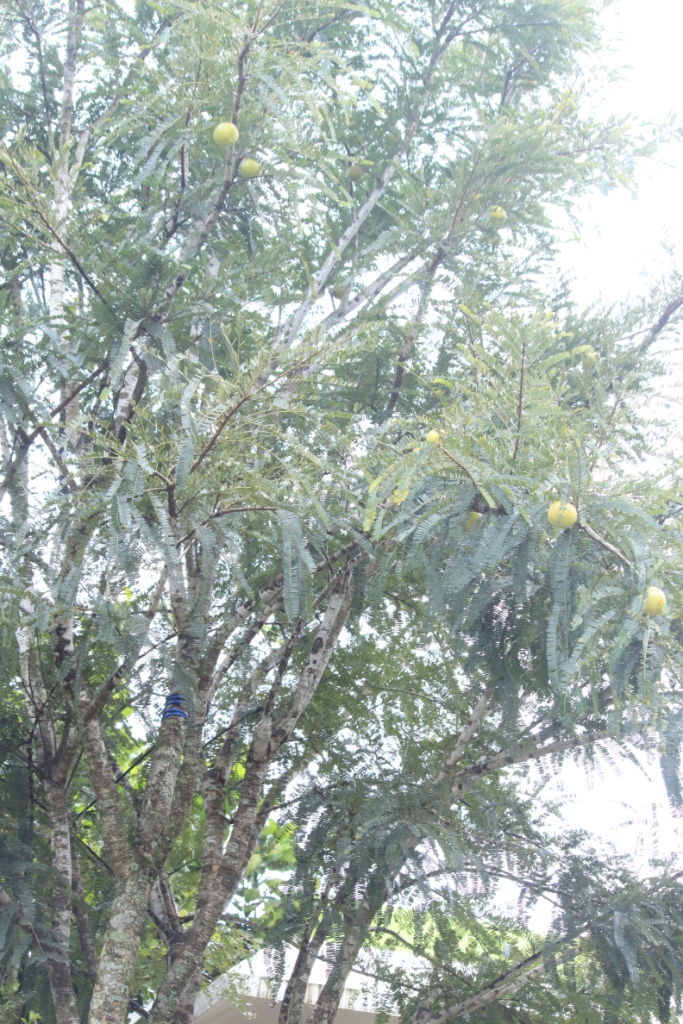
Indian Gooseberry (Embeklic myrobalan)

Indian Gooseberry, also known as Amla, grows throughout the country in deciduous forest and hill slopes up to an altitude of 900 meters and is also cultivated in plains  for commercial purpose. This medium sized tree can grow up to 10- 15  meters in height and produces round and juice fruits. The leaves are used to treat conjunctivitis, inflammation and diarrhoea. The fruits are used in wide range of disorders including colic, ulcers, diarrhoea, and cardiac disorders.

Continue reading →

Ganges River Dolphin Conservation

Click the image for the story on BBC’s website:

The Ganges River Dolphin is one of the world’s most endangered freshwater mammals.

Its numbers in South Asia have plummeted in recent decades. But Indian conservationists working on the Brahmaputra River hope to reverse the dolphin’s decline by mobilising riverside communities to protect these amazing cetaceans.

Shellfish Prefer Noncaffeinated Beverages

Click the headline to go to the story and podcast:

“There have been some reports that caffeine may affect reproduction. When organisms are stressed, they produce stress proteins to protect their cells. And, if an organism is under prolonged stress, then that organism may have to shift energy they would normally spend on growth and reproduction.”

Thommankuthu Waterfalls

Thommankuthu is a popular water fall situated about 20km from Idukki dam.It is made up of a series of 12 falls in the Kannadiyar River spread over a distance of 5 km at an altitude of 800m above sea level. The scenic water falls and pristine surroundings attract tourist from around the world.

Continue reading →

Thorn Apple (Devil’s Apple)

Thorn Apple is an erect succulent annual shrub which grows throughout India especially in the Western Ghats  and is untended land, roadsides and farms. The plant is useful in treating asthma , cough ,fever ,ulcer and skin diseases  Traditionally the roots are used to treat rabid dog  bites and even insanity and the leaves are useful to treat epilepsy. Continue reading →

Project Management and Homestay in Kerala, India

Last week, I was very fortunate to be invited to live, work, and learn development process with a project management company here in Kerala, India. I have to say that it was a short but a very meaningful opportunity: both culturally and academically. Here is a story of my two day journey:

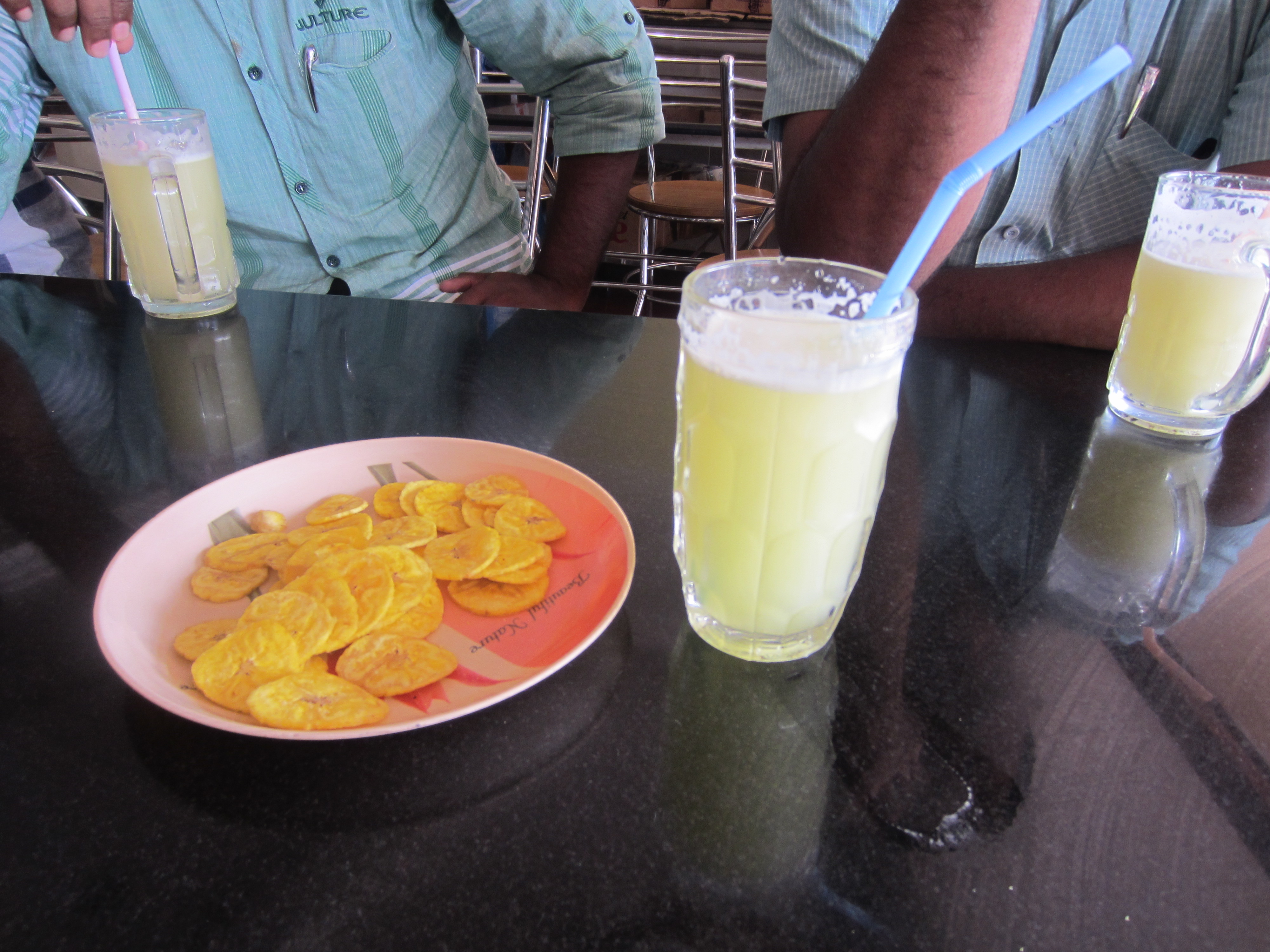
Fresh Lime Juice with Banana Chips @ Break time

In the US, the concept of project management is very common, and thus most construction projects often include a project management company; a mediator that facilitates the communication among the client/owner, architect, interior designer, and the various contractors by managing construction schedules, budget & estimates, and translation of design to actual building structure. However, in India, many construction projects happen without project management, which may cause all kinds of issues. So, when I first heard that RAXA was hiring a project management company, I was thrilled to meet the project managers and what I’d be learning from them.

Continue reading →

From Feather to Frame

Painting by: Jane Pompilio George

It was with pleasure that I recently discovered a Cornell “neighbor” who happens to be both an artist and bird lover, who takes inspiration from the Cornell Lab of Ornithology’s round-the-clock “bird cam” nest images.  (Click on the painting above to go directly to her blog.)

People all over the world have been able to experience (and be inspired by) the nesting of great blue herons and red-tailed hawks near the Cornell campus, as well as Osprey nests in other parts of the United States.

Continue reading →

From Old Tools, New Knowledge

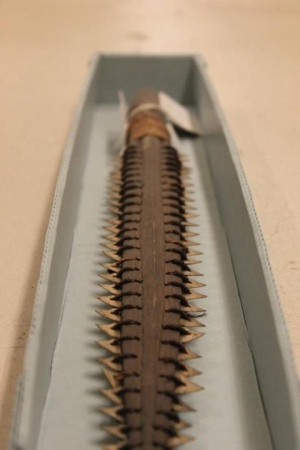
Weapons from the Gilbert Islands contain the teeth of shark species no longer found in the area. Photo by J. DREW/COLUMBIA UNIV.

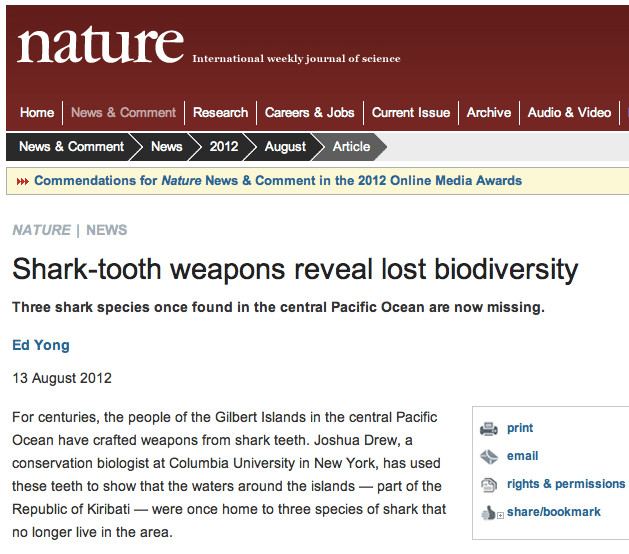
Click the headline image above, or the photo to the left to go to the story:

“This is shadow biodiversity,” said Drew, presenting his results at the 2012 Ecological Society of America Annual Meeting in Portland, Oregon, last week. “Three sharks disappeared from these reefs before we even knew that they existed there.”

Drew analysed 124 shark-tooth weapons housed in the collection of the Field Museum of Natural History in Chicago, Illinois. The artefacts included swords, tridents and a 4-metre-long lance, dating back over 120 years.

All are built in the same way: the islanders drill hole in the teeth and lash them to buttresses of wood with cords made from coconut leaves.