The Mestizo-Indigeno Divide

Should we connect everyone, everywhere?  Another of globalization’s thorny debates, but this time argued very locally.  As always there are global implications (in this case having to do with the loss of unique cultural heritage).  Click the headline image above to go to the story in The Guardian:

The 125-mile (200km) road would pass through the Alto Purús national park in Peru, connecting a remote area to the outside world but opening up the most biologically and culturally important area of the upper Amazon to logging, mining and drug trafficking. Opponents of the plan fear it will threaten the existence of uncontacted tribes such as the Mashco-Piro. Continue reading

Serpentine Routes Of Kerala

The roads through the Western Ghats in Kerala are hilly and serpentine. These photos were taken along those winding routes heading to the neighboring state of  Tamil Nadu. The route across the border goes through Kumily, Lower Camp, Gudalur and Cumbum, with Kumily being the border town in Kerala and the rest located in Tamil Nadu.

The distance from Kumily down into the valley is only 6km. The huge pen stock pipes that bring water from Mullai Periyar Dam to the power house in Lower Camp can be seen on this drive; a view that shows a part of the unique relationship between the two states.  Continue reading

Odonata Hotspots

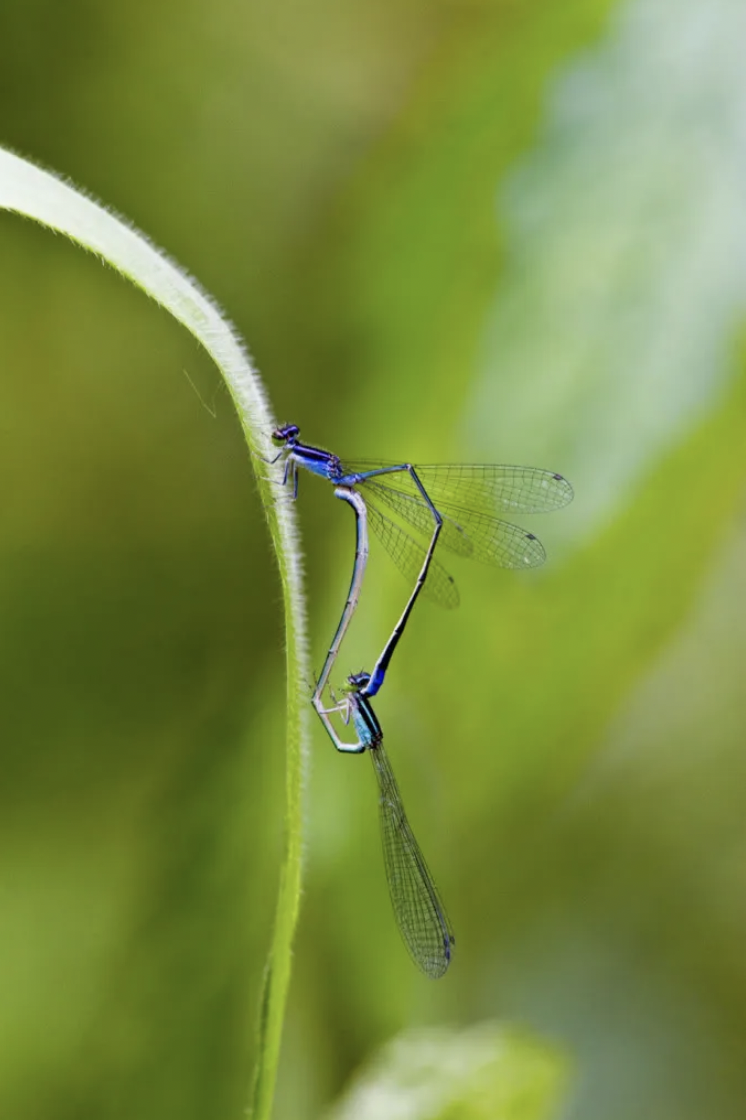
It’s always a delight when I stumble upon a pond or stream with dragonflies and damselflies flying around, defending their territories, basking, hunting, and propagating, their very existence a pleasure for me to witness. However, the rare joy is when I find a gem of a habitat – an area so ideal for odonate life that while I photograph one new species, I have to avoid being distracted by the other four or five more colorful new species I’m simultaneously seeing out of the corner of my eye. I had one such explosive pond-wading experience several days ago while visiting a spice estate near Kumily.  Continue reading

Rockefellers Honoring Tatas

Cornell University Photography file photo

If you have been to India, you recognize the name. In fact, you might be forgiven for thinking they own the place. But the gentleman to the right was honored recently precisely because of the means by which the company’s business interests intersect with national interests, which is largely through its commitment to the communities within which they operate.  We (the many Cornellians among us but especially the 150 or so who staff and manage Raxa Collective’s base in south India, where these values of Tata are well known) join in applause and awe.  Click the image to the right for the story:

Since the Tata Group’s founding in 1868, the company’s mission has included returning wealth to the communities in which it operates. Two-thirds of Tata Sons is owned by philanthropic trusts that were founded more than 120 years ago.

At Cornell, the Tata Group has established the Tata Scholarship for Students from India to make Cornell accessible for talented Indian students with limited means, as well as the Tata-Cornell Initiative in Agriculture and Nutrition to create programs in India to increase crop yields, introduce new agricultural technologies and improve livelihoods.

Participatory Workshop Introduction

Last week, thanks to the effort of very helpful contacts on the islands, I was able to attend a Participatory Monitoring workshop in Puerto Ayora. For those of you unfamiliar with the term in the workshop title, you are not alone. Participatory monitoring, community science, public participation in scientific research, volunteer data collection–these all mean practically the same thing as citizen science, which I have briefly written about before. Here is another good, and possibly the most definitive, source of information on the subject, and although the site is a part of the Cornell Lab of Ornithology, I’ve pointed out (even more briefly) that projects are by no means limited to birds.

The workshop consisted of an impressive list of international expert invitees—representing Cedar Crest College/Earth Watch, SUNY (College of Environmental Science and Forestry and at Stony Brook), Stanford University, Pepperdine University/ Scripps Institution of Oceanography, the Center for Biodiversity and Conservation/American Museum of Natural History, Colorado State University/University of Wisconsin-Madison, the United States National Park Service (Joshua Tree National Park and Acadia National Park), and the Galápagos Conservancy. Additionally, the Galápagos National Park, Charles Darwin Foundation, WWF Galápagos, Conservation International, Universidad Central Sede Galápagos, and Grupo FARO were present. A very skilled interpreter, with portable headsets, helped those who didn’t speak English or Spanish. Being in the minority of non-PhD.-holders, and practically the only person with just an undergraduate education, made walking into the room slightly unnerving, but I knew that since the Cornell Lab of Ornithology didn’t have a representative in attendance there were still constructive inputs that I could contribute, seeing as the workshop was about citizen science. Another comfort was that people commonly mistake me for being older than I am. While a freshman at Cornell two years ago, many of my TAs thought I was a senior or junior for most of the semester, and when traveling, people who I tell I’m studying at Cornell tend to assume I’m in graduate studies until I correct them.

Continue reading

Lord Murugan – God of Tamil

Lord Murugan is the son of Lord Shiva and his wife Goddess Parvati.  He is very popular and is more frequently worshipped in the state of Tamil Nadu than the other Indian states.  He has other names (or avatars) such as Arumugan (meaning six faced), Palaniyappan, and Kadirvelan.  His vehicle is a peacock, so he is known as Mayilvahana in Tamil language.

A popular story is that when Murugan was born there were several maids willing to take care of him.  Embarrassed by having to choose, Murugan took six avatars at once so he wouldn’t have to disappoint any of them and hence was given the name Arumugan. Continue reading

We’re No Angels

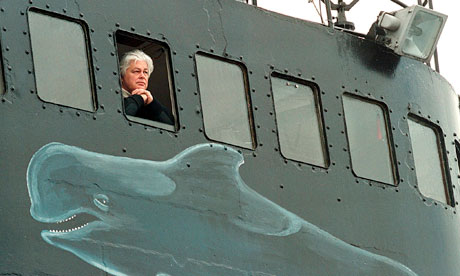
Captain Paul Watson says that the alleged incident in 2002 did not occur in Costa Rican waters. Photograph: Corbis

He’s no angel.  That would be the view of whaling and fishing interests, which include countries and big companies (plus plenty of soulless mercenaries, poachers and thugs).  Whales might think otherwise. 800 large endangered bluefin tuna, saved from poachers by this man and his organization, might too.  He counts plenty of our contributors as admiring, angel-cheering, distant observers.  Our observations are tempered by acknowledgement of the conundrums wrapped up in his in-your-face, semi-legal tactics (not our style).  But we care about fisheries and related topics as much (while trying to keep our wits about us) as those complexities.  And those forces Paul Watson is battling are certainly not always angelic themselves. Nor are we, always, for that matter.  Click the image above for the story in The Guardian:

California-based marine conservation organisation Sea Shepherd suspects that Costa Rica may have made a deal with Japan to have him extradited. Continue reading

Backwaters Of Kerala

Kerala has an extensive network of waterways covering a distance of approximately 560 km. Besides the large inland lakes, the backwaters include the whole network of canals and waterbodies made by the unique craftsmanship of nature. The lifestyles along these waterways has given rise to a popular but easy going form of tourism. The photos in this post are taken from Alappuzha (Alleppey), the smallest district of Kerala.  Continue reading

Worth Half A Minute

Thanks to the Environment section of the New York Times, its website, the “Green” and the “Science” initiatives on that site, the above quick video of an invention that may change clean up procedures for one of the scariest new energy trends (read the story here, and then scroll down that site for earlier stories on fracking itself):

In fracking, a mix of water, sand and chemical additives is injected into a drilling well under heavy pressure to release natural gas from shale deposits. At the end of the process, some of the chemical-laden water returns to the surface along with salts, radioactive elements and other contaminants absorbed from the shale. Safely disposing of the waste from fracking without contaminating drinking water and waterways has been a major environmental and health concern.

White Hibiscus

White hibiscus is a small shrub which normally grows to a height of 15-20 feet commonly naturalized in the Western Ghats of India. This single white flower blooms throughout the year and is slightly fragrant. In Kerala, it is mainly grown in  homes and spice gardens as an ornamental plant.

Language & Conservation

Click the image above to go to National Geographic‘s valuable contribution to address one of the least discussed conservation crises facing the world today:

Every 14 days a language dies. By 2100, more than half of the more than 7,000 languages spoken on Earth—many of them not yet recorded—may disappear, taking with them a wealth of knowledge about history, culture, the natural environment, and the human brain.

National Geographic’s Enduring Voices Project (conducted in collaboration with the Living Tongues Institute for Endangered Languages) strives to preserve endangered languages by identifying language hotspots—the places on our planet with the most unique, poorly understood, or threatened indigenous languages—and documenting the languages and cultures within them.

A Quick Thought on George

I was at the beach with Reyna, Roberto, and their kids at Tortuga Bay on Sunday when we heard from an acquaintance that El Solitario Jorge had passed away (the news passed at a speed throughout the Galapagos Islands similar to that reserved for elder dignitaries elsewhere in the world). My first feeling was surprise, because I had always heard how old giant tortoises could live and I knew how much veterinary care the animals at the Charles Darwin Research Station received. My second and third feelings were sadness, followed by some unexplained relief (was it a queasy feeling of my good fortune for just having seen George for a second time on Friday afternoon, while walking through the tortoise breeding area? Relief provided by the mystical thought that maybe he will find his soul mate in the next dimension? Something else?  I do not know).

We were all a bit stunned by the news, wondering what the implications were for the dozens of organizations and companies that used George as “celebrity” endorser for the Galápagos and biodiversity conservation: almost every t-shirt you see on Charles Darwin Road in Puerto Ayora has Lonesome George imprinted on it, either in artwork or the logos for the National Park, the Galapagos Conservancy, and many other groups. This single tortoise was placed alone on billions of pieces of merchandise supporting (or purporting to) conservation, and his loss brings to mind what the WWF would face should the last panda pass: the extinction of the species might serve as an even more compelling, albeit less directly or personally moving, icon for protection of endangered species.

In lighter news: this week, from morning till evening, I’ll be attending and learning from a workshop titled “Development of a Participatory Environmental Monitoring Program for Galapagos,” which I think will be incredibly useful and educational for my plans with citizen science at Tomás de Berlanga!

Whether You Met Him Or Not, Say Goodbye to George

Lonesome George: alone until the end. Photograph: Thomas H Fritts/EPA

Some of our contributors, like Reyna and Roberto, are permanent residents of the Galapagos Islands; some like Seth, are currently stationed there; others among us have been there and had a brief encounter with George.  The news of his demise is not merely sad, for all of them, all of us; it sends a bit of a chill, for reasons evident when you read the history of his species.  Yet, George made an enormous contribution to awareness of the need for conservation and habitat renewal.  He was a celebrity, of sorts, working (whether he liked the gig or not, we shall never know) on behalf of endangered species around the world.  Thank you, George.  Click the image above for the notice in The Guardian:

The last known representative of the giant Galápagos tortoise subspecies Chelonoidis nigra abingdoni had every reason to shun humanity, however. His relatives were exterminated for food or oil by whalers and seal hunters in the 19th century, and his habitat on Pinta was devastated by escaped goats. George possibly has relations on neighbouring Isabela Island, but it is more likely his whole subspecies is now extinct – the end of what is probably a 10m-year-old line.

Indian Leopard

Indian Leopard at Wayanad Sanctuary

Indian Leopard comes under one of the categories of five Indian big cats, which are massively spreaded on the Indian sub-continent. Preferring dry, deciduous areas with  significant amounts of rainfall these leopards inhabit tropical rainforest upwards of  2200 meters above sea level. Continue reading

Intra-Galactic Weather Forecasting

A NASA artist’s illustration of events on the sun changing the conditions in near-Earth space.

Click the image above to go to the 5-minuted podcasted explanation of a project you have likely never heard of.  But it sounds important (perhaps to explain why sometimes your mobile phone gets inexplicably scrambled) and as with the story here it may inspire the career aspirations of a few young clever dreamers:

“When one of these big storms comes in, it can actually change and flex the magnetic field around the Earth,” Stratton says. “So we’ll measure that and then we’ll see how all of that energy that’s coming out of the sun deposits into the Earth’s magnetic field, into the radiation belts.”

Ordinary satellites wouldn’t survive so much radiation. So Stratton and a large team at the Applied Physics Lab have spent years designing and building two very tough spacecraft.

Each of the spacecraft is an octagon about 4 feet tall. But once they are in space, they will deploy booms that extend about the length of a football field.