Beholder’s Eye

Robert Krulwich has more to say on topics we referred to in several links and observations about dwindling fisheries.  Is it just a matter of perception?

Yes, there are more and more people on the planet, and yes, there are fewer and fewer fish in the sea, but do we really notice? After all, fish live in water and we live on land; so we don’t mingle that much. If fish were sparrows, we might see a dramatic decline, but who misses what they don’t see in the first place?

Click the image to go to the full line of reasoning.

Sustainable Landscape Design

Here in the desert, where rainfall is relatively low and where people take great pride in the aesthetic of their surroundings, landscaping is an issue with a great environmental impact. From water use and runoff to soil quality and wildlife interaction, landscaping decisions can turn a piece of property into a detriment to the environment, or they can turn it into a sustained celebration of its environment.

Crown of Thorns plant is a drought tolerant plant, great for landscaping in the desert of the Coachella Valley

Very recently, I attended a sustainable landscaping design workshop in San Diego held by Southwest Boulder and Stone and conducted by Morgan Vondrak of Argia Designs. These companies specialize in the landscaping needs of Southern California and are mindful of the environmental needs involved in such a specialty. Ms. Vondrak shared ten useful and beneficial tips with the attendees, all of whom had a personal interest in sustainable gardening. Here are some of the important things I learned… Continue reading

The Hill Mangoes of the High Range

These pictures were taken in the area of Periyar where one can find these hilly mangoes in plenty. Mangoes have grown for more than 4,000 years in India. Hilly mangoes are widely used in making pickles instead of being eaten as fruits. Mangoes require a tropical or subtropical, frost-free climate. Flowers Continue reading

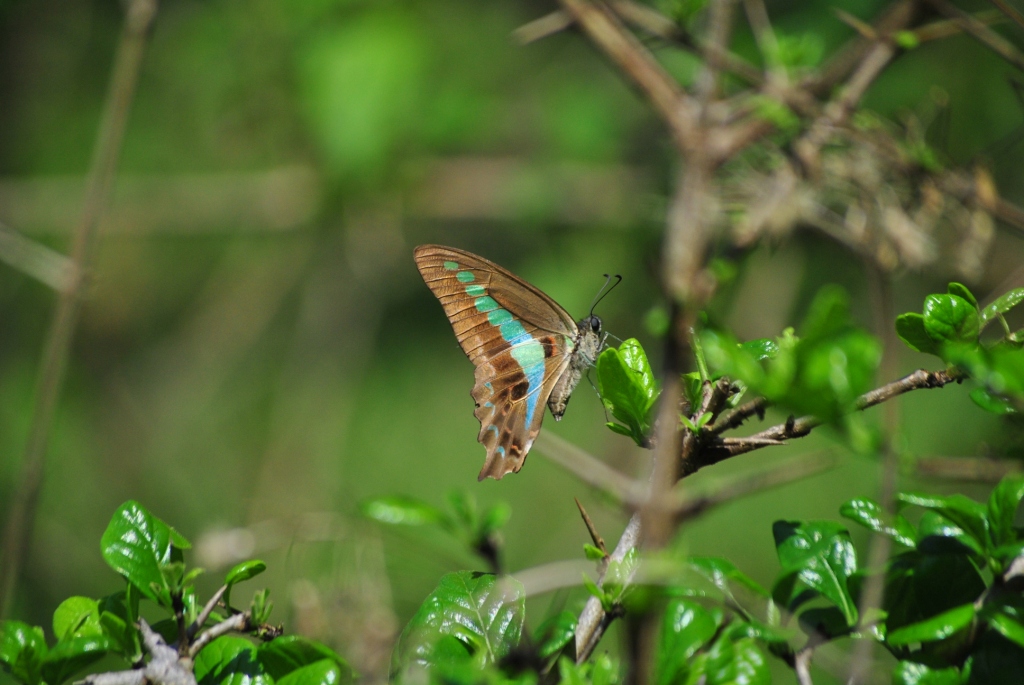
Common Map Butterfly (Cyrestis thyodamas)

I have found this butterfly inside the core area of Periyar near Thannikudi-  a wireless station situated to the northern side of the reserve.  This butterfly is confined to the cool moist forests of the Western Ghats. It visits flowers as well as damp patches.  Continue reading

Candle Bush (Cassia alata)

Cassia alata is an erect tropical, annual herb with leathery compounded leaves found in the Western Ghats of India. The plant grows quickly to a height of 6-12 ft and can live for many years. It has waxy yellow spikes on the tip of each branch for which reason they are also known by the name candle bush and seven golden candle sticks. The spikes elongates as the period of blossom progresses. Flowers are pollinated by carpenter bees and caterpillars of migrating butterflies feed on this plant. Continue reading

The Catch

In a post last August, Seth referred to the problem of over-fishing as an example of a complex set of challenges constantly facing societies, simply stated as how we cooperate to solve problems.  Overfishing is not a new problem, and like many challenging ones seems to be getting more and more daunting, with no solutions in sight no matter how far and wide we search.  Click the image below for a well-written documenting of one facet of this problem.  It may leave you in need of a lighter treatment of the future of fish

Harvested by the billions and then processed into various industrial products, menhaden are extruded into feed pellets that make up the staple food product for a booming global aquaculture market, diluted into oil for omega-3 health supplements, and sold in various meals and liquids to companies that make pet food, livestock feed, fertilizer, and cosmetics. We have all consumed menhaden one way or another. Pound for pound, more menhaden are pulled from the sea than any other fish species in the continental United States, and 80 percent of the menhaden netted from the Atlantic are the property of a single company.

Malabar Raven (Papilio dravidarum)

Endemic to the Western Ghats of South India, the Malabar Raven butterfly is common in the Periyar Tiger Reserve. Despite their rounded wing shapes, these medium sized black-brownish tailless butterfly are in the swallowtail family. Continue reading

Lime

The lime tree is a spiny evergreen shrub found in plenty in the Western Ghats of India. Limes are typically round, green, with leathery leaves and fragrant white flowers. They are rich in vitamin C and often used to add more taste to the flavors of Indian food and beverages like lime water, lime juice, etc. Continue reading

Milk Weed (Asclepias syrica)

Milk weed is a herbaceous, perennial, nectar-rich plant growing up to 3-5 m tall. These can be found in old fields, roadsides, meadows and thorn forests. The oval leaves are velvety on their upper surface and downy underneath. Continue reading

Coffee Flowers

Coffee plantations are found in the Western Ghats of Southern India on hills and misty mountains ranging from an elevation of 800m – 1500m above sea level. The coffee flowering season is a spectacle to be experienced. It looks like a pale jewel glittering in the crown of the coffee plant. The white blossoms have a beautiful scent which attracts honeybees, butterflies and other pollinators.

Continue reading

Gold’s Glitter Guarded

From The New Yorker‘s website, a slide show on the recent article about last year’s discovery of gold buried in a temple in south Kerala, and a remarkable set of observations from the photographer assigned to that story:

In India, deities can own property, and this temple, dedicated to Vishnu, has been accumulating gold for centuries. “I was asked to photograph it from the outside; it is strictly forbidden to take photos inside,” Goia said. “Jake and I found ourselves jumping from office to office calling whatever number possible to try to get permission to access the security area.”

This slideshow requires JavaScript.

Feynan Ecolodge at the Dana Biosphere Reserve

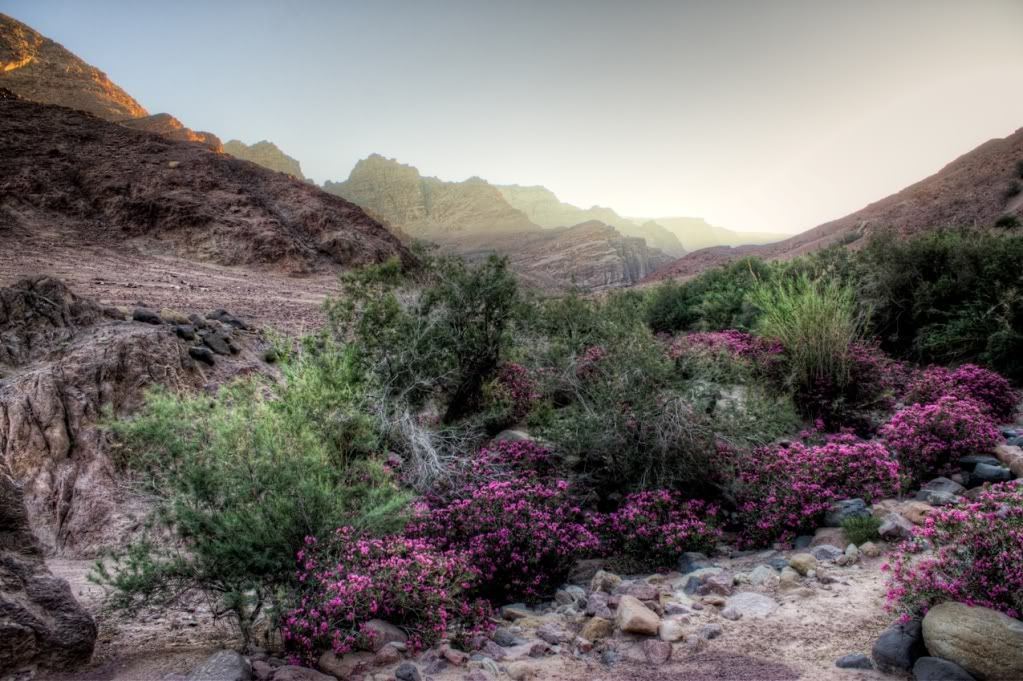
When I stepped into the cool morning air outside Amman’s airport two weeks ago, I knew I was in for an interesting time. For the next seven weeks I would be staying at Feynan Ecolodge as a live-in writer and photographer, spending time with Bedouin locals, adventuring through the Dana Biosphere Reserve, which was established as a protected area in 1989 by Jordan’s Royal Society for the Conservation of Nature, and experiencing Feynan in a way few people are able to. I hope to become familiar with both the magnificently diverse geological and biological features of the area, as well as the Bedouin culture, which is as steeped in mystery to me as their chai is with sugar. Traditions and rituals, beliefs and taboos which seem impractical or unsophisticated to the Western world all have significance which might not be superficially visible. Continue reading

Nature Walk at Periyar

This slideshow requires JavaScript.

The Periyar Nature Walk gives visitors the opportunity to explore the dense Periyar wilderness, enjoying nature, sighting wildlife, hearing the rustle of wind and smelling the wild blossoms. The trek often passes through evergreen and moist deciduous forest interspersed with marshy grasslands.  Continue reading