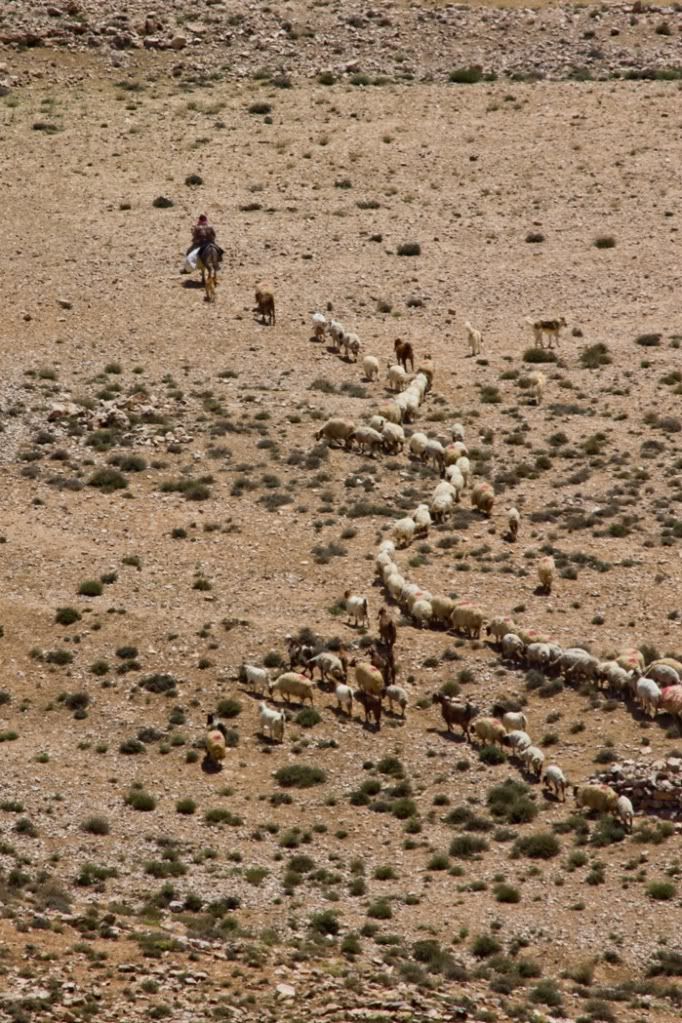
A Bedouin man herds his sheep up a hill overlooking Wadi Araba, where Feynan is only barely covered by mountains. Continue reading
A Bedouin man herds his sheep up a hill overlooking Wadi Araba, where Feynan is only barely covered by mountains. Continue reading
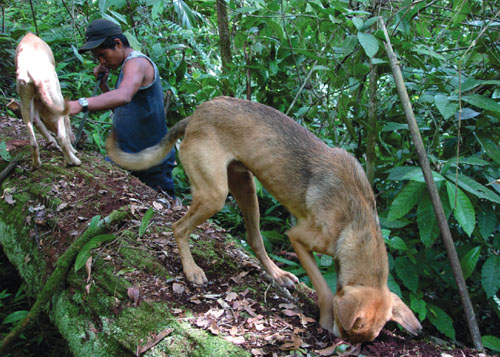
Dog domestication may have given anatomically modern humans an advantage over Neandertals. Studies of modern-day hunters suggest that dogs help people hunt more efficiently and ensure a more plentiful food supply. Here, a Mayangna hunter in Nicaragua works with his dogs to pursue an agouti (a rabbit-sized rodent) in a hollow trunk. The best dogs sometimes help these indigenous hunters bring in more than 50 kilograms of meat per month. Photo, Menuka Scetbon-Didi.
(Click the image above to go to the story in Scientific American):
One of the classic conundrums in paleoanthropology is why Neandertals went extinct while modern humans survived in the same habitat at the same time. Continue reading
Over the summer, I’ll be working with youth in the community of the second largest island of the Galápagos archipelago, Santa Cruz. This central island is the touristic center of the archipelago, and Puerto Ayora, its capital, is the most populated (and thus, urban) area in the islands. In particular, my goal is to engage students of the Unidad Educativa Modelo Tomás de Berlanga, a bilingual non-profit school five minutes from the center of Puerto Ayora, and create a youth-led project that focuses on habitat awareness and improvement, participatory science, and the arts, specifically through birds.
I will try to apply the framework of the Celebrate Urban Birds program to the Galápagos, using a list of around 16-20 focal species to teach those I can reach on Santa Cruz about citizen science as a tool for conservation and research while hopefully deepening an appreciation of their surroundings. I aim Continue reading

Yellow Allamanda is an evergreen, tropical shrub naturalized in the Western Ghats of India growing vigorously to a height of 2m and above. The plant’s main attraction are its yellow, trumpet shaped flowers, Continue reading

Basking Ridge, NJ
Guest Author: Denzel Johnson
The positive thinker regards life as an adventure where the rewards are in the risks and the pleasure in responding to the challenge.
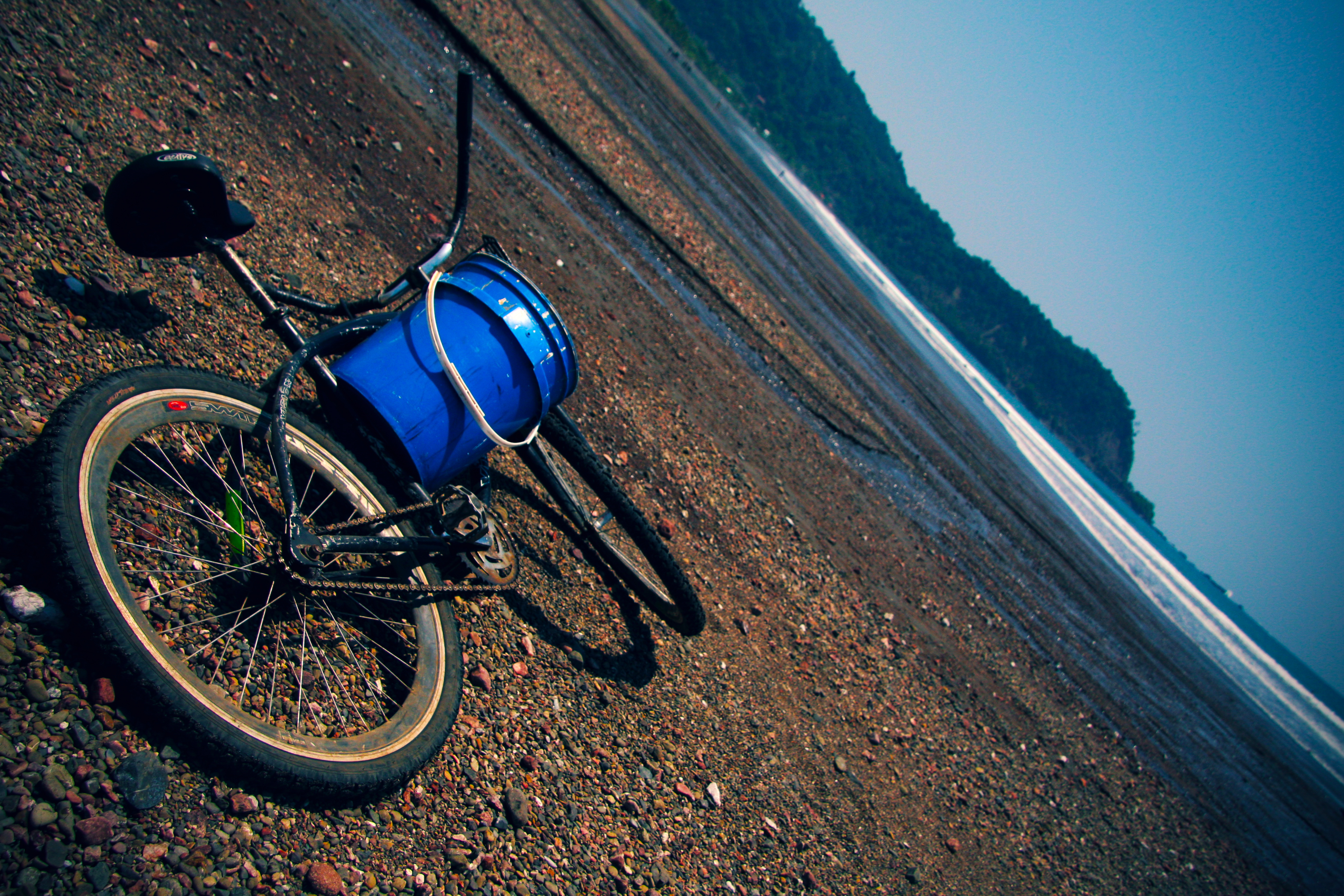
A card printed with that quote has sat in my wallet since setting off last year for my journey through Latin America. I convinced myself that my philosophy as a traveller should somehow reflect these words and the card was meant to encourage me to step off the beaten track and venture where others wouldn’t consider a destination.
Having recently just spent a good portion of my gap year in solo travel through South America, I not only found myself on my own but always more positively challenged because there was no one else I could rely on. Continue reading
Two days ago I camped with friends in the Periyar Tiger Reserve. We had wonderful sightings: a herd of elephants with a baby, a single bison grazing in the forest, and a bear (a very lucky sighting but from a long distance). It was nice to spot animals at a very close distance and to catch them on camera. I visit the reserve frequently as an official forest watcher, but it is a different experience for me every time.- Mr. Salim
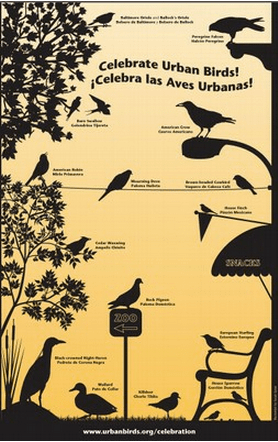 For the past year, I have been working at the Cornell Lab of Ornithology for the project Celebrate Urban Birds. Distinct from other citizen science projects the Lab of O. is involved with, such as eBird or FeederWatch, Celebrate Urban Birds (CUBs) stays true to its name and hones in on the celebratory aspect of studying birds: artwork, festivals, education, and other activities promoting community. Of course, there is still data involved. Thousands of forms have been filed—both electronically and physically—containing information on sightings of the sixteen focal species within 10-minute observation periods. These observations, along with notes about sighting location, are the source of data for the project. Participants include the address from which they are looking for birds in the ten minutes, describe the general amount of greenery and pavement in the area (as well as the size of the area itself), and list whether they saw, did not see, or were not sure about each of the sixteen species. This information constitutes a checklist that can be compiled into a larger repository of sightings in various types of green spaces around the country; the CUBs website contains species maps according to the number of observations in the last 90 days, marking where, say, a Brown-headed Cowbird has and has not been seen.

The power of convergence and collaboration
• Sustainability optimists speak of an era of convergence – a coming together of new technologies and new business models to create a 21st century economy
• In the below video, sustainability pioneers explain the power of having common goals and a shared, collaborative vision
(click the banner below to go to the video)

Beauty is in the eye of the beholder. Turn the volume off (because beauty is in the ear of the beholder), go full screen, and click play. If all goes well for you, repeat with moderate volume.

This is the statue of the Goddess Veera Bathra Kaliamman situated 8 kms away from Thekkady, on the way to Madurai in between Gudalur and Lower camp(villages of Tamilnadu). The statue is nearly 42 feet high and is unlike anything elsewhere in India. Continue reading

Basking Ridge, NJ
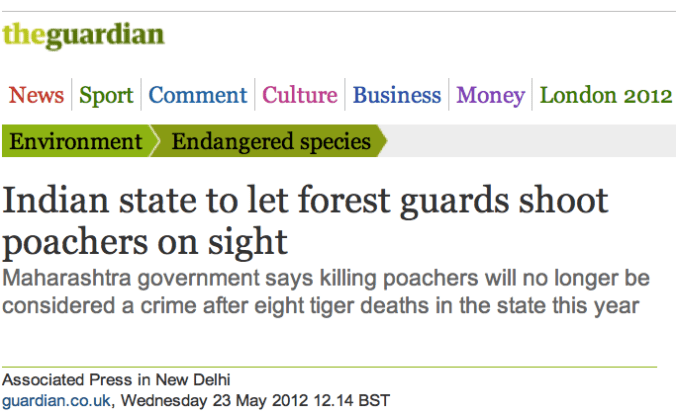
Click the headline above to go to the story below:
A western Indian state has declared war on animal poaching, allowing forest guards to shoot hunters on sight to curb attacks on tigers, elephants and other wildlife. Continue reading

The Black lily is an ornamental species of flowering plant found in the Western Ghats of India. It grows a cluster of beautiful blossoms from a taller, leafless flower stalk and are surrounded by broad bracts. The underground stem tubers of the plant are rich in starch. Continue reading

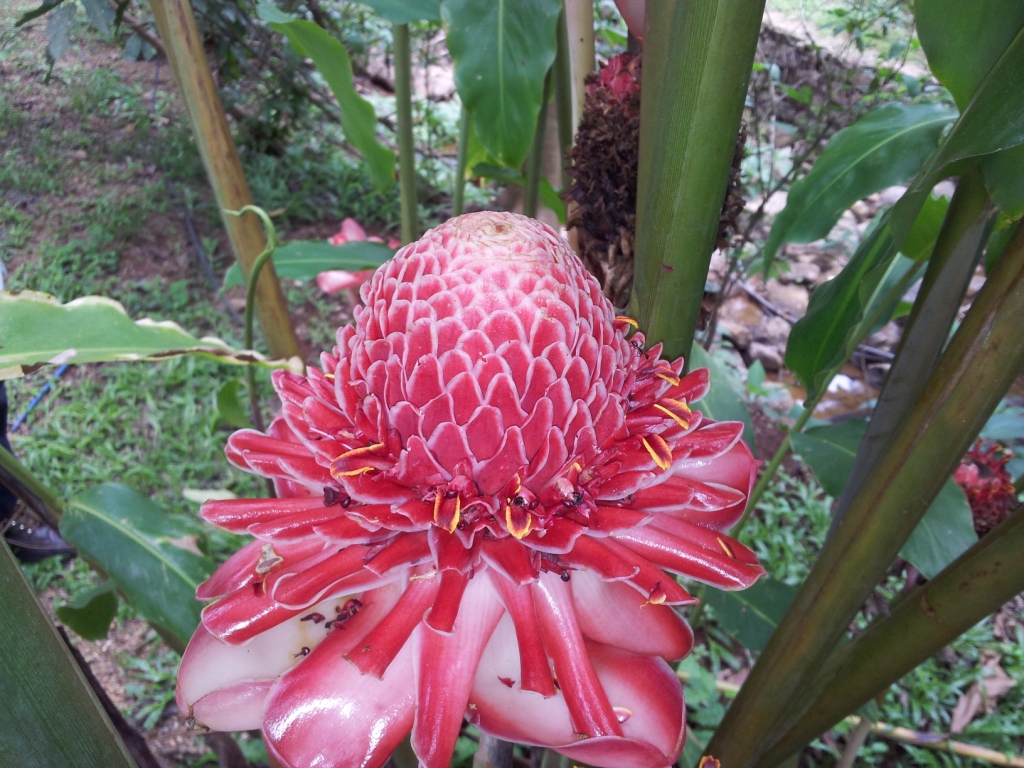
Red torch ginger is a perennial tropical plant native to Malaysia and Indonesia but naturalized in the Western Ghats of India. The plant grows from rhizomes, bulbous root structures similar to culinary part of the ginger family. The main attraction of the plant is its sturdy cluster of bracts that vary from light pink to deep rose color and resemble a flaming torch, hence the name Red Torch Ginger. Continue reading
 The New Yorker‘s Dana Goodyear is a foodie’s food writer. She reports on topics you maybe did not know you did not know about; but after, you realize you wanted to know. Her most recent blog post (click the image to the left) describes research asking questions which, in the spirit of science, may leave the non-scientist scratching their head (but read the post to the end to see how the puzzle is put together): Continue reading
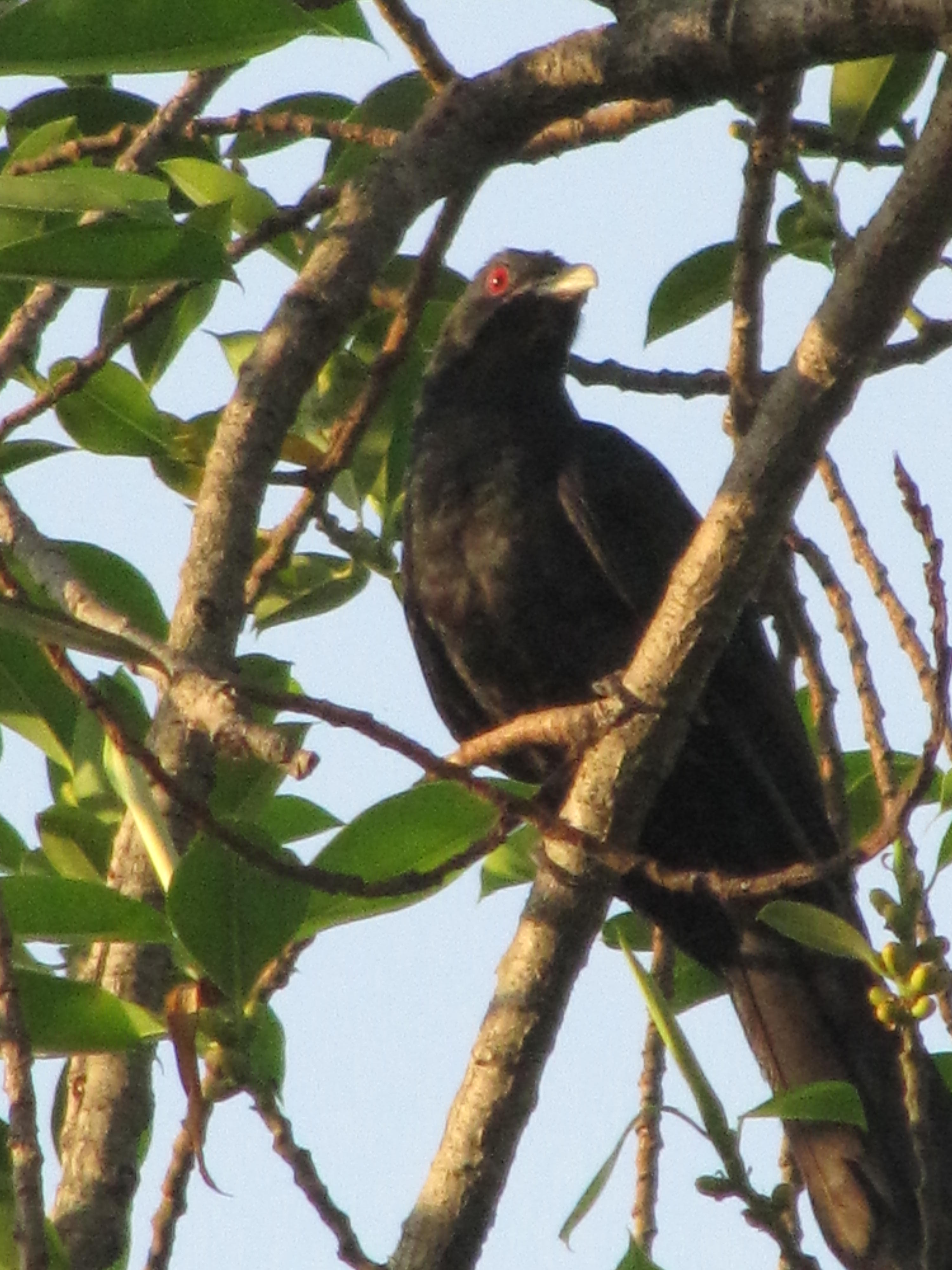
Photo: Mr.Steve, Cardamom County Guest from UK
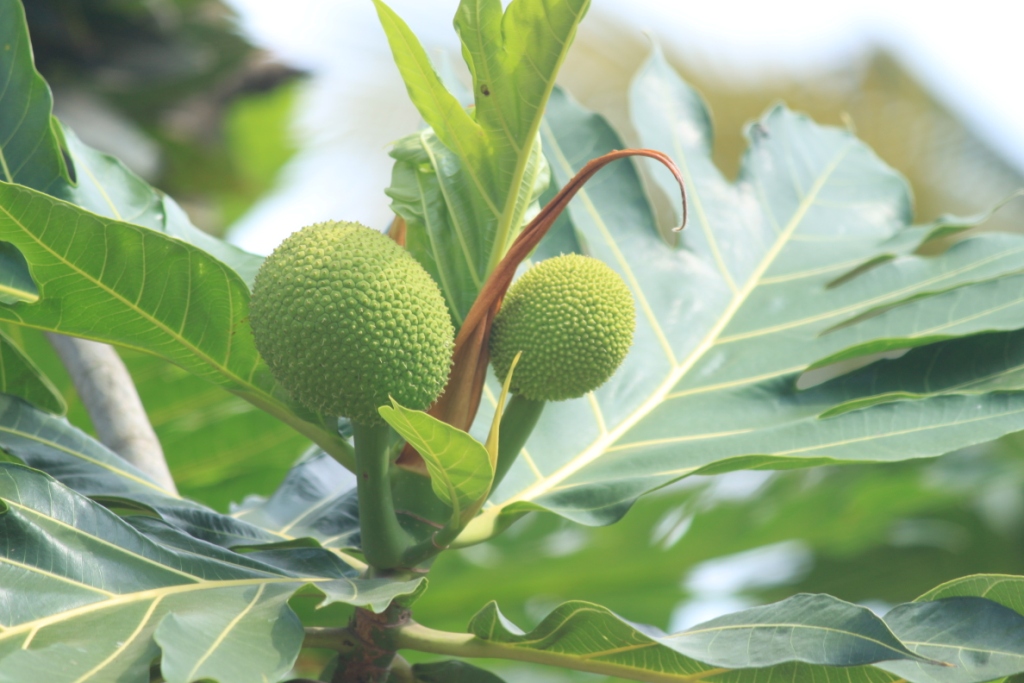
Breadfruit is an equatorial tropical fruit species found at the elevation of 1500m in the Western Ghats of South India. The starchy, potato-like fruit has a taste and texture similar to freshly baked bread when cooked; and hence the name ‘Breadfruit’. The tree grows vigorously to a height of 25m and produce 120-200 fruits annually. Continue reading
 Organikos