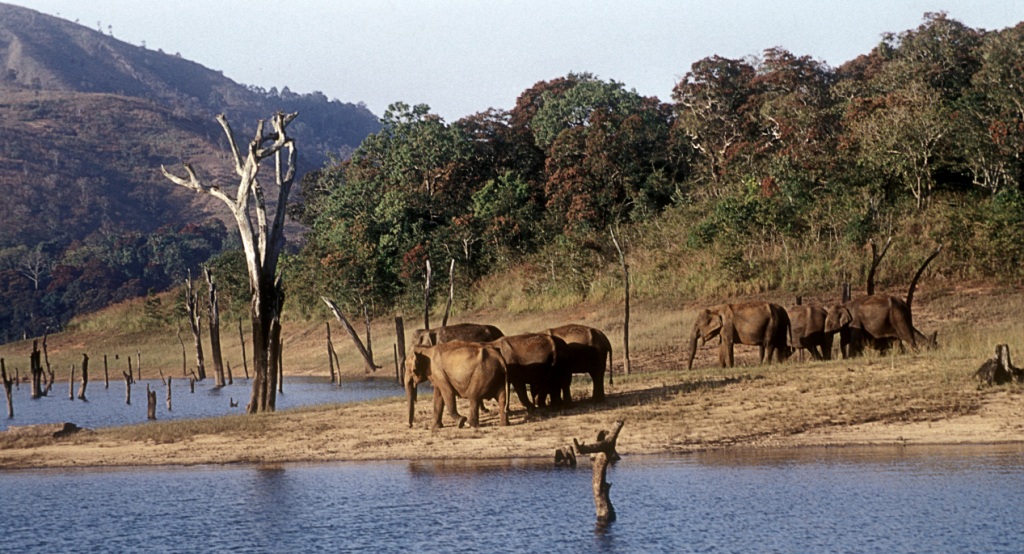
Thekkady, Through an Old Camera’s Lens

“We have fallen heirs to the most glorious heritage a people ever received, and each one must do his part if we wish to show that the nation is worthy of its good fortune.” –Theodore Roosevelt

We have commented elsewhere on the counterintuitive observation that hunters and fishermen are sometimes, perhaps even often, the best conservationists. (See Seth Inman’s posts from last autumn.) At least in the “North American Wildlife Conservation Model” established in the early 20th century it can be understood that way. Some environmentalists would call the slope between the two concepts a “slippery” one.

Theodore Roosevelt, the 26th President of the United States was a very public example of this. Approximately 230,000,000 acres of wilderness, including deserts, mountains, wetlands and forests were placed into the public trust under his presidency. I wrote about his importance to the early conservation movement in the U.S. in a post called The Natural. At the time I wrote that post I purposefully avoided using the archival photographs that portrayed Roosevelt’s long history of hunting, assuming it wouldn’t fit with our Conservation point of view. Continue reading
Machad Mamankam – Unique and Traditional Temple Festival

In Kerala, almost every village has its own temple with an annual festival. So there is always a local festival happening somewhere or the other, each with its own flavor and color. The 800 year old Mamankam festival is celebrated annually at the Machad Thiruvanikav temple near Trichur, the cultural capital of Kerala. Continue reading

Hypothetical Biology: Part Two

This post continues the hypothetical situation described in my previous post, which you can find here. I left off claiming that the most likely explanation for the barring and display of the male turacos was sexual selection; below I try to support this hypothesis in greater detail:

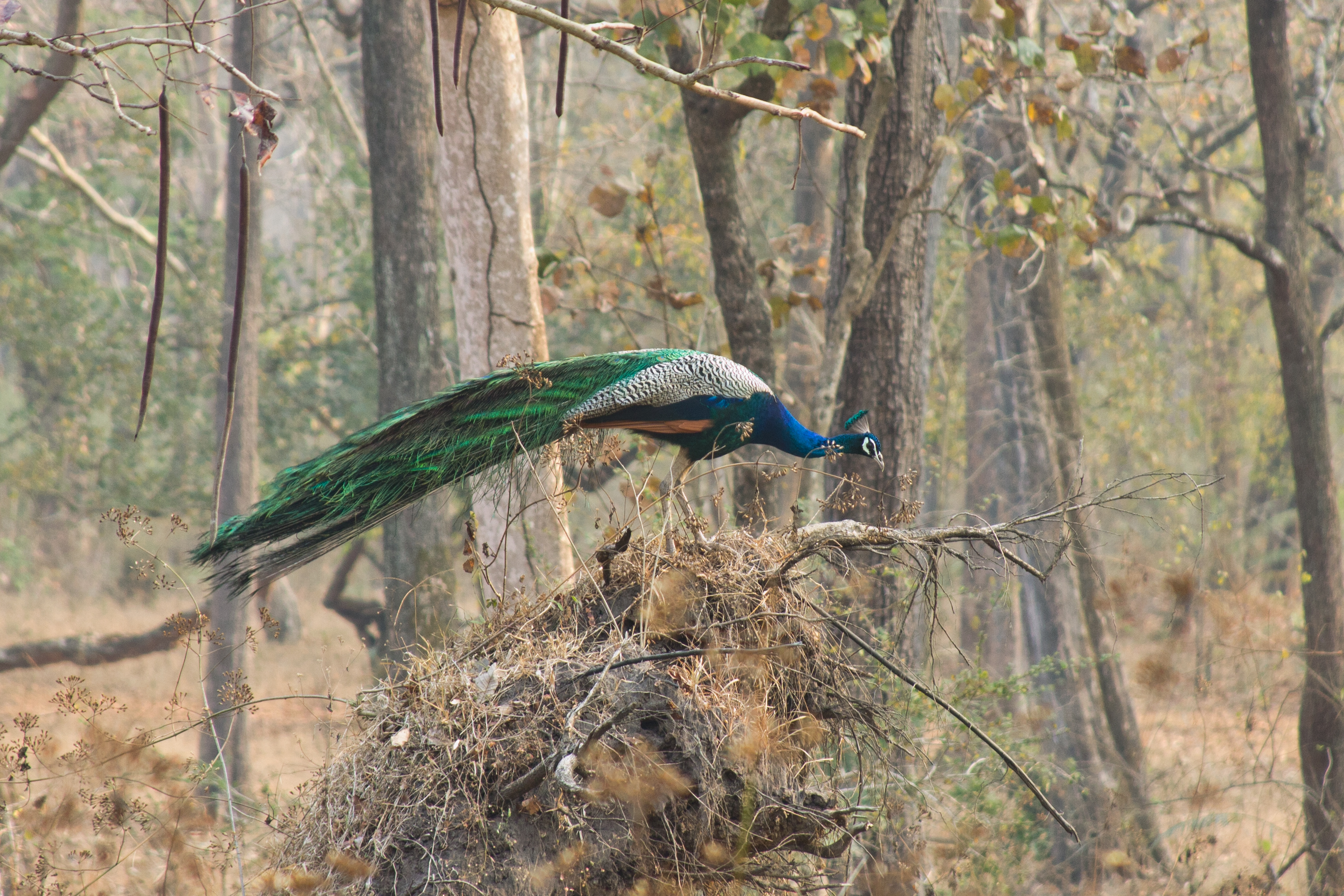
We know that the male turacos limit themselves to intraspecific displays, so the pigmentation and display must be signals for other turacos. It also seems likely that some element of the barring is, or is at least perceived as, evidence of quality. Depending on how elaborate and visible the display is, it may create a handicap for male turacos. The handicap theory posits that sexually attractive traits are frequently impediments to an organism’s ability to survive, and thus that an organism’s continued survival despite such a hindrance portrays its higher quality. For example, some male birds, peacocks being an immediate example, have displays of quality reflected by an honest handicap: their conspicuous and unwieldy tail feathers. Although the turaco’s ultraviolet pigment is inexpensive to produce and invisible to mammalian predators, it may be noticeable to some reptilian predators and is probably visible to avian predators, making it possible that the turaco barring display is an honest handicap signal.

Continue reading

Allspice (Pimenta dioica)

Native to the New World Tropics, allspice is a medium sized tree growing up to 35 to 42 feet in height whose leaves smell like a combination of cinnamon, cloves and nutmeg. The evergreen tree produces small berries which contains one or two seeds. This seed is priced as the second most expensive spice in the world market after Saffron.

Continue reading

The Chenda melam- Traditional band of Kerala

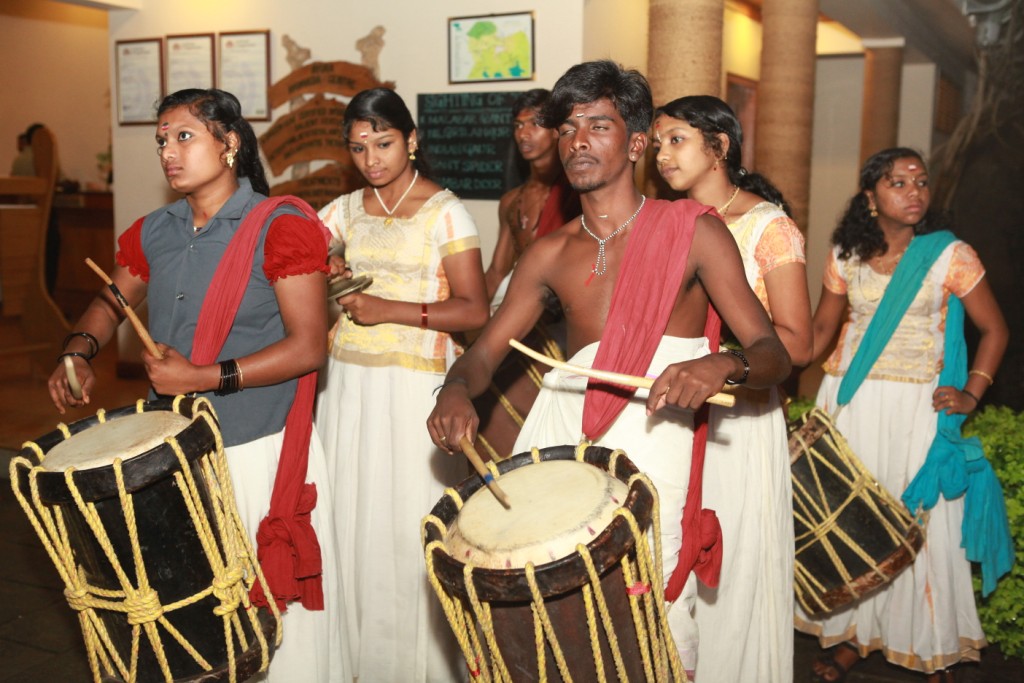
The Chenda melam is the most widely performed keshtra vadhyas (songs or programmes based on temples festivals) of south India. Irrespective of cast or religion, the melam have been an important part of every Kerala festival for over 300 years old. The most important among these melams are Pandy and Panchari, which may extend up to 5 hours. The leading instrument in these compositions is the Chenda, a cylindrical drum that originated in Kerala. The Chenda is divided into Valamthala Chenda & Edamthala Chenda (right & left side of the instrument) or also known as “Veekam Chenda” & “Uruttu Chenda”.

Continue reading

Giving Wildlife a Hand

Creativity often breaks the boundaries of “Art” and flows unrestricted into the art of advertising, catching the eye and closing the deal.  Using uncharacteristic restraint in avoiding all the obvious applause puns tugging at my imagination, I will just say “kudos to WWF” for using Guido Daniele’s inspired work to make their important point. Continue reading

Periyar Sightings: March 24 & 25, 2012

Some of our guests at Cardamom County recently enjoyed the Nature Trail at Periyar. They were happy to share their photos with us.

Photo by Manoj Vasudevan

Mr. Manoj Vasudevan, who is a senior Tour Escort, took a good collection of pictures while on the trek with his group.

Cormorants

Group of Indian Gaur

Continue reading

Places to Bird: Part 4*, Algonquin Provincial Park

Gray Jay

The thermometer read six degrees below zero Fahrenheit.  Within five minutes of stepping outside I had lost all feeling in my face.  We were three hours north of Toronto in the middle of nowhere in the middle of February.  We had arrived at Algonquin Provincial Park with high expectations and would not be disappointed.  Algonquin is thus far my favorite winter birding destination.  The species are incredible and the scenery might be even more impressive.

Continue reading

Hypothetical Biology

Let’s say you’ve just found out something new about a species of bird, a certain turaco that is a very dark cryptic green, in the forests of the Congo. The species hasn’t been studied much, and you’ve discovered that the male birds have a special pigmentation only visible in the ultraviolet spectrum, and this pigment is found in a barred pattern across their undersides, which they display to females and other males in their dense colonies. Based on certain test results, you can positively claim that the pigment is easy and inexpensive to produce, and you’ve also ascertained that the bars of ultravioletly-pigmented feathers are closely correlated with the bird’s growth—that is, older birds have wider bars. But apart from these few facts, you know very little about the turaco species, and your job is to wonder how and why the ultraviolet barring and its display evolved.

Continue reading

Yoga & Evolution

A few months ago there was an article in The New York Times that apparently caused a ruckus (click the image to the left to read The Guardian‘s coverage of that aftermath) in the Western yoga community.  Maybe it is because I am not a member of the Western yoga community that, when I read the article originally I thought:   Brilliant.  Eastern tradition meets Western science.  Evolution.  Improvement.

Today I had a reminder about that article, and my response to it, while listening to this podcast.  The journalist (a Pulitzer-toting science writer who also has practiced yoga for more than 40 years and recently published The Science Of Yoga) writing that article says something about half way through that rings true: Continue reading

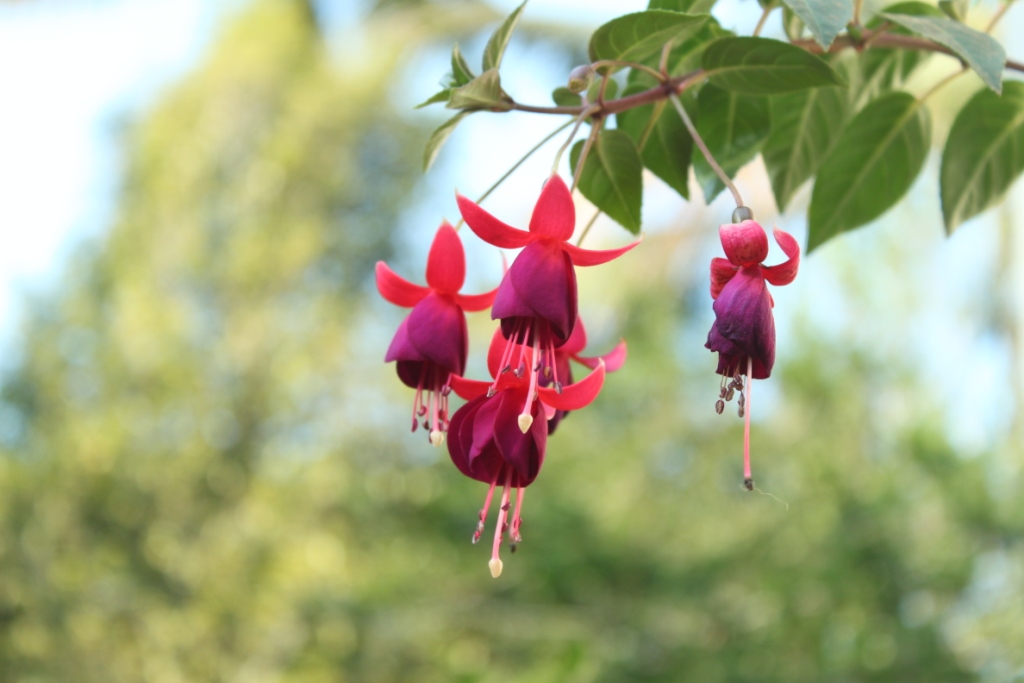
Fuchsia – An Ornamental Plant

The fuchsia flower is a beautiful ornamental exotic flower with striking colors which is widely grown in the Western Ghats. The majority of fuchsia species are native to Central and South America. There are almost 110 varieties of this species.

Continue reading