The Cyberspace Jungle

Today, we are bombarded with information. Millions of bits–photos, text, video–stream by us every second we’re on the web. And we’re always on the web. Mobile devices on 3G (and now “4G”) and lightweight laptops able to access nearly ubiquitous WiFi hotspots mean that the modern age is certainly the information age. And the Internet continues to grow riotously; like a tropical rain forest, millions of unique niches exist, but they are inhabited here instead by users and data. And much like a natural ecosystem, the internet is also inextricably interlinked and interdependent: hyperlinks, reference pointers, and social media make the Internet a pseudo-organic entity that has its gaze turned not only outward (towards expansion) but also inward (towards connections). In its own way, the internet is an oddly beautiful thing. The freewheeling, ever-shifting topography of the web means that from second-to-second it’s never quite the same place.

But for all its seductive beauty and facile utility Continue reading
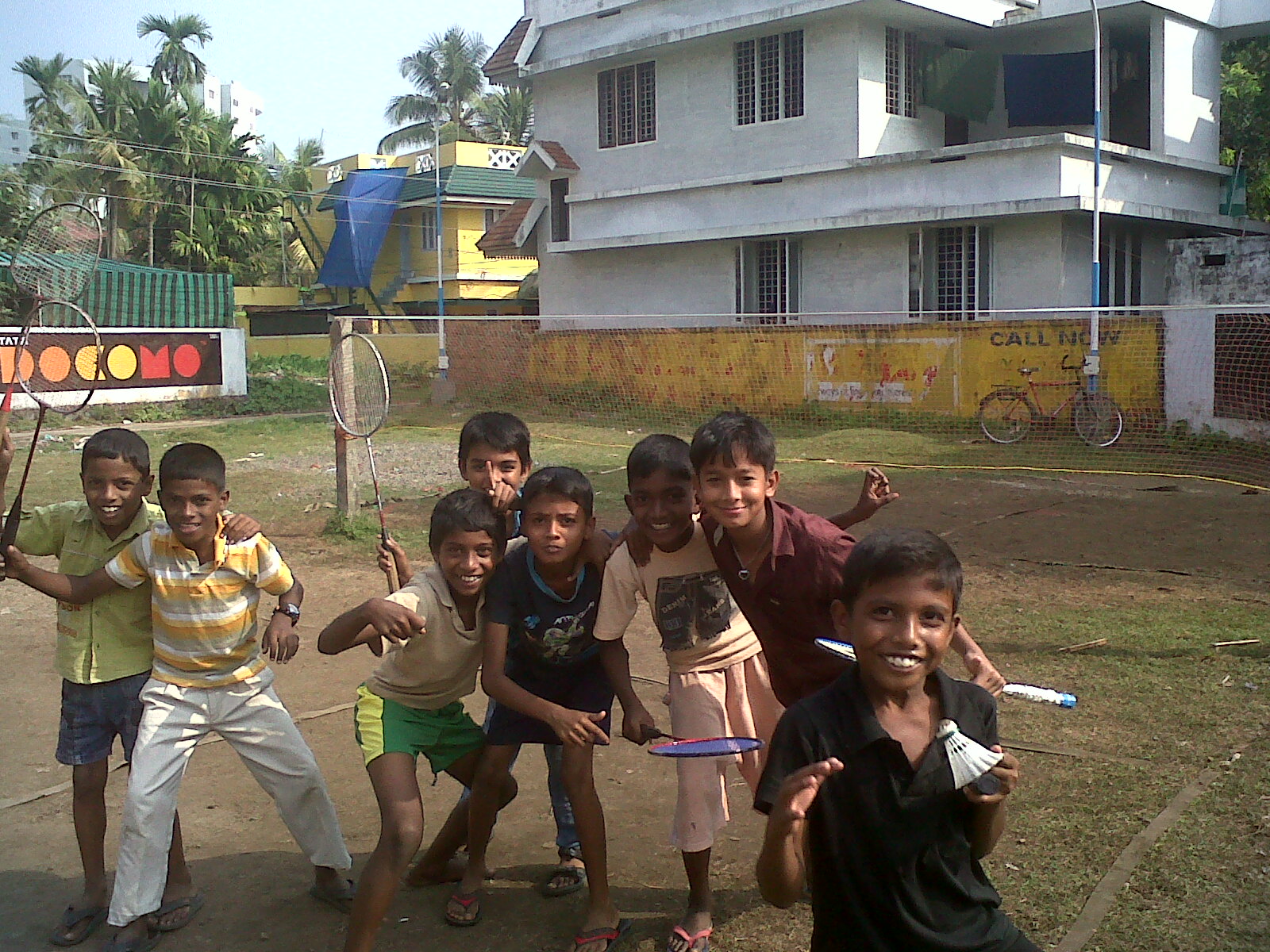
Our Gang, Thevara (Sunday Shuttle)

The friendliest fellows to be found.  Any passerby will get a smile.  Any passerby who tries to click a snapshot will get the royal treatment: a split second shift from the middle of a game (which was the point of the snapshot) to the most spectacular improvised pose that could be mustered. Continue reading

Entrepreneurial Conservation Through Rockclimbing

Guest Author: Robert Frisch

Image

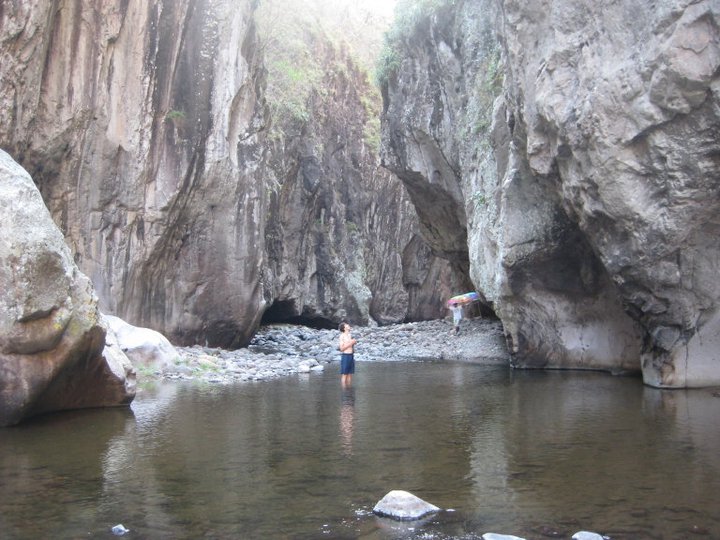
The burgeoning sport of rock climbing is an excellent example of how an adventure sport can propagate the conservation of natural areas through private sector initiatives.  In the early days of the sport, climbers would hammer iron “pitons” into cracks in the rock as they ascended, and attach ropes to them in order to protect against falls.  The pitons were not designed to be removed, and can still be seen on some of the classic climbs around the world.  Visionary thinkers such as Yvon Chouinard (of the Patagonia clothing and gear company) were unsatisfied with the fact that with each new climb, permanent scars were left in the rock, and set out to devise other means of protection.  Nowadays, climbers use removable “nuts” and “cams” that still protect against falls, but leave no trace in the rock.  In fact, rock climbers have even set up organizations such as the Access Fund that participate in conservation and land protection initiatives.  The sport has also helped to bring much needed revenue to rural areas as diverse as Slade Kentucky, Yangshuo China, or Sigsipamba Ecuador. Continue reading

Pepper Harvest and Paper Bags

Guest Author: Aby Thomas

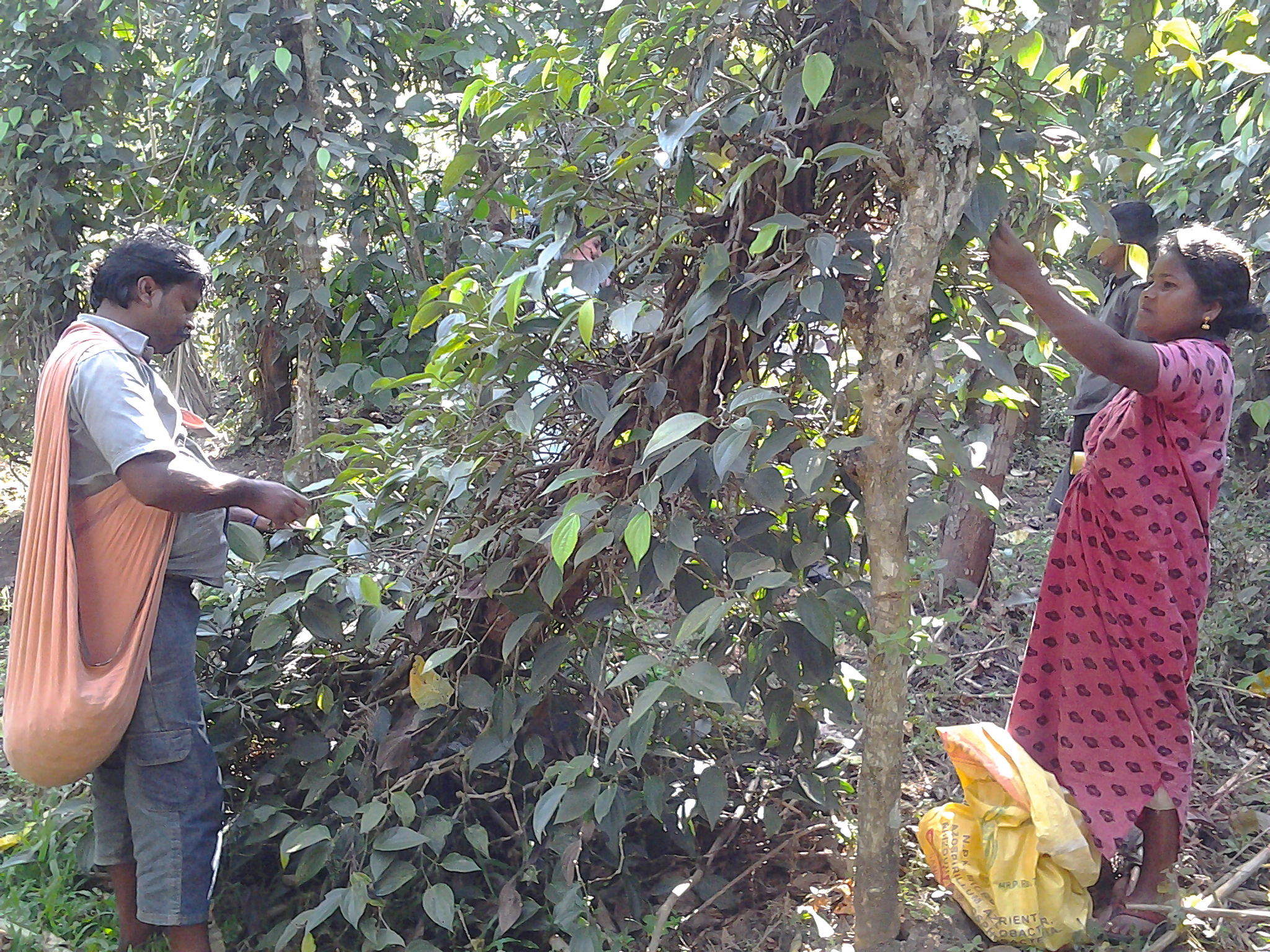
The title “Pepper harvest and Paper bags” may sound unusual, but it’s related to the newspaper bags initiatives by Cardamom County and the forestry department to create alternatives means of income for the tribal ladies leading to community development. The Vanasree Auditorium ladies have multiple responsibilities based on their working directly for the forestry department.  But the Mannakkudy ladies have had the newspaper bags as their primary income.  Until recently….The paper bags unit was active until the end of December, but now the tribal ladies are busy with their pepper harvesting. The pepper harvesting season in the locality begins with the month of January and ends during March. During these periods, the ladies help men in harvesting pepper. Continue reading

Verticals & Travel

Is it about the nascent field of urban ecology?  The science of water?  Microscopic adventures?  Click the image above (from the collection of the Wellcome Library in London, an “1828 etching by William Heath depicting a woman dropping her teacup in horror on discovering the monstrous contents of a magnified drop of water from the Thames, at the time the source of London’s drinking water”) to read Mark Dorrian’s captivating means of introducing a film, using a couple ideas and images that

anticipated future expressions of the new adventure on the vertical, perhaps the most striking of which would be Charles and Ray Eames’s short film Powers of Ten.

Continue reading

Margin Calls

Click the image to the right for an explanation of what that image has to do with the remarkable world of marginalia, which begins:

“In getting my books,” Edgar Allan Poe wrote in 1844, “I have always been solicitous of an ample margin; this is not so much through any love of the thing in itself, however agreeable, as for the facility it affords me of penciling in suggested thoughts, agreements, and differences of opinion, or brief critical comments in general.”

A certain Mr. Wallace, of literary fame, apparently had reason to write in the spaces of whatever was at hand.  But that is a matter of quite trivial pursuit compared to Kerouac’s marginalia while reading Thoreau.

Continue reading

Orchidian Slaves

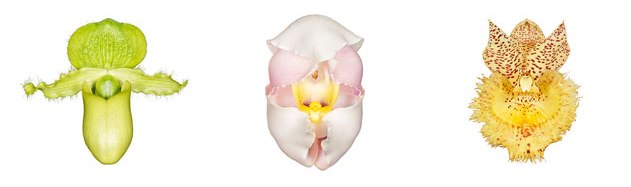
Cooperation is so remarkable as to seem beautiful, in that warm and fuzzy way that purring makes us feel.  But what about beauty?  Is it a common good, a selfless gift to others?  Beauty, as the cliche has it, is in the eye of the beholder.  Sometimes in the nose, and other times in the ears, too.  According to an article in Smithsonian a particular species of orchid might employ more than one strategy for attracting those it needs assistance from:

They trick animals into pollinating them and usually give nothing in exchange. Some orchid species mimic nectar-producing flowers to lure bees; others emit the fetid smell of rotting meat to attract carrion flies.

Richard Dawkins, an evolutionary biologist, published a book in 1976 called The Selfish Gene that would help explain the orchid’s beauty as a tool of entrapment.

Ever Clever

Click the image to the left to go to Dan Ariely’s always interesting and insightful blog site, where a recent post highlights a grocery whose shoppers are committed to lifestyles of health and sustainability.  The opener contains the key point:

Jared Wolfe, one of the students working with me, took the following pictures at Whole Foods a few days ago.  They illustrate amazing creativity in defining what the term “a deal” means.

1) Regular price is $1.99 and the Sale price is?   Two of the same item for $5 — which according to Whole Foods’ quick calculation is a savings of $1.02.  Amazing.

Continue reading

Chellarkovil – The Green Planet

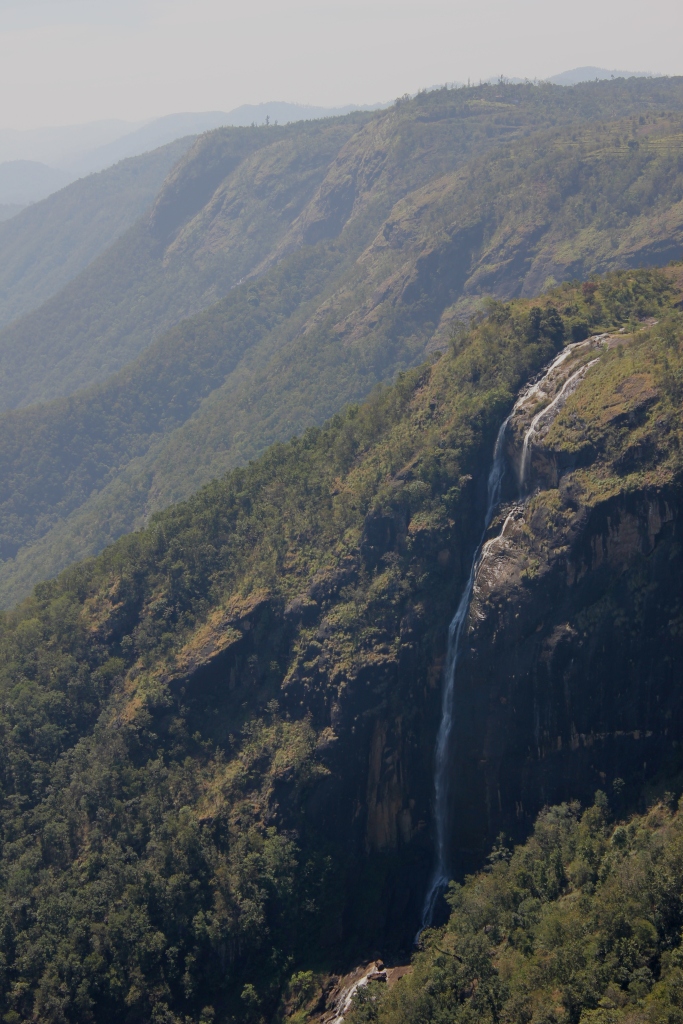
One of the most green overlook sites of the Western Ghats is situated 15km from the Periyar Tiger Reserve. Located 15 km from Kumily, Chellarkovil is well known for its views of a cascading waterfall and the flourishing patchwork of fields in Tamil Nadu. One of our Cardamom County guests shared some of their snapshots taken at Chellarkovil during their visit. 

Continue reading

Flora and Fauna of Thekkady

This slideshow requires JavaScript.

I happened to speak with Mr.Ravi from Bangalore who is staying with us. They went for the boat cruise yesterday evening and they sighted a herd of sambar deer, a bunch of elephants, wild gaur etc.

Continue reading

It Might Have Seemed Funny

If you thought you had heard all the most clever jokes in the English language about environmental activists (citizens, scientists and other types) you might want to stay up to date with The Onion.  Activists can say and do things that, on reflection, lead to laughter, wincing or worse.  Perhaps the tendency Raxa Collective is most sensitive to is preachiness: we avoid it at all costs, preferring humor to vinegary sourpuss judgement of others.

If you were to click from humor at The Onion directly onto the page where Merchants Of Despair (click the image to the left) is reviewed and promoted, you might think it is Oniony humor.  But no, it seems to be earnest, determined anti-environmentalism:

Combining riveting tales from history with powerful policy arguments, Merchants of Despair provides scientific refutations to antihumanism’s major pseudo-scientific claims, including its modern tirades against nuclear power, pesticides, population growth, biotech foods, resource depletion, industrial development, and, most recently, fear-mongering about global warming. Merchants of Despair exposes this dangerous agenda and makes the definitive scientific and moral case against it. Continue reading

Bright Ideas

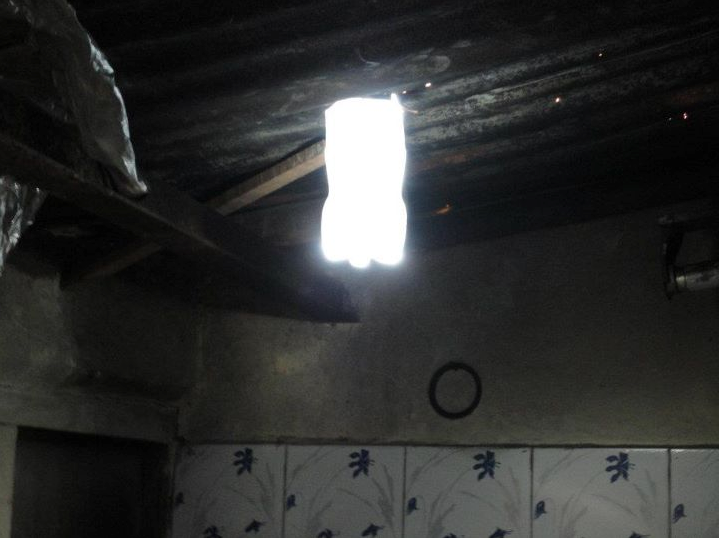
Ingenuity can go a long way in meeting people’s essential needs with the simplest of materials.

The recipe: Start with students from the Massachusetts Institute of Technology (MIT), add basic materials destined for dumps and landfills around the world, mix with filtered water and bleach, install, expose to sunlight. And voilà!–a light that will last for 10 years!

The Solar Bottle Bulb is based on the principles of Appropriate Technologies – a concept that provides simple and easily replicable technologies that address basic needs in developing communities.

Continue reading

Evolved Cooperation

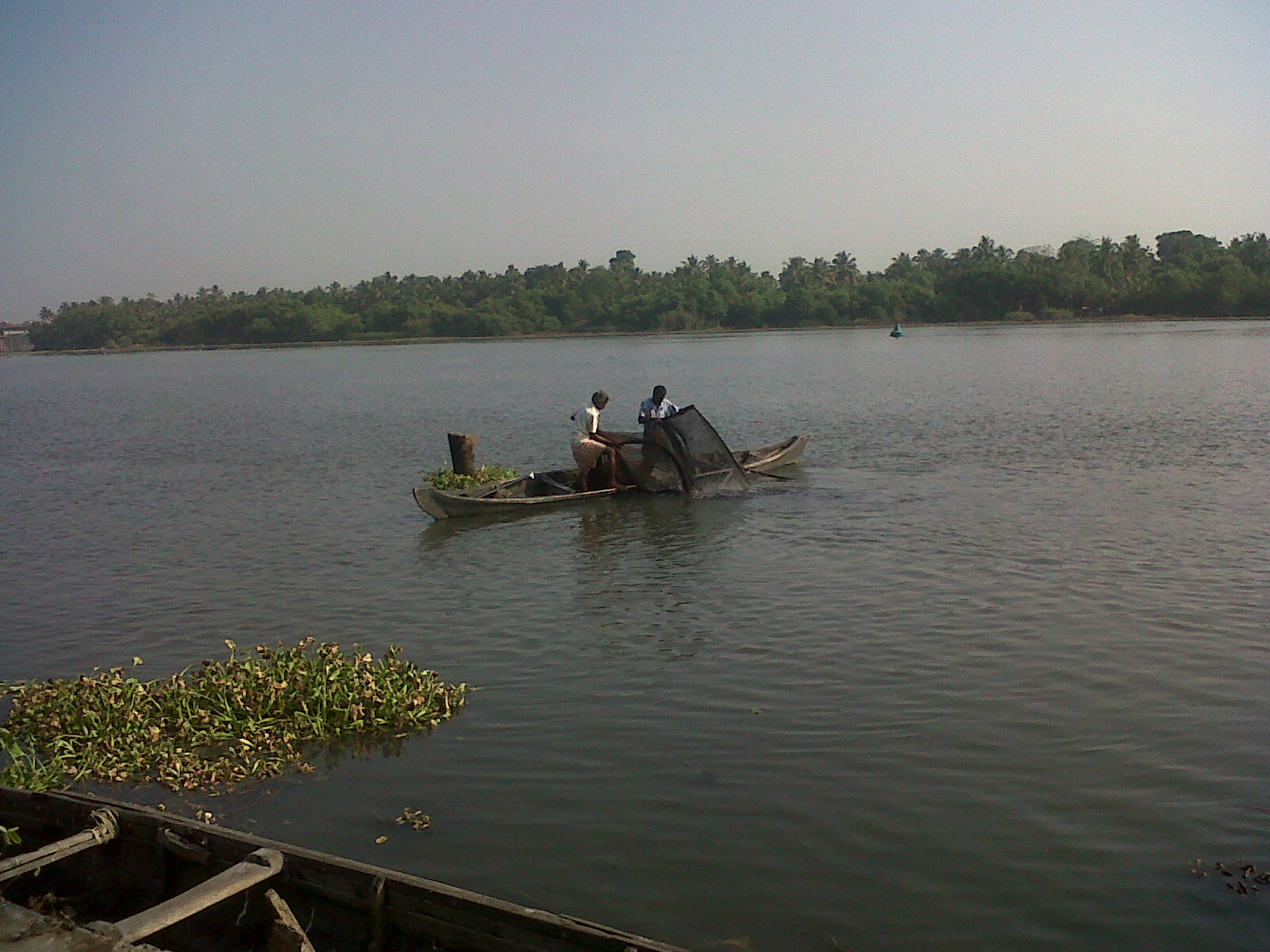
Any given morning in the neighborhood called Thevara, where we have some wonderful friends, the fishermen do their thing a few meters from the riverfront walkway.  To call that cooperation is like calling the kettle black.  But just as we found this explanation of man-animal cooperation fascinating, this morning’s mobile phone snapshots got interesting.

Continue reading

The Evolution Of Cooperation

Several earlier posts have touched on the topic–how cooperation (or altruism, defined here) comes about, overcoming the problems associated with the potential for free riders and other collective action barriers.  The current issue of Nature contains findings from the research of a team at Harvard Medical School.  If you are a subscriber to the journal click the image above to go to the research.  If you want a four minute synopsis with excellent visuals, jump the jump.

Continue reading

Tamed Giant – Elephant Park

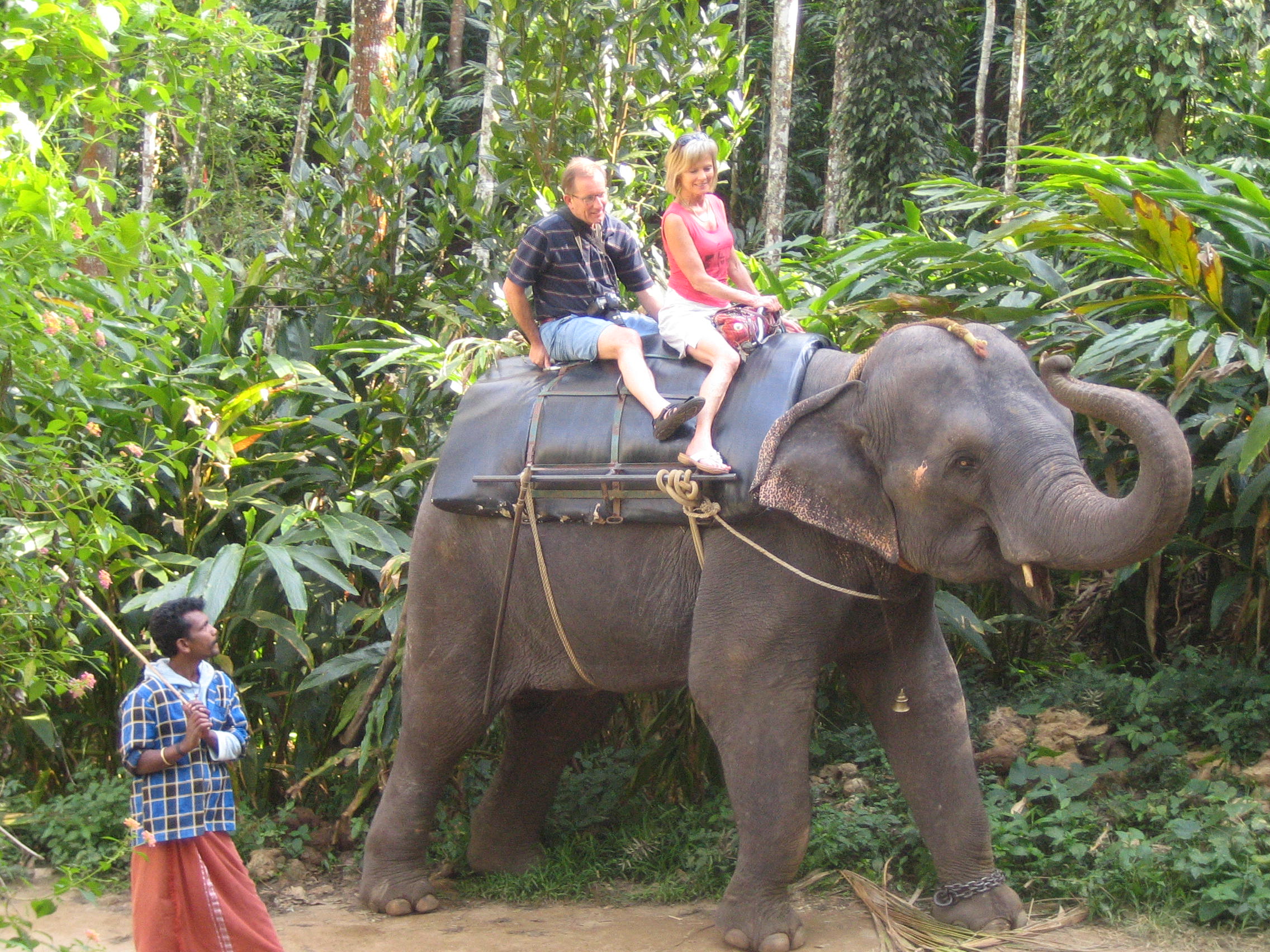
Mr & Mrs. Mouleart from Belgium joined us at Cardamom County for 2 days from January 24th through the 26th, 2012. One of their excursion choices was for a ride on a tamed gentle giant – The Elephant at Thekkady. Continue reading