The Meaning(s) Of Organic

At first glance, this article and others on this website appeared to be of the “denier” variety, but on close read of this particular item (click the banner below to go to the article) it seems clearly of the educational clarification variety.

According to Rodale and his acolytes, products created by—and processes carried out by—living things are fundamentally different from lab-based processes and lab-created products. The resurrection of this prescientific, vitalistic notion of organic essentialism did not make sense to scientists who understood that every biological process is fundamentally a chemical process. In fact, all food, by definition, is composed of organic chemicals.

Continue reading

Paper Patrol

Guest Author: Aby Thomas

This slideshow requires JavaScript.

Last week I wrote about the ladies of the Mannakkudy EDC and the success and quality of their bag production.

Now I’d like to tell you a bit more about the Vanasree Auditorium ladies and their Forestry Department responsibilities. If you notice that the ladies’ clothing is different from their counterparts in the Mannakkudy section of the EDC, you are correct. Part of the Vasanta Sena (or Green Army), these women help with both forest patrols against poachers and illegal logging, and as guides for the Cloud Walk Trek as well.  And since they pick up plastics and other non-biodegradable waste along the way, they understand the need for a plastic free national park all the more. Continue reading

Question Of Free Will

Now, after 50 years of studying the brain, listening to philosophers, and most recently being slowly educated about the law, the issue is back on my front burner. The question of whether we are responsible for our actions — or robots that respond automatically — has been around a long time but until recently the great scholars who spoke out on the issue didn’t know modern science with its deep knowledge and implications.

Continue reading

Language Akin To Species

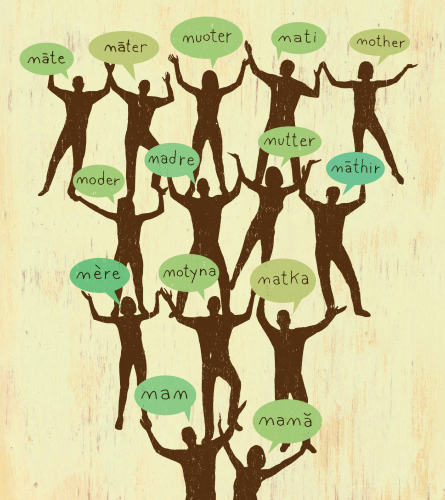
…words and other language units change systematically as they are passed from one generation to the next, much the way genes do. Charles Darwin similarly argued in 1871 that languages, like biological species, have evolved into a series of related forms….

Continue reading

Feasting Thankfully

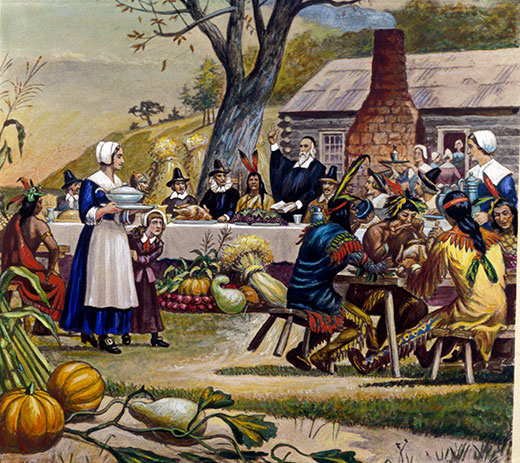
“Wildfowl was there. Corn, in grain form for bread or for porridge, was there. Venison was there,” says Kathleen Wall. “These are absolutes.

William Bradford, the governor Winslow mentions, also described the autumn of 1621, adding, “And besides waterfowl there was great store of wild turkeys, of which they took many, besides venison, etc. Besides, they had about a peck a meal a week to a person, or now since harvest, Indian corn to that proportion.”

Replete With Thankfulness

This morning at 8am, India Standard Time, our Thanksgiving turkey arrived at our flat. With a little help from friends it was surprisingly easy to come by. Unlike chickens, which can be seen running around every yard or patch of untended land, or ducks, which are pretty ubiquitous in Kerala’s watery byways, turkeys are just not that common here in India. So when I saw a few milling around someone’s yard while Milo and I were kayaking on the backwaters some time back I just had to ask our friend (who happens to own the neighboring property) to see if they might sell one to me.  The rest is history, as they say. Continue reading

152 Years And Counting

Besides being the most useful holiday known to man (however it is celebrated, as well as whenever, and by whomever) today is the birthday of the first publication of Darwin’s On the Origin of Species by Means of Natural Selection, or the Preservation of Favoured Races in the Struggle for Life.

Did you know that Charles Darwin and Abraham Lincoln were born on the same day?  And that Lincoln was responsible for making Thanksgiving a national holiday in the USA? Continue reading

Thanksgiving Is Healthy

Cultivating an “attitude of gratitude” has been linked to better health, sounder sleep, less anxiety and depression, higher long-term satisfaction with life and kinder behavior toward others, including romantic partners.

Continue reading

Clear-Winged Forest Glory

These are the first good shots I’ve gotten of any glories before. I have seen Stream Glories (Neurobasis chinensis) in Gavi, but they were far too shy to be able to photograph them. Walking through the forest the other day, however, a single Forest Glory (Vestalis gracilis) flew past me into the undergrowth. Careful not to lose sight, I followed it, only to discover a total of  five damselflies lounging about in the shade.  Continue reading

Little Pics

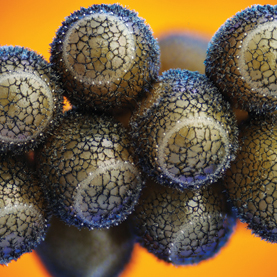
This crowdsourcing of microscopic imagery arrived long before the invention of the smartphone and networked communications: the amateur has long made a mark with the microscope—in the early years, by hand drawing images that appeared underneath the lens, and, in more recent times, with the added realism brought by the photograph.

Continue reading

Flights of Fancy

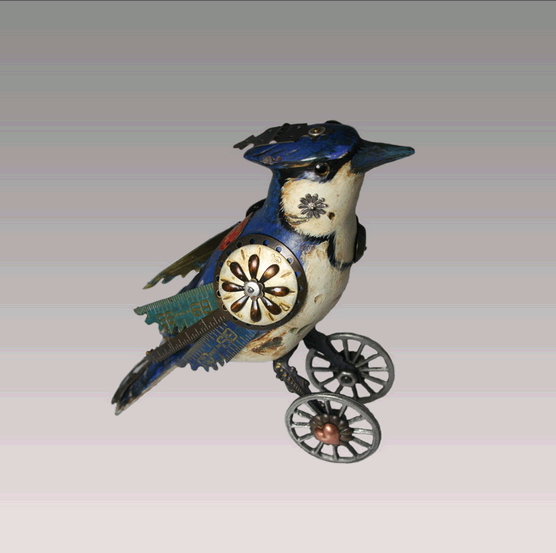
Blue Jay on Wheels by Mullanium

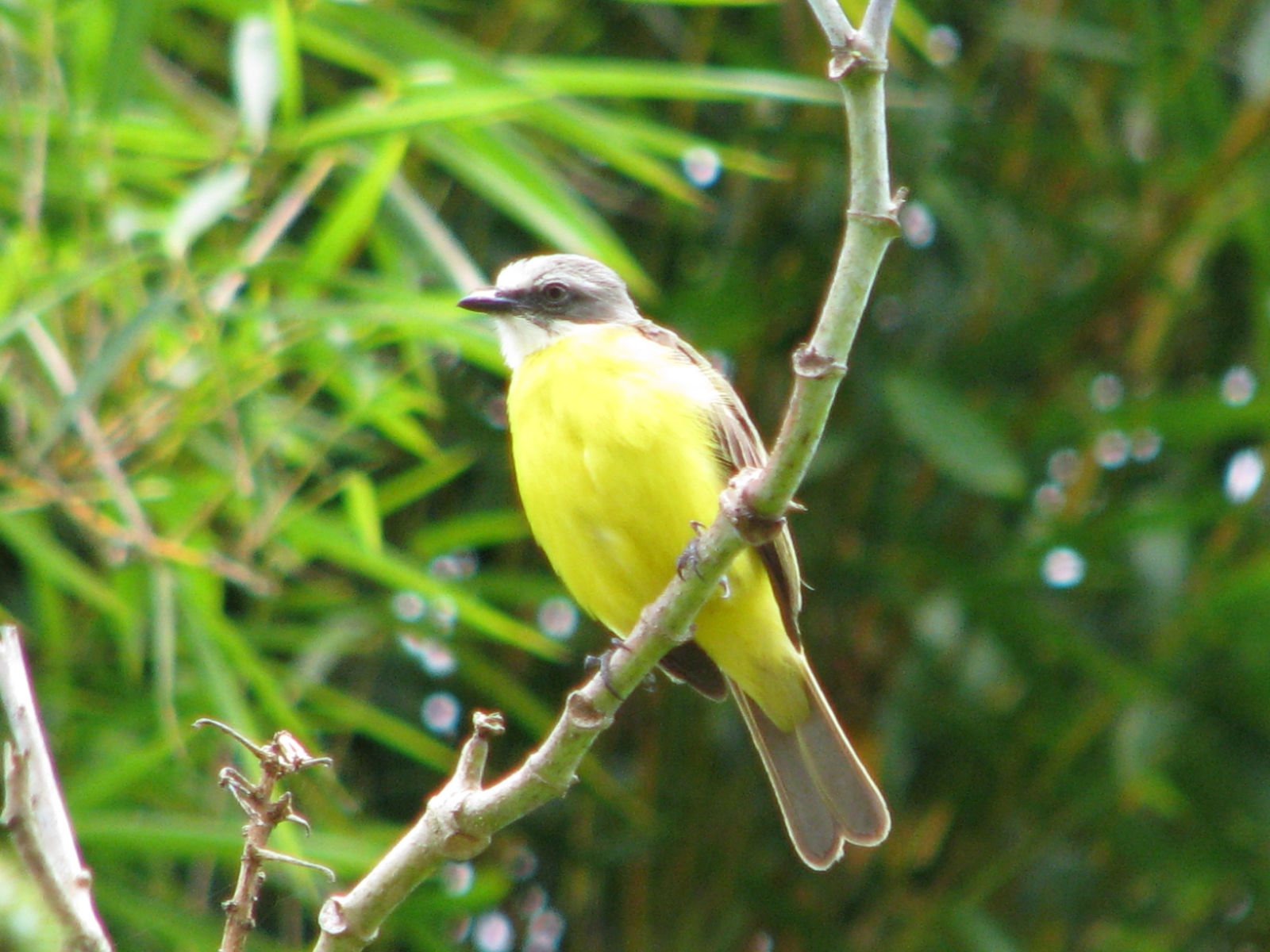
Sometimes I wonder whether the attraction to birds is universal.  Based on bird watcher statistics I would lean toward a “yes”.  Is it the colorful plumage that so attracts us?  The cheery tweets and chatters?  The flamboyant beaks, wattles, crests and tails?  Or is it just that anthropomorphically curious tilt of the head? Continue reading

Wordsmithing: Bibliopegy

By what criterion, of all the books on all the shelves in all the libraries, does one choose a particular book?  In the digital world we live in now, is that even a relevant question?  For anyone who loves to walk over to the lectern in the library where the monumental OED is sitting, the answer is certainly yes, even if they very much also appreciate other forms of access to OED.

So today we pay tribute to those artisans who, along with calligraphers and paper-makers, keep the world of ideas evolving.  How one binds a book could have enormous consequences, so it is surprising to see that the etymology for this word is so modern:

Bookbinding as a fine art.

1876    Encycl. Brit. IV. 42/1   Contemporary masterpieces of French, Italian, and German bibliopegy.

1885    Pall Mall Gaz. 10 Sept. 15   The Exhibition of what is known as bibliopegy.

1958    ‘M. Innes’ Long Farewell 72   Appleby, although hazy about bibliopegy, was quite certain he wasn’t a distinguished student of it.

Almost Missed It

It is just the way things are.  My reading list/pile is always longer/taller than I have time for.  And living between the rice fields and spice-laden Western Ghats I do not have access to the kind of bookstores we took for granted while living elsewhere.  Amazon does not deliver in India, nor would I put a penny in their coffers until I have the sense that they are not trying to monopolize the book trade, not to mention everything else.

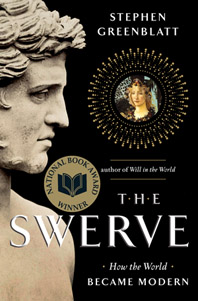
Even if I had access to a great book store I might not have picked this one up off the shelf, though I admire the author’s writing.  I have not been in the mood for anything too canonical or Great lately; rather merely useful, interesting, lesser reading.  Short- and long-form journalism tend to be my standard fare. There was something in the pile with Greenblatt’s name on it, a magazine article, that I kept burying for months and which persistently kept resurfacing. Continue reading

Ethical Consumption

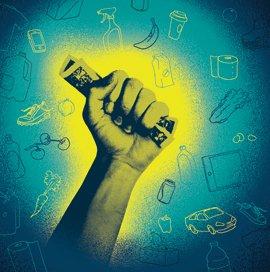
There is a clear link between the focus of this article (click the image to the right to get it) and themes we care deeply about on this site.

It provides a meaningful review of how consumer spending holds the key to a more sustainable economic value chain–which sounds obvious when stated so bluntly but the article also demonstrates that it is not as easy as it sounds.

Otherwise, we would have made more progress than we have by now.

Continue reading

Keyhole To The Jungle

Another vertical panorama, the Keyhole is a more artistic than depictive, unlike most of my photographs. I was struggling to get the shots I wanted to use in the picture (there were about 10) because of the lighting differences between the rocks on the bottom, the undergrowth in the lower third, the canopy, and the skyline. Getting an even light level in all the shots was complicated, requiring checking each shot and retaking them multiple times to ensure accuracy. After over 20 minutes I finally felt satisfied, and laboring twice that long in the digital darkroom resulted in the following image Continue reading

Non-Conformist Rabble-Rousing

This week there is a profile in The New Yorker of the “organization” behind OWS, or more precisely an account of how the movement got its start.  It is in front of the pay wall (click the image to the left to be taken to the article) and is intriguing from the perspective of collective action, a topic we have written about several times.

Conversations by email and phone between two fellows who have not seen each other in person in years seems to have sparked an enormous extended mobilization.

The movement’s evolution, organizationally speaking, is interesting from an entrepreneurial perspective: there is a “don’t try this at home” sense that emanates from the pages.

Continue reading