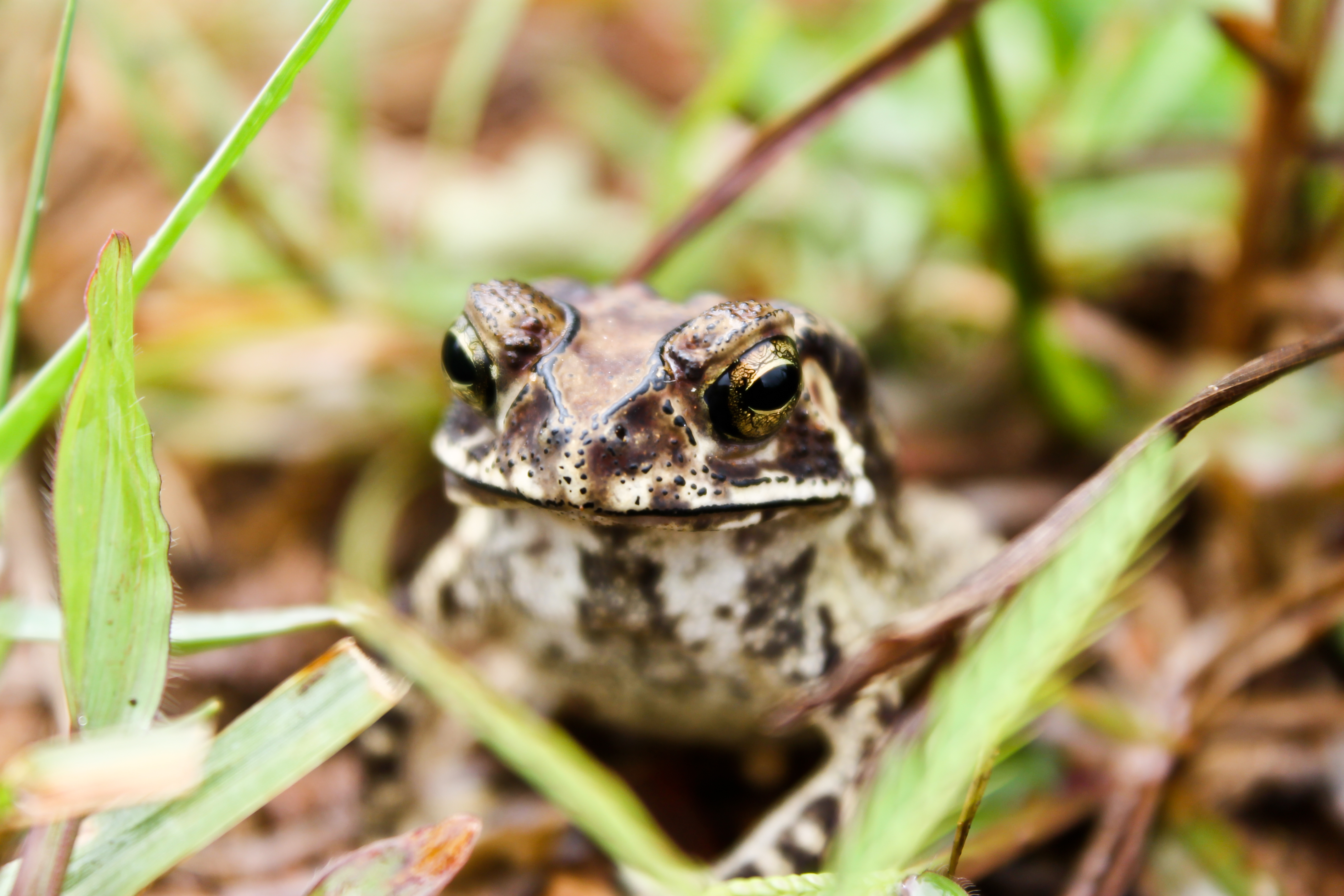
So far, my treks in the Periyar Tiger Reserve have yielded a generally consistent array of wildlife sightings. Insects and spiders are a constant, birds of some sort or other are common, boar and gaur are to be expected, deer are a pleasant (but not huge) surprise. Elephants are not uncommon to see, but don’t stand around modelling for pictures, and are usually sighted from a great distance. Tigers are out of the question to see, except for the extremely fortunate. Of course, this leaves out dozens of categories of creatures, and hundreds (possibly thousands) of species. Amphibians are a pretty constant sighting, mainly in the form of frogs and toads. To be honest, I don’t really know the difference, but I do have a definite ID on one species: the Common Indian Toad (Duttaphrynus melanostictus).
Thank You, Mr. Friedman
 When I began teaching a new graduate course ten years ago–an elective course that considered the impact of globalization on entrepreneurship–I assigned The Lexus and the Olive Tree as required reading. The diploma for the masters degree was coming from Cornell University, the course was being taught in Paris, and my students were from 23 different countries. The discussion around that book were the best I ever experienced as a professor.
I am now based in India, in a business partnership with a student from that course, and we often find ourselves using words like hot, flat and crowded as shorthand when discussing strategy (ours is an entrepreneurial business much affected by technology and globalization). Continue reading
Good As You Want To Be
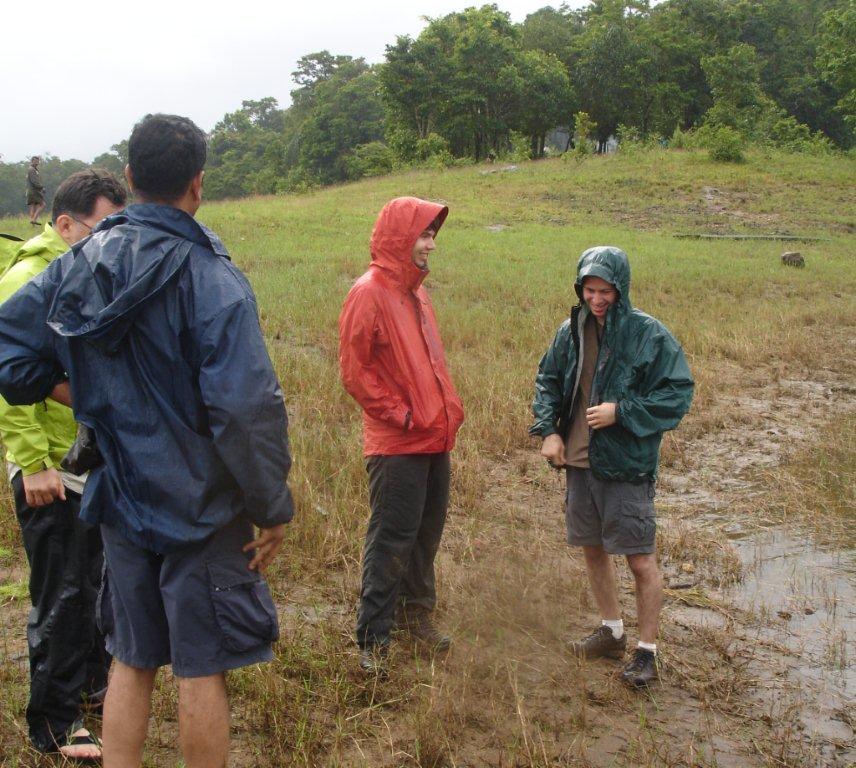 I have been thinking further on the Tiger Trail, and its connection to the purpose of this site. Usually I muse on the wisdom of the judge that took the risk to allow convicted poachers to serve out their life sentence in the national park rather than in prison. The opportunity we have to visit the wilderness with them, and to relay that story, is certainly a privilege, for this site and for the individuals who write about it.
But the reason I keep coming back to it is that the men who represented the risk have, by all appearances, made good on their promise not to return to poaching for all these years. Why?
If the men were inherently good, an argument could be made, they would not have hunted and killed tigers for money, or destroyed the cinnabar ecosystem for money. But to meet the men today, they certainly seem good, by nurture if not by nature. And so, why? Continue reading
Wordsmithing: Sustainability
While the development economics paradigm known as sustainable development has been with us for merely a generation or so, the adjective sustainable goes back to 1611, according to OED. A derivative of that adjective, the noun sustainability, came into use much more recently, which may explain the name attached to the paradigm:
1980 Jrnl. Royal Soc. Arts July 495/2 Sustainability in the management of both individual wild species and ecosystems is critical to human welfare.
We cannot help but agree with the application in that reference.
Eye of the Beholder
Being a macro photographer without a macro lens is complicated. There are plenty of corners that can be cut, and crutches to lean on, but in the end, the best way to get a high-quality macro image is using the right equipment. The trick I use most often is cropping – my 18-55mm lens can focus on relatively close subjects, although not nearly close enough to get the desired macro effect. If the focus falls upon the right points, the final image can be cropped, and the subject’s size increased without distortion.  These three images are all created from the same one – the one on the left. To see the increased detail, click the picture for a full-size version. Continue reading
Bird of the Day: Vermilion Flycatcher (Galapagos Islands, Ecuador)

Sacred Trees
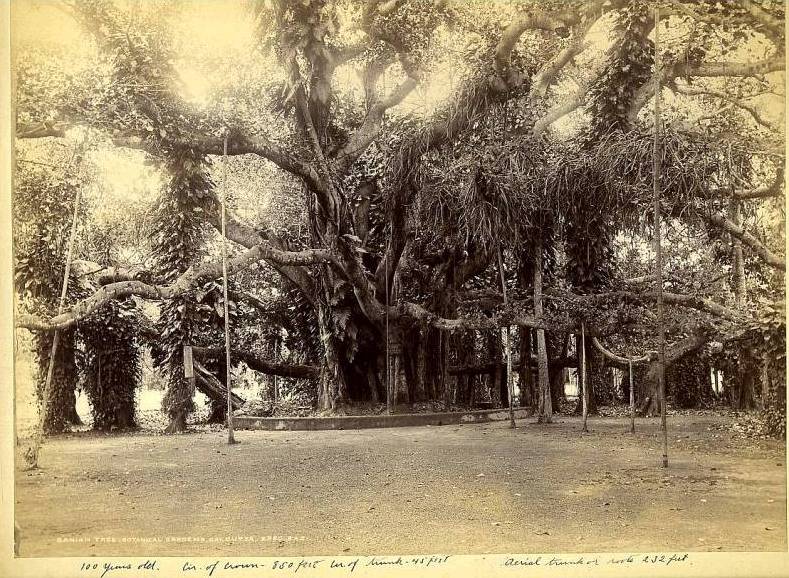
The fig-tree at this day to Indians known
In Malabar or Deccan, spreads her arms,
Branching so broad and long, that on the ground
The bended twigs take root, and daughters grow
About the mother tree, a pillar’d shade,
High over-arched and echoing walks between.
–John Milton, Paradise Lost
Sensible Sight, Visionary Sense
Milo’s post reminded me of the surprise I had, 30 years after first reading Brave New World, when (thanks to the generosity of The Paris Review, which started providing some of their archives online, free for the taking) I came across an interview with Aldous Huxley. By most accounts, not least your high school English teacher’s, he was a visionary, right? So ponder this, if you did not already know it:
…INTERVIEWER
How did you happen to start writing? Do you remember?
HUXLEY
I started writing when I was seventeen, during a period when I was almost totally blind and could hardly do anything else. I typed out a novel by the touch system; I couldn’t even read it. I’ve no idea what’s become of it; I’d be curious to see it now, but it’s lost. My aunt, Mrs. Humphry Ward, was a kind of literary godmother to me. I used to have long talks with her about writing; she gave me no end of sound advice…
Bird of the Day: Greater Flamingo (Galapagos Islands, Ecuador)

Blind Sights
An interesting question to ask about a fully intact and functional brain’s cognitive abilities is this: how do we know that each individual’s perception isn’t unique, whether it’s visual, olfactory, or of any other sense? Processing and emotional responses aside – how do we know that people actually see things the same way, physically? The color I identify as red might appear as residing on the opposite end of the spectrum to someone else, despite the light’s wavelength being constant. The smell I identify as vanilla may be different from another person’s perception of vanilla’s odor, but because we are both correctly identifying the scent as that of vanilla, it is both futile and impossible to determine whether or not the stimulus is perceived identically between the two people.
Enter science! Everyone’s nose (at least those without ‘abnormalities’) has the same scent molecule receptors, meaning we all have the same capabilities for smelling the odors in the air (yes, they are molecules! they are not magically dispersed by the scent fairies, contrary to popular belief). Continue reading
Artifacts
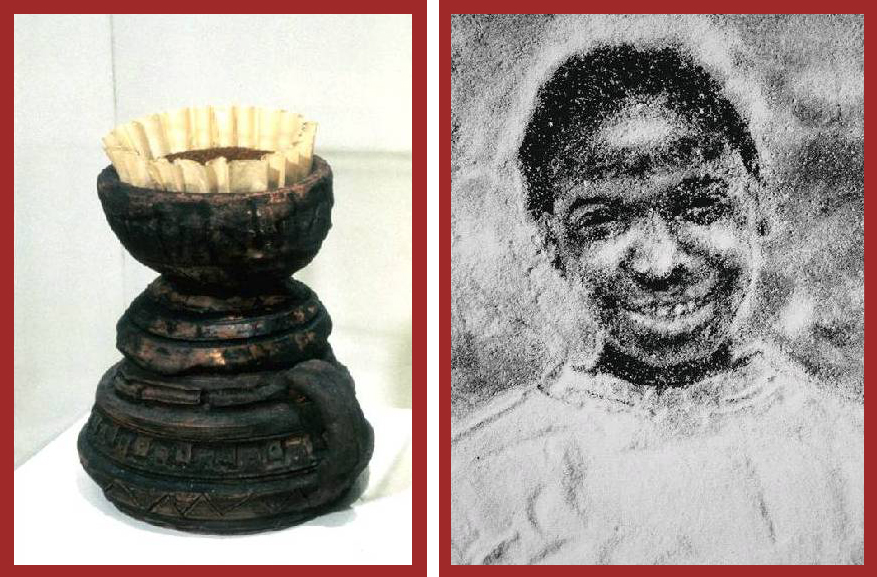
When I posted about the artist Vik Muniz a few days ago I wrote primarily about his collaborative film with director Lucy Walker. I feel I didn’t do justice to the general wit of his work. Like fellow artists Chris Jordan and Mary Ellen Croteau, Muniz is an ultimate recycler, but his “puckish” personality informs his work, both through his choice of medium (sugar to create shimmering portraits of the children of cane workers on St. Kitts) or visual jokes (Pre-Columbian drip coffee maker). Continue reading
2011 Sustainability Roundtable at the Hotel School
Last week, I had the pleasure of attending the 3rd annual Sustainability Roundtable at Cornell University. The roundtable was attended by several notable industry executives from Marriott, InterContinental, Starwood, and Wyndham. It covered five topics: sustainability across global platforms, standardizing environmental footprints of hotel stays, customer choices, sustainability in the meetings/events sector, and leveraging trends and overcoming barriers in sustainability. Participants came from a wide variety of backgrounds; hospitality franchisors, owners, operators, suppliers, consultants, utility providers, investors, and researchers were all represented. In short, it was a meeting of the best, most passionate minds in sustainable hospitality. Although their discussion covered a wide range of important issues, the session that I found most interesting was “Sustainability and Customer Choices,” which I’ll briefly touch on.

Roger Simons, Manager from Meeting Professionals International (MPI); AJ Singh, Associate Professor of Michigan State University; and Ted Saunders, Director of Sustainability for Saunders Hotel Group partake in a lively discussion at the roundtable that the Center for Hospitality Research hosted.
Little L Liberalism
The first time I remember having heard of Nicaragua was during an evening newscast sometime in the autumn of 1980. The first time I had the opportunity to vote in a presidential election was November, 1980. Most of the students I knew at that time were somehow very certain about what was right and wrong in general, about what would be best for Nicaragua, about who could best lead the United States, and about lots of other things. And most seemed to have similar views to one another. Some days I was impressed by the coherence and consistency, others nauseated.
It was the nausea, in the end, that motivated me. That sickening feeling was not the result of judging people around me, but of realizing that I did not have sufficient experience to have such strong viewpoints. That was why I left college (the ad below, which I did not see until a few years after graduating college, summed up in 30 seconds what I had been looking for).
Freeze Frame
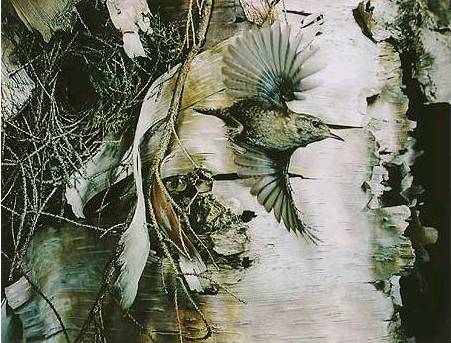 Eliot Porter Winter Wren, 1969 Amon Carter Museum Collection*
Sometimes it takes a scientific mind to re-calibrate the artistic eye. Eliot Porter’s parents had instilled a love of nature and science in him from an early age, and he’d been photographing birds since received his first camera at the age of 10. His training in medicine and as a chemical engineer didn’t dampen his interest, in fact he was among the first to bridge the gap between photography as a fine art and its foundations in technology and science. Continue reading
Expectations
 Some time between 1980 and 1981, when I first became aware of Nicaragua, I started leafing through this book that I saw many fellow students carrying around with them. It was the text for a course I was not taking, but maybe that was for the better. The short bursts of exposure to the explication of “the new” in art were probably all I could handle while being shocked by everything else, all new too.
By the summer of 1981 I had dropped out of college, and away from all that other too new stuff, and began apprenticing with a blacksmith. It was a reaction to the news about Nicaragua, in part. Today’s news reminded me that in the ensuing 30 years answers have not gotten any clearer, or easier.
I do not have any photographs from my time as would-be artisan, which was short-lived. I have visual and sensory recollections of it, including my first listening to Blood On The Tracks and long motorcycle rides through the blue grass hills of northern Kentucky and southern Indiana. And through my nose I can recall the smithy coal fire and grunting leather bellows, food cooked over a wood fire, and Sunday morning folks in clean clothes on church pews. Continue reading
Bird of the Day: Lineated Woodpecker (Morgan’s Rock, Nicaragua)

When It Doesn’t Rain, It Pours
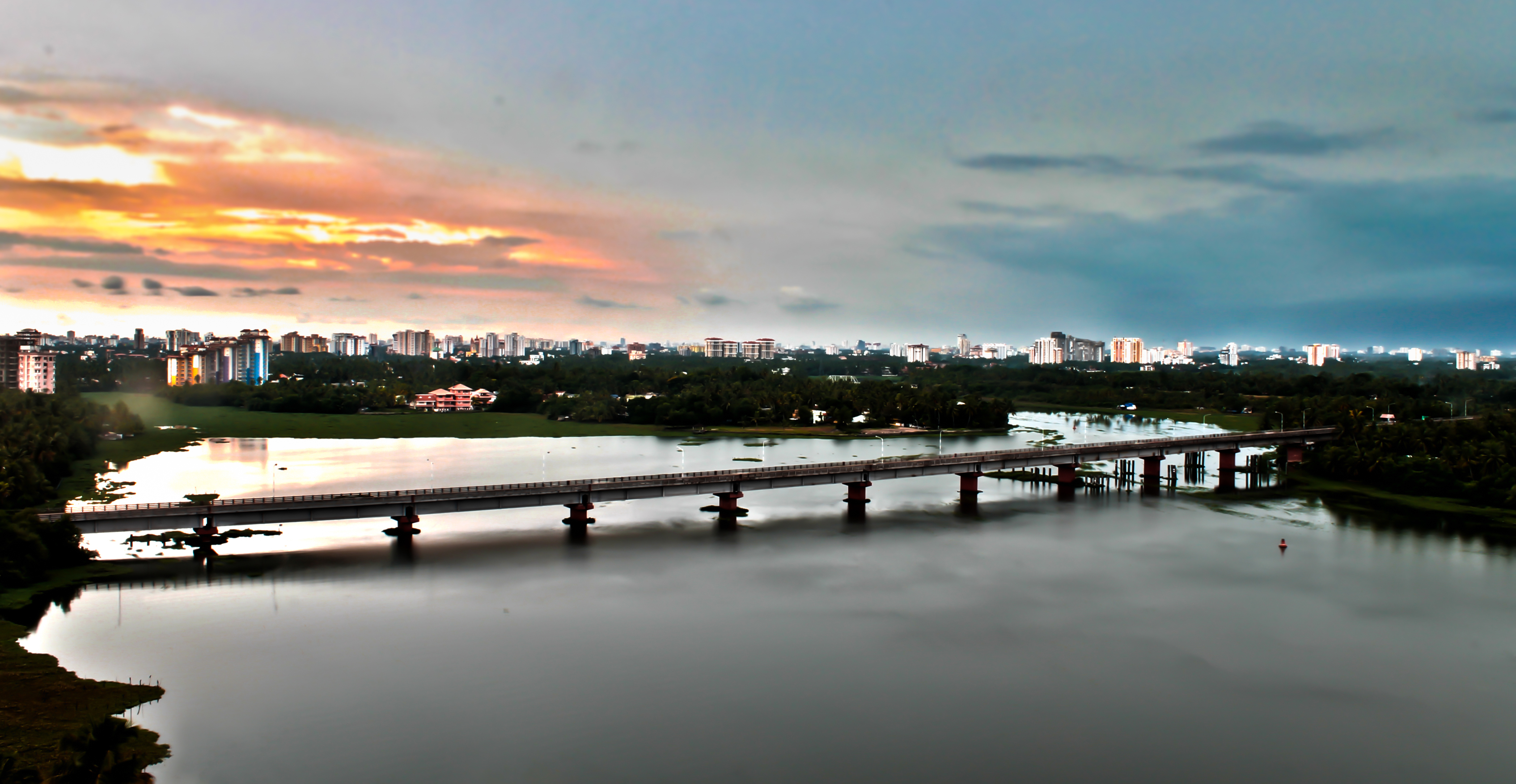
Perhaps it’s a bit of a cliché to use the phrase “calm before the storm”, but that’s exactly what it was. The sun was setting and clouds were gathering – the grey sky occasionally illuminated by a flash of lightning, although thunder never followed. Lately, Cochin has been having rains that are seemingly erratic to someone who hasn’t lived here long, but to the locals, they’re as predictable as… well, the seasons.

Twitcher’s Random Walk
Visit the Cornell Lab of Ornithology’s website, for whatever reason, and you will likely get carried away. Something will catch your eye, and your imagination, and the resulting search will lead somewhere like this. This particular weekend you may soon enough find yourself (courtesy of the New York Times Travel Section) here:

If you are like us, you will immediately want to know more about that vulture conservation thing. Continue reading
Strengthening Helpers’ High
Lately, I have been pondering altruism, one’s unselfish devotion to the well-being of others often without regard to personal well-being. I admit I am befuddled by the concept. It challenges theories of evolution and even caused Charles Darwin to question his own theory of natural selection—how could these acts of self-sacrifice exist in a world full of the fittest habitants, that possess only an incentive to survive and reproduce? Regardless, I find it very encouraging to witness such selfless behaviors from my fellow mankind. This behavior takes many forms in many aspects at many different times.
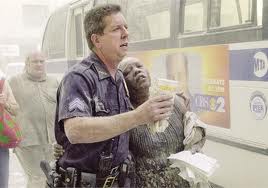 For instance, I reflect on the aftermath of September 11, 2001. This date was one of the earliest times in my life when I acknowledged altruism’s existence. I remember people gathering in tribute to the dead, celebrities organizing benefit concerts to raise money, and yellow ribbons streaming across nearly every home and shirt lapel signifying compassion for lost lives. After Hurricane Katrina swept through the Gulf Coast, citizens all over the nation offered their support; my family even opened our home to refugees for a few weeks. Similarly, this year’s September flooding of the southern tier of New York and the recent damaging snow storms of the East Coast have brought out the kindness and generosity of neighbors. From the Flight 93 passengers to storm rescuers, altruism spurs many questions: Why are some people willing to help even at their own expense? Why do some feel the urge to help more strongly than others? Can altruism be learned or is it innate? Continue reading
Bird of the Day: Blue-winged Parakeet
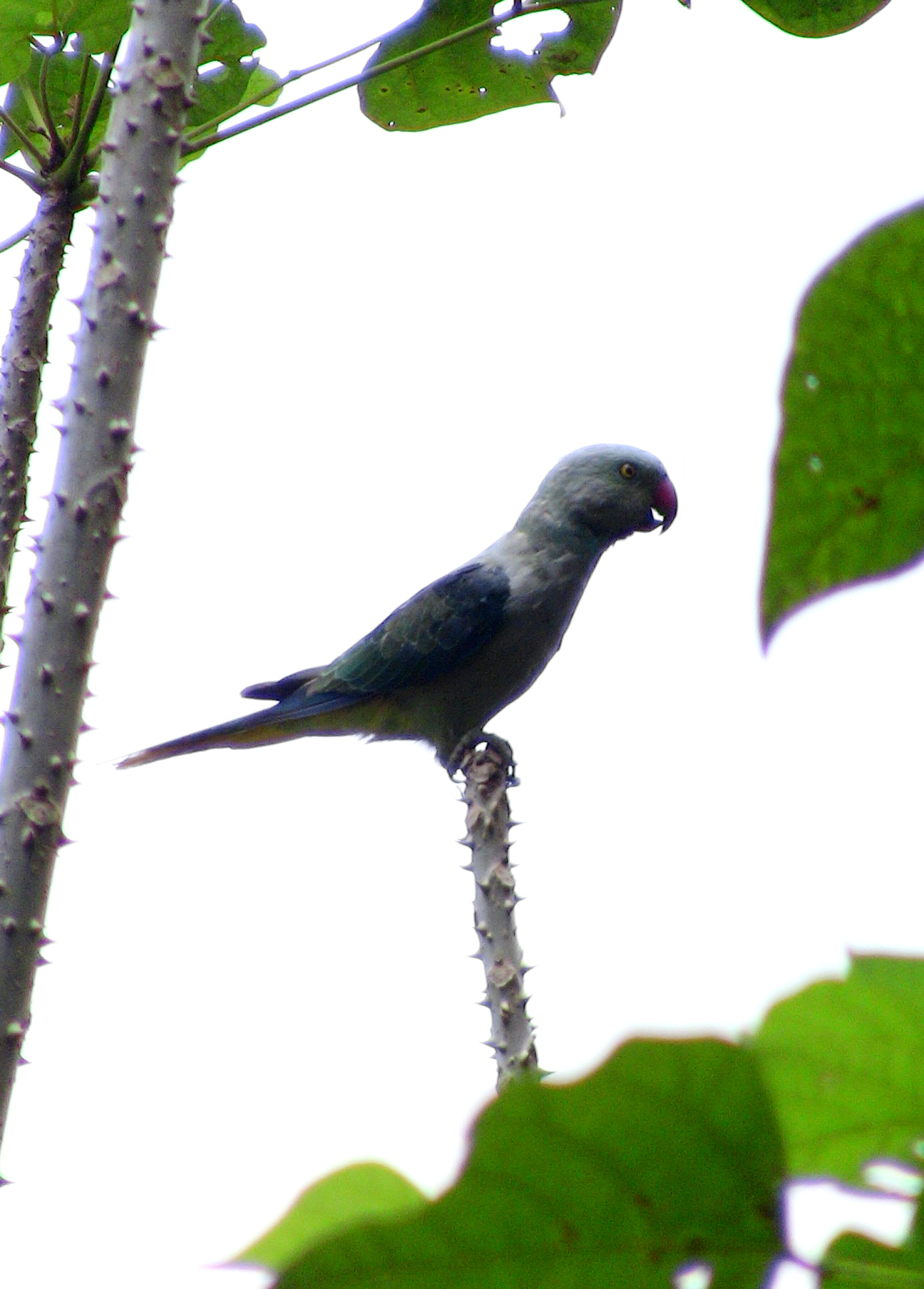
Thekkady, Kerala
 Organikos