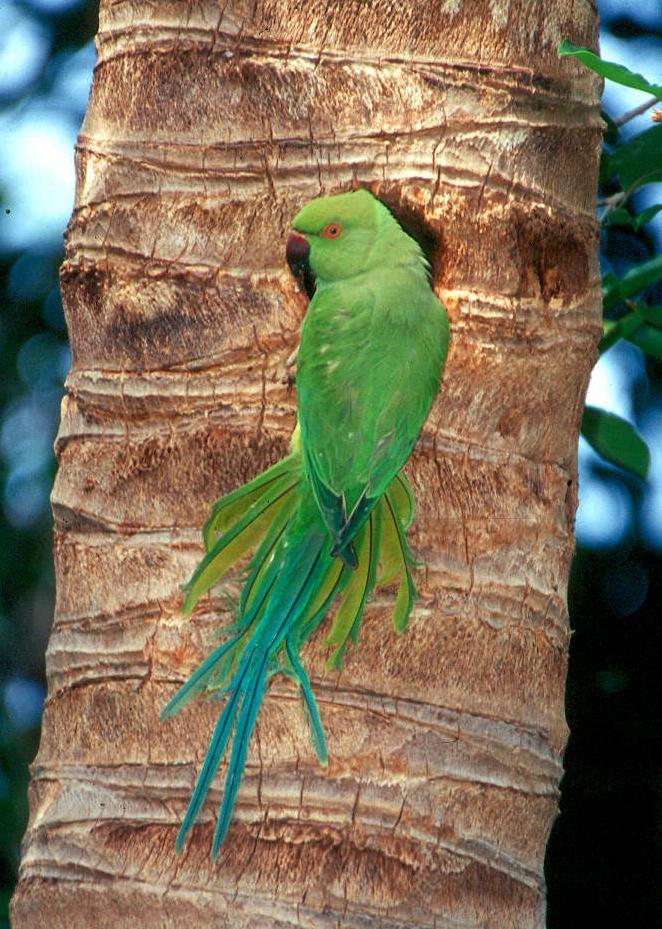
“Vella-kkaran!”

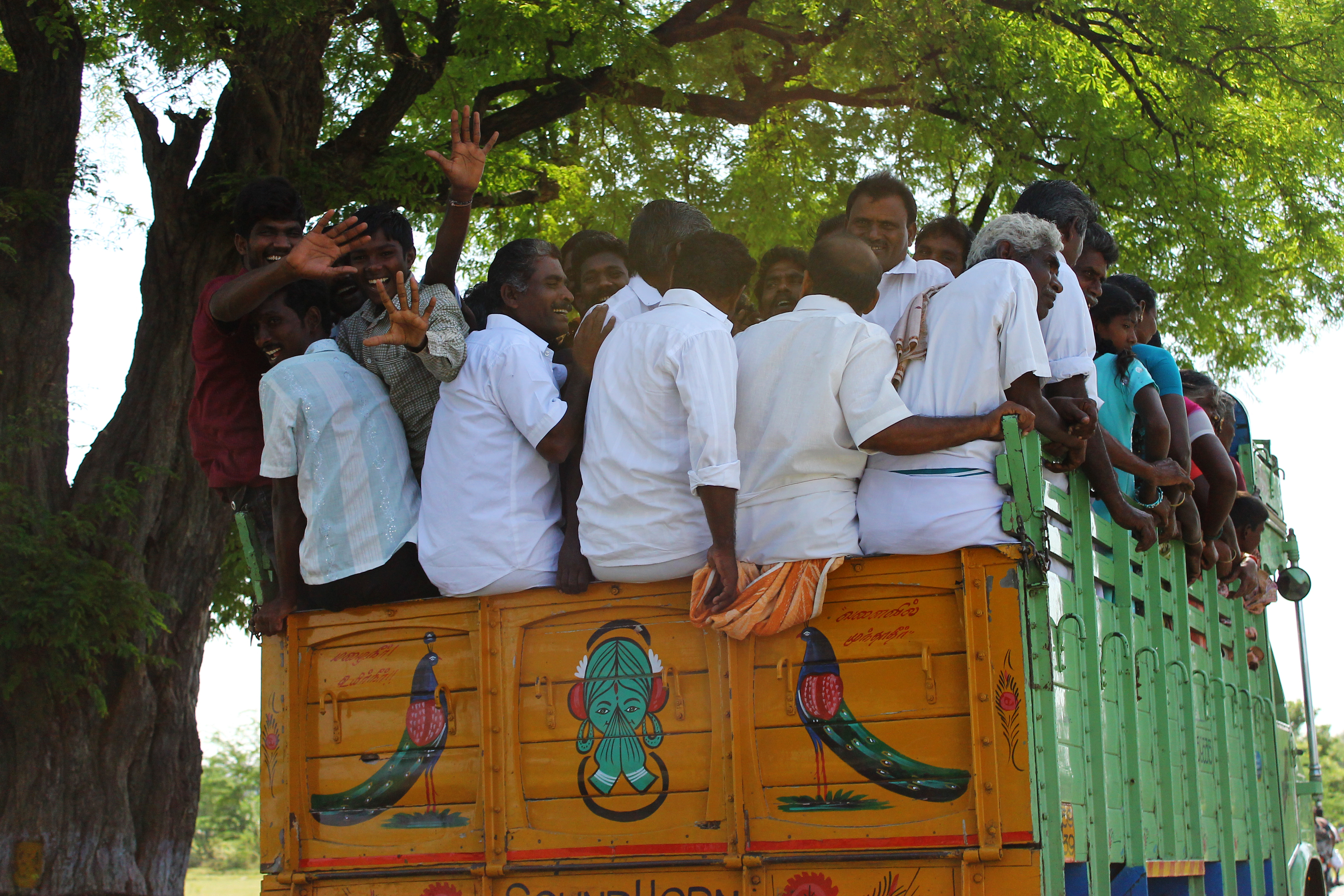
A group of celebratory Tamils on route to a festival

On a recent road trip into Tamil Nadu I was really struck by the ways it differed from Kerala. Although the states are direct neighbors, and many Tamil live and work in Kerala, the contrasts were striking.

They were small differences, subtle even, but enough to give the states a different flavor, if you will. Maybe its that Keralites seem a bit more serious, a bit more focused on their modernity and business acumen. There was something more colorful about the way life was portrayed next door. Although there is the old adage that the “grass is always greener on the other side”, an irony in this case to be sure, as Kerala is a far greener state in almost every meaning of that word.  (I highlight the word almost because, as Sung wrote in a previous post, much of the produce eaten in Kerala is grown in Tamil Nadu, despite their far lower rainfall.)

The short time I spent in the state left me with an impression of a less mechanized world.  A land of brick works and goat herds, of Bullock carts as lorries, of fields and fields of crop cultivation. Continue reading

Wordsmithing: Biophilia

Our usual thanks to OED, but a special one too this time.  One of the words we have been working into our sentences in recent years is this word that had two primary definitions different from the one we associated with one of our favorite biologists.  Now they have added a third definition, thanks to E.O. Wilson and everyone who follows his ideas and words, and repeats them:

3. A love of or empathy with the natural world, esp. when seen as a human instinct.


Oxygen & Odonata

300 million years ago, the world was a very different place. Besides the severe geological changes and the sudden appearance of invertebrates, the Paleozoic Era was host to a severe change in atmospheric composition – namely the extreme increase of oxygen levels, and a drastic drop of carbon dioxide. The atmosphere, changing so radically, caused one or two ice ages, a few extinctions, and a natural development of what we today would consider very strange creatures indeed.


Scientists today, curious about (or perhaps inspired by) the fossils of dragonflies with 2-foot wingspans that zipped and zoomed (or whooshed, rather) through the Paleozoic skies, have been conducting experiments on the effects of atmospheric oxygen levels on short-term adaptation in a variety of insects.  In late 2010, results were produced – on a large scale.

…And Back Again

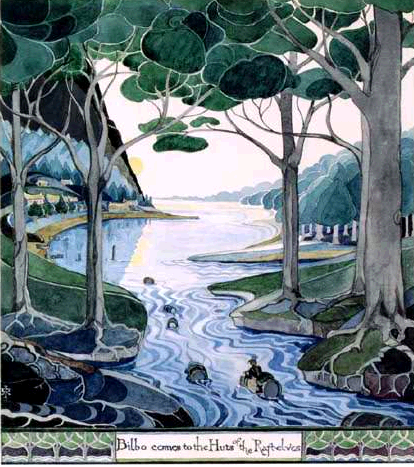
This small book has followed a long and lively trail since its publication seventy-four years ago today. Tolkien himself recollected that the book began with a mere doodle –“In a hole in the ground, there lived a hobbit”–in the late 1920s, yet the tale itself didn’t actually get written until about 10 years later. But Tolkien was a master scribbler, so those doodles included maps and genealogies that essentially outline the geography of the adventure. He used his keen knowledge as a professor of Anglo-Saxon to populate “Middle Earth” with creatures and languages, making an alphabet of “runes” and painting cover and plate art for the book’s first edition.

J.R.R. Tolkien painted Dust cover from 1937 first edition

“Good morning!” said Bilbo, and he meant it. The sun was shining, and the grass was very green. But Gandalf looked at him from under long bushy eyebrows that stuck out farther than the brim of his shady hat.

“What do you mean?” he said. “Do you wish me a good morning, or mean that it is a good morning whether I want it or not; or that you feel good this morning; or that it is a morning to be good on?”

“All of them at once,” said Bilbo…then Bilbo sat down on a seat by his door, crossed his legs, and blew out a beautiful grey ring of smoke that sailed up into the air without breaking and floated away over The Hill.

“Very pretty!” said Gandalf.  “But I have no time to blow smoke-rings this morning.  I am looking for someone to share in an adventure that I am arranging, and it’s very difficult to find anyone.”

“I should think so–in these parts!”

And even before the adventure truly began my then small sons would sit enthralled as we read chapter after chapter.

J.R.R. Tolkien painted picture plate from 1937 edition

Before The Hobbit there was Homer, before Homer there was Doyle and Swift and Aesop… Our peripatetic lifestyle always included books, no matter what continent we lived on.

The Hobbit has played an important role in the lives of generations, mine and my sons’ counted among them. Before there were computers and video games there were books, and before books there were stories. I can only pray that the latter two will outlive the former.

Watch It On National Geographic Channel

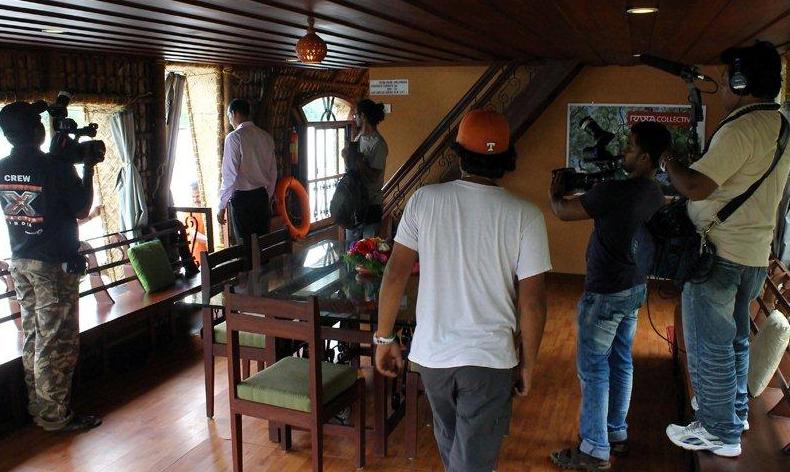
Our colleagues offer amazing experiences on the backwaters of Kerala, in the houseboats described here, with some visual support here and here; and once more here (really, look at it to get a sense of grocery shopping in our neighborhood); so no surprise that a film crew and remarkable cast of characters asked to spend time with them.  The crew of 15 or so (I lost count) was from all over India; so was the cast.  The four featured men in this film are part of a “bucket list” adventure that is being filmed in the locations ranked most highly in a national competition as “must go.” Kerala’s backwaters made that list. Raxa Collective’s houseboats were chosen as the venue for best experiencing those backwaters.

The four men–a student, an IT marketing executive, an Indian Capoeira master-in-training, and a famous Bollywood actor–met for the first time not long ago, and by the time we met them they seemed like old friends.  By the time it airs on the National Geographic Channel, that will stand out as much as the fabulous locations (I like the picture hanging on the wall past the camera man).  We will share more on the broadcast times when we have them.  The photo below is Milo’s, and we have some additional photos by Sung from this particular day (they were on the houseboats for many more days), more on which as we have those photos, and hopefully some film outtakes.

Jad!

You knew he deserved it, but never thought about it, did you?  Sounds like a question for Radio Lab.  If you agree with us on comfort food, you might agree that Jad has something in common with those oreos, mostly in that he helps us adjust to wherever we find ourselves, but also when introducing us to new words such as defenestration (about 26 minutes into the segment in this link). For those who feel as strongly about Robert Krulwich as they do about Jad–what a team–you know that the Radio Lab partner is beaming with pride, don’t you?  One word; good.

Live an Example

Lullwater at Emory

Do you respect your friends? Unless you have very strange relationships, I’m guessing you can say that your friends’ ideals and opinions are meaningful to you. If you know that a buddy doesn’t enjoy country music, you’re probably not going to blast Keith Urban when he’s around. If your best friend can’t stand whistling, maybe you’ll refrain from providing your most rousing rendition of the Star Wars theme song. If she’s not so into politics, perhaps that’s not the person you’ll run to and inform of Glenn Beck’s latest revelation.

The point is, what matters to your friends usually matters to you, and vice versa. If you’re mindful of this Continue reading

Yes! We Have No Bananas!

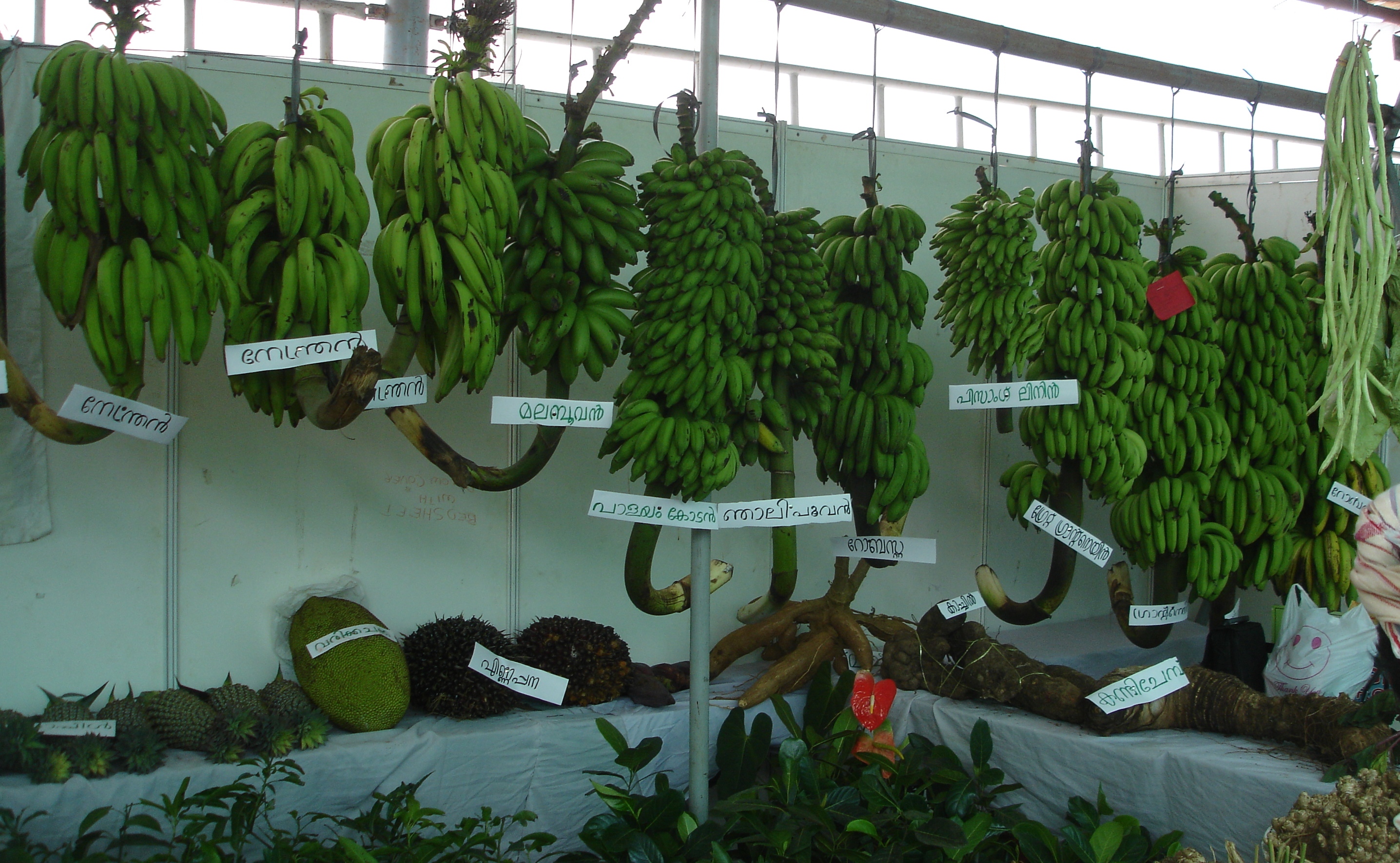
Banana Varieties On Display at the Cochin Flower Show (Names in Malayalam)

There are bananas for eating and bananas for cooking.  Bananas for boiling and bananas for frying. There are bananas with exotic sounding names: Cuban Red, Blue Java, Lady Finger, Orinico, Poovan, Rasthali, Manzana (which does, indeed, taste more like an apple). I wish I knew (and could taste!) all of them, because there are more than a thousand varieties. Somewhere there must be a database of all those names, all those varieties, hopefully all those genomes.  Continue reading

Collective Action & Learning

This site has more than one expression of gratitude for the founders, funders, faculties and students at more than one institution of higher learning.  Students have written their own descriptions of gratitude for experiences that such schools (as well as their families and communities) have prepared them for.  Recently I have interacted with the faculty and students of a course at Brown University and the takeaways keep on giving and then giving some more. Now, I extend an invitation, or recommendation, to students elsewhere: join!

I do not necessarily mean, as in here, join us.  Just as well if you can support the efforts here or here or here; otherwise take your pick from other posts on this site.

I direct this to students at a course at Cornell University, taught by Steve Wolf.  They are challenged to figure out the collective action problem, and solve it practically.  Side note: some recent graduates of Cornell, such as Nicole and Katrina, have shared their personal experiences in projects inspired by the topics in this course; a couple of examples are here and here (see their other posts by clicking on their names on the right side of this site); so has Adrien, a couple of years out of Amherst; and David, who would have graduated Brown a few years ago if he had not been busy forming this organization.

You get the point.  I hope that more of you join, wherever you may. And you are more than welcome here.  We all look forward to your contributions.

Green House Redefined

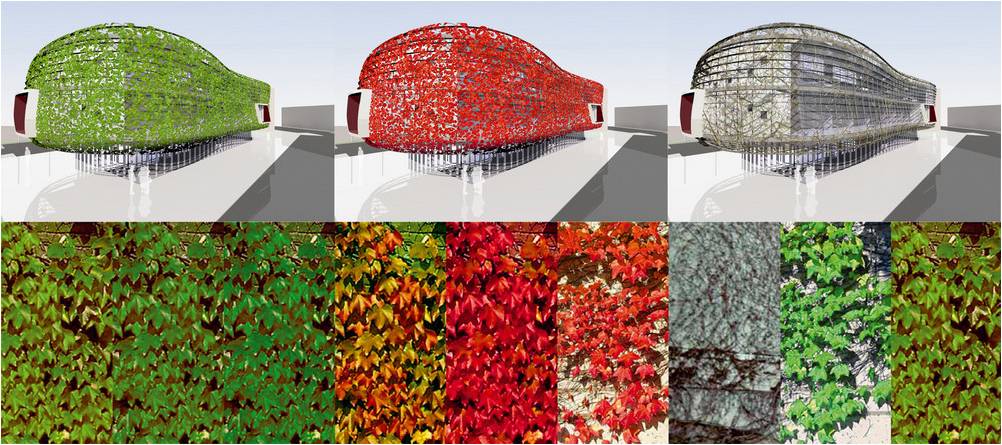
Use of natural light, passive and active energy saving systems, relative position to the sun, air flow, leaf moistened air….

This doesn’t sound like “business as usual” for a municipal building. But the Noain City Hall in Navarre, Spain designed by Award winning Zon-e Arquitectos stems  logically from the fact that the region leads Europe in its use of renewable energy technology.  Continue reading

Cool-Schooling

If you are a parent, and ever had a challenge related to your child(ren)’s school (what is the opposite of an oxymoron? this must be an example of it, but where is George Carlin when you need him?), you will likely want to read Clifford Levy’s moving description (alert: if you are not a subscriber to The New York Times this link will count as one of your free sample views) of enrolling his three kids from Brooklyn in a Moscow school a few years back.

If you are anyone who ever had your own momentary thoughts about being too cool for school (again the opposite of an oxymoron: who hasn’t?  is it called a tautology?  or just plain old redundant?), you will definitely want to read at least one snippet about the founder of the school in Moscow that Levy is describing:

…Bogin added courses like antimanipulation, which was intended to give children tools to decipher commercial or political messages. He taught a required class called myshleniye, which means “thinking,” as in critical thinking.

That is the school everyone could use a bit of: the one that enlightens, that empowers its students to become too cool to be fooled.

Brown Takeaways, & Galapagos Giveaways

For the work we do, there are a few places always on my radar.  I do not mean some search engine tool for getting all the news on such and such.  I mean radar in the sense of, what really matters?  Why? When and where did it start mattering for me?  September, 1983 at JFK Airport is at the very top of the list, believe it or not, but I will save that story for another day. August, 1988 at Cornell University is near the top, as is February, 1995 in Costa Rica.  The Galapagos Islands joined the list in July, 1998 when I had my first work assignment there.  Ever since, I have had WWDD? buzzing in my thoughts, something like a bumper sticker in the back of my mind that cannot and will not go away.

This story from 2000 is a reminder of one my my subsequent visits.  Continue reading