
Sambar Deer (Rusa unicolor) grazing in an open field near the Periyar Lake.
Sambar Deer (Rusa unicolor) grazing in an open field near the Periyar Lake.

Whether by coincidence or just being on a roll (sorry), I just came across an inspiring urban art project that is part Civil Disobedience, part Public Art Initiative, part plain old recycling and completely FUN! Continue reading
A pleasure to read this post from the Islands that Reyna has written about, especially that it is from someone celebrating their honeymoon; super-especially when they take great photos, write well, and share them with everyone.
The mention of Brown and the questions students raised in a postscript exchange of ideas continues to inspire.
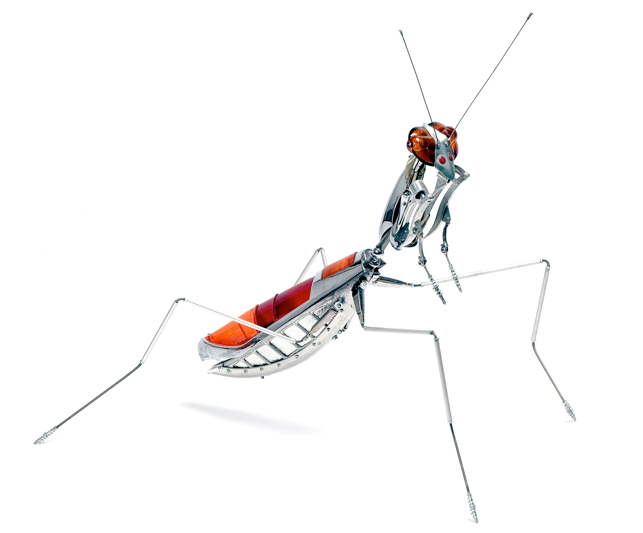
In a world of give and take, another mention of our favorite sculpteur of late is one way to think again about the fable mentioned here. Ants are not just the worker drones implied, and grasshoppers are not just the partiers implied. Could it be that the praying mantis has the answer? :
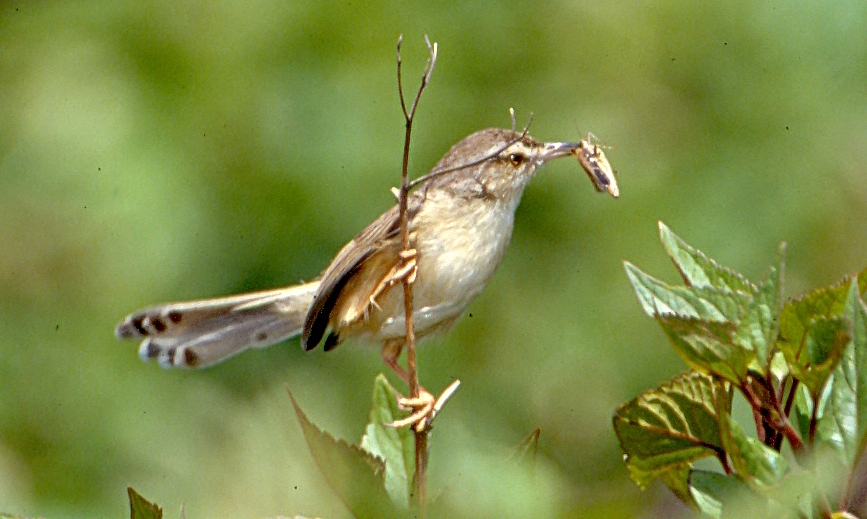

The Celebration of Urban Birds isn’t just about “Bird Counts” and helping to create welcome habitats for your ornithological neighbors. Protecting migratory birds is an urgent part of this process. Just as we work to create and support buffer zones around nature reserves in various parts of the world, we need to think about ways that human lifestyles impact animal health and habitat.
New York City Audubon’s Director of Conservation Susan Elbin states that
Night-time migrants navigate using cues which include moon-light and star position, and may become confused by the glare of tall building lights.
Bird watchers are everywhere. Countless households around the world sport bird-feeders in back yards, and thousands of photographers like Vijaykumar Thondaman dedicate much of their lives to capturing stunning images. It is practically impossible to believe that anyone could fail to see the beauty in a toucan or quetzal, Latin American species that tourists travel whole hemispheres to see for themselves in the wild.
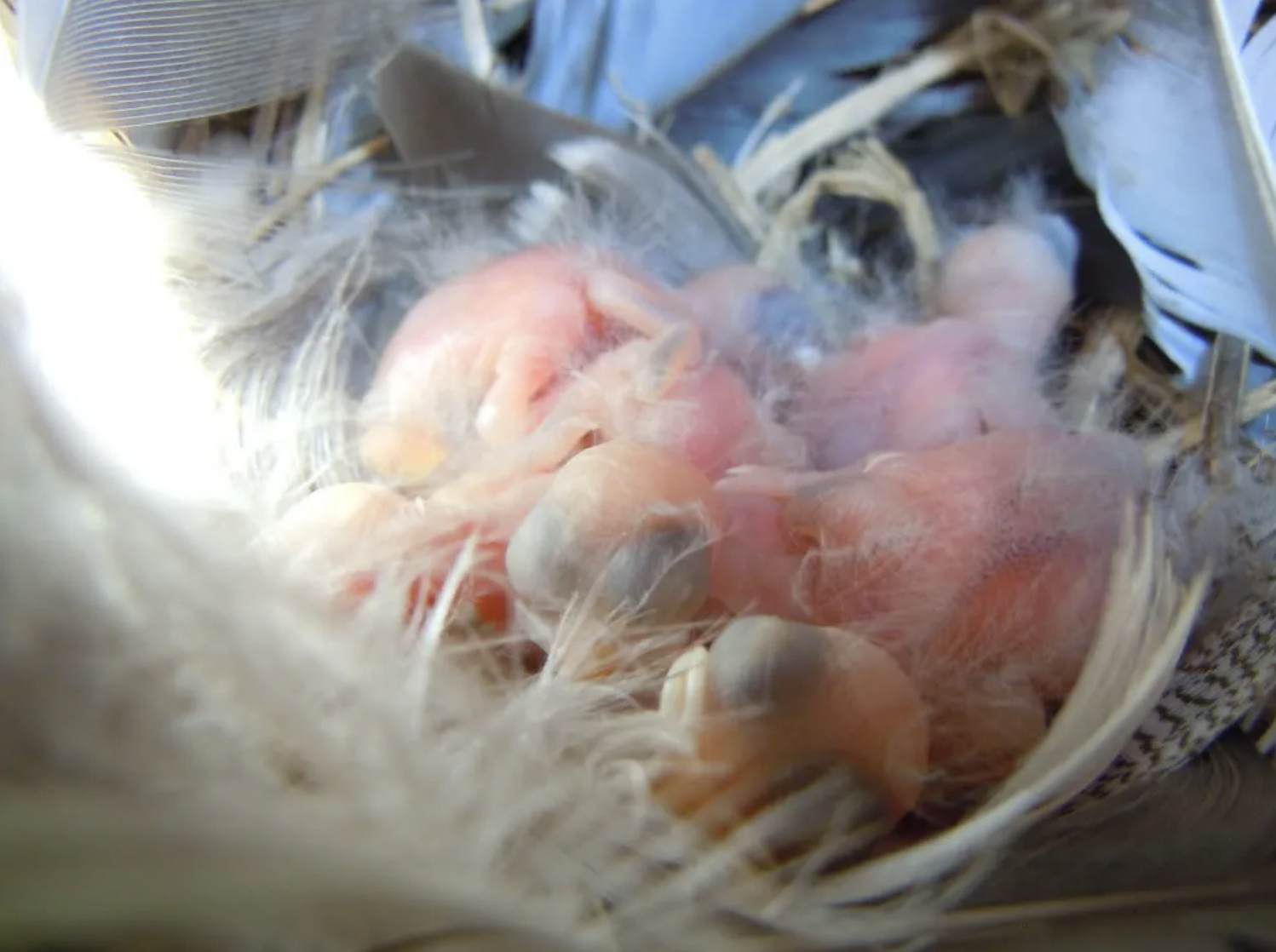
Swallow nestlings studied by Cornell students
Collecting data on birds is a difficult process because there aren’t enough ornithologists to be in the field all the time. But what about the casual bird watchers carrying around their binoculars, the families gathering on their porches to watch hummingbirds flit around flowers, or the schoolchildren staring out the classroom window at the distant and free shadows of birds of prey in the sky? Citizen science involves using these millions of bird lovers as a resource. As one of the world leaders in the study of birds, the Cornell Lab of Ornithology has been using citizen science since 1966, and is involved in many projects that bring bird watchers together while building an impressive database that is used for important research.
Here’s an article on Cornell Lab of Ornithology and the National Audubon Society’s citizen science project eBird.org.
Starting next week I will be working at one of these projects, called Celebrate Urban Birds, managing/deciphering this data and helping people around the country get involved in the surprisingly simple and rewarding experience of watching and identifying birds, whether they have a background in ornithology or not.
At the risk of being tagged a superstitious bumpkin, I bring up the topic of auguries for the second time. My first omen of good fortune in Kumily was the appearance of an owl – the portent was indeed accurate, as shown by the success of Diwia’s paper bag workshop. Today, while in the Periyar Tiger Reserve, I sat on a bamboo raft and allowed my gaze to amble into the skies. It was a bright, sunny day (my toasted face solid evidence), with a clear sky save for a few small outcroppings of water vapor drifting in the soothing breeze. One particular puff of cloud caught my eye for a single reason – it looked like an elephant.

Amused but not particularly touched, I returned to my casual waterline eye-scanning. Not 10 minutes later, the significance of the elephant cloud hit me, albeit from about a football field’s distance.


The video clip above is what comes to mind after a bit of reflection. Thanks to Alan, Bill and 30+ others, I have not only fonder thoughts for Brown University, but food for thought. The course ENGN 1930, aka Social Entrepreneurship, asks students to provide brief, written reflections on class sessions, readings, etc. In my session with them, I started by sharing my experience completing a PhD and moving to Costa Rica in the mid-1990s. I then described the process of learning from both public sector leaders and entrepreneurs there, and eventually forming a company that practices entrepreneurial conservation.
The gist of several of the “takeaways” from students is the reasonable question that I am chewing over now: are the Raxa Collective initiatives examples of social entrepreneurship? Is La Paz Group practicing social entrepreneurship? The snarky, if partially true reply would have been that I do not care all that much what it is called. Continue reading
From Bike Share programs to recycled wheels, Tour de France to backwater byways, bicycles are universal, or at least global.
More than just a method of transportation, they are often a form of expression, of the person riding it or the job they do. Continue reading
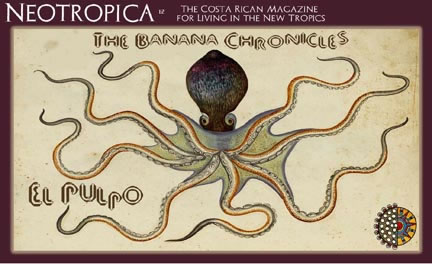 The book mentioned in this previous post is proving difficult to stop thinking about. The historical clarifications are part of it in a purely fascinating way (no domesticated animals in the pre-Columbian New World, really?); better understanding of phenomenal events such as the potato blight of 150+ years ago, and kudzu in the present day southeastern USA, are equally illuminating, if more alarming. For anyone who has lived in the old or new tropics, this naturally leads to thinking about bananas, and then the clicking starts. And if you are lucky you end up somewhere like this (click on the image above): Continue reading
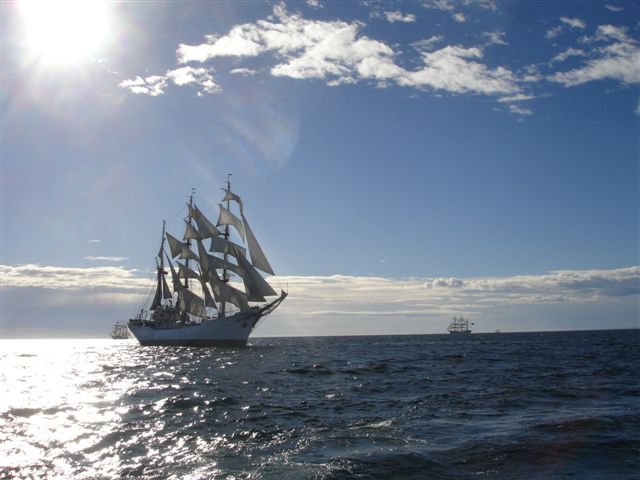
There was a time when all seafaring vessels used renewable energy sources…they moved either by manpower or wind power, or a combination of the two. The Industrial Revolution changed that and the steam engine, powered by coal or wood, pushed ships out of carbon neutrality.
In March, 2010 I had the privilege to experience the Vela Sud America, a Bicentennial Regatta of tall ships commemorating the creation of the independent South and Latin America, as they passed through the Straits of Magellan near Punta Arenas, Chile on their way up the west coast of South America. The weather hadn’t yet turned very cold (it was nearing winter in the southern hemisphere) and it was a bright sunny day.
Coincidentally today, September 15th, is Independence Day in all 5 countries of Central America–Feliz Día de la Independencia! Continue reading
 As of this writing, the biographical section of this author’s personal website begins with an inaccuracy that can be easily forgiven. He just hasn’t updated it yet. That’s okay, glass houses and all. But what about all the students interested in topics like this, at places like Brown and Cornell, who want to figure out how one becomes Charles C. Mann? We learn a bit about the initial C in his name, but not about how he got interested in this topic, he prepared to research it, write it, etc. That’s okay too.
He brings light to so many topics that we take for granted, even those of us studying some of these topics–do you picture the local population of what is now North America, pre-Columbus, riding horses?–that we can be thankful that he has been busy at researching and writing this book, and less busy explaining to us how he learned to do such work. Just this passage should get you thinking:
Newspapers usually describe globalization in purely economic terms, but it is also a biological phenomenon; indeed, from a long-term perspective it may be primarily a biological phenomenon. Two hundred and fifty million years ago the world contained a single landmass known to scientists as Pangaea. Geological forces broke up this vast expanse, splitting Eurasia and the Americas. Over time the two divided halves of Pangaea developed wildly different suites of plants and animals. Before Colón a few venturesome land creatures had crossed the oceans and established themselves on the other side. Most were insects and birds, as one would expect, but the list also includes, surprisingly, a few farm species—bottle gourds, coconuts, sweet potatoes—the subject today of scholarly head-scratching. Continue reading
There is something fascinating to me about images that depict stationary objects while also imparting a sense of rapid motion. Night-shots of city streets with cars trailing lights are tricky, difficult to stage, and unnatural, yet still beautiful. Finding natural scenes depicting motion while the environment stands still is difficult, but a reliable source of endless photographs is the waterfall. Whether a mega-million gallon monolith or a trickling stream tickling down the side of a wall, the endless motion of a waterfall starkly contrasts against the backdrop, and the patterns which are the result of the water’s movement over a period of time can often be breathtaking.


No sooner had I posted the words of a former President of Brown University than a colleague at Cornell sent me news that Mathis Wackernagel is serving a term as a Rhodes Professor (as it is known in shorthand). This brought to mind two things: first, this book that was published as I was completing my doctoral dissertation and starting work in Costa Rica on a related topic (more on which, soon); second, the President of Cornell University during all of my seven years on campus. The book was to have a huge, lasting impact. The same is clearly true for President Rhodes, whose hand I had the honor to shake more than once. The confluence of events in 1996–this book’s publication and an unrelated group of grateful and generous Cornell alumni creating this Professorship that would later honor the book’s author–is pretty cool:
Frank H. T. Rhodes Class Of ’56 University Professorship
To commemorate their 40th reunion, the Class of 1956 initiated an endowment to create the Frank H. T. Rhodes Class of ’56 University Professorship in honor of Cornell’s ninth president (1977–1995). The purpose of the Rhodes Class of ’56 Professorship is to strengthen the undergraduate experience by bringing to the university individuals from every walk of life who represent excellence of achievement and to create opportunities for interaction with undergraduates. The endowment also makes it possible to create public events related to the professorship such as lectures, performances, films, art exhibits, or conferences. Rhodes Class of ’56 Professors are full members of the faculty while in residence. Appointments are awarded for a period of three years. During each year of their appointment, Rhodes Class of ’56 Professors visit the campus for a week to engage in a variety of activities including public lectures, ongoing courses, and collaborative research.
Despite the fact that this post makes me look like a “one trick pony” I have to share yet another recycling innovation that involves, well, you know…
The Canadian company Knowaste has opened several facilities in the U.K. that are making a significant dent in the nearly 800,000 tons of disposable nappies and other “absorbent hygiene product” waste that would normally go directly to landfills annually.
The company has pioneered a system that, after heat sterilization, converts the plastics in the products into items such as roof shingles and plastic tubing, with the waste from that processing used to generate heat and power for the plant itself. Continue reading
Kerala’s Backwaters may be the only home to certain cultural items such as the snakeboat races and the traditional Kettuvalam houseboats, but they are also host to universal waterway phenomena. There is the mandatory bounty that nature provides in the form of distinct and delicious fish and crustaceans, not to mention the huge swathes of coconut palms that grow naturally. Acres and acres of rice paddies are cultivated at below sea level – a feat not unique of Kerala. But in today’s universal culture of rapid globalization, few areas are content with being entirely self-sufficient. So what do the residents of the Kerala Backwaters do if they can’t grow or forage a supply they want? The strips of land are too remote and inaccessible for a run-of-the-mill supermarket to be profitable, let alone practical. As usual, Kerala folks have come up with a creative yet simple solution to the problem of accessibility and functionality – a floating supermarket.


 Organikos