Those Brown People

In a post some weeks ago on this site, thanks were given to several individuals who have advanced education for all humanity, and provided La Paz Group some of its most talented Contributors.  In this, my first post on this site, I would do the same for Nicholas Brown and all the others responsible for the experience I had yesterday; but the list would be long.  Instead, I will pay tribute to them all through an anecdote about a few:

I was giving a lecture in Quito, Ecuador last year about themes you would recognize as La Paz Group-ish.  In the discussion period after my lecture I was asked if I was aware of “the brown people” in Ecuador.  While many people I have worked with in Ecuador over the last 14 years have skin pigment darker than my own, I would never refer to them that way, so I replied politely that I was not aware of them. Continue reading
Wordsmithing: Possibilian

Breaking with the tradition established several Wednesdays ago, we will not adhere strictly to the OED definition for the word we want to consider today.  We could not, even if we wanted to, because according to OED it does not yet exist.  A close cousin does, and it is worth noting that possibilism (which neither MS Word’s spell-checker, nor WordPress’s, recognize as legitimate) has a meaning somewhat close to what we want to highlight.  The second sense of that word, anyhow, does:

2. Geogr. The belief that human freedom of action is not limited by the natural world.

A possibilian may be a person who does not let the natural world get in the way of doing things.  But it is actually much more interesting than that.  When you have twenty minutes set aside for some intrigue and inspiration, take a look at this for a fuller understanding of the word (from the smith who coined it):

High Line Skyline

An aerial shot looking down on the Washington Grasslands section of the park, with Rashid Johnson’s artwork Blocks and Yutaka Sone’s Little Manhattan visible, both 2015 Commissions.

Railroads were one of the most significant early forces of change to the landscape of North America.  They not only moved freight and people but they participated in opening up the newly formed National Parks to visitors with the creation of the now iconic grand hotels.

Some of the railway’s original train tracks were marked and put back in their original locations. You’ll see them throughout the park today. Photo by Rick Darke

But as roads began to rival rails the network underwent a steady decline, and fewer and fewer resources were being put into their maintenance.

Fast forward a century–give or take a decade–and we find railroads, or at least rail corridors, going back to one of their greatest historical traits; as a pathway to nature.

In the 1980s the U.S. Congress passed an amendment allowing the use of soon-to-be-abandoned rail lines for hiking and biking trails.The highly successful “Rails-to-Trails” program has lead to nearly 1,012 rail-trails in the U.S. with a total trail mileage of more than 11,000.

Not just a U.S. phenomenon, there are similar programs in Canada, Mexico, Europe and Australia, to name a few.  (Tasmanian Trail anyone?) Continue reading

To Recycle, Compost, or just Trash?

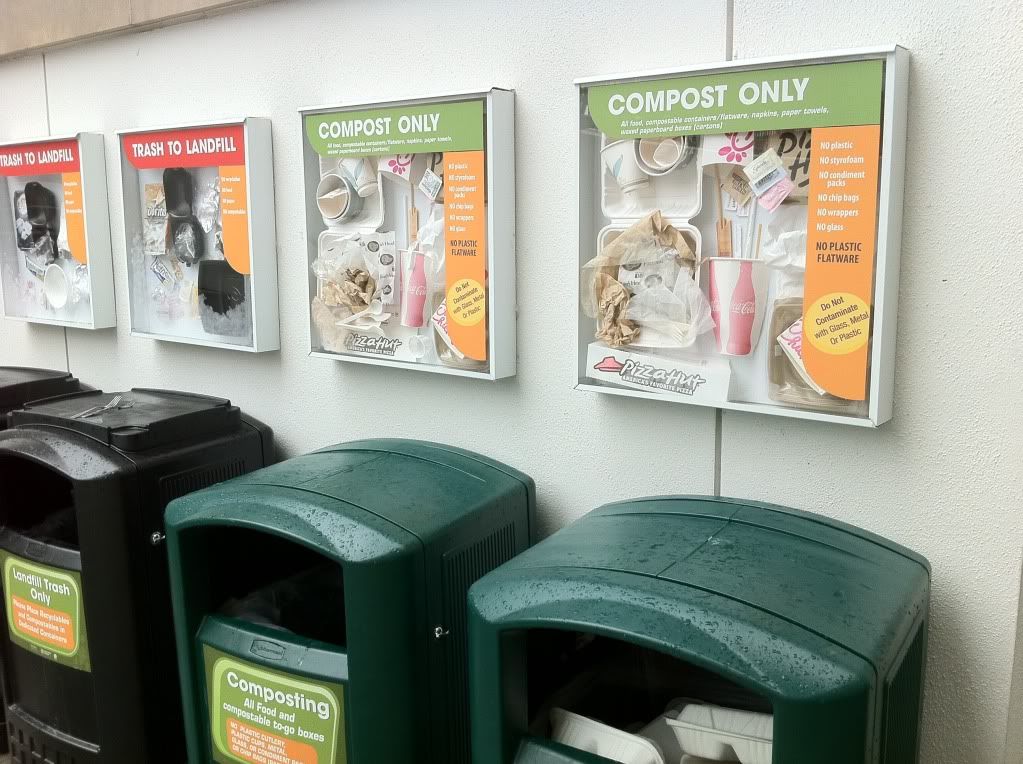
Every student’s visit to the food court in Cox Hall, one of Emory’s largest dining halls, generates quite a bit of trash. Because of the diversity of Cox’s offerings—Chick-Fil-A, Pizza Hut, the Deli, and more—this waste comes in all varieties, too: thin cardboard cartons, Styrofoam boxes, plastic knives and forks, soy sauce and ketchup packets. While sorting these out and recycling them appropriately might only be a matter of taking a few moments to look at the labels, some students feel that they don’t have the time to find out what goes into recycling, composting, or just the trash. College sophomore Daniel F. weighs in:

            I like to think that I care about the environment, but there are times when I just can’t sort out what’s what. It gets confusing when you start bringing a lot of these packages together…

Emory, luckily, is making it easier for bewildered students like Daniel to live in a sustainable way.  Continue reading

Moving Through Space, Time, and Culture

Hundreds of years of studying physics has told us that the journey through time is linear, and only goes one way. Laws of gravity aside, travelling through space need not be linear – any course can be taken as we move through our lives. These videos were created on a journey through 1056 hours of time and 38,000 miles of space – but the cultures witnessed and experienced by the travelers  are innumerate.

[vimeo 27246366]

Continue reading

A New Nation Rooted in Tradition

This slideshow requires JavaScript.

I have lived in South Sudan now for over a month! Living and working in a developing country is definitely thrilling and challenging. Within a few moments of stepping off the plane in Juba, the capital of South Sudan, I had my first encounter with South Sudan’s interesting rules and regulations. The arrival terminal at the airport is modest and petite.

While I waited for my luggage to be scanned in the airport’s newly installed x-ray scanner, I found a dingy luggage cart with a sign stating “Welcome to London Heathrow Airport”.  How funny? I had to take a picture! Right after the flash went off, a security officer snatched the camera out of my hand and asked me to enter the security office. After a short interrogation, I pleaded for forgiveness, deleted the photo, and scurried out of the airport gate.

Continue reading

Onam Ice Melter

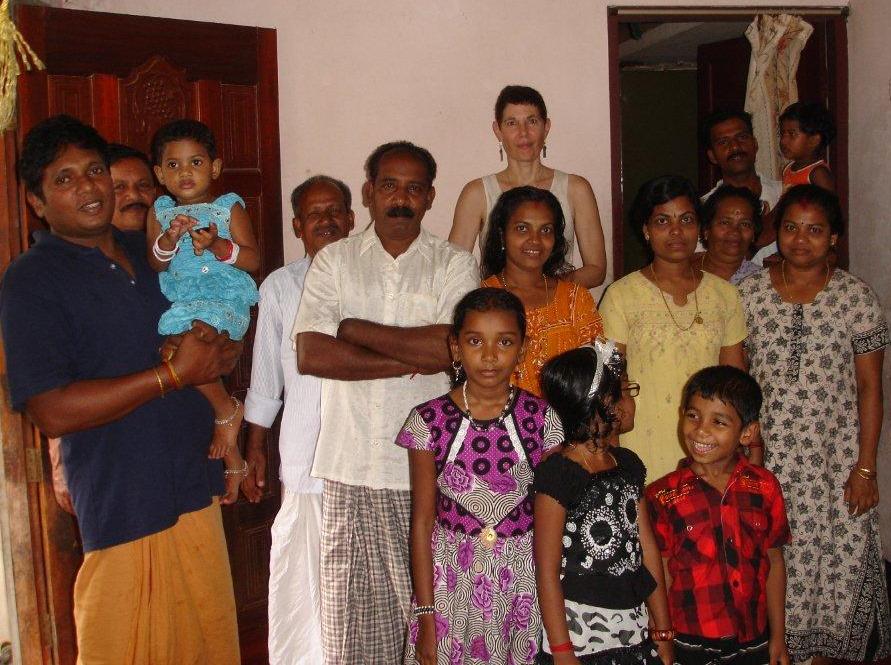
In our neighborhood of Cochin, called Thevara, we walk sometimes in the early morning or late afternoon—been doing this for over a year now.  Yesterday, some ice melted on our afternoon walk.  Our ice, well-melted by warm neighbors.  The ice I refer to is a cultural separator between the we that has been and the we that is and will be. Continue reading

Happy Go Lucky

Aesop’s fables are full of opportunities for the modern reader, re-teller, or listener to imagine different interpretations.  Thanks to the efforts of these folks we can easily access those fables and make what we will of them.  A favorite of ours, for its versatility, is this one:

One fine day in winter some Ants were busy drying their store of corn, which had got rather damp during a long spell of rain. Presently up came a Grasshopper and begged them to spare her a few grains, “For,” she said, “I’m simply starving.” The Ants stopped work for a moment, though this was against their principles. “May we ask,” said they, “what you were doing with yourself all last summer? Why didn’t you collect a store of food for the winter?”

“The fact is,” replied the Grasshopper, “I was so busy singing that I hadn’t the time.”  “If you spent the summer singing,” replied the Ants, “you can’t do better than spend the winter dancing.” And they chuckled and went on with their work.

Continue reading

The Best Is Yet To Come

Writing about that game, among other things, in this post (that breaks new media ground as a review in one magazine’s website of another magazine’s special edition on sports heroes), Giles Harvey reflects:

…he ends up missing—it’s the greatest goal never scored—but that hardly matters. If anything, the fact that he misses seems to intensify the aesthetic quality of the move. (As though Pelé were interested in something as utilitarian as scoring goals!)

The moment seemed to me to represent a summit not just of sporting prowess but of human civilization itself. Watching it, I felt what might be described as species pride: look what we’re able to do! Continue reading

Victory Gardens Redux


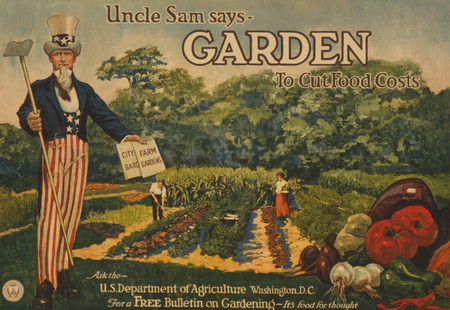
As innovative and “hot topic” as they are, the concept of urban and suburban community gardens is not actually new, nor a USA phenomenon.  Just a seemingly “modern” and “developed economy” phenomenon.  Innumerable acres of public and private land across the USA, U.K., Canada and Germany were being used for small scale agriculture during WWI and WWII. London’s Hyde Park, San Francisco’s Golden Gate Park and New York City’s Riverside Park (not to mention Eleanor Roosevelt’s White House lawn) all had plots for cultivation in order to mitigate the costs of growing and transporting produce during wartime.  A Victory Garden campaign during WWI is said to have influenced the creation of over 5 million gardens in the USA alone. Continue reading

Monsooning Coffee & Tasting The Place

Monsoon_Malabar_m.pngWe have been beta on a service that allows an actual taste of the places where we work.  Coffee, from our friends in Nicaragua; honey, wild-hunted in India, Africa and South America; the salt that Ghandi promoted; and the pepper that we have written about more than once.  And so on. The point is that you can taste the difference of a food or a beverage based on where it comes from, and that is evocative. For example, coffee grows all over the world, and not only the growing conditions vary but so do the post-harvest traditions:

I head off to attend a friend’s wedding in India.  It happens to be at the same time as the beginning of the monsoon season so I can’t resist the temptation of organizing to visit the coffee monsoon processing town of Mangalore on the Malabar coast.  It is the only place in the world where this most unique of coffees is processed: Monsoon Malabar

I land at the new Bangalore airport which is now world-class, slick, big and impressive.  It is so far removed from the old Bangalore airport I last visited sixteen months ago where you were jolted into a profound awareness that you were in a foreign country for real: with hordes of people lining the exit ramp and traffic going in six directions at once and a cacophony of horns, calls and mass humanity pressing on all sides. The new airport is much more sedate and orderly and the immersion into the wonderfully varied and exotically, pungent Indian culture is now a little more gradual. Continue reading

Beta-Think Is Better

Jeff Jarvis has this to say in a post combining the topics Beta-Think and End Malaria Day:

The modern cure to Voltaire’s paradox [“Le mieux est l’ennemi du bien,” or “the best is the enemy of the good”]—and a gift of the digital age—is the beta: the unfinished and imperfect product or process that is opened up so customers can offer advice and improvements.

Those of us who have worked in bricks and mortar environments, especially hospitality businesses, might wonder: did he never hear of a “soft opening” before?  Those have been around since long before the digital age.  But he likely means, and we agree, that digital and especially social media facilitate more effective soft openings of all kinds, everywhere.

Onam Festival at Cardamom County

As Amie and other contributors mentioned in their posts, the Harvest Festival and the time of giving thanks has come to Kerala and to Cardamom County.  I had the great opportunity to be on property and experience the colorful festival of Onam.  Being part of both guest and staff, I could see all aspects of the event: from preparation to the final event.  Onam is a ten day festival as Amie’s post explains, but the most important day of Onam is the 9th day, which is oddly called “First Onam” because that is the day that King Mahabali actually descends to Kerala.  But any day of Onam seems like the Keralites’ spirits were soaring.  All the staff at Cardamom County have great warm and happy smiles but during this festival season it felt like their warmth was doubled.

This slideshow requires JavaScript.

Go Grinnell!

The inauguration of Grinnell College’s 13th president Raynard S. Kington, M.D., Ph.D in 2011 marked a transition point for the college. The prize commemorates the occasion and celebrates Grinnell’s historic and future commitment to positive social change.