Pepper Terroir

Chili.  Chili Pepper.  Capsicum.  Multiple monikers for a simple fruit in the nightshade family that has successfully colonized all cultures around the globe.
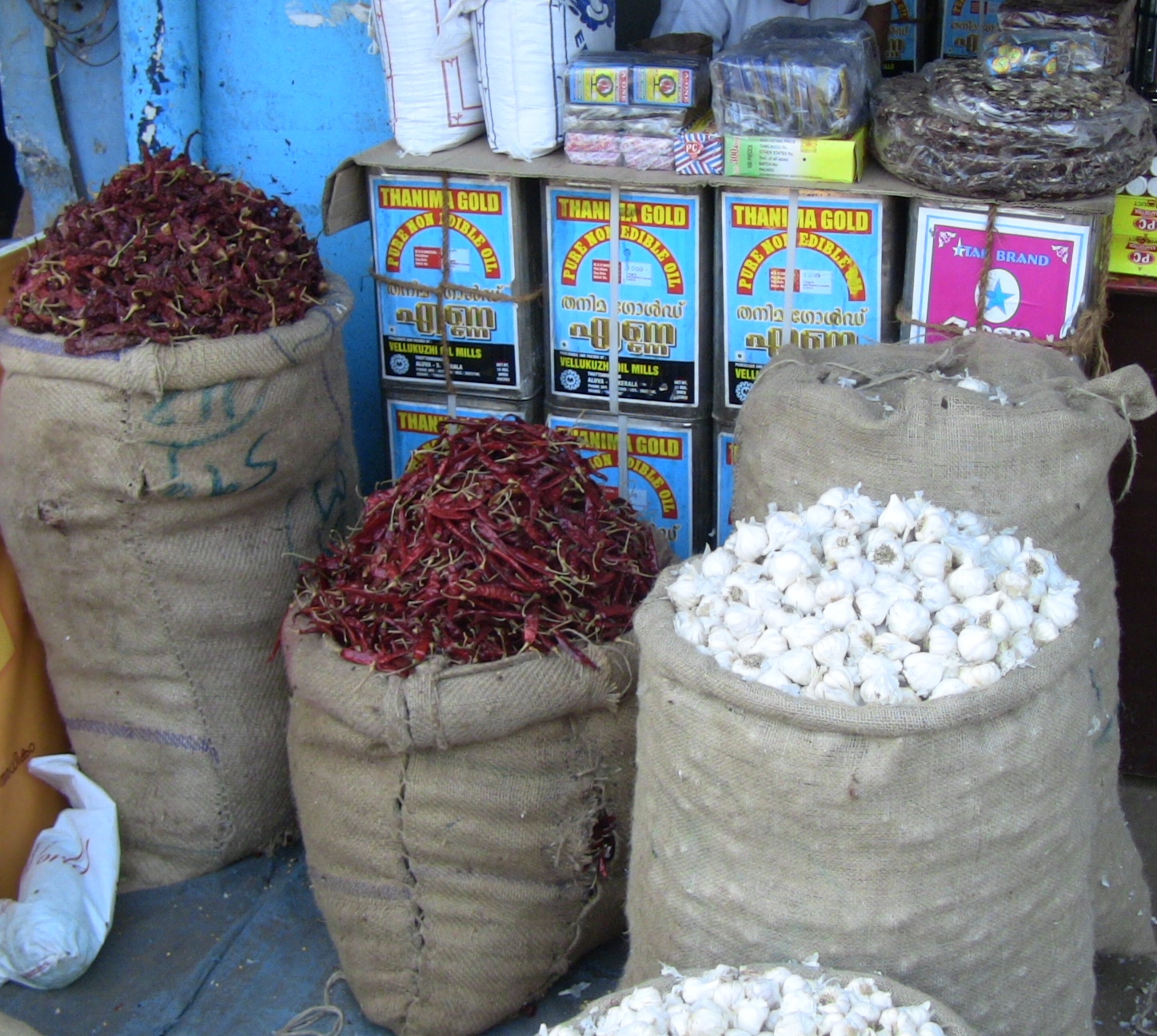
Chili Peppers and garlic at the Ernakulum Market, Cochin

This new world crop was part of the so called “Columbian Exchange”, using those newly opened passages to cross oceans and then continents.   Both the Spanish and the Portuguese had interests and influence across Asia and India, and these fiery fruits were quickly incorporated into local cuisine.
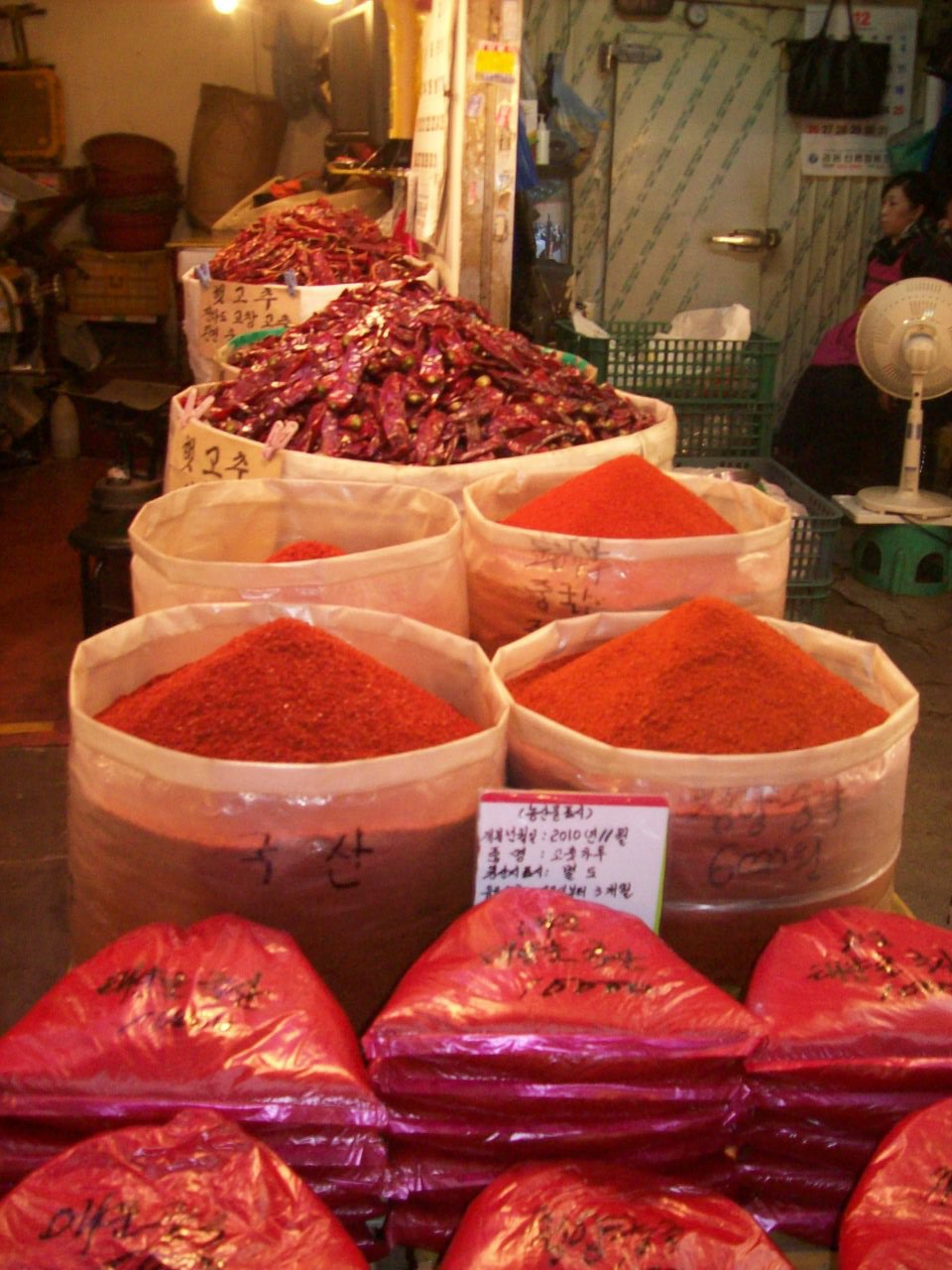
Chili Peppers (whole and ground) at Yangnyeong Market, Seoul

Oaxaca, Mexico has been a culinary mecca for decades and the chili has played an enormous role.  A market excursion wouldn’t be complete without a visit to the chili stalls.  As I’ve written in previous posts, this form of “shopping” goes way beyond simple provisioning.  It’s a both lifestyle and a lifeline to a different time…

Mark Bittman is referring to a particular terroir in his article.  But using an anthropomorphic conceit I’ll ask readers to consider the concept of “slow food” as a citizen of Pangaea.

Irreverent Yes, But

Ralph said it best:

A foolish consistency is the hobgoblin of little minds, adored by little statesmen and philosophers and divines.

Whether you agree with Mr. Emerson or not; whether you believe in hobgoblins or not: shake it up.  With humor often works.  Twist and shout.  We neither stand on ceremony nor worry about offending sensibilities in general, if it is all in good fun, and especially if it serves a valuable purpose.  See George here and here for proof of our convictions.  But Twitter, really?  Have you actually experienced an earthquake?  Even if not, have you read the news lately?  Is there anything really fun in this?

The Anthropocene

I wrote yesterday about the North American cod stocks that have practically disappeared during the last century as a result of overfishing. Needless to say, this is just one of many species that humans have had a seriously detrimental effect upon in their shaping of the Earth. An article from The Economist this May discusses the geological forces that humans have had on the Earth, focusing on topics like the carbon cycle or nitrogen fixation rather than species extinction.

Paul Crutzen and Eugene Stoermer coined the term “Anthropocene” in 2000 to classify what they see as a new age on the geological time scale, and the fairly abrupt and sharp decline of cod may be one of the many changes visible in the fossil record thousands or millions of years from now. As you can see in the image below, we are currently in the Holocene, but Crutzen and Stoermer, along with many other scientists, including several of those in the International Commission on Stratigraphy (which arbitrates the geological time scale), believe that we have entered an age primarily shaped by Homo sapiens.

Image from The Economist

Continue reading

Talk About Heels

We are generally wary of the word style (and fashion, vogue, etc.) so with no particular link to any themes central to Raxa Collective’s mission, except maybe activism (in the most fun sense of that word) if Keef and the boys (Rocky Road) cannot manage to get you jigging, maybe this will get you going (though really, for the best moves, you’ve got to meet this gang):

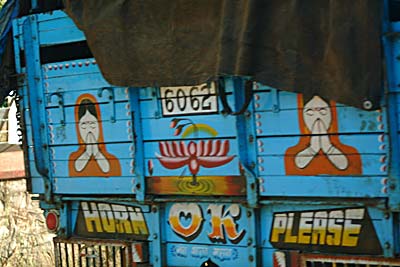
Don’t Honk To Change The Rules

Guest Author: George M. George

Driving in Kerala sometimes makes me wonder whether Dante failed to describe an essential part of that descent into the inferno.

A recent advertisement for a major automotive company actually made this statement: Make Your Own Rules.

Oh. Thank you so much. It seems that most drivers here have in fact made their own rules and do not care how the ‘game’ is played as long as they win. So it is imperative that when you get here you opt for a slower, safer drive to your destination by asking your driver to go easy on the right pedal.  If you do so, you will actually enjoy the scenery, of which there is plenty.  But, you will still have the sonic thrill of your life. Continue reading

Baby Elephant Rescue in Kenya

Guest Author: Nicole Kravec

In the morning I was at my computer, preparing for a visit from Muriel, a woman from London who is a director of a top-notch research firm.  She’s doing pro-bono work for the Maasai Wilderness Conservation Trust and Campi ya Kanzi Community Ecolodge (www.maasai.com) where I am, and I am preparing for her 3 day visit that starts tomorrow.  After a few hours of mind-numbing regression analysis I heard some commotion outside. Continue reading

A Better Tea Party

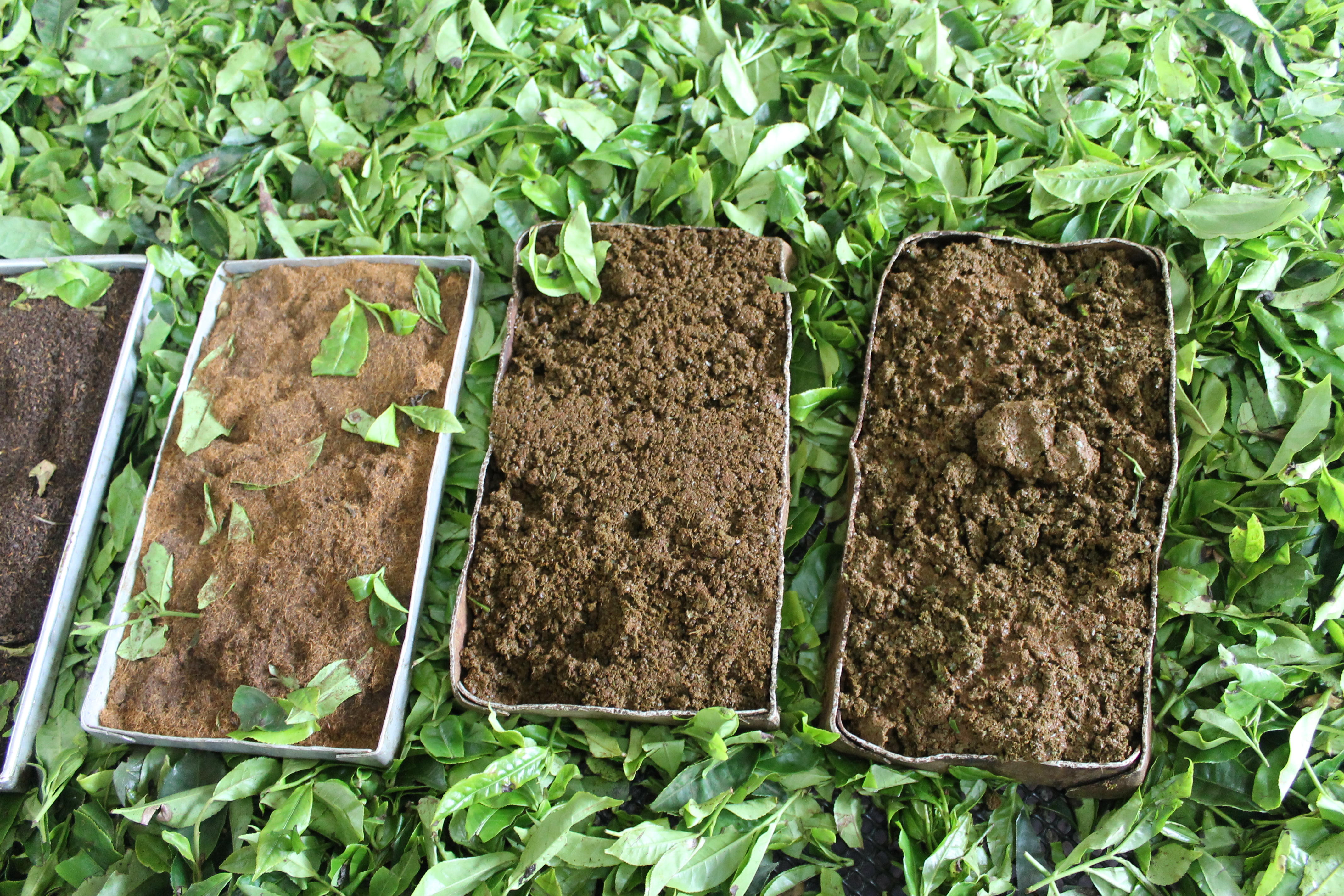
Our visit to Munnar’s High Range Tea plantations gave us more insight into the history of the drink than just the lively culture of the “cuppa”.

Traditionally called Chai, tea has been the backbone of numerous communities in the mountainous areas of India and Sri Lanka (formerly known as Ceylon). Schools, health clinics and even Hindu temples were built by the plantations for the betterment of the community.  The Shristhi Welfare Centre, founded by a local tea plantation, sells delicious High Range strawberry preserves and handmade paper products that contributes to the rehabilitative vocational work of physically and mentally challenged children of the plantation workers.  Unfortunately they were closed on Sunday when we wanted to visit.

There’s more to tea than meets the palette.  I will be writing more about the Shristhi Welfare Centre, and its relation to tea, in posts to come.

The Gadus Commons

William Bradford, governor of Plymouth Colony in Massachusetts for much of the first half of the 1600s, from whom North Americans  have inherited the notion of  communal Thanksgiving (and incidentally my grandfather 26 generations removed) noted:

The major part [of the Pilgrims] inclined to go to Plymouth chiefly for the hope of present profit to be made by the fish that was found in that country (Cod; 67).

Fast forward a few centuries.  Bottom trawling, longlining, and gillnetting during the 19th and 20th Centuries were probably the most responsible for cod’s population decline in North America. Faced with the same great abundance that had helped bring settlers to Cape Cod, huge fishing companies acted rationally to maximize their own gain, taking advantage of the bountiful commons, and this led to ruin. With the near disappearance of cod came the absence of herring, capelin, humpback whales, and squid. Continue reading

Wordsmithing: Market

Amie has written about market in various contexts, making use of both its verb and noun form.  In our day to day activities, we are motivated by entrepreneurial conservation, by which we mean market-oriented solutions to complement the efforts of NGO, philanthropic and governmental efforts to preserve ecosystems and maintain the vitality of cultures.

We abhor all things fundamentalist, so the cliche of the University of Chicago notion of markets is not one we cling to (nor is the cliche apt anymore; see their contributions in the realm of behavioral economics to get a sense of where this great institution is heading in terms of hegemonic ideas).  The same goes for the fundamentalism that has prevailed in the world of conservation–a belief that markets cause environmental problems but cannot provide solutions.  So, in the spirit of tamping down fundamentalism of all kinds, we might look at the marginalia of this word’s definition, rather than OED‘s definition itself, as we otherwise systematically do:

Proverb: you may know how the market goes by the market folks.

We adapt this, in our daily work, to mean: let’s be realistic while we attempt creative, fun approaches to serious problem-solving.

The Passions of Nature

Events around the globe provide examples of Mother Nature flexing her proverbial muscles, humbling the strongest among us with her power and reminding each of us who is boss.

But if “hell hath no fury like a woman scorned” we can also remember that same potency is the very stuff of life itself.

Colombia & Kerala, South-South Cousins

In another superb field note, Paula Pedraza echoes sentiments seen in several posts by our own Contributors:

Everyday life for these people is like a lifetime of adventures for us. Working here really has been an illuminating, inspiring and humbling experience.

Michael’s reflections on the Tiger Trail comes to mind.  So does the follow up to that.  Speaking of Michael, we are certain that when he is back in the swing of things at Amherst College, and with a bit of encouragement from his fan base, he will be gracing these pages again soon.

Big Ideas, Inclusive

We’ve made a few references to Big Ideas–first to raise the gauntlet and recently intending to drop it. One paragraph from this article set our discussion in motion:

But if information was once grist for ideas, over the last decade it has become competition for them. We are like the farmer who has too much wheat to make flour. We are inundated with so much information that we wouldn’t have time to process it even if we wanted to, and most of us don’t want to.

David Carr, writing about how Steve Jobs has changed the landscape of multiple businesses, has added a nice twist to the discussion by noting how ideas can become outsized when they take shape as things in a particular way: Continue reading

Snowy Charisma

There just seems to be something about Owls.  Wisdom personified.  Avatar of the Greek Goddess Athena and also of the Hindu Goddess Lakshmi.  Which came first?  To complicate matters, in other ancient traditions they represent less desirable qualities (bad omens in Arabian mythology, and death in some African and Mesoamerican cultures).

I can almost picture a Zack Snyder battle on the big screen covering all this territory.

Meanwhile they remain charismatic members of the ornithological world.

According to veteran Owl researcher Denver Holt:

 “People pay attention to owls more than other birds because they look like us,” he said. “They have a symmetrical face, eyes facing forward, a round, flat face and a round head with feathers that look like hair.”

In his New York Times article Jim Robbins writes that owls are not only harbingers but barometers, helping us understand the status of fragile ecosystems.  Daniel J. Cox’s photographs give readers a stunning view of both the owl’s majesty and scientific importance in these studies.

Bird of the Day? Let’s call these Strigiforme ambassadors the Bird of the Hour!

When Good, He’s Very Good

Mark Bittman took it down quite a notch when he started up-slumming with celebrities. Nothing against Gwyneth, nor Mario.  Just that this fellow is better at what he does than they are at what they do.  Case in point today: he is on game.