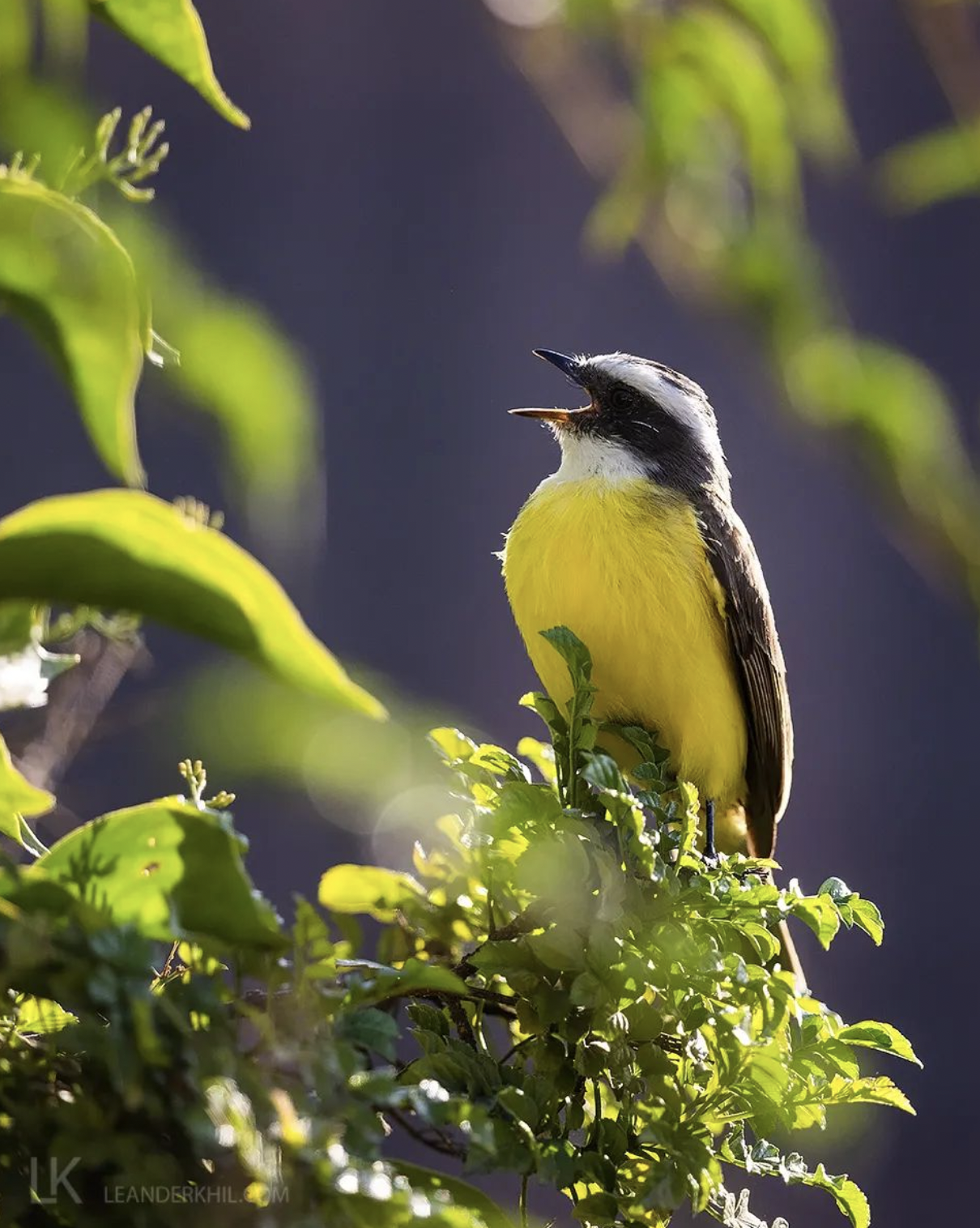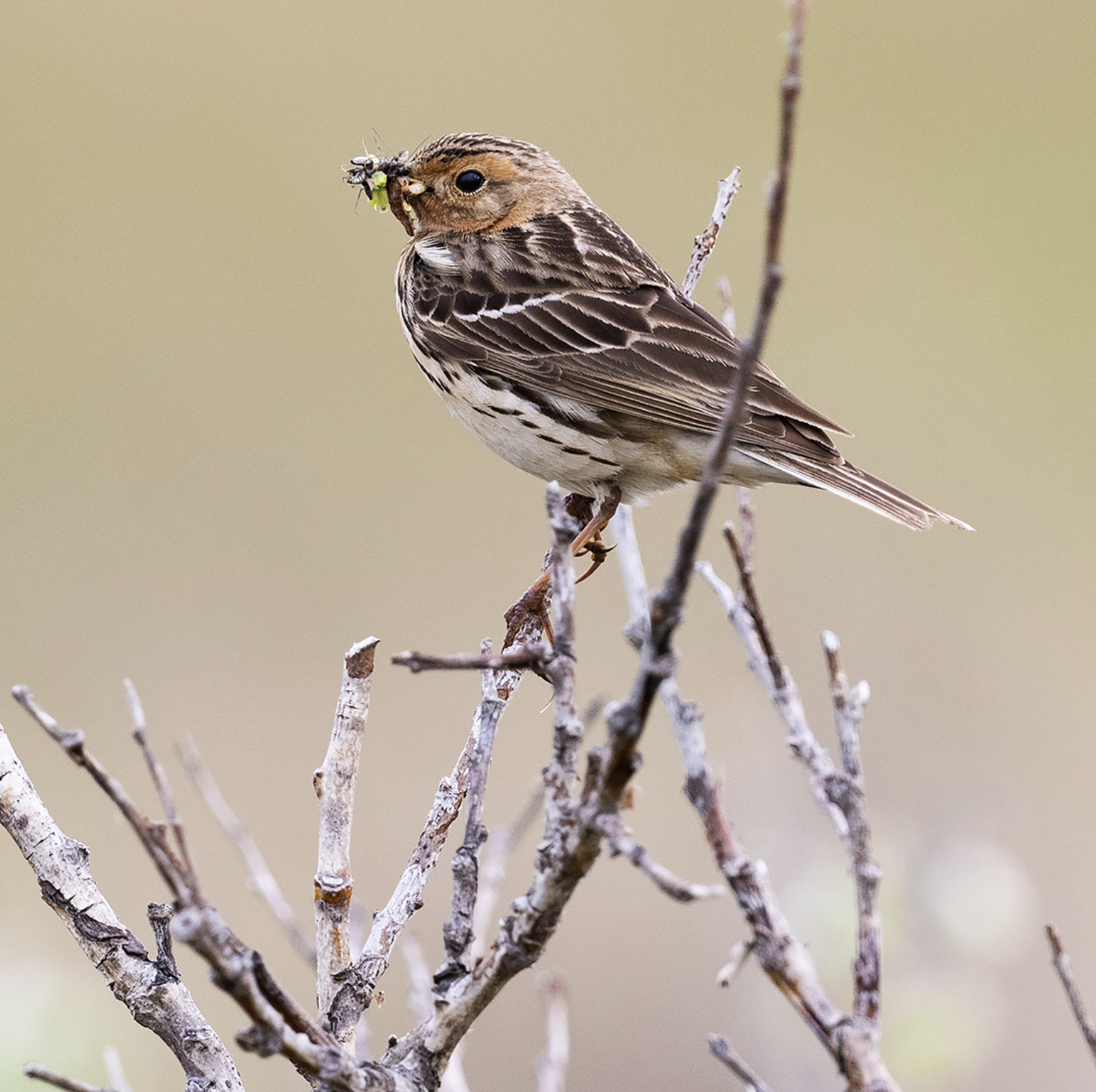
Lake Georgetown Cedar Hollow, TX
Lake Georgetown Cedar Hollow, TX
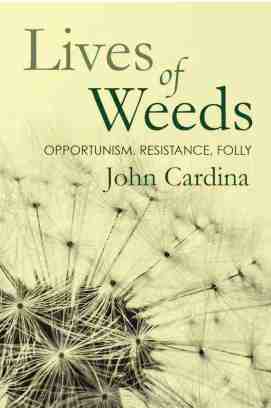 Weeds are classified subject to norms, we have read; thanks to Rivka Galchen for reminding us, and reference to this book:
The names we call plants say more about us than they do about the greenery that surrounds us.
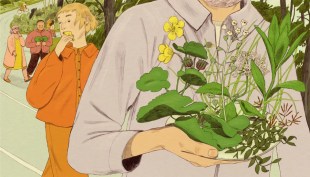
Steve Brill’s first stop was the greenery behind the bike racks. Brill, who is known as Wildman Steve, picked up a weed with heart-shaped seed pods and a small, four-petalled white flower. About thirty of us were gathered for a three-hour foraging tour through Prospect Park, in Brooklyn.
Illustration by Karlotta Freier
The plant was shepherd’s purse, a name that references the seed pods’ resemblance to the containers shepherds used to make from the bladders of sheep. “It’s in the mustard family,” Brill said. “Most all of the flowers in the mustard family are four petals in the shape of a cross.” He encouraged everyone to take a bite, and to tell him what vegetable it tasted like. Continue reading
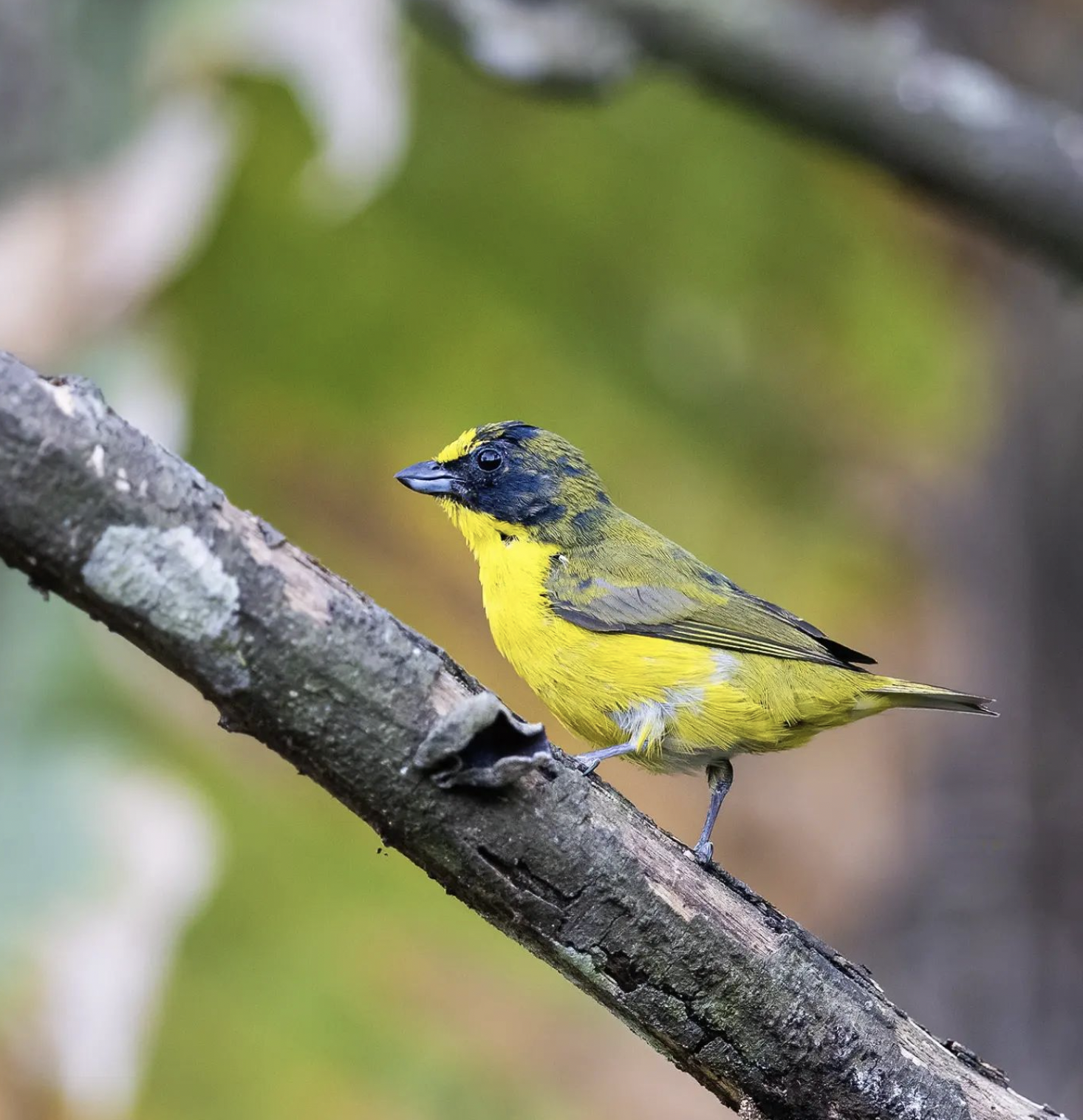
The Lost Tinamou Nature Preserve, Guatemala
Wesley Allsbrook
Christian Cooper, an American science writer, is author of the forthcoming book (below left) from which the following essay in the New York Times is adapted:
Three Years After a Fateful Day in Central Park, Birding Continues to Change My Life
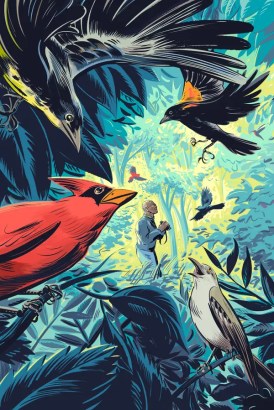
Early in the morning of May 25, 2020, I biked from my apartment on Manhattan’s Lower East Side to Central Park to go birding in the Ramble. Despite the uncertainties of the time — New Yorkers were living in a hot spot of the raging Covid pandemic, with no vaccine in sight — I strove to start this warm, sunlit Memorial Day on a happy note by wandering my favorite urban woodlands in search of migrating songbirds.
I was focused on the end-of-season hunt for a mourning warbler, a small yellow and gray skulking bird that’s difficult to spot and relatively rare. I hadn’t yet seen one that year.
Visiting the park in the morning to look for birds has long been a springtime routine for me. I wake before sunrise and grab my Swarovski binoculars — a 50th-birthday present from my father — and head out the door. Continue reading
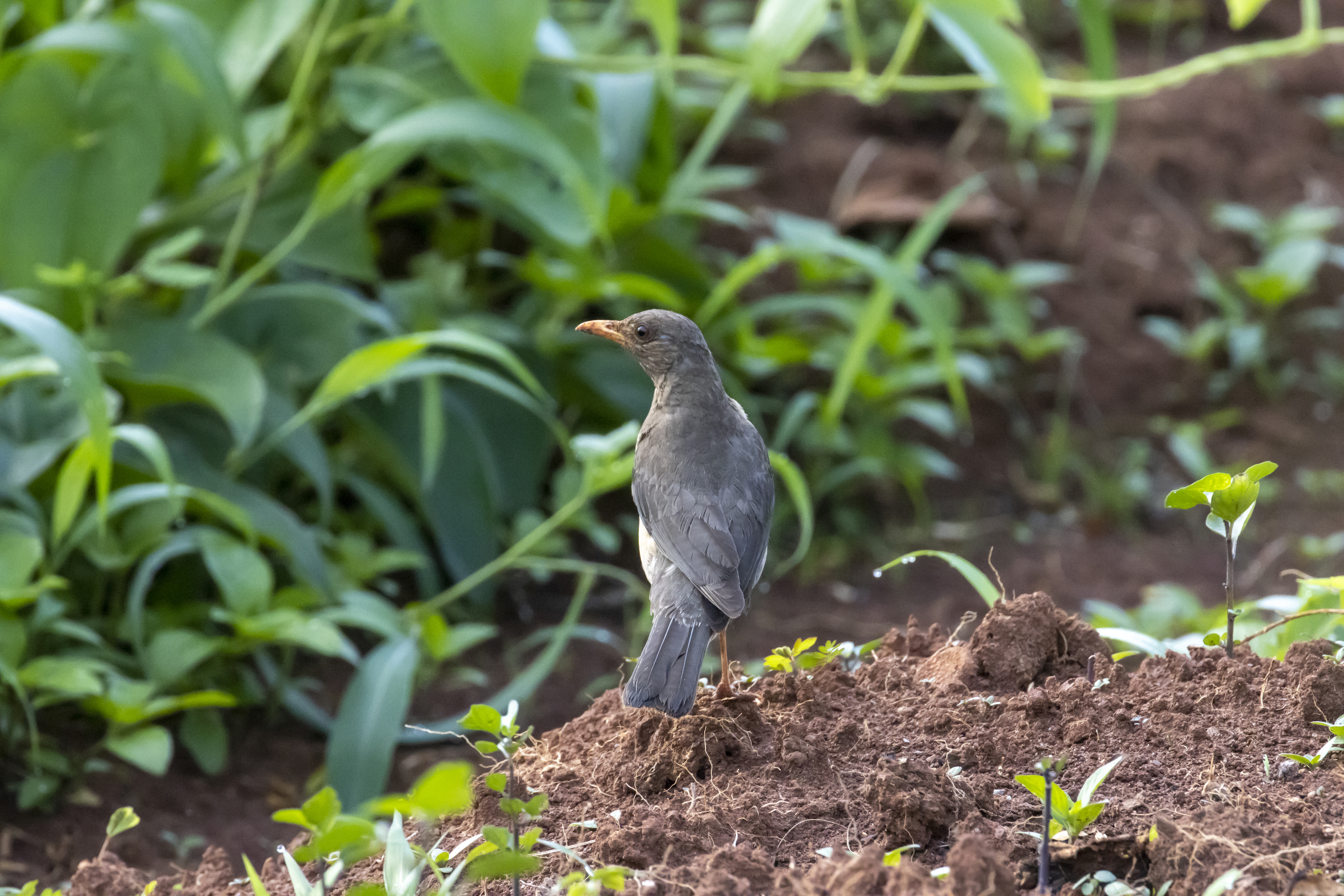
Yaoundé, Cameroon
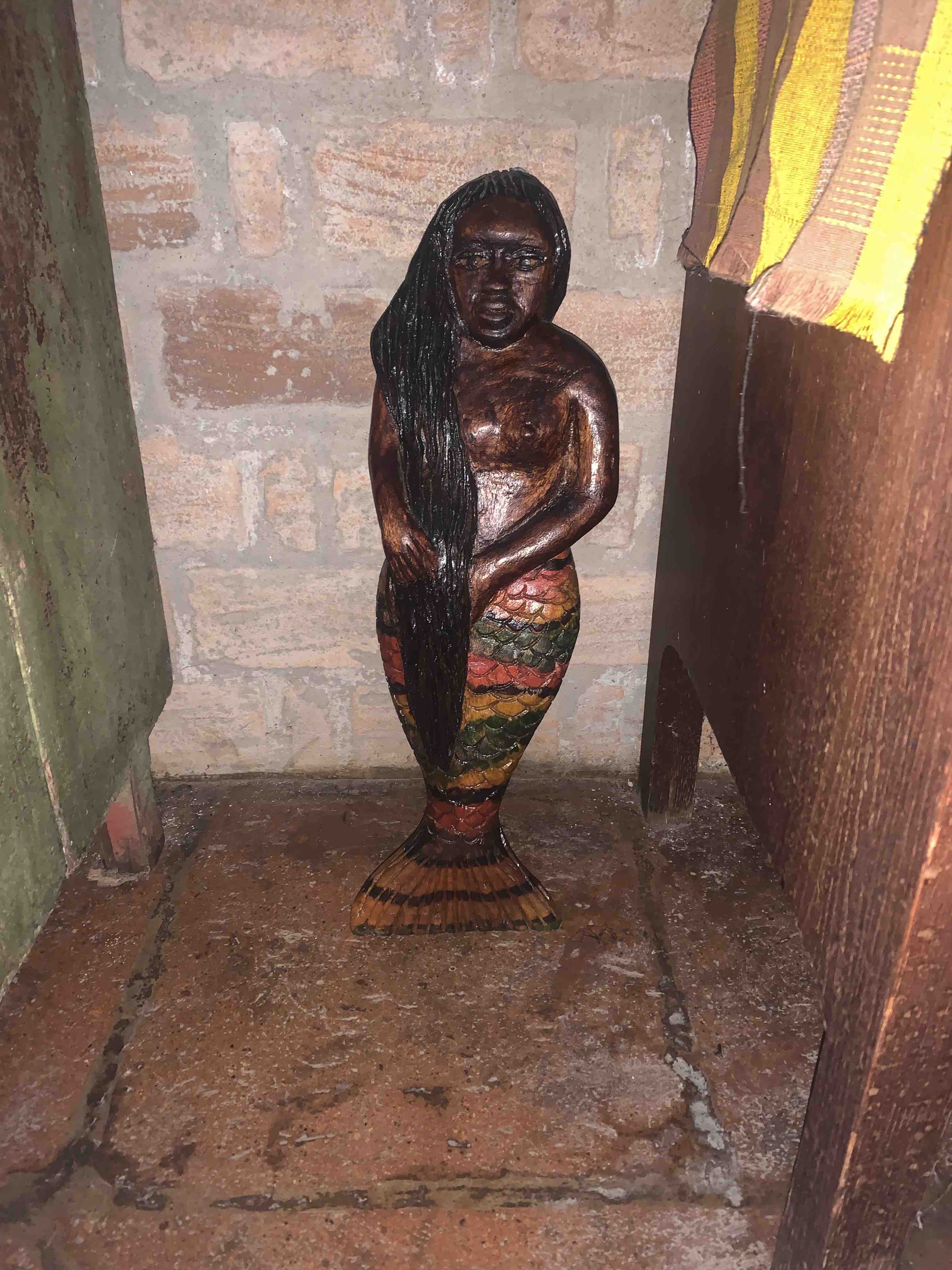
Mermaid (now in Escazu, Costa Rica), handcrafted by Rock Bottom from driftwood in Port Antonio, Jamaica
June 15, 2011 was the day we first posted on this platform, and while we have evolved since then we have remained constant and consistent in a few ways. In the daily search for something worth sharing, photos of birds from around the world have been the most constant–as in, every day since the first photo was shared by this old friend who got us started on that daily routine. Thank you, Vijaykumar, for a healthy habit-formation.
Consistent have been the shared convictions that environmental conservation, no matter how bleak the news, is worth our effort.
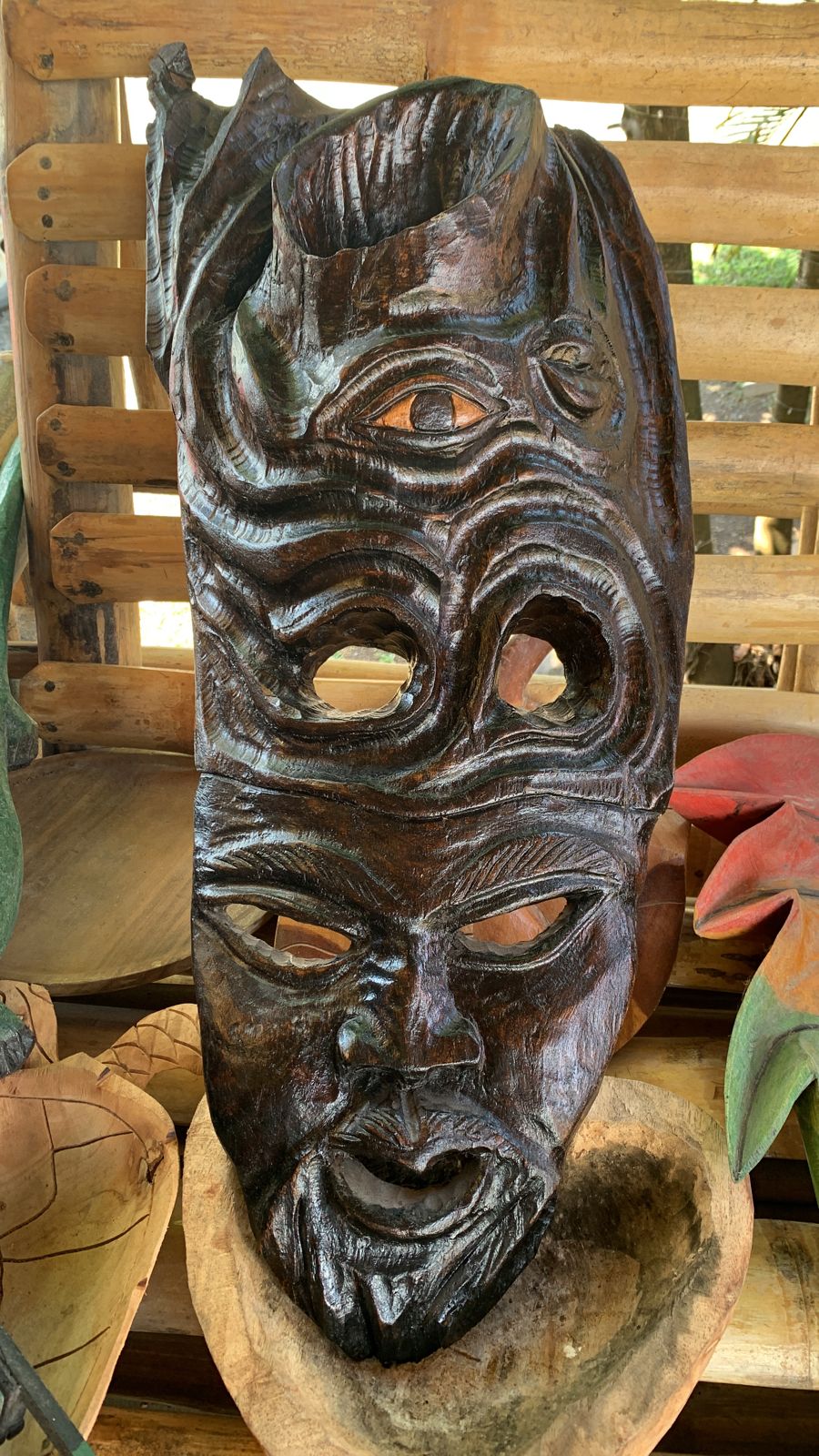
Maroon shaman mask with third eye for healing power (now in Ithaca, NY USA), handcrafted by Rock Bottom from driftwood in Port Antonio, Jamaica
Plenty more constantly interesting sub-topics like books and libraries, seemingly unrelated to the environment, have been the focus of daily posts; but they are related. As is artisan production, riffed upon many times in these pages, especially now that it is the focus of our day jobs.
So today, heading toward the twelve year mark posting here, a nod to an artisan named Rock Bottom. He carves driftwood in Port Antonio, Jamaica.
There is an effort in that part of Jamaica to revive and strengthen traditional crafts, and the work of Rock Bottom is a model for what we can hope to see more of. My hope is that the amazing engine of economic activity that Jamaica’s tourism sector represents will valorize his work and the work of others akin to his.

Hotel Quelitales, Cartago, Costa Rica
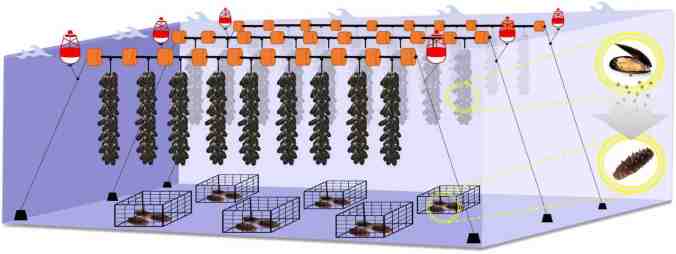
Diagram of a test project in Italy in which sea cucumbers cleaned up excrement from farmed mussels. GROSSO ET AL.
A topic that rarely, if ever, has made our pages, the sea cucumber’s moment in the spotlight has arrived:
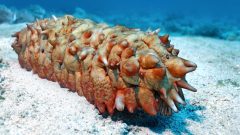
A sea cucumber near Mindoro Island in the Philippines. IMAGEBROKER / ALAMY STOCK PHOTO
Are Sea Cucumbers a Cleanup Solution to Fish Farm Pollution?
Seafood farm operators are breeding and deploying sea cucumbers to vacuum up the massive amounts of fish waste that pose a major problem for their industry. It is part of an effort to redesign fish farms with multiple species so that they work more like natural ecosystems.
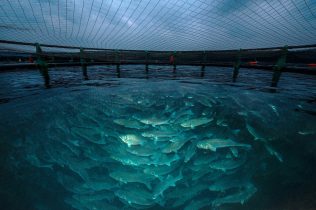
Sea bass at a fish farm in the Adriatic Sea off the coast of Slovenia. WATERFRAME / ALAMY STOCK PHOTO
Off the coast of the Hawaiian Island of Kauai, an underwater metropolis bustles. Sea turtles glide lazily through the surf while schools of fluorescent yellow butterflyfish weave between basketball-size sea urchins and sharp corals.
But Dave Anderson isn’t distracted by the otherworldly charm of the coral reef — he’s here on a mission. Around 70 feet below the surface, he finds his prize: a red sea cucumber. Continue reading
Antigua, Guatemala
PFAS are used as a coating on food packaging and are prevalent in other everyday items like personal care products and textiles.
Triple Pundit, and writer Riya Anne Polcastro, are new to us, and we appreciate their coverage of this complex topic, important both for health and environmental reasons:
Nixing PFAS is a Real Possibility: Here’s One Company That’s Doing It
Per- and polyfluorinated substances (PFAS) have been getting a lot of negative publicity. And with good reason. Classified as “forever chemicals,” they’ve been found in food, water, soil, animals and even our blood. Although the extent of their effects is not fully understood, they are known to negatively impact human health in a variety of ways. But while many are calling for an overall ban on the chemicals, pushback from the industry seeks to simply switch out the PFAS we already know are harmful with lesser-known ones that likely have the same — or possibly even worse — effects. Continue reading

Estero Llano Grande State Park, Hidalgo County, TX
 Our thanks to the LA Review of Books for this review by Dinyar Patel:
Sugar, Slavery, and Capitalism: On Ulbe Bosma’s “The World of Sugar”
WHAT MIGHT DONALD RUMSFELD have in common with Frederick Barbarossa, Mormons, and Queen Elizabeth I’s rotting teeth? The answer is simpler than you might expect: the power and influence of sugar, a crystalline specimen of world-historical significance dissolved in your morning coffee or tea. A warmongering neocon, a Holy Roman emperor, pious Utahns, and a heavily cavitied pair of Tudor gnashers are part of an expansive cast of characters in Ulbe Bosma’s new work on the sweet stuff, The World of Sugar: How the Sweet Stuff Transformed Our Politics, Health, and Environment over 2,000 Years. This book is a tour de force of global history, one that helps us better understand the genesis of both modern capitalism and globalization. Continue reading
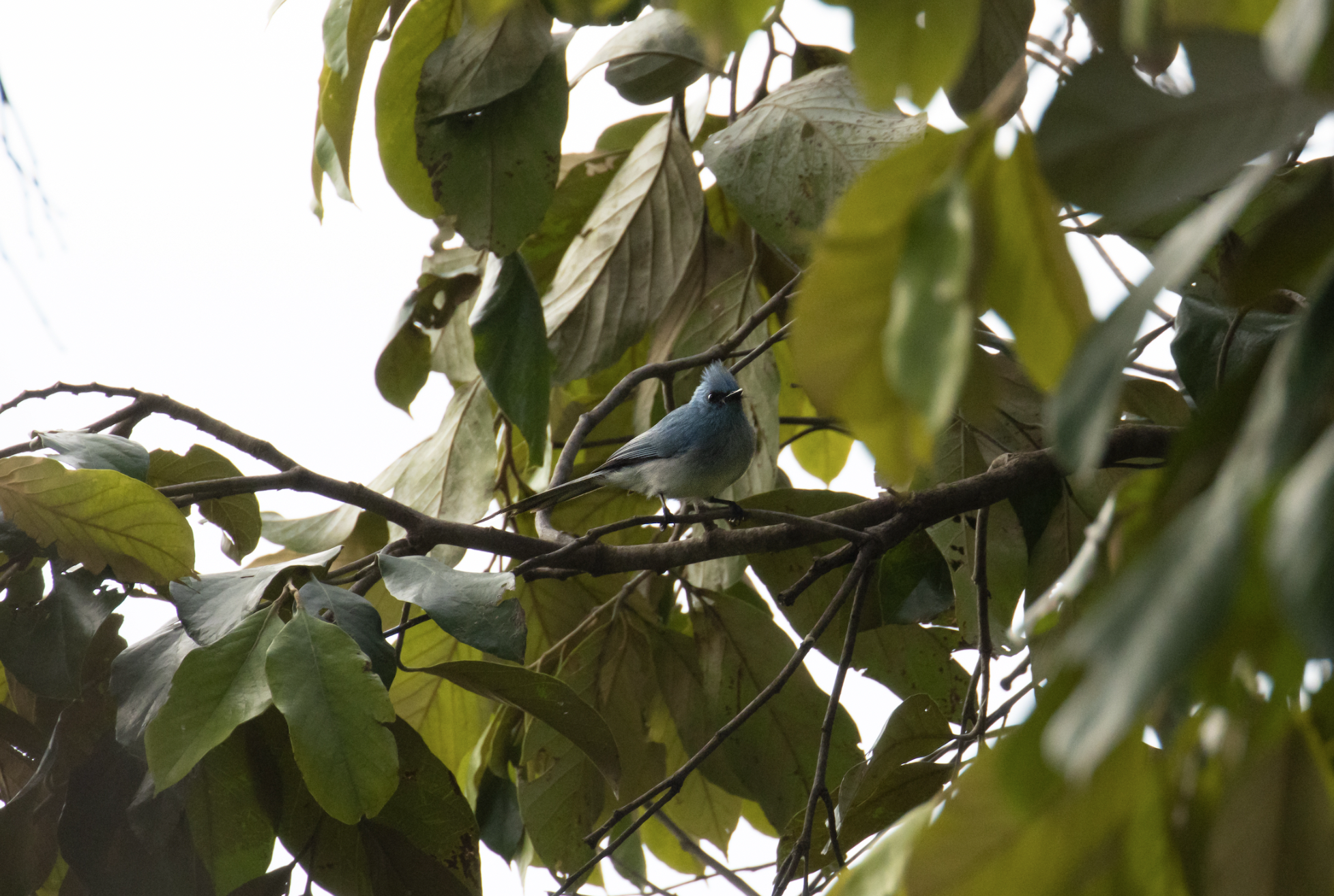
Yaoundé, Cameroon

The notion that clear-cutting can be counteracted by the planting of trees is a political product of the timber industry.Photograph © Robert Adams / Fraenkel Gallery
Jill Lepore gives us a 30-minute read on a topic we have linked to more times than any topic other than birds:
Forests fed us, housed us, and made our way of life possible. But they can’t save us if we can’t save them.
The woods I know best, love best, are made of Northern hardwoods, sugar maple and white ash, timber-tall; black and yellow birch, tiger-skinned; seedlings and saplings of blighted beech and striped maple creeping up, knock-kneed, from a forest floor of princess pine and Christmas fern, shag-rugged. White-tailed deer dart through softwood stands of pine and hemlock, bucks and does, the last leaping fawn, leaving tracks that look like tiny human lungs, trails that people can only ever see in the snow, even though, long after snowmelt, dogs can smell them, tracking, snuffling, shuddering with the thrill of the hunt and noshing on deer scat for dog treats. Continue reading

Williamson County, TX
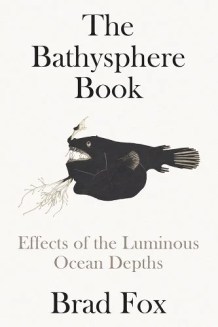 When a book like this comes along, take in what the review has to say, maybe read a second opinion, then go find a copy from any of the several independent booksellers offering it:
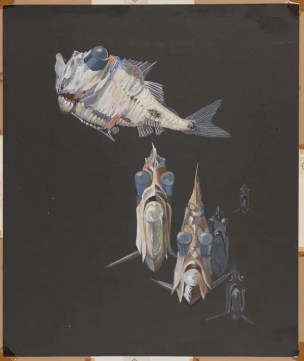
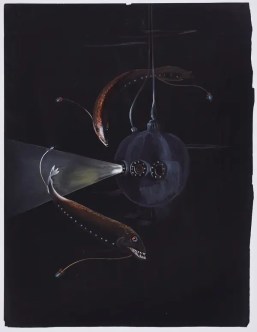
Deep-Sea Creatures of Bittersweet Orange and Metallic Opaline Green
In “The Bathysphere Book,” Brad Fox chronicles the fascinating Depression-era ocean explorations of William Beebe.
Wildlife Conservation Society Archives
Consider the siphonophore. An inhabitant of the lightless ocean, it looks like a single organism, but is actually a collection of minute creatures, each with its own purpose, working in harmony to move, to eat, to stay alive. They seem impossible but they are real. In 1930 William Beebe was 3,000 feet underwater in a bathysphere, an early deep-sea submersible, when he spotted a huge one: a writhing 20-yard mass whose pale magenta shone impossibly against the absolute blackness of the water. As you can imagine, it made an impression.
Wildlife Conservation Society Archives
“The siphonophore mind, Beebe thought, asks us to rethink our individuality, to consider our epidermis as only one way to measure the extent of our bodies,” writes Brad Fox in “The Bathysphere Book,” a hypnotic new account of Beebe’s Depression-era underwater exploration. “In that light, our furious competition, our back-stabbing and fights over resources, is nonsense. Better we work together, getting closer and closer, more finely attuned to each other’s needs until we are indistinguishable.” Continue reading

Eaglenest Bird Sanctuary, Arunachal Pradesh
 We are new to the website where this interview is on offer, and appreciate its proclamation: “We cut through the noise. Of social media. And algorithmic distraction. We find the serious stuff. The stuff you miss. Every week. With human curators.” We are also new to the explainer and critic on a set of topics we often have had links to:
ADRIENNE BULLER ON GREEN CAPITALISM AND THE PITFALLS OF CLIMATE FINANCE
Adrienne Buller is Director of Research at the think tank Common Wealth, where she leads investigative projects about building a democratic economy. She previously researched the intersection of finance and the climate crisis at InfluenceMap, and has also written for The Guardian and the Financial Times, among other publications. Continue reading
Varanger Peninsula, Norway

Illustration by Arina Kokoreva
A bit late considering the special issue was published one month ago, but here is another article in a recent series featuring unusual ideas about how to address climate change:
A Heat Shield for the Most Important Ice on Earth
Engineers might be able to protect Arctic ice by coating it with tiny glass bubbles. Should they?
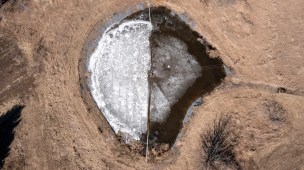
An aerial view of the glass-bubble-covered ice, at left, and the bare ice. Photograph by Doug Johnson
On a clear morning in late March, in rural Lake Elmo, Minnesota, I followed two materials scientists, Tony Manzara and Doug Johnson, as they tromped down a wintry hill behind Manzara’s house. The temperature was in the high thirties; a foot of snow covered the ground and sparkled almost unbearably in the sunlight. Both men wore dark shades. “You don’t need a parka,” Johnson told me. “But you need sunglasses—snow blindness, you know?” At the bottom of the hill, after passing some turkey tracks, we reached a round, frozen pond, about a hundred feet across. Manzara, a gregarious man with bushy eyebrows, and Johnson, a wiry cross-country skier with a quiet voice, stepped confidently onto the ice. Continue reading