
Norway’s Combustion Transition

About 80 percent of new-car sales in Norway were electric last year, putting the country at the vanguard of the shift to emissions-free vehicles. David B. Torch for The New York Times
A major fossil fuel producing country has figured out how to transition away from combustion engines:
In Norway, the Electric Vehicle Future Has Already Arrived
About 80 percent of new cars sold in Norway are battery-powered. As a result, the air is cleaner, the streets are quieter and the grid hasn’t collapsed. But problems with unreliable chargers persist.
BAMBLE, Norway — About 110 miles south of Oslo, along a highway lined with pine and birch trees, a shiny fueling station offers a glimpse of a future where electric vehicles rule. Continue reading
Bird of the Day: American Three-toed Woodpecker

Gallatin, Montana
The Future Of Solar In India
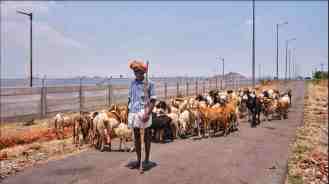
A local farmer grazes his goats along a road overlooking Pavagada Solar Park. Photographs by Supranav Dash for The New Yorker
Difficult to imagine that with all the times India has appeared in these pages, and separately all the times that solar has appeared, this is the first time they appear together:
India’s Quest to Build the World’s Largest Solar Farms
Pavagada Ultra Mega Solar Park, a clean-power plant the size of Manhattan, could be a model for the world—or a cautionary tale.
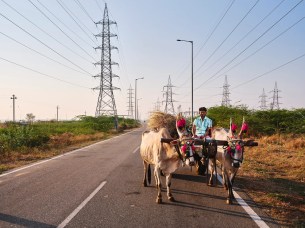
Ashok Narayanappa drives a bullock cart carrying hay, along a stretch of road lined with pylons, in Pavagada Solar Park.
Every morning in the Tumakuru District of Karnataka, a state in southern India, the sun tips over the horizon and lights up the green-and-brown hills of the Eastern Ghats. Its rays fall across the grasslands that surround them and the occasional sleepy village; the sky changes color from sherbet-orange to powdery blue. Eventually, the sunlight reaches a sea of glass and silicon known as Pavagada Ultra Mega Solar Park. Here, within millions of photovoltaic panels, lined up in rows and columns like an army at attention, electrons vibrate with energy. The panels cover thirteen thousand acres, or about twenty square miles—only slightly smaller than the area of Manhattan. Continue reading
Bird of the Day: Blue-throated Goldentail

Hotel Castillo del Arenal, Alajuela Province, Costa Rica
Think, While You Can, About The Processed Foods You Eat

Jess Ebsworth
The groceries we shop for, even with the finer shopping options, sometimes disappoint; but some foods are just plain wrong, as this article by Sally Wadyka in the New York Times explains:
The Link Between Highly Processed Foods and Brain Health
Eating packaged foods like cereal and frozen meals has been associated with anxiety, depression and cognitive decline. Scientists are still piecing together why.
Roughly 60 percent of the calories in the average American diet come from highly processed foods. Continue reading
Bird of the Day: Morelet’s Seedeater
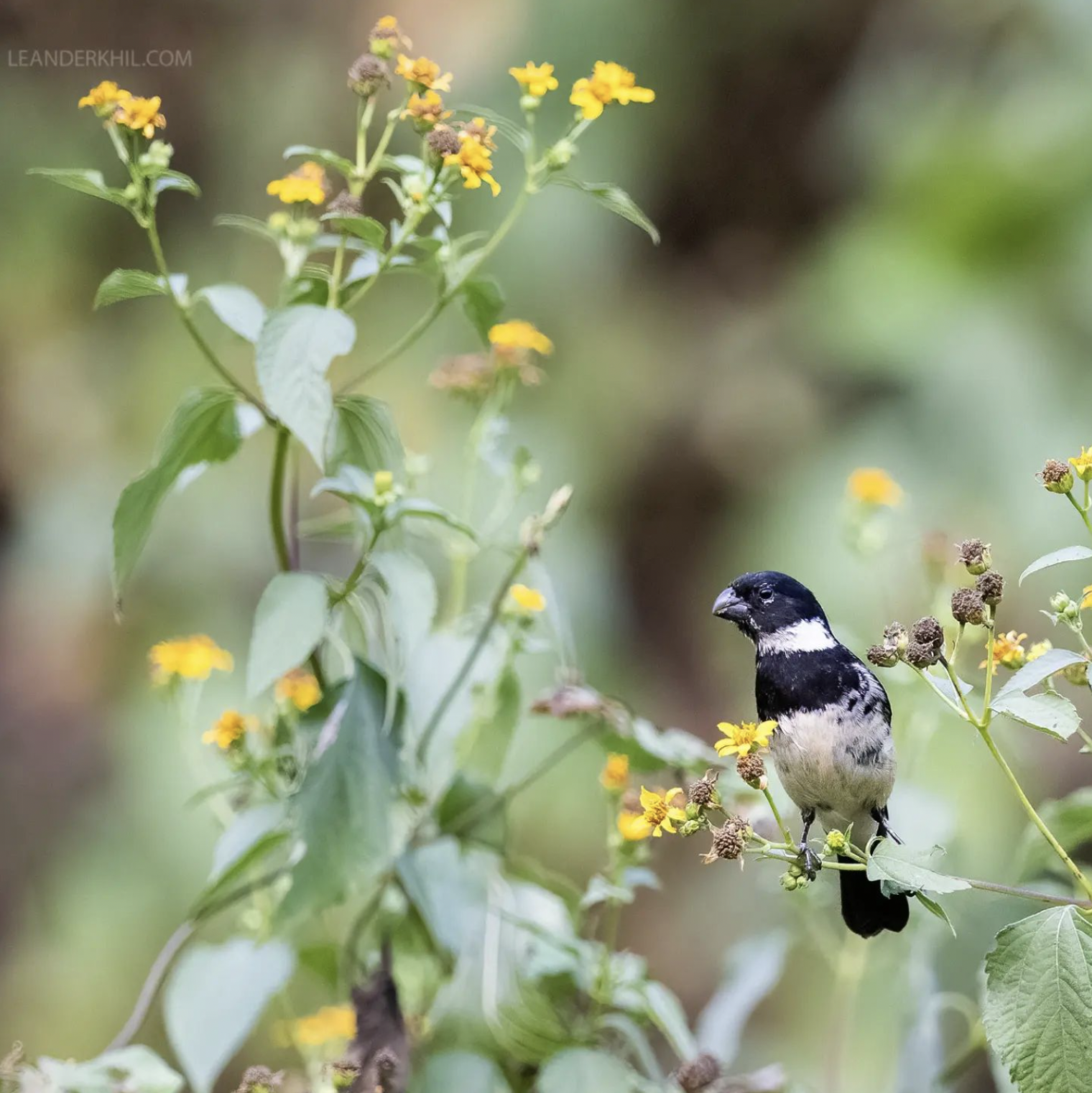
The Lost Tinamou Nature Preserve, Guatemala
Auchan 2000 & Authentica 2023
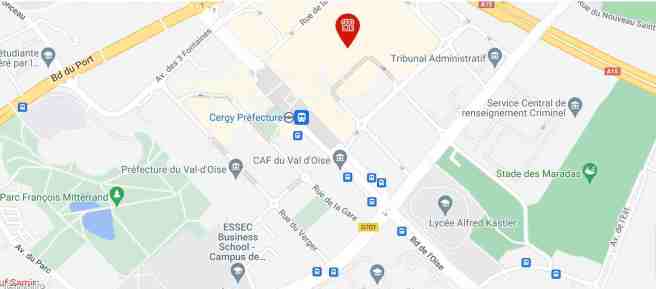
The Auchan hypermarche in Cergy is at the location of the red balloon in the image above. It is a short walk from the ESSEC campus (lower center of map). Click to go to the map on Auchan’s website
On each of the occasions I have read articles about Annie Ernaux I have been reminded of the first of my five years teaching at ESSEC. During the 2000-2003 academic years I lived on campus for extended periods away from home and family in Costa Rica. My grocery shopping was at the same Auchan elegantly dissected by the woman who last year won the Nobel Prize in Literature. During my fourth year teaching there I was completing work on a project in Montenegro that made it more convenient for our family to be based in Paris for 12 months. This turned out to be one of the most culturally enriching experiences our family ever had together. And relevant to life now.
Adrienne Raphel’s article in The Paris Review begins with her own “big retail” experience, and at first read it connects dots between our Paris time and our retail life now. For the last 4+ years we have been waking up each day looking for novel ways to succeed without following the “pile it high and watch it fly” model. So, if that resonates with you for any reason, read on:
INTERIOR OF THE WAL-MART SUPERCENTER IN ALBANY. PHOTOGRAPH BY MATT WADE, COURTESY OF WIKIMEDIA COMMONS. LICENSED UNDER CCO 3.0.
“The Dead Silence of Goods”: Annie Ernaux and the Superstore
The first and only time I went to the Walmart in Iowa City was surreal. When I was in high school, my parents’ business-oriented small press had published a book called The Case Against Walmart that called for a national consumer boycott of the company; the author denounced everything from the superstore’s destruction of environmentally protected lands to its sweatshop labor to its knockoff merchandise. So by the time I made a pilgrimage out to the superstore at age twenty-one, I hadn’t stepped in a Walmart for nearly a decade, and it had acquired this transgressive power—the very act of crossing the threshold was as shameful as it was thrilling…

Bird of the Day: Northern Double-collared Sunbird

Rift Valley, Kenya
Alcohol 2.0

click this image to go to the video and accompanying text
Alcohol rarely features in our pages, but in the spirit of public service announcement this pair seems worth sharing:
The Opinion Video above is about a drug problem — but not the one you may think. While the United States struggles to deal with the opioid crisis, there’s a quieter drug epidemic that has been unfolding for a lot longer. It involves a substance that was normalized long ago but that, by some measures, plays a role in more than 140,000 deaths a year.
It’s alcohol.
But don’t worry. We here at Opinion Video are not a bunch of temperance reformers coming to take away your six-packs and single malts. We just think there’s a lot more that American lawmakers could be doing to lessen the harm that alcohol causes…
The Economist podcast episode below, from a couple months back, is a useful bookend to the op-ed above. It illuminates the mysteries of the hangover and the chemistry of new alcohol-free, healthy and buzz-inducing alternatives:
How alternatives to alcohol could save lives
Our podcast on science and technology. This week, we explore how innovators are dreaming up ways to enjoy the effects of alcohol, without the costs
ALCOHOL IS the most widely used drug in the world, but it is also the cause of three million deaths each year and has been linked to many other long-term illnesses. Continue reading
Bird of the Day: Bald Eagle
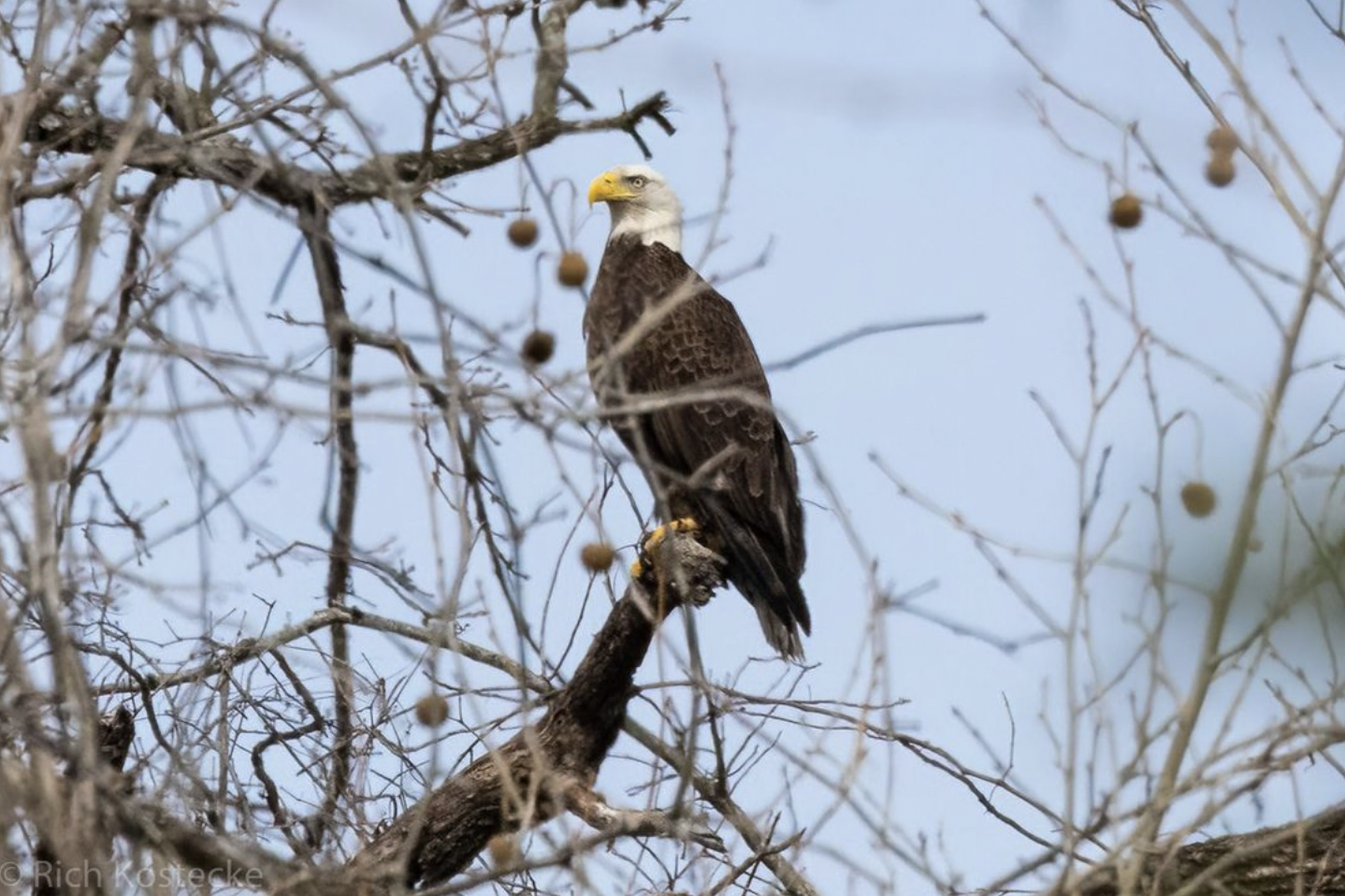
Northern Williamson County, TX
Bringing Back Peat
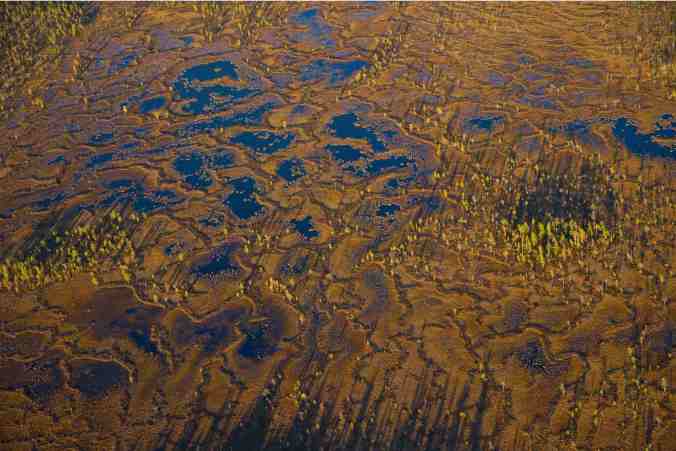
Peatland and taiga forest in northern Finland. NATURE PICTURE LIBRARY / ALAMY STOCK PHOTO
It has been a year since we linked to a peat-in-place story, of which there cannot be too many (so thank you, Yale e360):
Tero Mustonen. GOLDMAN ENVIRONMENTAL PRIZE
Finland Drained Its Peatlands. He’s Helping Bring Them Back
Tero Mustonen has led a successful effort to restore roughly 80 areas of ecologically critical peatlands across his native Finland. In an interview, he talks about the importance of bringing Indigenous knowledge to rewilding initiatives in far northern regions and beyond.
Until a century ago, almost a third of Finland was covered in pristine peatlands, which comprise one of the Earth’s largest and most important carbon sinks. Since then, however, half of Finnish peatlands have been strip-mined for fuel or drained to make room for forest plantations. Continue reading
Bird of the Day: Resplendent Quetzal
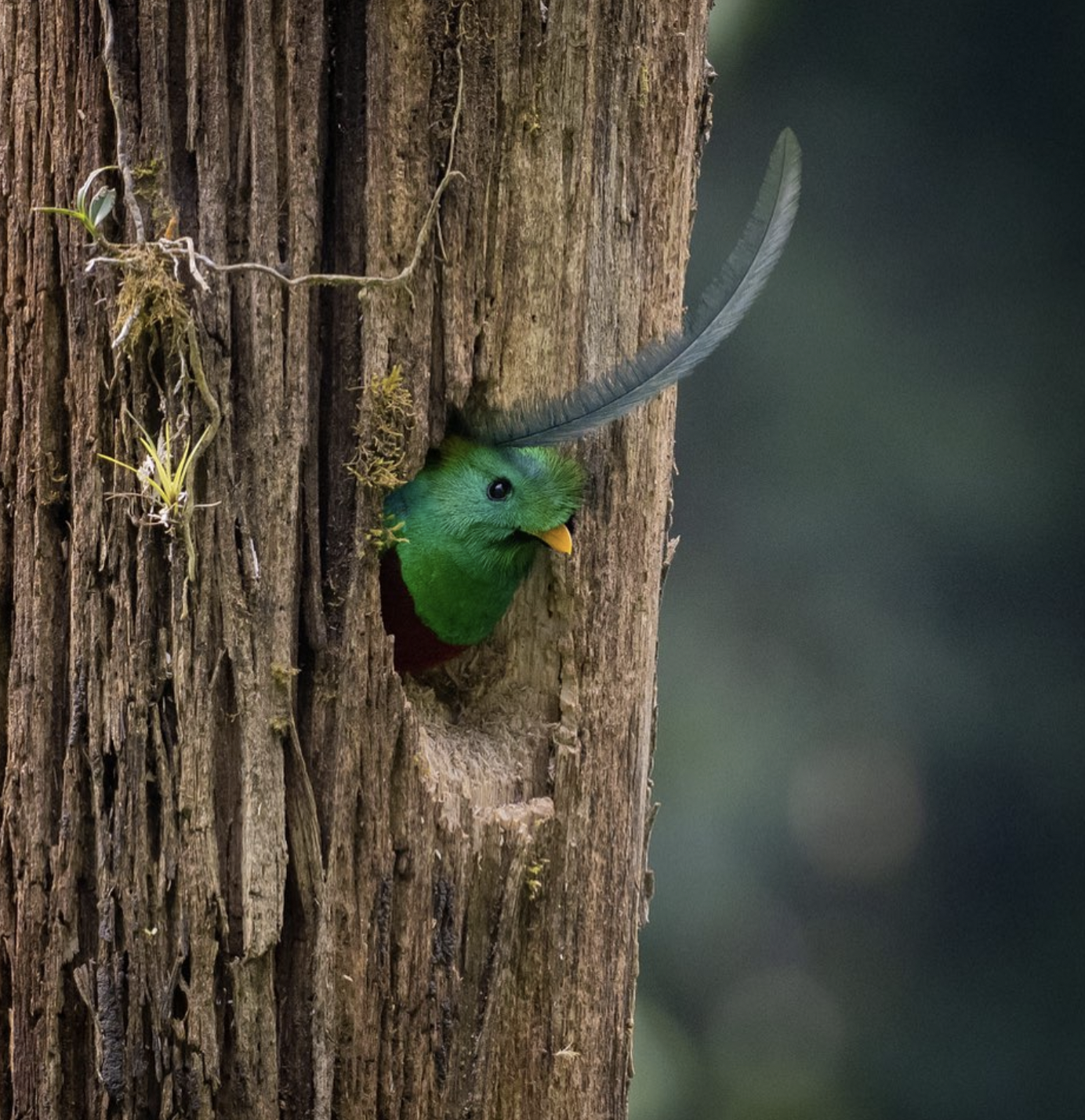
Male in nest
Volcano Atitlan, Guatemala
Viewed From Above, Our Most Important Leaks

Illustration by Ard Su
David W. Brown offers this updated look at the use of satellite technology for a key metric:
A Security Camera for the Planet
A new satellite, funded by a nonprofit, aims to pinpoint emissions of methane—a gas that plays a major role in global warming.
When his phone rang, Berrien Moore III, the dean of the College of Atmospheric and Geographic Sciences at the University of Oklahoma, was fumbling with his bow tie, preparing for a formal ceremony honoring a colleague. He glanced down at the number and recognized it as nasa headquarters. This was a bad sign, he thought. In Moore’s experience, bureaucrats never called after hours with good news.
It can see large methane concentrations along its orbital path, but can’t pinpoint emissions sources. Illustration by Ard Su
For roughly six years, Moore and his colleagues had been working on a space-based scientific instrument called the Geostationary Carbon Cycle Observatory, or GeoCarb. nasa had approved their proposal in 2016; it was now 2022, and GeoCarb was being built by Lockheed Martin, in Palo Alto, California. Once it was in space and mounted to a communications satellite, GeoCarb would scan land in the Western Hemisphere continuously in strips, taking meticulous measurements of three carbon-based gases: carbon dioxide, carbon monoxide, and methane. It would give scientists a detailed view of the carbon cycle—the process by which carbon circulates through the Earth’s forests, lakes, trees, oceans, ice, and other natural features. Continue reading

Bird of the Day: Spot-breasted Oriole

The Lost Tinamou Nature Preserve, Guatemala
Andy Hunter Scales Up Without Selling Out
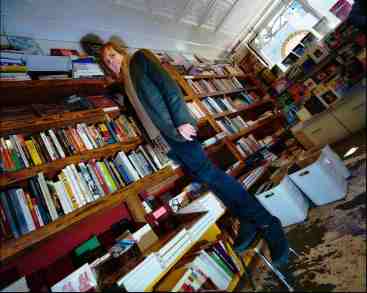
Andy Hunter, the founder of Bookshop.org (pictured here at Spoonbill & Sugartown Books in Brooklyn) developed his love for books early. “I became a reader, in the beginning, because it provided me solace,” he says. PHOTOGRAPH: YAEL MALKA
Who could resist a story about scaling up without selling out–especially when it involves an online book shop?
Our thanks to Kate Knibbs, a senior writer at WIRED, for this profile of someone who has indirectly featured in our pages without being named before.
Not to mention the photographs by Yael Malka accompanying the story:
How Bookshop.org Survives—and Thrives—in Amazon’s World
Andy Hunter’s ecommerce platform was a pandemic hit. Now he’s on a mission to prove that small businesses can scale up without selling out.
“DO YOU REMEMBER what kind of beer it was?”
PHOTOGRAPH: YAEL MALKA
Andy Hunter pauses for so long before answering my question, it’s awkward. He’s racking his brain. I’ve asked him to tell me about the night he came up with the idea that led to his improbably successful bookselling startup, Bookshop.org. As a former magazine editor, he wants to get the details right.
He remembers the easy stuff: It was 2018. He was on the road for work. At the time, Hunter ran the midsize literary publishing house Catapult, a job that required schmoozing at industry events. The night of his big brainstorm, he was away from his two young daughters and his usual evening obligations—dishes, bedtime rituals—and had a rare moment to think, and drink a beer. Continue reading

Bird of the Day: Sooty-faced Finch
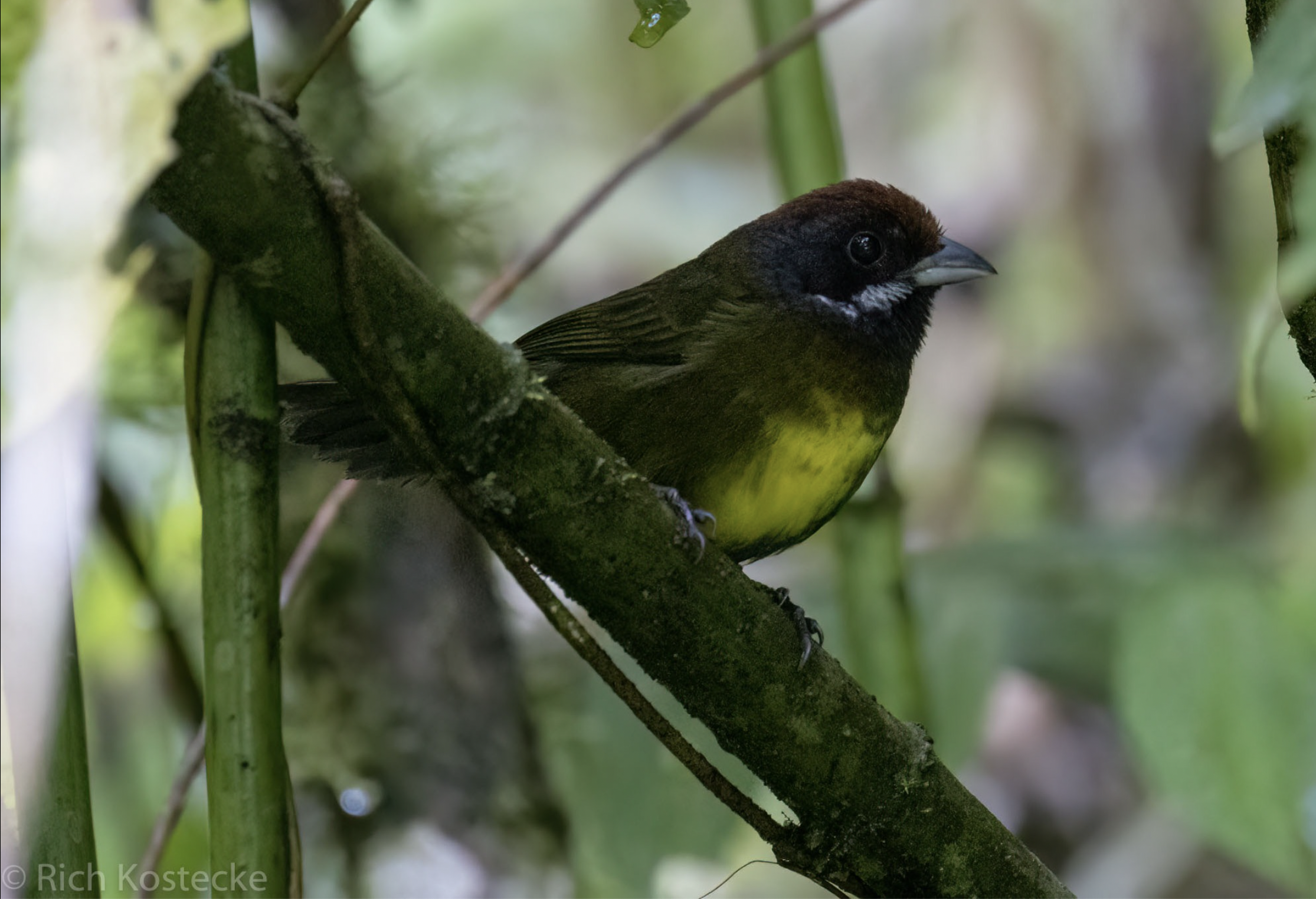
Cartago, Costa Rica
Libreria Bookshop & Review Of Once Upon A Prime

Click above to visit an independent bookshop whose platform for selling books online is a welcome distraction. Below, the owner of that shop (a character worth contemplating) writes a great book review. Oddly enough, we could not find, or figure out how to find, this book on his bookshop’s website.
 But nevermind that, we have linked to the publisher’s blurb on the book to the left:
Once Upon a Prime review – why maths and literature make a winning formula
Prof Sarah Hart’s exuberant study of the enduring conversation between mathematics and literature is fascinating
The universe (which others call the Library) is composed of an indefinite, perhaps infinite number of hexagonal galleries.” That’s how Jorge Luis Borges starts The Library of Babel, beloved by maths geeks and book nerds alike for the way it toys with the mathematical concept of infinity. Continue reading
Bird of the Day: Vulturine Guineafowl
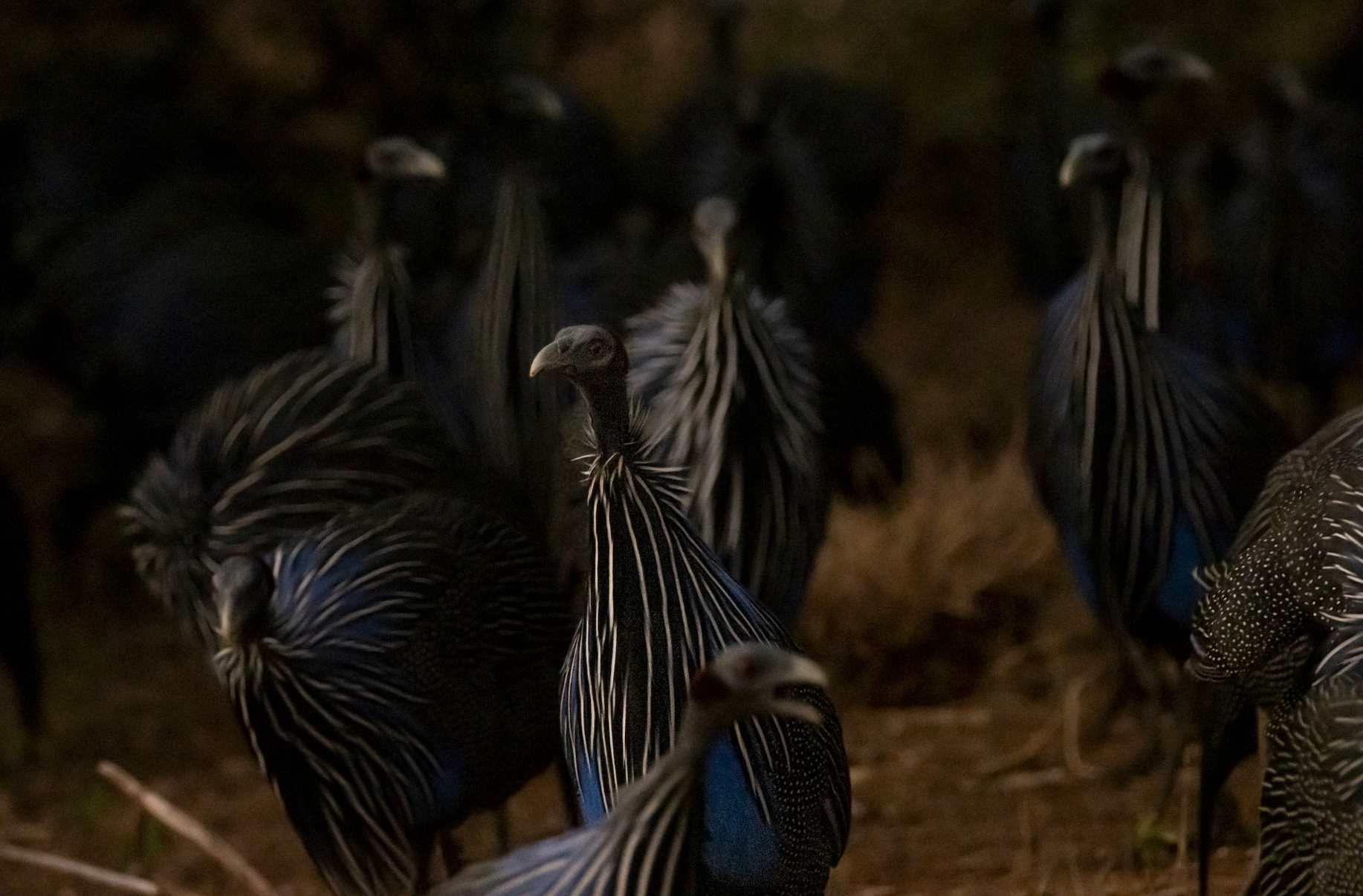
Samburu Nature Reserve, Rift Valley, Kenya
#CargoUnderSail #RethinkShipping

Illustration by Owen D. Pomery
The Climate Crisis Gives Sailing Ships a Second Wind
Cargo vessels are some of the dirtiest vehicles in existence. Can a centuries-old technology help to clean them up?
In February, 1912, Londoners packed a dock on the River Thames to gawk at the Selandia, a ship that could race through the water without any sails or smokestacks. Winston Churchill, then the minister in charge of the British Royal Navy, declared it “the most perfect maritime masterpiece of the twentieth century.” But, as the Selandia continued its journey around the world, some onlookers were so spooked that they called it the Devil Ship…
 The history is a fun read, so continue to the whole story here. But then, take a closer look at the company featured in the article:

Our Story
Over the course of 20 years working in the maritime industry Cornelius Bockermann witnessed first hand how humans adversely affect our environment. He knew something had to change. In 2013, he moved with his family to Cairns and shipped all their possessions from Germany to their new home in Australia. Through the process of shipping his own goods he experienced the disconnect between commerce and environmental preservation. Upon learning of plans to expand fossil fuel based shipping along the Queensland coast and amongst the Great Barrier Reef he knew he had to act. The question became how do you offer businesses and consumers a sustainable option in shipping?
Cargo Under Sail is the answer and the Dutch schooner named the AVONTUUR is the vessel to start it.
We are a passionate collective of individuals working to create a supply chain that merges the relationship between commerce and preservation. We are restless and can no longer wait for others to make a change.
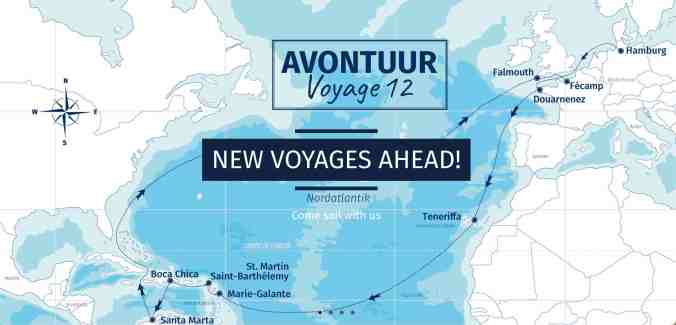
Our Mission Zero
To eliminate pollution caused by shipping cargo.
We have a five-stage approach:
1. Raise Awareness about the environmental destruction caused by the shipping industry
2. Model a clean shipping future with our AVONTUUR
3. Sell premium AVONTUUR products to support the ongoing operation of the project.
4. Establish a demand for products shipped by sail
5. Build a modern sail cargo fleet

