
Illustration by Ard Su
David W. Brown offers this updated look at the use of satellite technology for a key metric:
A Security Camera for the Planet
A new satellite, funded by a nonprofit, aims to pinpoint emissions of methane—a gas that plays a major role in global warming.
When his phone rang, Berrien Moore III, the dean of the College of Atmospheric and Geographic Sciences at the University of Oklahoma, was fumbling with his bow tie, preparing for a formal ceremony honoring a colleague. He glanced down at the number and recognized it as nasa headquarters. This was a bad sign, he thought. In Moore’s experience, bureaucrats never called after hours with good news.
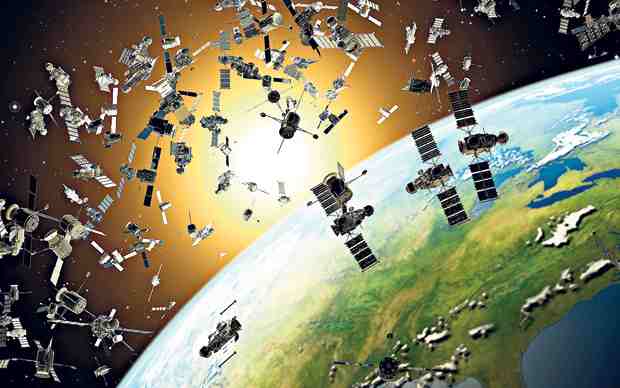
It can see large methane concentrations along its orbital path, but can’t pinpoint emissions sources. Illustration by Ard Su
For roughly six years, Moore and his colleagues had been working on a space-based scientific instrument called the Geostationary Carbon Cycle Observatory, or GeoCarb. nasa had approved their proposal in 2016; it was now 2022, and GeoCarb was being built by Lockheed Martin, in Palo Alto, California. Once it was in space and mounted to a communications satellite, GeoCarb would scan land in the Western Hemisphere continuously in strips, taking meticulous measurements of three carbon-based gases: carbon dioxide, carbon monoxide, and methane. It would give scientists a detailed view of the carbon cycle—the process by which carbon circulates through the Earth’s forests, lakes, trees, oceans, ice, and other natural features. Continue reading



 It may be true that scientists have not been the most compelling communicators, but that is no excuse for our inaction. As someone who left a







 Organikos