Capturing Carbon In Trillions Of Tons Of Soil

Thanks to Yale Climate Connections for sharing Max Graham’s article at Grist:

How much carbon can farmers store in their soil? Nobody’s sure.

Advocates say the long-awaited farm bill could help fix that.

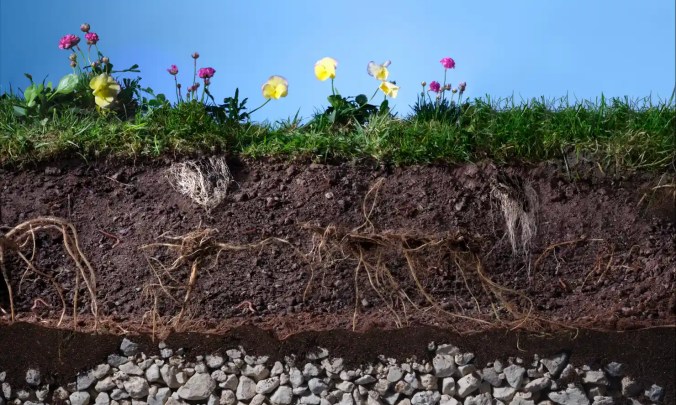
Dirt, it turns out, isn’t just worm poop. It’s also a humongous receptacle of carbon, some 2.5 trillion tons of it — three times more than all the carbon in the atmosphere. Continue reading
Among The Reasons To Regenerate Soil

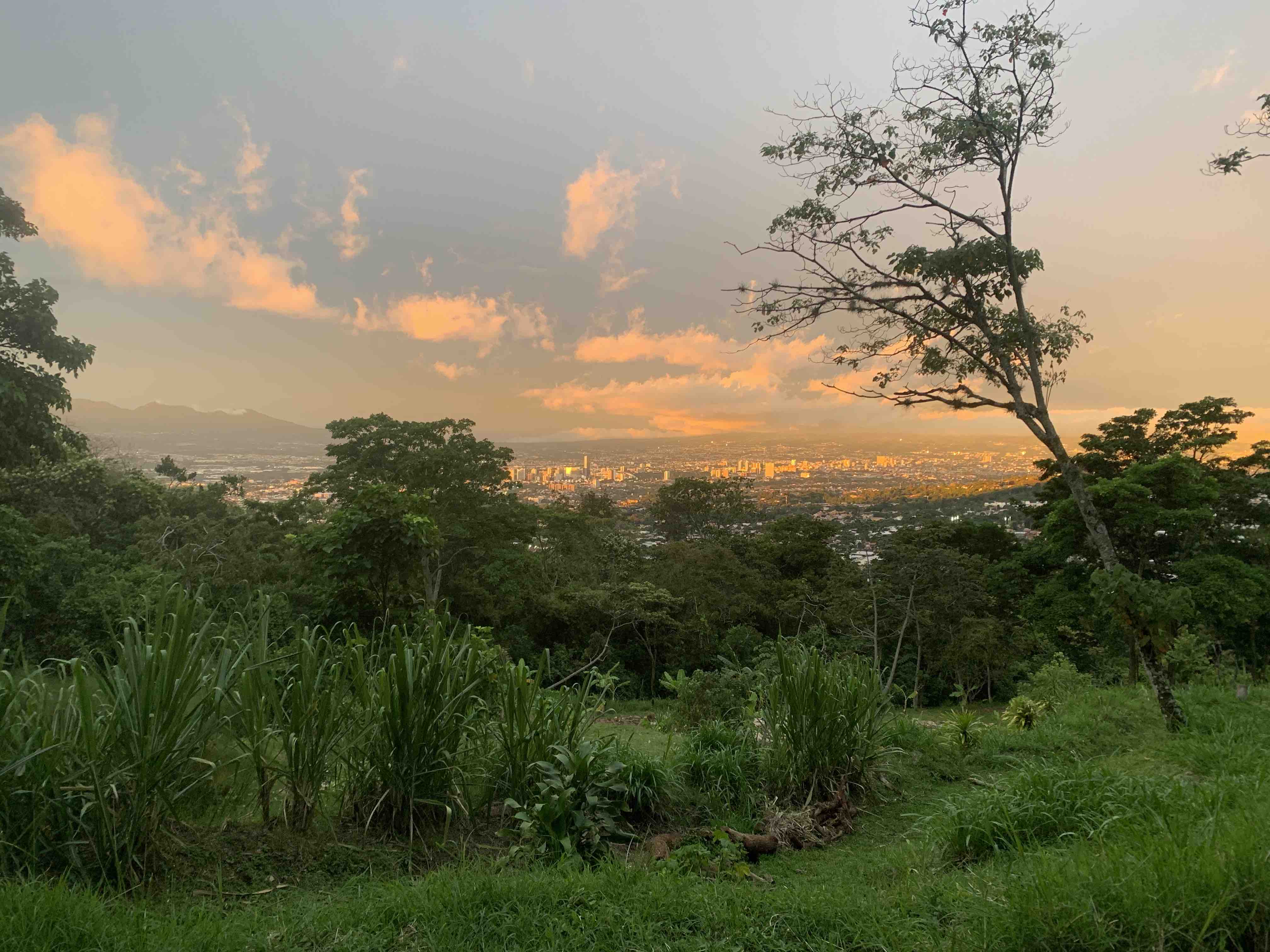
Organikos soil regeneration view from above, early Tuesday morning

When we started the berm where the sugarcane grows now, we knew we had a multi-year project ahead of us. This morning, before the sun had risen enough to shine on the land, I snapped the photo above, looking down on the acreage where we have planted more than 100 trees to provide shade for coffee we will plant in the near future. Besides all that, plenty of good ideas for how and why to regenerate the quality of the soil on that land; here’s some more:

A springtail crawls over snail eggs. ANDY MURRAY

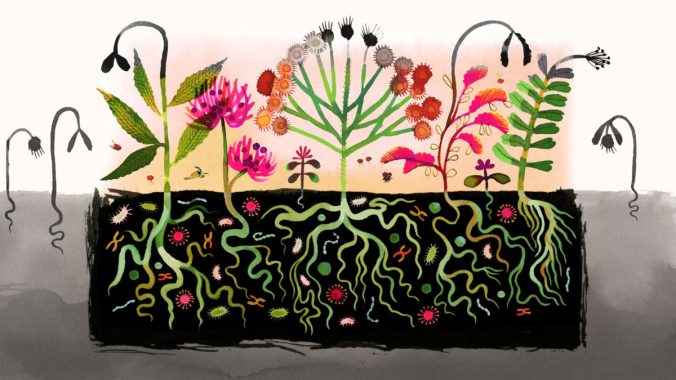
Nearly Two-Thirds of All Species Live in the Ground, Scientists Estimate

Soils are more rich in life than coral reefs or rainforest canopies, providing a home to nearly two-thirds of all species, according to a sprawling new analysis. Continue reading

Microfauna, Microbiota & Other Wonders Of Soil

When a plant root pushes into soil, it triggers an explosion of activity in billions of bacteria. Photograph: Liz McBurney/The Guardian

I used the word microflora in the title of a post I wrote 3+ years ago, and today I learned something that serves as a correction. I used that word to distinguish from the better known charisma of megafauna. But there is a better word I should have used in that title, so I am using it in the title of today’s post. The word microbiota has made a few fleeting appearances in our pages, buried in the text of scientific explanations. This editorial by George Monbiot got me to look up the word microflora and from now on I will avoid the misnomer:

The secret world beneath our feet is mind-blowing – and the key to our planet’s future

Don’t dismiss soil: its unknowable wonders could ensure the survival of our species

Beneath our feet is an ecosystem so astonishing that it tests the limits of our imagination. It’s as diverse as a rainforest or a coral reef. We depend on it for 99% of our food, yet we scarcely know it. Soil. Continue reading

Corn Belt Soil

ENZO PÉRÈS-LABOURDETTE / YALE E360

Thanks to Verlyn Klinkenborg for this essay:

How the Loss of Soil Is Sacrificing America’s Natural Heritage

A new study points to a stunning loss of topsoil in the Corn Belt — the result of farming practices that have depleted this once-fertile ground. Beyond diminished agricultural productivity and more carbon in the atmosphere, it is a catastrophic loss of an irreplaceable resource.

A corn field being planted in Hull, Sioux County, Iowa. MELINA MARA/ THE WASHINGTON POST VIA GETTY IMAGES

Geologically speaking, I grew up in a small farm town on the Des Moines lobe, a huge tongue-shaped remnant of glacial activity that reaches south across central Iowa. All around us were mollisols with a deep A-horizon — a type of rich black topsoil visible in farm fields for miles in every direction. In school we were taught only one thing about that soil: to be proud of it. It was a given, a blessing, a moral fact. In a sense, it seemed to have no history. Continue reading

The Miracle Of Soil, Explained

As we work to improve the soil in advance of planting thousands of coffee seedlings in a few months, we appreciate a video like this one as a tool for explaining what we are doing, and why. Thanks to Phoebe Weston for bringing this to my attention.

Notes from the Garden: Monsoon Season

photo (8)

Burying the garden waste to prepare the land for planting

As it is monsoon season here in Kerala, we gardeners have to take into consideration the way it affects the soil. Today we did land preparation for the heavy rains. We dug holes in the new beds and took garden waste from old banana plants and buried it. The top of the soil had been mulched with manure and weeds were growing on them. We mixed the manure and weeds into the soil. I like the idea of just mixing the weeds in because then the nutrients that the weeds took from the soil can break down back into the soil again. When the heavy rains come, they would have washed the nutrients from the mulch away so this is to help with nutrient erosion. Continue reading