
Sathyabhama Das Biju (from left), James Hanken, Harvard’s Alexander Agassiz Professor of Zoology, and Sonali Garg during a June 2023 field trip to study amphibians in the Western Ghats, a biodiversity hotspot in India. Photo by A.J. Joji
During our seven years living and working in the Western Ghats we came to appreciate frogs through the eyes of our family, those of our staff, as well as travelers and occasional scientific references (the man on the left in the photo to the left having shown up in our pages one of those times). Good to know that the science is being shared for good cause, thanks to Anne J. Manning in this article for the Harvard Gazette:
The Indian Purple Frog, first described by Sathyabhama Das Biju in 2003.
Indian herpetologists bring their life’s work to Harvard just as study shows a world increasingly hostile to the fate of amphibians
Having pulled themselves from the water 360 million years ago, amphibians are our ancient forebears, the first vertebrates to inhabit land.
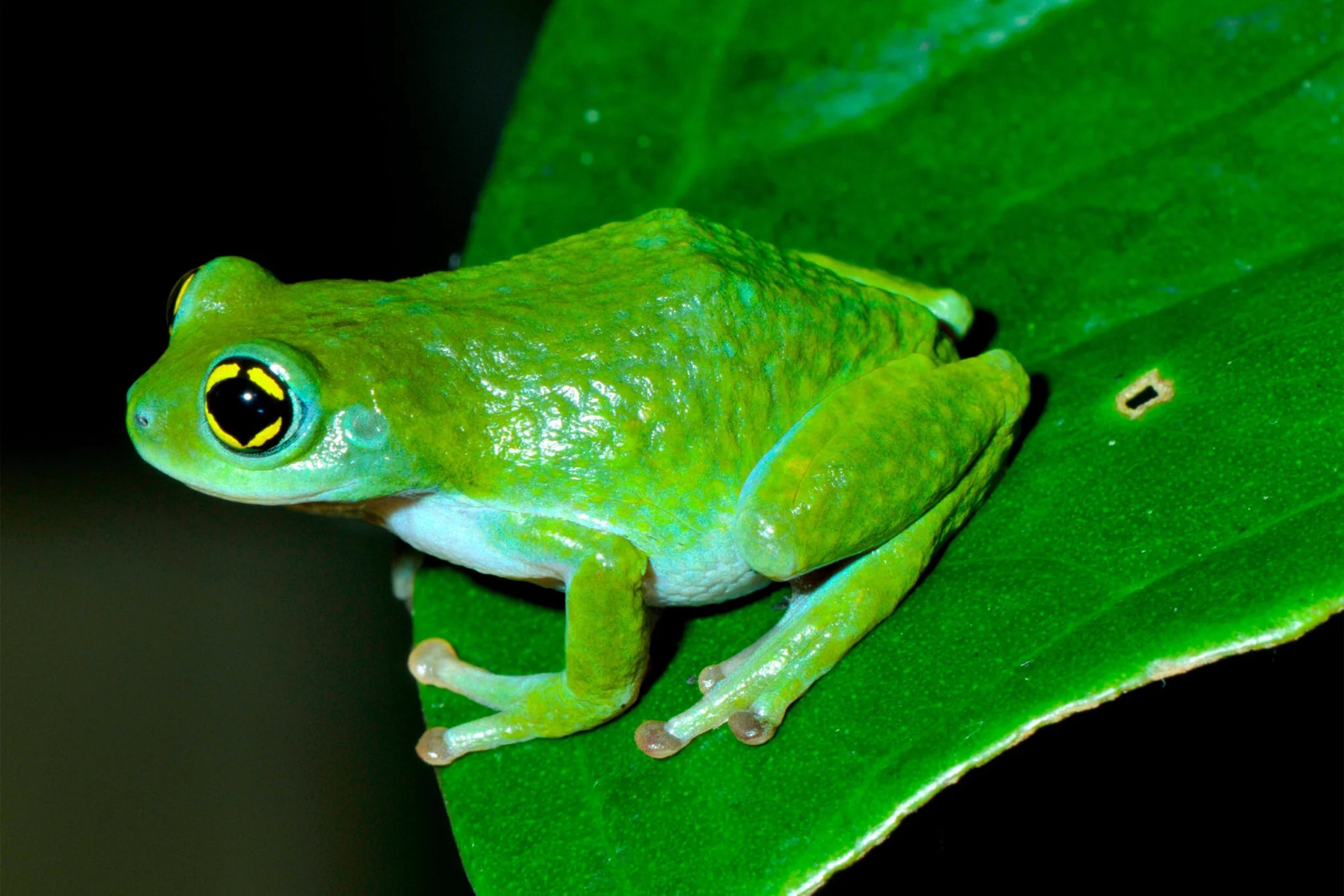
After 136 years from its original description, Günther’s shrub frog was recently rediscovered in the wild. Credit: S.D. Biju and Sonali Garg
Now, this diverse group of animals faces existential threats from climate change, habitat destruction, and disease. Two Harvard-affiliated scientists from India are drawing on decades of study — and an enduring love for the natural world — to sound a call to action to protect amphibians, and in particular, frogs.
Sathyabhama Das Biju, the Hrdy Fellow at Harvard Radcliffe Institute and a professor at the University of Delhi, and his former student Sonali Garg, now a biodiversity postdoctoral fellow at Harvard’s Museum of Comparative Zoology, are co-authors of a sobering new study in Nature, featured on the journal’s print cover, that assesses the global status of amphibians. It is a follow-up to a 2004 study about amphibian declines.
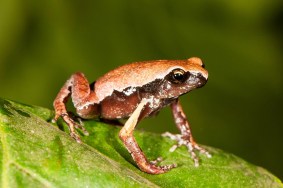
Franky’s narrow-mouthed frog is among the threatened species. Credit: S.D. Biju and Sonali Garg
Biju and Garg are experts in frog biology who specialize in the discovery and description of new species. Through laborious fieldwork, they have documented more than 100 new frog species across India, Sri Lanka, and other parts of the subcontinent.
According to the Nature study, which evaluated more than 8,000 amphibian species worldwide, two out of every five amphibians are now threatened with extinction. Climate change is one of the main drivers. Habitat destruction and degradation from agriculture, infrastructure, and other industries are the most common threats to these animals.
Biju and Garg are among more than 100 scientists who contributed their data and expertise to the report, which shows that nearly 41 percent of amphibian species are threatened with extinction, compared with 26.5 percent of mammals, 21.4 percent of reptiles, and 12.9 percent of birds.
Frogs, says Biju, are excellent model organisms to study evolution and biogeography because of the extreme diversity of traits they acquired over millennia. They are also very sensitive to abrupt changes in their environment, including droughts, floods, and storms, which makes them a barometer for assessing the health of an ecosystem.
“But very frankly, what drives me the most is their beauty and diversity in shapes, form, colors, as well as behaviors,” said Biju, who has dedicated 30 years to frog taxonomy across biodiversity hotspots in or near India, rising to fame through his formal description in 2003 of the Indian Purple Frog. He is known as the Frogman of India.
India is home to one of the most diverse frog populations in the world, with more than 460 documented species. Of those about 41 percent are considered threatened, according to Biju. Habitat destruction and degradation from cultivation of tea, coffee, spices, and other products pose the most danger to the animals.
As a Radcliffe Fellow, Biju is focused on “outpacing nameless extinctions” — saving frogs before they go extinct without being classified or even recognized. He is looking to understand key areas within biodiversity hotspots for effective conservation planning. He is also writing a book — filled with fieldwork photos — on amphibians of India.

Read the whole article here.
 Organikos