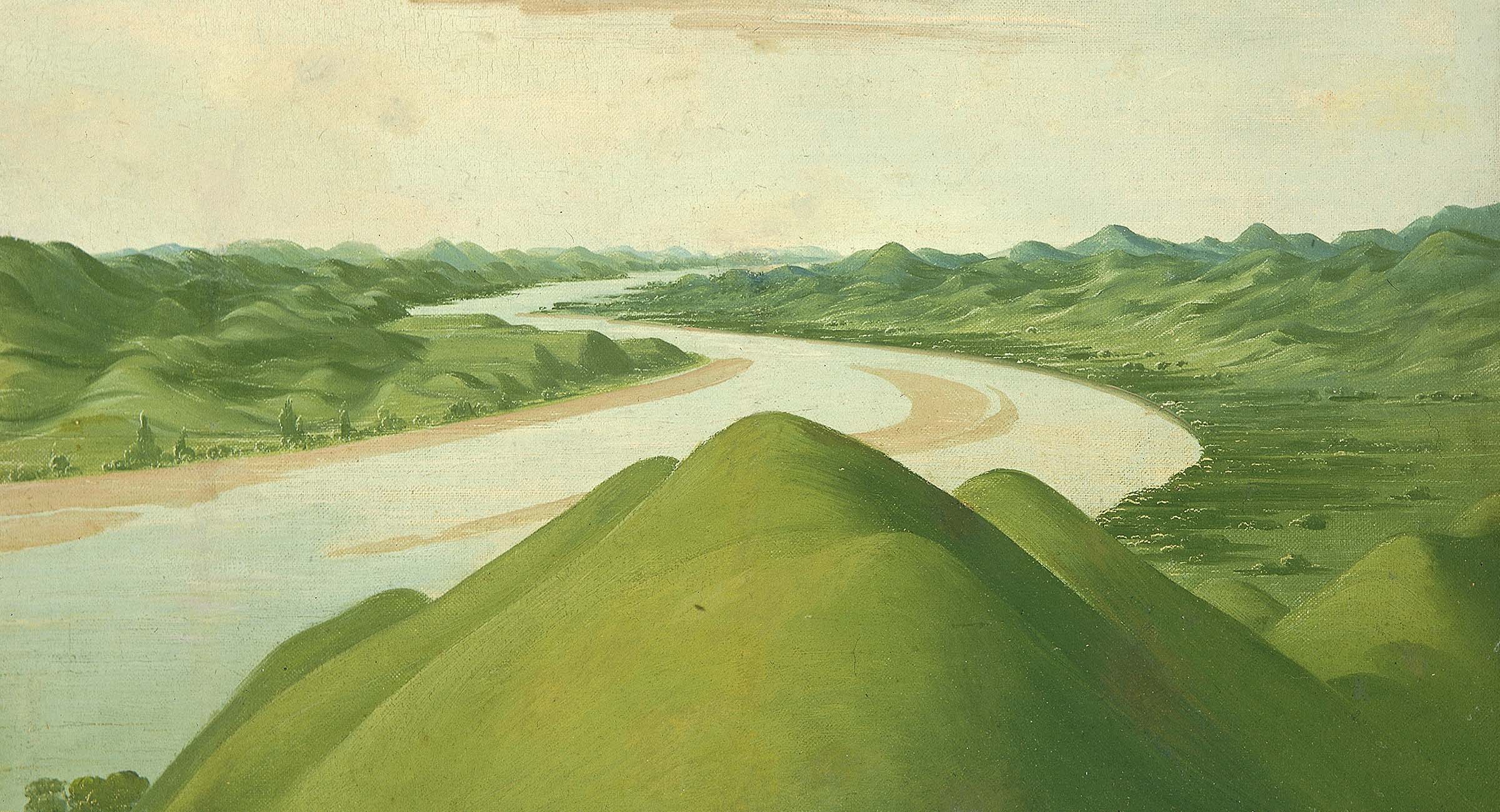
View in the “Cross Timbers,” Texas, by George Catlin, c. 1832. Smithsonian American Art Museum, gift of Mrs. Joseph Harrison, Jr.
Lapham’s Quarterly, judged here only by the rare occasions when we have linked to their work, offers gem quality items of interest, such as this essay by Rosemarie Ostler:
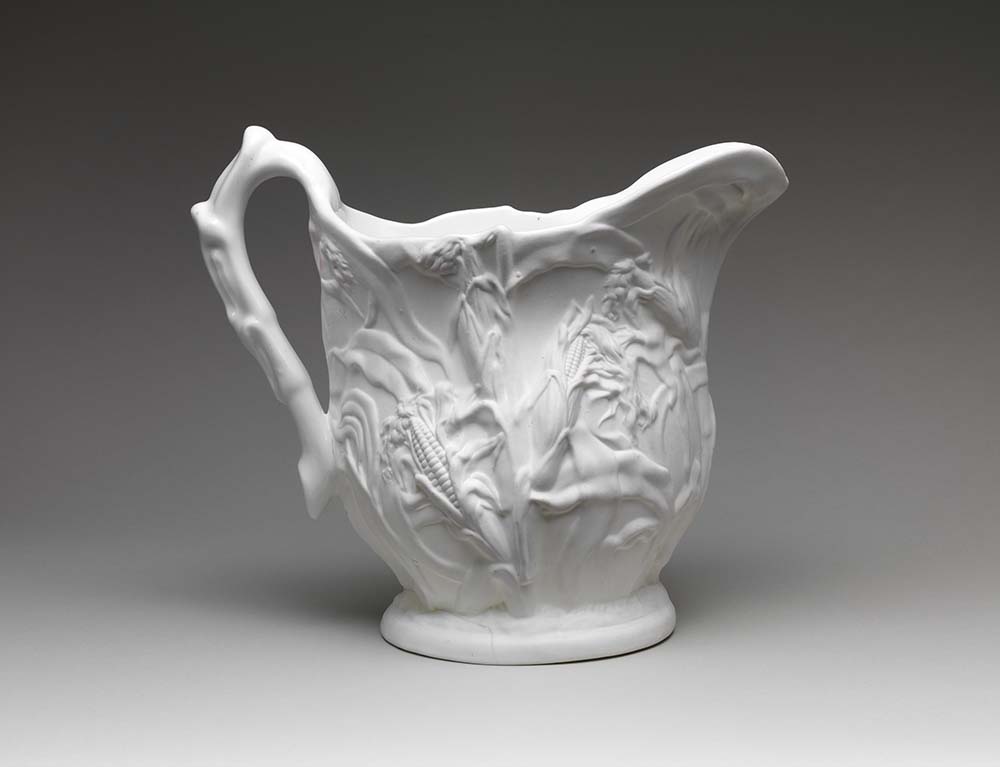
Corn pitcher, Southern Porcelain Company, c. 1855. The Metropolitan Museum of Art, Sansbury-Mills Fund, 2014.
The Early Days of American English
How English words evolved on a foreign continent.
English settlers faced with unfamiliar landscapes and previously unknown plants and animals in the Americas had to find terms to name and describe them. They sometimes borrowed words from Native American languages. They also repurposed existing English words and invented new terms, as well as keeping words that had become archaic in British English. As non-English-speaking immigrants began to arrive during the eighteenth century, they accepted words from those languages as well. By the time of the American Revolution, English had been evolving separately in England and America for nearly two hundred years, and the trickle of new words had become a flood. Continue reading →














 Organikos