2021 Ignobles

Enjoy this webcast of the awards ceremony from a journal we can all respect for the quality of its investigative research, its creative approach to choosing prize winners, and most of all its capacity to produce laughter:

The 2021 Ig Nobel Prize winners

BIOLOGY PRIZE [SWEDEN]:
Susanne Schötz for analyzing variations in purring, chirping, chattering, trilling, tweedling, murmuring, meowing, moaning, squeaking, hissing, yowling, howling, growling, and other modes of cat–human communication.
REFERENCE: “A Comparative Acoustic Analysis of Purring in Four Cats,” Susanne Schötz and Robert Eklund, Proceedings of Fonetik 2011, Speech, Music and Hearing, KTH, Stockholm, TMH-QPSR, 51. Continue reading

Smart People Do Smart Things, Sometimes Very Late

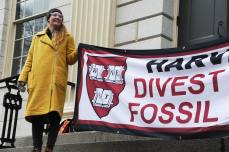
BREAKING: After a decade of constant pressure by students, faculty, and alums,
@HARVARD
IS FINALLY DIVESTING FROM FOSSIL FUELS.

While Rupert Murdoch is not even worthy of the “too little too late” moniker, Harvard University is worthy of “better late than never:”

Triumph! Harvard Finally Divests From Fossil Fuel

The richest university in the world capitulates after a decade of activism

The end came, as ends often do, quietly: at midafternoon today Harvard president Larry Bacow released a letter to Harvard students, faculty, and alumni. He didn’t use the word ‘divestment’–that would have been too humiliating–but he did say that the richest university on earth no longer had any direct investments in fossil fuel companies, and that its indirect investments through private equity funds would be allowed to lapse. “HMC has not made any new commitments to these limited partnerships since 2019 and has no intention to do so going forward. These legacy investments are in runoff mode and will end as these partnerships are liquidated.” Continue reading

Orca On

The video above is the shortest, clearest primer we could find to explain how this machine technology works. With Orca now on we will get the chance to see how much promise this process holds for carbon capture’s machine approach versus the tree approach, which we now know needs some reconsideration:

World’s biggest machine capturing carbon from air turned on in Iceland

Operators say the Orca plant can suck 4,000 tonnes of CO2 out of the air every year and inject it deep into the ground to be mineralised

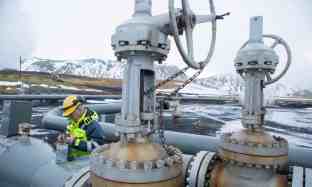
A worker on a CarbFix carbon injection well in Iceland in 2017. The company is involved in the new Orca plant designed to draw carbon dioxide out of the air and store it as rock. Photograph: Christian Science Monitor/Getty Images

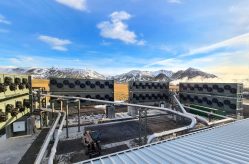
The world’s largest plant designed to suck carbon dioxide out of the air and turn it into rock has started running, the companies behind the project said on Wednesday.

The plant, named Orca after the Icelandic word “orka” meaning “energy”, consists of four units, each made up of two metal boxes that look like shipping containers.

Constructed by Switzerland’s Climeworks and Iceland’s Carbfix, when operating at capacity the plant will draw 4,000 tonnes of carbon dioxide out of the air every year, according to the companies. Continue reading

Really, Rupert?

Rupert Murdoch, executive chairman of News Corp, at a meeting of the World Economic Forum, January 30, 2009. MONIKA FLUECKIGER / WORLD ECONOMIC FORUM

If we had a category called too little, too late, this man and his phenomenally profitable media empire would not even feature in it. He has done so much damage through his empire’s constant denialism of climate change that even one little act like this one would not be worthy. Australia is too fossil fuel friendly, for sure, but is small potatoes in the scope of Murdoch’s holdings and their relevance to the world. And it is not at all clear this move is genuine. It seems obvious that as more of the world believes its own eyes rather than what he has been selling, he needs to pivot. We should not reward such a pivot:

In Australia, Murdoch-Owned News Outlets Vow to Back Away From Climate Denial

Though long hostile toward climate science, News Corp Australia is planning an editorial campaign calling for a zero-carbon economy,The Sydney Morning Herald reported. Continue reading

Bitcoin’s Carbon Footprint Explained

Cryptocurrency’s immense carbon footprint has been well known since early on. What to do about it is the question. Getting a good answer to that question depends in part on understanding the nature of the problem. Read below for the clarity of the explanation on this topic, and let the illustrations make it that much clearer:

Bitcoin Uses More Electricity Than Many Countries. How Is That Possible?

Cryptocurrencies have emerged as one of the most captivating, yet head-scratching, investments in the world. They soar in value. They crash. They’ll change the world, their fans claim, by displacing traditional currencies like the dollar, rupee or ruble. They’re named after dog memes. Continue reading

Grounding The Carbon On Farmlands

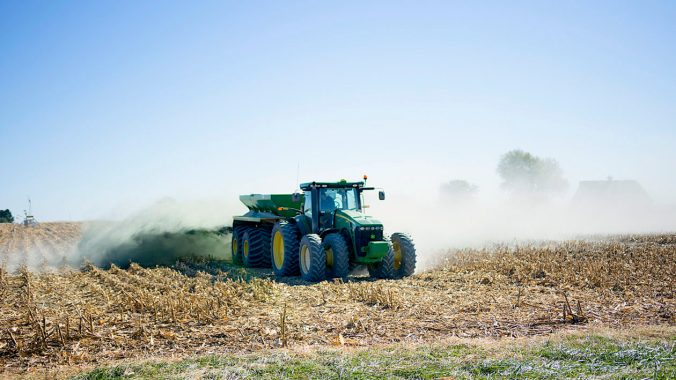
Basalt is spread on the Leverhulme Centre for Climate Change Mitigation’s research cornfields in Illinois. JORDAN GOEBIG

Thanks to Yale e360:

How Adding Rock Dust to Soil Can Help Get Carbon into the Ground

Researchers are finding that when pulverized rock is applied to agricultural fields, the soil pulls far more carbon from the air and crop yields increase. More studies are underway, but some scientists say this method shows significant benefits for farmers and the climate.

Researcher Zack Kozma (left) gathers a water sample from a field where rock dust has been added to the soil at Cornell’s AgriTech Agricultural Experiment Station. GARRETT BOUDINOT; SOPHIE NASRALLAH

On a hot and humid August day near Geneva, New York, Garrett Boudinot stands in a field of hemp, the green stalks towering a foot or more over his 6-foot, 4-inch frame. Today, the mustached Cornell University research assistant will harvest six acres of the crop, weigh it in red plastic garbage bins, and continue to analyze the hundreds of water samples taken with measuring devices called lysimeters that have been buried in the field over the last three months.

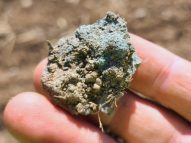
A clump of soil containing rock dust. GARRETT BOUDINOT; SOPHIE NASRALLAH

Boudinot, part of a research team at Cornell University, will sweat through the next two days of field work to see whether an unusual component added to the soil earlier in the year helped increase yields and sequester carbon. This soil amendment “we just call lovingly ‘rock dust,’ which isn’t very descriptive,” says Boudinot. “But it’s really silicate rocks that have been pulverized to a fine powder.” Continue reading

Balancing Power On Climate

The main way to counter the malign power of vested interest is to meet organized money with organized people. Photograph by Nicole Neri / Bloomberg / Getty

For the entire run of his newsletter McKibben made this point over and over again, and now one final time from his unique platform at the New Yorker:

The Answer to Climate Change Is Organizing

Dealing with global warming is always going to be about the balance of power.

Amore personal note than usual this week, because this will be the last of these Climate Crisis columns I’ll write (though it’s not the end of my work for the magazine). I’m incredibly grateful to The New Yorker for letting me do them—and especially thankful for Virginia Cannon, who has edited them each week with grace and aplomb. Our run has overlapped almost perfectly with the course of the pandemic, and for me it’s been the perfect moment to sit back and appreciate and highlight the work of so many across the wide universe of activists, scientists, economists, and politicians who are taking on the deepest problem that humans have ever wandered into. I can’t overstate the comfort of that universe: it didn’t exist thirty-two years ago, when I started writing about climate change; its slow but inexorable rise has given me not just welcome company but real hope. I’ve particularly enjoyed “passing the mic” to many members of that gathering throng. Continue reading

The New Race In Wind Energy, Between Fixed And Floating Turbines

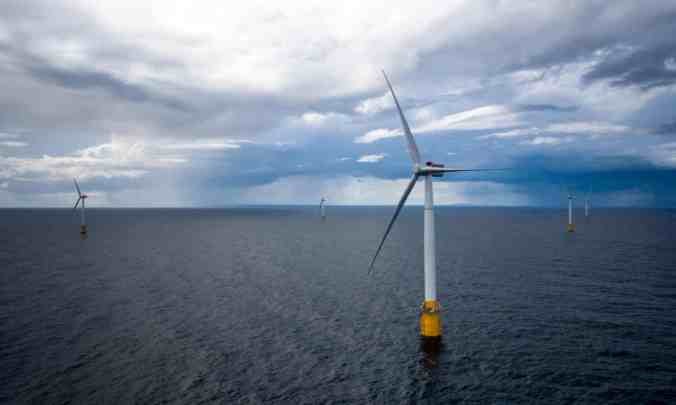
The world’s first floating wind farm 15 miles offshore of Aberdeenshire, in Scotland. The 30 megawatt installation can power approximately 20,000 households Photograph: Xinhua/Alamy

Wind, of all the alternative energy sources we pay attention to, requires vast areas for generation. So water has become the go-to place to place the turbines. It looks like the new race is whether to have the turbines fixed or floating:

Floating wind turbines could open up vast ocean tracts for renewable power

Technology could help power a clean energy transition if it can overcome hurdles of cost, design and opposition from fishing

In the stormy waters of the North Sea, 15 miles off the coast of Aberdeenshire, in Scotland, five floating offshore wind turbines stretch 574 feet (175 metres) above the water. The world’s first floating windfarm, a 30 megawatt facility run by the Norwegian company Equinor, has only been in operation since 2017 but has already broken UK records for energy output. Continue reading

A Taste Of Matthew Raiford’s Heritage

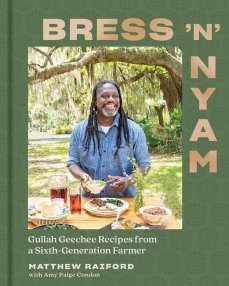
The last food book we featured was not a cookbook, but had plenty of food for thought. Thanks to the Kim Severson (again, after a couple years of our not seeing her work) for bringing Matthew Raiford, his family heritage, his farm and his cookbook to our attention in her article: A High-Summer Feast to Forge Connections in the Deep South. And if time is short, click through just for the exceptional photography:

Rinne Allen for The New York Times

Matthew Raiford swore he’d never return to his family farm in coastal Georgia. But in breaking that vow, he found a sense of community worth celebrating with a lavish spread.

BRUNSWICK, Ga. — It’s not a stretch to say there may have never been a party for a cookbook like the one Matthew Raiford threw on his family farm a few weeks ago.

Rinne Allen for The New York Times

The book’s title is “Bress ‘n’ Nyam” — “bless and eat” in the English-based Creole spoken by the Gullah Geechee people who live along the coasts of the Carolinas, Georgia and northern Florida. Their ancestors were captured in West Africa and enslaved. Nowhere else in America has the cultural line from Africa been better preserved. (Mr. Raiford’s people call themselves freshwater Geechee, which means they are from the mainland of coastal Georgia. Saltwater Geechees are from the barrier islands.) Continue reading

Really, Chase?

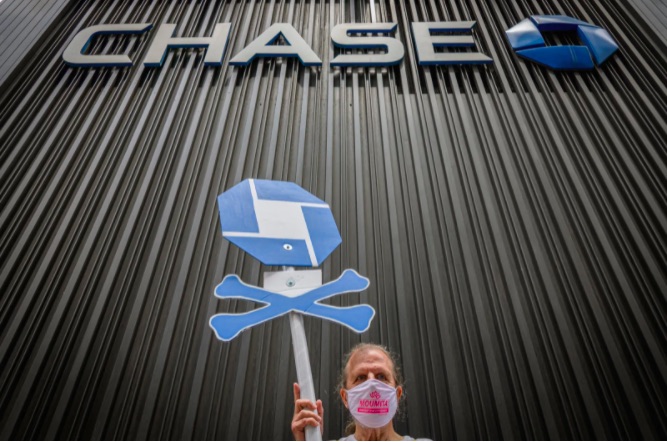
A climate activist picketing outside a Chase Bank branch in New York earlier this year. Photograph by Erik McGregor / Getty

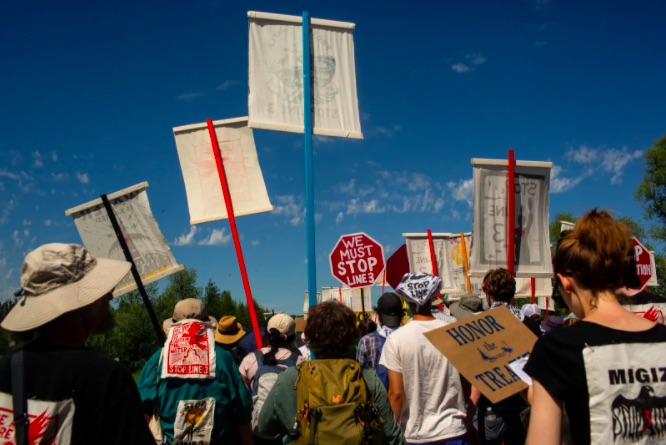
It is a no-brainer to oppose Line 3, but mere opposition does not amount to much. Action is the thing. And action is not always as cumbersome as it may sound. For example, if you bank with the people who are bullish on the future of oil, and who mix your money up with that money, it is time to rethink that relationship. Pull your money out of that bank:

Slow-Walking the Climate Crisis

“Greenwashing” is too kind a term; this is more like careful sabotage.

Travellers arriving in an unfamiliar city used to worry that they’d climb in a taxi and be driven to their destination by the most circuitous route possible, racking up an enormous bill. That’s pretty much what Big Oil and its allies in government and the financial world are doing with the climate crisis—in fact, at this point, it’s the heart of the problem. Continue reading

Adaptation In The Vineyard

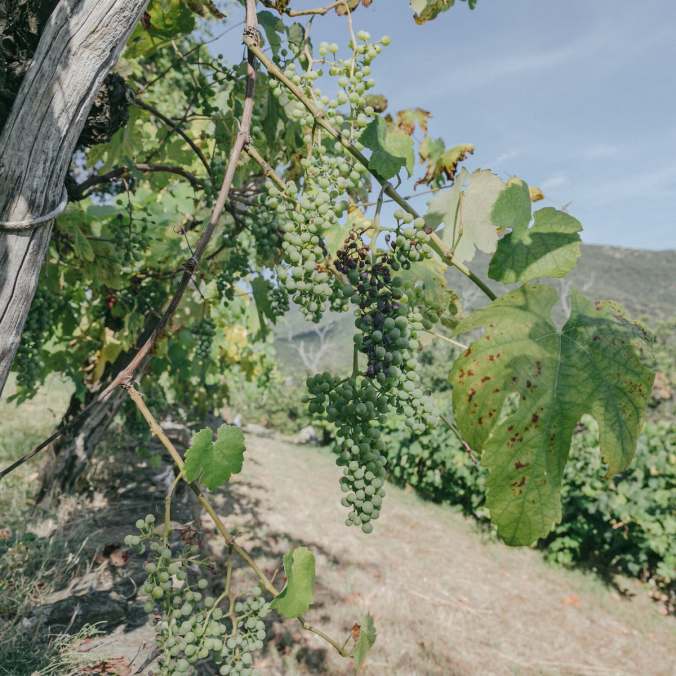
Jacquez vines at Michel Arnaud’s farm in the village of Saint-Mélany in the Ardèche region of France. The American hybrid variety has been banned in France since 1934. Andrea Mantovani for The New York Times

We admire many French traditions, except for those, especially, having to do with birds. When it comes to wine, the French are often but not always right:

For France, American Vines Still Mean Sour Grapes

French authorities have tried to outlaw hardy American hybrids for 87 years. But climate change and the natural wine movement are giving renegade winemakers a lift.

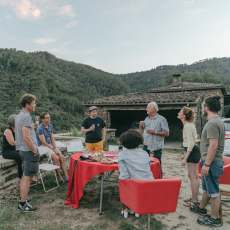
A tasting of forbidden wines at Hervé Garnier’s “Memory of the Vine” association in the village of Beaumont. Mr. Garnier, standing third from right, is one of the last stragglers in a long-running struggle against the French wine establishment and its allies in Paris. Andrea Mantovani for The New York Times

BEAUMONT, France — The vines were once demonized for causing madness and blindness, and had been banned decades ago. The French authorities, brandishing money and sanctions, nearly wiped them out.

But there they were. On a hillside off a winding mountain road in a lost corner of southern France, the forbidden crop was thriving. Early one recent evening, Hervé Garnier inspected his field with relief.

In a year when an April frost and disease have decimated France’s overall wine production, Mr. Garnier’s grapes — an American hybrid variety named jacquez, banned by the French government since 1934 — were already turning red. Barring an early-autumn cold snap, all was on track for a new vintage. Continue reading

Agriculture In Australia Needs A Strategy

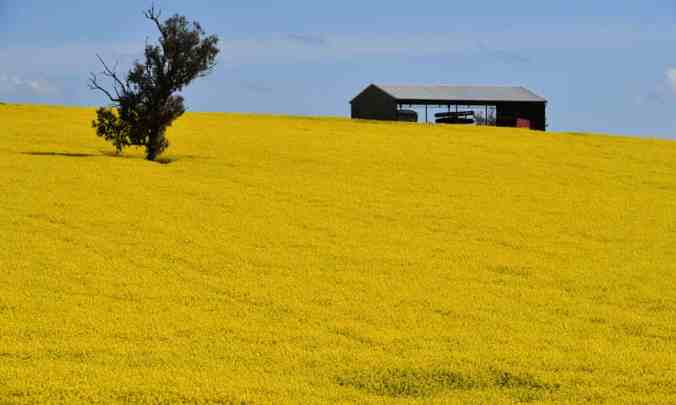
‘Farmers are at the interface of the world’s most wicked problems’. A field of canola crops near the New South Wales town of Harden. Photograph: Mick Tsikas/AAP

Thanks to Gabrielle Chan for this observation on ag down under, and how it impacts us all:

Farmers manage more than half of Australia. We all have a stake in them getting it right

If you eat, you have an interest in farming. If you care about the environment, you have an interest in farming. Yet Australia has no national agriculture strategy

Strip away modernity. Unlearn everything you know about the complexity of your average day. The ordinary interaction, the workaday worries, the pinging of your phone, the relentless roll of the inbox. You are left with the human condition. Continue reading

Totes In Perspective

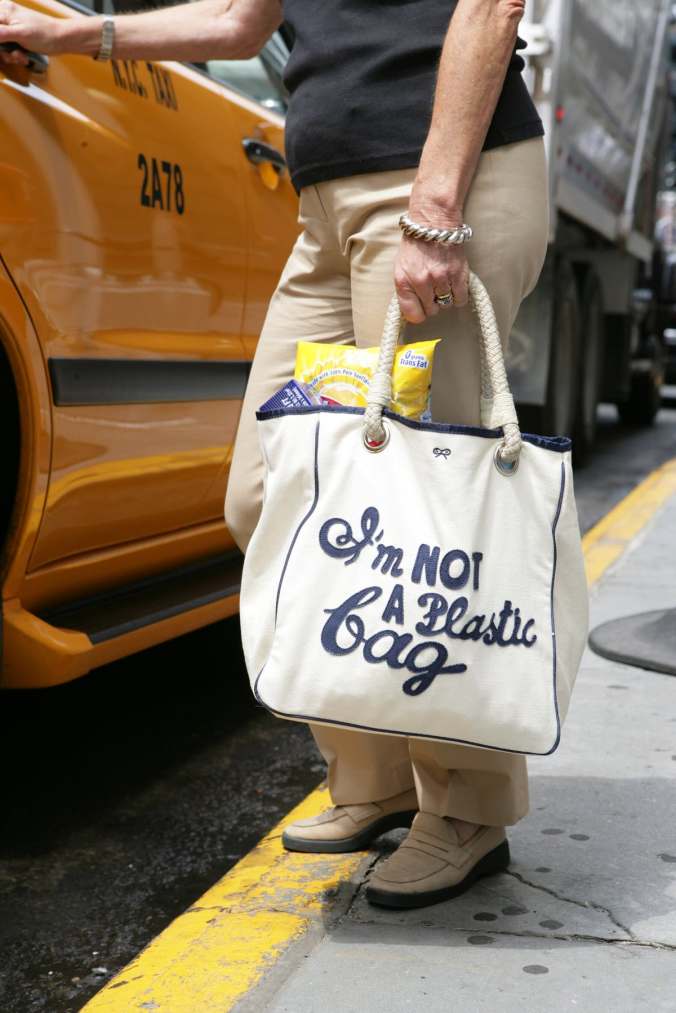
The original Anya Hindmarch tote, sold at Whole Foods for $15 back in 2007, that kick-started the anti-plastic-bag campaign. Lars Klove for The New York Times

It started one way.

Ms. Hindmarch’s updated version, made from recycled plastic. Suzie Howell for The New York Times

And then it evolved. Now we have to think again about the bags we use to carry things in:

The Cotton Tote Crisis

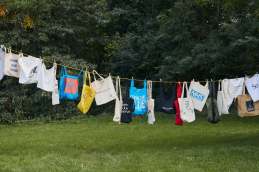
You can get cotton bags pretty much everywhere. How did an environmental solution become part of the problem?

A laundry line of cotton totes accumulated by a single person since the race to replace plastic began. Suzie Howell for The New York Times

Recently, Venetia Berry, an artist in London, counted up the free cotton tote bags that she had accumulated in her closet. There were at least 25.

There were totes from the eco-fashion brand Reformation and totes from vintage stores, totes from Soho House, boutique countryside hotels and independent art shops. She had two totes from Cubitts, the millennial-friendly opticians, and even one from a garlic farm. “You get them without choosing,” Ms. Berry, 28, said. Continue reading

Carbon Capture Closer

Fans draw air into Climeworks’ direct air capture plant in Zurich, Switzerland. CLIMEWORKS

Our thanks as always to Jon Gertner for this news.  Combining capturing carbon with other goals is not new, but it has been goal-setting elusive of significantly robust results; we are getting closer:

The Dream of Carbon Air Capture Edges Toward Reality

Next month, an industrial facility in Iceland will join a growing number of projects to remove CO2 from the air and put it underground. But major hurdles, including high costs, remain before this technology can be widely deployed and play a key role in tackling climate change.

Climeworks’ Orca plant under construction near Reykjavik, Iceland. CLIMEWORKS

In early September, at an industrial facility located about 25 miles southeast of Reykjavik, Iceland, the Swiss company Climeworks will mark the opening of a new project named “Orca.” At least in a conventional sense, Orca doesn’t actually make anything. It is comprised of eight elongated boxes that resemble wood-clad tanks. Each of these boxes — known as “collectors” — is roughly the size of a tractor trailer, and each is festooned with 12 whirring fans that draw a stream of air inside. Within the collectors, a chemical agent known as a sorbent will capture CO2 contained in the air wafting through. Continue reading

Whales’ Future, Our Future

Whale stories have been in our pages on a regular basis over the last ten years not only because of their charisma. Because of how long they have been on the planet, their future should matter to mankind. The biggest of the species hiding in plain sight is increasingly spotted in ancestral waters, which seems like good news, but read on:

Blue whales returning to Spain’s Atlantic coast after 40-year absence

Some experts fear climate crisis is leading creatures back to area where they were hunted almost to extinction

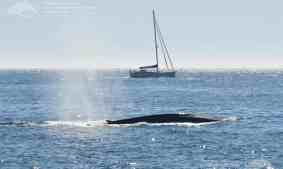
The creatures may have returned to Galicia out of a form of homesickness, or ancestral memory. Photograph: Bottlenose Dolphin Research Institute

Blue whales, the world’s largest mammals, are returning to Spain’s Atlantic coast after an absence of more than 40 years.

The first one was spotted off the coast of Galicia in north-west Spain in 2017 by Bruno Díaz, a marine biologist who is head of the Bottlenose Dolphin Research Institute in O Grove, Galicia. Continue reading

Books About Below The Deepest Most Of Us Will Ever Go

Chloe Niclas

Thanks to Robert Moor for these reviews:

The Wonders That Live at the Very Bottom of the Sea

Two new books, Edith Widder’s “Below the Edge of Darkness” and Helen Scales’s “The Brilliant Abyss,” explore the darkest reaches and all that glows there.

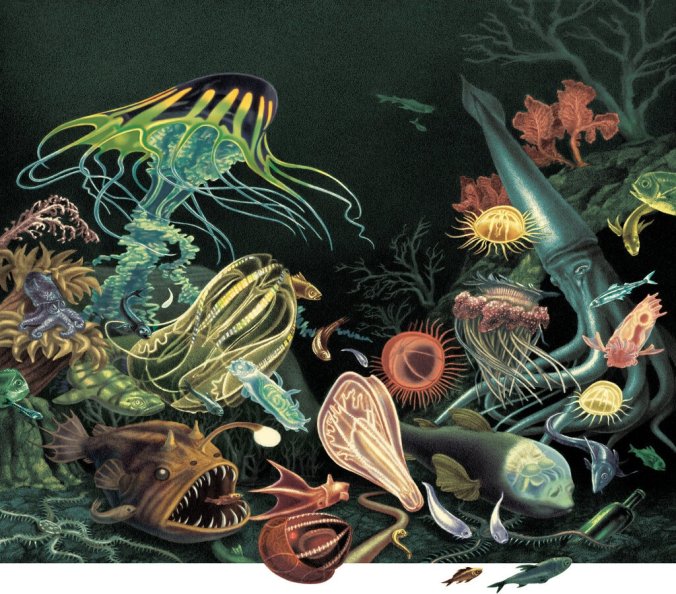
In the deep sea, it is always night and it is always snowing. A shower of so-called marine snow — made up of pale flecks of dead flesh, plants, sand, soot, dust and excreta — sifts down from the world above. When it strikes the seafloor, or when it is disturbed, it will sometimes light up, a phenomenon known, wonderfully, as “snow shine.” Vampire squids, umbrella-shaped beings with skin the color of persimmons, float around collecting this luminous substance into tiny snowballs, which they calmly eat. They are not alone in this habit. Most deep-sea creatures eat snow, or they eat the snow eaters.

Until fairly recently, it was widely believed that the deep seas were mostly devoid of life. For centuries, fishermen hauled in deep-sea trawling nets filled with slime, not knowing that these were carcasses. Some animals, adapted to the pressure of the deep, are so delicate that in lighter waters a mere wave of your hand could reduce them to shreds. The myth of the dead deep sea, known as the Abyssus Theory, was disproved by a series of dredging and trawling expeditions in the 19th century, including a German scientific expedition in 1898 that pulled up the first known vampire squid. But the misconception nevertheless lingered. In 1977, a geologist piloting a submersible near the mouth of a hydrothermal vent, and finding it swarming with creatures, asked the research crew up above, “Isn’t the deep ocean supposed to be like a desert?” Continue reading

Costa Rica’s Insects In The Limelight

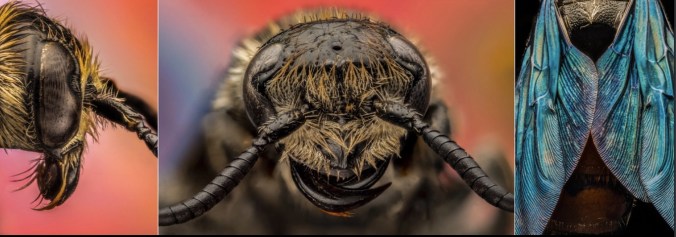
Green Orchid Bee, Euglossa dilemma. Pablo Piedra

Some of our favorite topics–Costa Rica & insects & photography–are covered in this interview:

A Longtime Military Photographer Has A New Passion Project: Bugs

Digger Wasp, Sphecidae
Pablo Piedra

Field Cricket, Gryllus assimilis
Pablo Piedra

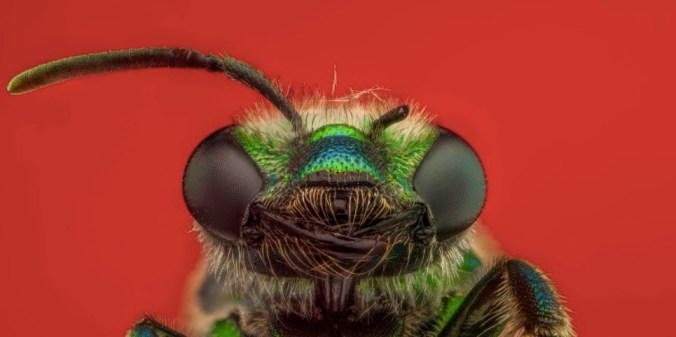
Pablo Piedra is a military photographer turned insect fanatic. After retiring in 2019 from 22 years with the military, he moved to Costa Rica with his family. Here he started doing macro photography of the country’s native bugs as a way of staying creative during COVID-19. His wife Daniela helps him look for insects and his son Jaden loves the final results.

How did you transition from being a military photographer to an insect photographer?

After my retirement in 2018, I began working as the Multimedia Director for the Tragedy Assistance Program for Survivors (TAPS) in Arlington, VA. In 2019, my family moved to Costa Rica and I became a freelance multimedia content creator. Continue reading

Sublime Icelandic Lava

The Fagradalsfjall eruption, on April 9th. Einat Lev, a volcanologist, says most active volcanoes are so dangerous or remote that they preclude casual visits. She said of Fagradalsfjall, “We’ll never get this kind of access anywhere, in any other place.” Photograph by Brian Emfinger

Our attention to Iceland started in 2013 and by late 2014 it might have seemed like an obsession. For good reason, whenever we see news about Iceland we pay attention and share here. And so it goes again:

Chasing the Lava Flow in Iceland

At a volcanic eruption, the sublime experience of watching land submerge land.

By mid-March, the people of Grindavík, a commercial fishing town at the western end of Iceland’s southern coast, were exhausted. For the previous three weeks, a strong seismic swarm had produced thousands of earthquakes per day, ranging from gentle tremors to tectonic disruptions powerful enough to jolt a person awake at night. Svanur Snorrason, a journalist who lives near the town’s harbor, told me that locals were “pretty much going insane” from sleep deprivation. “Earthquakes, or bad and very dangerous weather, we are used to it,” he said. “I don’t think people were afraid, but they were very tired.” Continue reading

Greece Names Names

A firefighter battles to extinguish a blaze in the village of Markati, near Athens, last week. Photograph: AFP/Getty Images

One of our favorite places in the world, a country that had little to do with creating the climate crisis, is suffering disproportionately from it:

Greece plans to name heatwaves in the same way as storms

Personalising the ‘silent killer’ hot spells could raise awareness in time to avert loss of life and property, say scientists

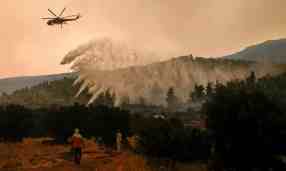
A firefighting helicopter makes a water drop as a wildfire burns in the village of Vilia, Greece, on Wednesday. Photograph: Alkis Konstantinidis/Reuters

Spurred on by this summer’s record temperatures, Greek scientists have begun discussing the need to name and rank heatwaves, better known for their invisibility, before rampant wildfires made the realities of the climate crisis increasingly stark.

A preventative measure, the move would enable policymakers and affected populations to be more prepared for what are being described by experts as “silent killers.” Continue reading

Greeley’s Conundrum

Thanks to Matthew Daly and PBS Newshour (USA) for this story:

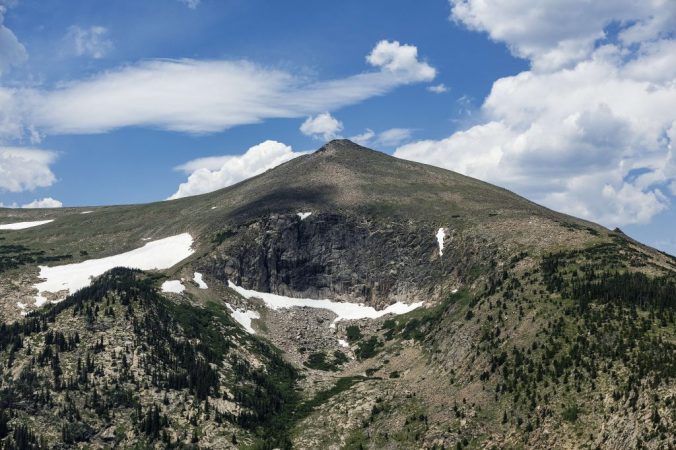
Booming Colorado town asks, ‘Where will water come from?’

GREELEY, Colo. (AP) — “Go West, young man,” Horace Greeley famously urged.

The problem for the northern Colorado town that bears the 19th-century newspaper editor’s name: Too many people have heeded his advice.

By the tens of thousands newcomers have been streaming into Greeley — so much so that the city and surrounding Weld County grew by more than 30% from 2010 to 2020, according to the U.S. Census Bureau, making it one of the fastest-growing regions in the country.

And it’s not just Greeley. Continue reading