Scotland, Running On Almost 100% Renewables

GETTY IMAGES. Scotland’s renewables output has tripled in 10 years

Thanks to Scotland, for the ambition and demonstration; and to the BBC for reporting this:

Renewables met 97% of Scotland’s electricity demand in 2020

GETTY IMAGES. WWF Scotland is calling for an increased roll-out of electric vehicles

Scotland has narrowly missed a target to generate the equivalent of 100% of its electricity demand from renewables in 2020.

New figures reveal it reached 97.4% from renewable sources.

This target was set in 2011, when renewable technologies generated just 37% of national demand. Continue reading

Power Plants Signal Intent

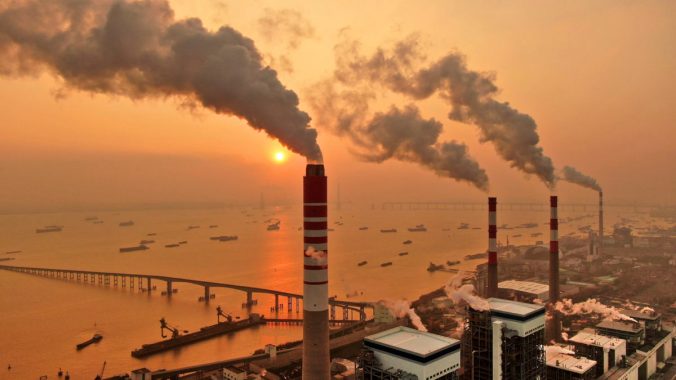
A coal-fired power plant in China’s Jiangsu province. XU CONGJUN – IMAGINECHINA

What is the real intent on addressing climate change, we must wonder:

Despite Pledges to Cut Emissions, China Goes on a Coal Spree

China is building large numbers of coal-fired power plants to drive its post-pandemic economy. The government has promised a CO2 emissions peak by 2030, but the new coal binge jeopardizes both China’s decarbonization plans and global efforts to tackle climate change.

China’s National People’s Congress meetings, which ended earlier this month, were shrouded in both a real and figurative haze about how strong its climate ambitions really are and how quickly the country can wean itself from its main source of energy — coal. Continue reading

Indigenous Communities Telling Their Own Stories, Their Own Way

It has been some time since we featured a story about creative new methods by which indigenous communities protect their heritage, and The Field Museum (Chicago, USA) offers this exhibit to demonstrate new ways of presenting that heritage:

Listening to many stories

For many years, Native American communities weren’t given the opportunity to tell their own stories in museums. Apsáalooke Women and Warriors is a step in a new direction. Continue reading

One More Reason We Care About Clean Water

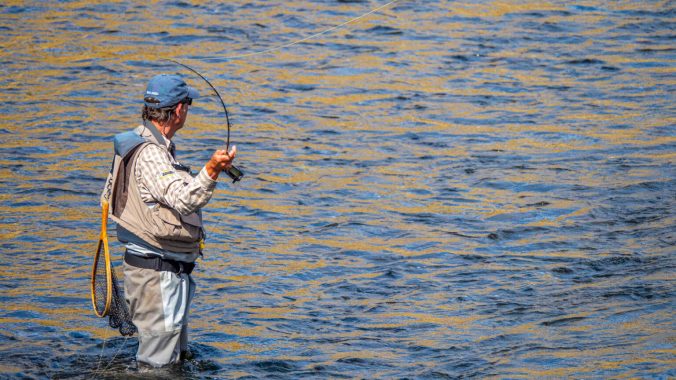
Owner of a fly-fishing lodge worries about fracking: His business can’t survive without clean water.

Thanks to Yale Climate Connections for one more reminder of how many reasons, big and small, we should care more about water:

Why the owner of a Montana fly-fishing lodge is worried about fracking

His business can’t survive without clean water.

Wade Fellin runs a fly-fishing lodge near Montana’s Big Hole River, an area renowned for the sport. Continue reading

Engineering + Imagination = Worthy Of Second Guessing

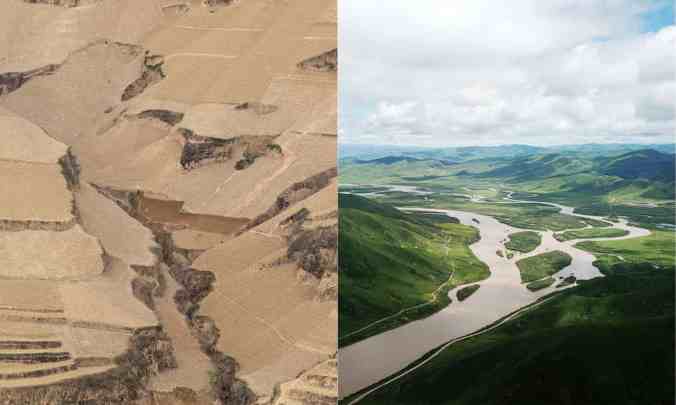
The Loess plateau, in China, in 2007, left, and transformed into green valleys and productive farmland in 2019. Composite: Rex/Shutterstock/Xinhua/Alamy

The message from Elizabeth Kolbert’s book should sound relevant to you when you read the following:

‘Our biggest challenge? Lack of imagination’: the scientists turning the desert green

In China, scientists have turned vast swathes of arid land into a lush oasis. Now a team of maverick engineers want to do the same to the Sinai

Flying into Egypt in early February to make the most important presentation of his life, Ties van der Hoeven prepared by listening to the podcast 13 Minutes To The Moon – the story of how Nasa accomplished the lunar landings. The mission he was discussing with the Egyptian government was more earthbound in nature, but every bit as ambitious. It could even represent a giant leap for mankind. Continue reading

Changing Water Use, Last Chances

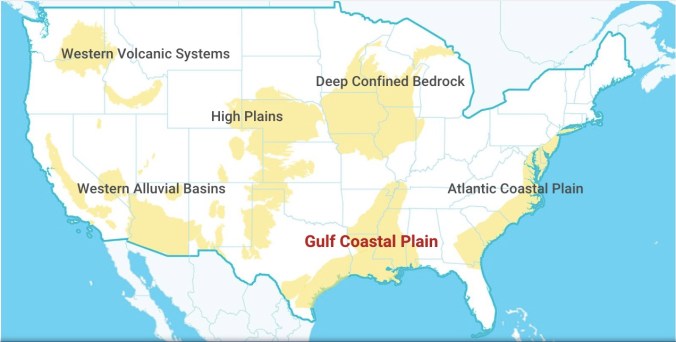
Sources: U.S. Geological Survey, U.S. Census Bureau Research: Austin R. Ramsey/IRW; Graphic: Kelly Martin/IRW

Yesterday’s post was about a book that argues we must change the way we source food. Water use is a parallel topic, of equal importance, and today National Public Radio (USA) presents an investigative report about Louisiana’s challenges related to water, and changes that must be made:

Known For Its Floods, Louisiana Is Running Dangerously Short Of Groundwater

A wastewater treatment plant in West Monroe, La., uses microalgae to biologically purify water. It’s the first step in a process that helps supply water for a local paper mill, saving the area’s stressed aquifer for residents. Austin R. Ramsey/IRW

Louisiana is known for its losing battle against rising seas and increasingly frequent floods. It can sometimes seem like the state has too much water. But the aquifers deep beneath its swampy landscape face a critical shortage.

Groundwater levels in and around Louisiana are falling faster than almost anywhere else in the country, according to U.S. Geological Survey data. An analysis by the Investigative Reporting Workshop and WWNO/WRKF traced the problem to decades of overuse, unregulated pumping by industries and agriculture, and scant oversight or action from legislative committees rife with conflicts of interest. Continue reading

Bottom Trawling’s Carbon Release

Beam trawlers’ heavy chains are dragged along the seabed, releasing carbon into the seawater. Photograph: aphperspective/Alamy

One of the many things that humans have been doing for a long time that are going to have to change:

Bottom trawling releases as much carbon as air travel, landmark study finds

Dragging heavy nets across seabed disturbs marine sediments, world’s largest carbon sink, scientists report

Fishing boats that trawl the ocean floor release as much carbon dioxide as the entire aviation industry, according to a groundbreaking study.

Bottom trawling, a widespread practice in which heavy nets are dragged along the seabed, pumps out 1 gigaton of carbon every year, says the study written by 26 marine biologists, climate experts and economists and published in Nature on Wednesday. Continue reading

Edible Houseplants

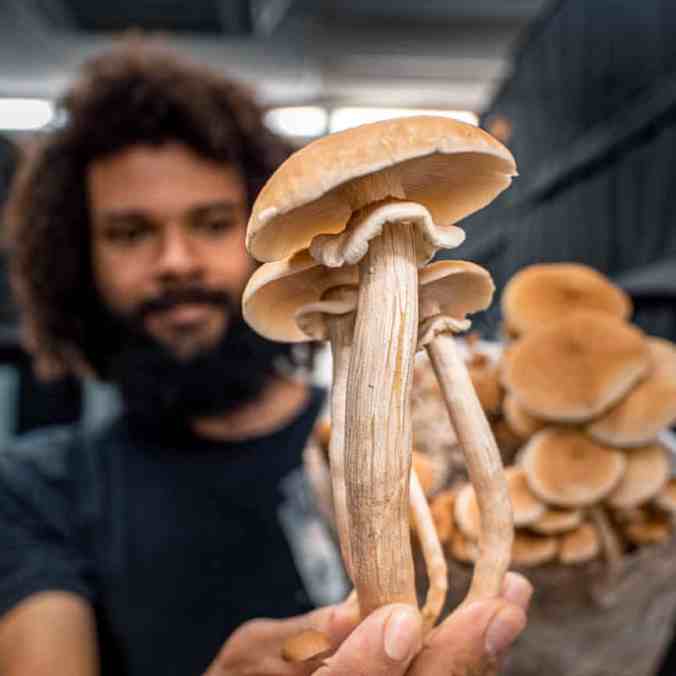
Michael Crowe holding the mushrooms he grew. Photograph: Mike Crowe/Stronz Vanderploeg

Growing edible fungi at home is easier than you might have thought:

Why mushrooms are the new houseplant everybody’s growing

Easy to grow, visually beautiful and oodles of fabulous fungi for breakfast, what’s not to love?

Michael Crowe with an abundance of homegrown mushrooms. Photograph: Stronz Vanderploeg

Selling home grown mushrooms – through bags small enough to sit on your kitchen countertop, filled with organic matter like grain or coffee grounds and inoculated with spores – has been Michael Crowe’s business since 2017. He enjoys hearing from happy customers, who sometimes send him updates on their progress. “It’s just so cool because it can bring together people of all ages, from all walks of life and people all over the place can grow food and have a really good time learning about it,” he says. Continue reading

Turning Point In USA’s Transition To Electric Vehicles

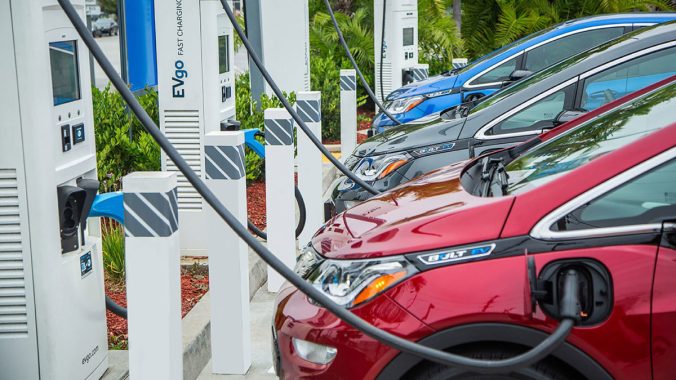
General Motors has partnered with EVgo to deploy more than 2,700 fast chargers across the U.S. CREDIT: GM

John Paul MacDuffie and Sarah E. Light, both professors at the Wharton School of Business at the University of Pennsylvania, have published an article on Yale E360 highlighting the improving potential for electric vehicles to dominate the USA market sooner than previously expected:

EV Turning Point: Momentum Builds for U.S. Electric Vehicle Transition

Driven by GM, Tesla, and the Biden administration, the U.S. is now poised to press ahead in the transformation to electric vehicles. Big challenges still loom, but technological advances, government support, and growing consumer appeal will drive the inevitable switch to EVs.

Last month’s failure of the Texas electric grid, coming just weeks after General Motors’ pledge to make only electric vehicles by 2035, highlights the daunting task the United States faces as it takes the first steps toward weaning its economy off fossil fuels. Continue reading

Forest Solitude, A Germanic Tradition

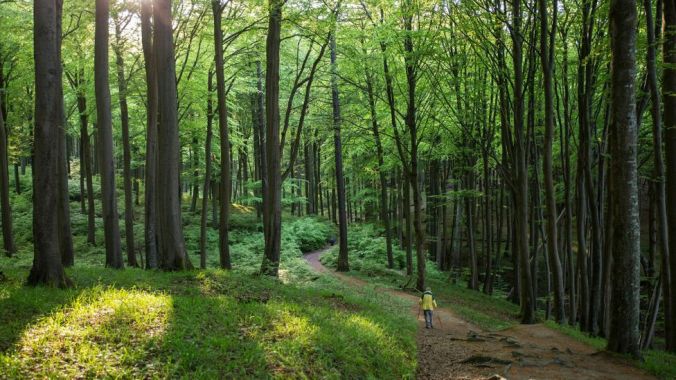
With forest making up around 33% of Germany’s land area, woodlands have become a central part of German culture (Credit: Westend61/Getty Images)

Thanks to the BBC for this article about the Germanic tradition of waldeinsamkeit:

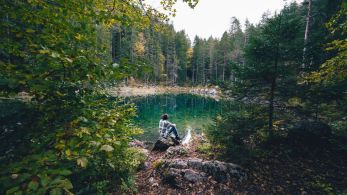
Waldeinsamkeit is an archaic German term for the feeling of “forest loneliness” (Credit: Marco Bottigelli/Getty Images)

Everybody is at it in Germany. They’re doing it in the trees in the Black Forest. Out in the magical Harz Mountains. In the national parks of Bavaria when silhouetted in the moonlight. And in the city centre woodlands of Berlin and Munich. Continue reading

Turtle Rescue, Texas Style

The South Padre Island Convention Center opened its doors and took in thousands of sea turtles cold-stunned during the Valentine’s Week Winter Storm. UT Marine Science Institute

Thanks to National Public Radio (USA) for this:

Texas ‘Cold-Stun’ Of 2021 Was Largest Sea Turtle Rescue In History, Scientists Say

Volunteers bringing in many lethargic turtles. John Faulk/Frontera Media

The Valentine’s Day winter storm of 2021 left Texans shivering in the dark, but that didn’t stop intrepid volunteers from heading out into the suddenly frigid waters of the Gulf Coast to save thousands of sea turtles at risk of dying. This is the story of the largest sea turtle “cold-stun” event in recorded history, according to scientists. Continue reading

Bookshop Versus Goliath, aka Amazon

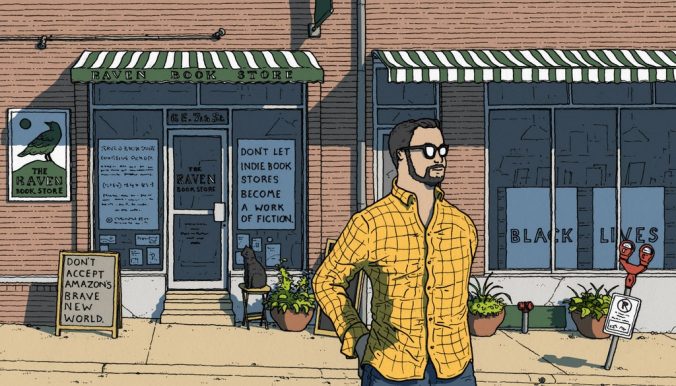
Amazon can afford to take a loss on books. Small independent bookstores cannot. Illustration by Owen D. Pomery; Source photograph by Danny Caine

We have respect for any merchant who takes the time, and has strong logic on their side, to explain why their prices are not as low as Amazon’s. Any time the opportunity arises to read Casey Cep on the subject of bookshops, take it; especially when she is writing about a bookshop’s pricing relative to Amazon’s. Be sure to read far enough to where she touches on the impact of bookshop.org on the marketplace for books, which on its own makes reading this essay worth the time:

A Kansas Bookshop’s Fight with Amazon Is About More Than the Price of Books

The owner of the Raven bookstore, in Lawrence, wants to tell you about all the ways that the e-commerce giant is hurting American downtowns.

If you know anything about the Raven bookstore in Lawrence, Kansas, then you know that it charges more for books than Amazon. Advertising higher prices is an unlikely strategy for any business, but Danny Caine, the Raven’s owner, has an M.F.A., not an M.B.A., and he talks openly with customers about why his books cost as much as they do. Continue reading

Obvious Conservation Stakeholders, Finally At The Table

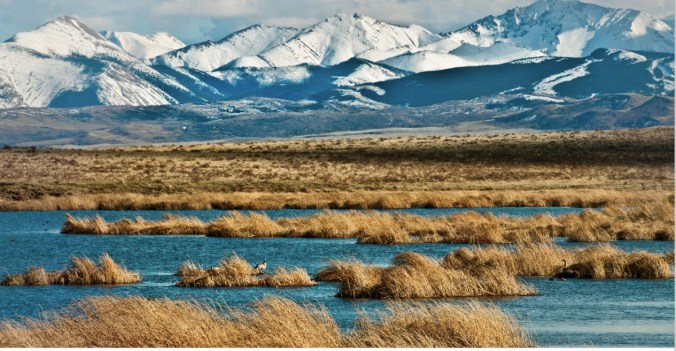
Canada Geese and other waterfowl occupy wetlands in the Badger-Two Medicine area of Montana. Members of the Blackfeet Nation hold the area sacred and are working to protect it permanently. Photo: Tony Bynum

Indigenous communities might seem obvious stakeholders in the protection of wilderness areas, but it does not always, or even often, play out that way. Graham Lee Brewer, a reporter for Audubon Magazine, has this to say about changes in the works:

Tribes Could Play a Crucial Role in Achieving a Bold New Conservation Goal

An emerging effort to protect 30 percent of the country’s land and water is an opportunity to strengthen tribal sovereignty and heed Indigenous ecological knowledge, experts say.

For nearly four decades the Blackfeet Nation has fought off attempts to drill for oil and gas in Montana’s Badger-Two Medicine area. Nestled in a national forest beside Glacier National Park, the region’s sweeping valleys, rivers, and wetlands—almost entirely unmarred by roads—form the setting of the Blackfeet creation story and host tribal ceremonies today. Continue reading

America’s Best Idea Gets an Addition

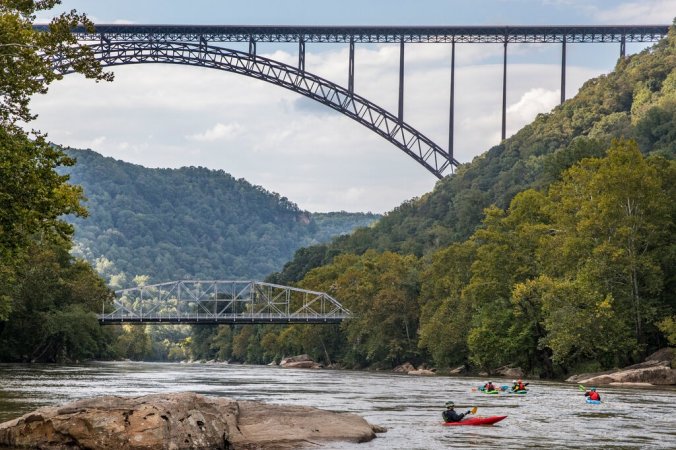
Kayakers enjoy calm waters under the New River Gorge Bridge.Credit…Tony Cenicola/The New York Times

The fact that we’re a late to highlight this new addition doesn’t lessen our enthusiasm for the fact. The United States National Park Service and the those who created it, and continue to fight for it, are heroes in our eyes. It’s an especially strong breath of fresh air when this new administration moves immediately to promote this “great idea” rather than diminish it.

Meet America’s 63rd National Park

The New River Gorge in West Virginia got the federal government’s highest protection, thanks, in part, to the latest pandemic relief bill.

As Americans continue to weather the pandemic, the $2.3 trillion coronavirus relief and spending bill passed by the federal government in December brought an unexpected and lasting gift: a new national park.

The 5,593-page spending package included a raft of provisions authorizing little-known projects — the construction of the Teddy Roosevelt Presidential Library in North Dakota, for one — and giving lawmakers a chance to advance a variety of long-delayed initiatives. Among them was the elevation of the New River Gorge, in southern West Virginia, to the status of Yellowstone, Yosemite and the country’s other most renowned outdoor spaces. The designation of the area — roughly 72,000 acres of land flanking 53 miles of the gorge — as a national park and preserve creates the 63rd national park in the United States and completes a multigenerational effort, started in the mid-twentieth century, to transform a tired industrial area into a national landmark.

“Towards the end of this year, with these big bills coming down, I decided to strike,” said Shelley Moore Capito, a Republican and the state’s junior senator, who, along with Senator Joe Manchin III, a Democrat, introduced the New River Gorge legislation in 2019.

“This was the right opportunity,” she said. Continue reading
Corn Belt Soil

ENZO PÉRÈS-LABOURDETTE / YALE E360

Thanks to Verlyn Klinkenborg for this essay:

How the Loss of Soil Is Sacrificing America’s Natural Heritage

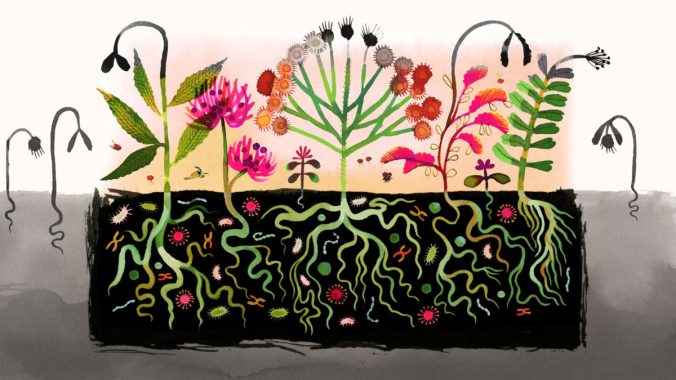
A new study points to a stunning loss of topsoil in the Corn Belt — the result of farming practices that have depleted this once-fertile ground. Beyond diminished agricultural productivity and more carbon in the atmosphere, it is a catastrophic loss of an irreplaceable resource.

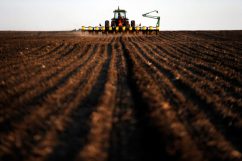
A corn field being planted in Hull, Sioux County, Iowa. MELINA MARA/ THE WASHINGTON POST VIA GETTY IMAGES

Geologically speaking, I grew up in a small farm town on the Des Moines lobe, a huge tongue-shaped remnant of glacial activity that reaches south across central Iowa. All around us were mollisols with a deep A-horizon — a type of rich black topsoil visible in farm fields for miles in every direction. In school we were taught only one thing about that soil: to be proud of it. It was a given, a blessing, a moral fact. In a sense, it seemed to have no history. Continue reading
Pandemic’s Impact On Tourism’s Impact

Last spring, a herd of Great Orme Kashmiri goats was spotted ambling through empty streets in Llandudno, a coastal town in northern Wales. Christopher Furlong/Getty Images

Kashmiri goats in Wales? I saw that story a year ago and it was amusing, and interesting. I did not post about it because amusement did not seem an appropriate sentiment to share then; too soon, as they say. But now, taking stock of the lasting impact of the pandemic on the work we do, on the planet where we do it, makes more sense. Somehow, Lisa Foderaro has never appeared in our pages before, but today is the perfect day to correct that:

For Planet Earth, No Tourism is a Curse and a Blessing

From the rise in poaching to the waning of noise pollution, travel’s shutdown is having profound effects. Which will remain, and which will vanish?

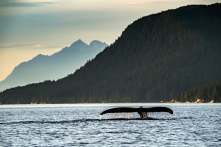
Water flows off the tail of a humpback whale as it dives below the surface near Juneau, Alaska. Christopher Miller for The New York Time

For the planet, the year without tourists was a curse and a blessing.

With flights canceled, cruise ships mothballed and vacations largely scrapped, carbon emissions plummeted. Wildlife that usually kept a low profile amid a crush of tourists in vacation hot spots suddenly emerged. And a lack of cruise ships in places like Alaska meant that humpback whales could hear each other’s calls without the din of engines. Continue reading
Under A White Sky

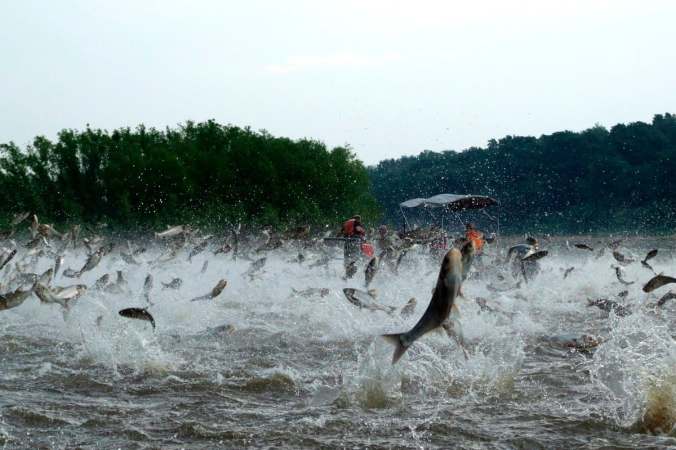
The continuing struggle to prevent Asian carp from entering the Great Lakes system has included solutions ranging from electrified water barriers to thrillingly impractical suggestions like stopping them with flying knives. Nerissa Michaels/Illinois River Biological Station, via Detroit Free Press

We have not featured any of her work since this review of H is for Hawk but we are happy to read Helen Macdonald’s work again with this review:

Can We Patch Up the Natural World We’ve Hurt?

UNDER A WHITE SKY
The Nature of the Future
By Elizabeth Kolbert

A few years ago YouTube recommended I watch a video with the word “carpocalypse” in its title. I clicked the link — of course I did — and stared in awe at what resembled a mash-up of a video game, nature documentary and war movie. I saw a river full of fish leaping from the water like chaotic piscine fireworks and men in speedboats yelling and holding out nets to catch them as if they were wet and weighty butterflies. Fish hitting people in the face, fish landing in boats, fish flapping between people’s feet in a mess of slime and blood. Continue reading
Lemons To Lemonade, African Locust Edition

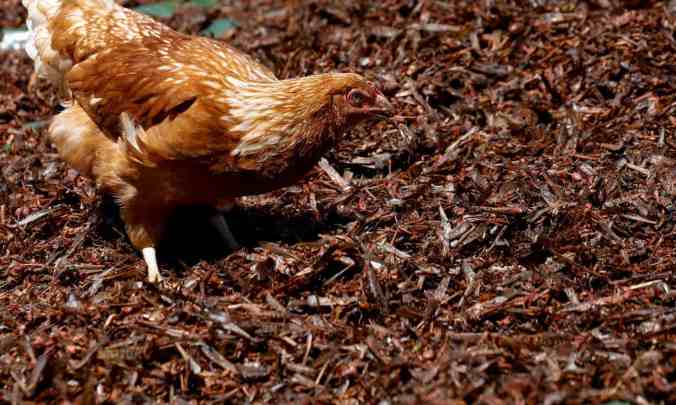
A chicken tucks into crushed desert locusts at a farm near the town of Rumuruti, Kenya

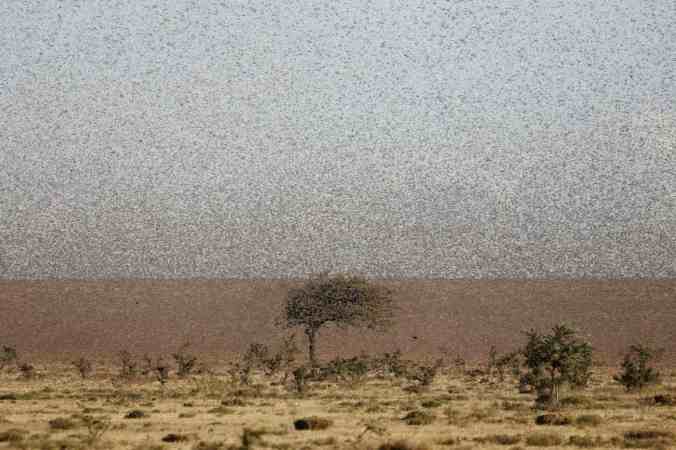
The Guardian shares a photo documentary of a lemons-to-lemonade story with locusts as the lemons. Click the title below, or any image, to go to the story:

Kenya is facing its worst plagues of locusts in decades. Since December 2019, huge swarms have caused devastation across east Africa

Iconic Geological Formations

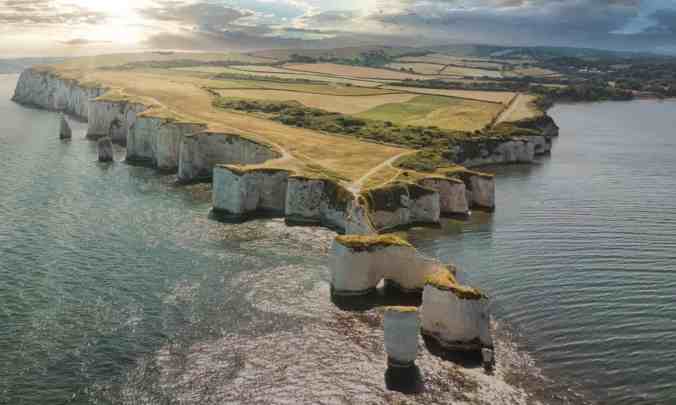
Old Harry Rocks in Dorset. Photograph: Adam Wearing/Getty Images/500px

Thanks to the Guardian for this long read on rocks and the people who dedicate their lives to studying them, and informing we lay people about them:

Rock of ages: how chalk made England

Swathes of England’s landscape were shaped by the immense block of chalk that has lain beneath it for 100 million years. For a long time, even geologists paid it little heed – but now its secrets and symbolism are being revealed

The Seven Sisters cliffs in East Sussex, England. Photograph: eye35.pix/Alamy

On the British Geological Survey’s map, chalk is represented by a swathe of pale, limey green that begins on the east coast of Yorkshire and curves in a sinuous green sweep down the east coast, breaking off where the Wash nibbles inland. In the south, the chalk centres on Salisbury Plain, radiating out in four great ridges: heading west, the Dorset Downs; heading east, the North Downs, the South Downs and the Chilterns. Continue reading

Ancient Trees & Magnetic Field

Radiocarbon from a 42,000-year-old kauri tree in New Zealand helped unravel Earth’s last magnetic upheaval. JONATHAN PALMER

Science magazine is accessible for most lay readers, even if their articles occasionally include a word we have never heard of, such as paleomagnetist:

Ancient kauri trees capture last collapse of Earth’s magnetic field

Several years ago, workers breaking ground for a power plant in New Zealand unearthed a record of a lost time: a 60-ton trunk from a kauri tree, the largest tree species in New Zealand. The tree, which grew 42,000 years ago, was preserved in a bog and its rings spanned 1700 years, capturing a tumultuous time when the world was turned upside down—at least magnetically speaking. Continue reading