Are We Anthropocenic Or Not?

Art works by Aletheia Casey

Thanks, as always, to Elizabeth Kolbert for illumination on this mystery:

The “Epic Row” Over a New Epoch

Scientists, journalists, and artists often say that we live in the Anthropocene, a new age in which humans shape the Earth. Why do some leading geologists reject the term?

A few months into the third millennium, a group called the International Geosphere-Biosphere Programme (I.G.B.P.) held a meeting in Cuernavaca, Mexico. Among the researchers in attendance was Paul Crutzen, an atmospheric chemist best known for his research on ozone-depleting chemicals, such as chlorofluorocarbons. Continue reading

If You Happen To Be In Venice

Work by Yuku Mohri at Japan’s pavilion. Moisture from the rotting fruit on display is converted into electric signals, which generate sounds or turn on suspended lightbulbs. Matteo de Mayda for The New York Times

It is the end of the standard work week for many, so here is an art concept to take them into the weekend, thanks to the New York Times art critics:

Given the Venice Biennale’s reputation as “the Olympics of the art world” — set in a spectacular city, no less — artists and curators here often favor grand, weighty gestures. This year’s Japan Pavilion wonderfully eschews gravitas for modesty and play, while still getting at something profound.

Mohri’s work was inspired by the rough and ready materials used to fix leaks in Tokyo’s subway. Matteo de Mayda for The New York Times

For her exhibition “Compose,” curated by Sook-Kyung Lee, the artist Yuko Mohri has created two installations of contraptions-slash-sculptures from local materials. One set, inspired by the D.I.Y. methods for fixing leaks in the Tokyo subway system, features tubes and everyday objects — like pans, rubber gloves and coat racks — rigged together and dangling through the air. The systems catch and recirculate water seeping into the pavilion, sometimes activating chimes in the process. Continue reading

10,000 New Electric Buses In India

People wait to board an electric bus in Pune, India. (Image credit: courtesy of ITDP)

Seven years and many bus stories among us recall the old buses. Noisy, smoke-belching, hot and crowded. Time to retire the old ones and at least lessen the noise and belching. Thanks to Sarah Spengeman and Yale Climate Connections:

India makes a big bet on electric buses

Fast-growing cities need electric buses if the country is to meet its climate goals.

Public transportation riders in Pune, India, love the city’s new electric buses so much they will actually skip an older diesel bus that arrives earlier to wait for a smoother, cooler ride in a new model. This has fed a new problem: overcrowding. Fortunately, more new buses are on the way. Continue reading

Babatana Rainforest Conservation Project & High Integrity Carbon Credits

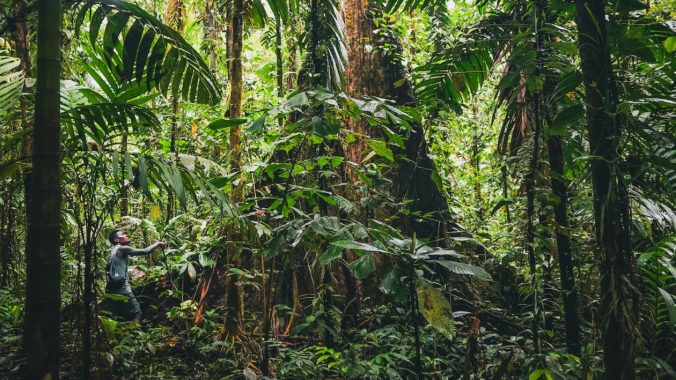
Sirebe tribal ranger Elijah Qalolilio Junior in the rainforest. DOUGLAS JUNIOR PIKACHA / NAKAU

A sign marks the boundary of protected Sirebe land. DOUGLAS JUNIOR PIKACHA / NAKAU

Of all the methods for addressing climate change, new incentives for protecting forests are among those we have most confidence in. Thanks to this article by Jo Chandler in Yale e360, if your introspection after reading this previous article had you down on carbon credits, there may be a way to restore your confidence:

The Sirebe forest at dusk. DOUGLAS JUNIOR PIKACHA / NAKAU

Solomon Islands Tribes Sell Carbon Credits, Not Their Trees

In a South Pacific nation ravaged by logging, several tribes joined together to sell “high integrity” carbon credits on international markets. The project not only preserves their highly biodiverse rainforest, but it funnels life-changing income to Indigenous landowners.

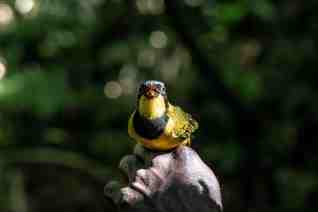
A male oriole whistler on a forest ranger’s hand. DOUGLAS JUNIOR PIKACHA / NAKAU

When head ranger Ikavy Pitatamae walks into the rainforest on Choiseul Island, the westernmost of the nearly 1,000 islands that make up the South Pacific archipelago of Solomon Islands, he surveys it with the heart of a tribal landowner and the eye of a forester. Continue reading

Assisted Evolution

Photo illustration by Lauren Peters-Collaer

If conservation failure is an option, then assisted evolution is a necessary consideration. Emily Anthes walks us through the idea:

When traditional conservation fails, science is using “assisted evolution” to give vulnerable wildlife a chance.

Scientists are trying to save lowland Leadbeater’s possums, tree-dwelling marsupials known as forest fairies, by crossbreeding them with possums from a separate highland population, a strategy known as genetic rescue.

For tens of millions of years, Australia has been a playground for evolution, and the land Down Under lays claim to some of the most remarkable creatures on Earth.

It is the birthplace of songbirds, the land of egg-laying mammals and the world capital of pouch-bearing marsupials, a group that encompasses far more than just koalas and kangaroos. (Behold the bilby and the bettong!) Nearly half of the continent’s birds and roughly 90 percent of its mammals, reptiles and frogs are found nowhere else on the planet.

Australia has also become a case study in what happens when people push biodiversity to the brink. Continue reading

Cambodian Mangrove Wonders

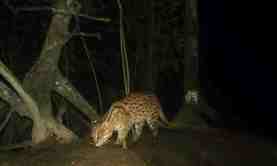
A fishing cat in Peam Krasop wildlife sanctuary. Photograph: Fauna & Flora/FCEE

Thanks to Robin McKie, now Science Editor at the Guardian, for this news from Cambodia:

‘We found 700 different species’: astonishing array of wildlife discovered in Cambodia mangroves

Smooth-coated otters in the mangroves. Photograph: Fauna & Flora/FCEE

Hairy-nosed otters and cats that catch fish are among the startling diversity of creatures making their home in threatened habitats

One of the most comprehensive biodiversity surveys ever carried out in a mangrove forest has revealed that an astonishing array of wildlife makes its home in these key, threatened habitats. Continue reading

Exquisite Textiles

“Development in Rose I” (1952).Art work by Anni Albers / Courtesy © The Josef and Anni Albers Foundation / ARS, 2024

Weavers got more attention during our seven years in India, but we are no less interested in the tradition today. Thanks to Jackson Arn, writing in the New Yorker, for this review:

Anni Albers Transformed Weaving, Then Left It Behind

Her textiles are quiet revelations, but even her later prints show how restraint can generate ravishing beauty.

Imagine you’d been born in 1899. Imagine living through the invention of the Model T, the jet aircraft, the liquid-fuelled rocket, and the computer chip. Now imagine looking back on all this in 1965 and writing, as though with a shrug, “How slow will we appear some day?”

In works like “Pasture” (1958), texture and almost-patterns create an overwhelming experience.Art work by Anni Albers / Courtesy © The Josef and Anni Albers Foundation / ARS, 2024 / © Metropolitan Museum of Art; Photograph by Peter Zeray

It takes an uncommon turn of mind to survive decades this dizzying and then sum them up with perfect nonchalance—but a lot of the greatness of Anni Albers lay in her ability to stay undizzied and keep doing her thing, year after year. Not that she was afraid of innovation; her thing just happened to be weaving, an art form that, by her own calculation, had not changed in any fundamental way since the Stone Age.

Critics reach for a few key words with Albers: “crisp,” “precise,” “mathematical.” Continue reading

Industry Pivots Via Carbon Sequestration

This gas processing plant at Casalborsetti is the focus of the first phase of an ambitious plan to capture carbon dioxide and bury it under the sea. Maurizio Fiorino for The New York Times

Where to put carbon is a major question of the day. Thanks to writers like Stanley Reed and publications like the New York Times the ideas keep coming:

Plan to Stash Pollution Beneath the Sea Could Save Money and Jobs

The Italian energy giant Eni sees future profits from collecting carbon dioxide and pumping it into natural gas fields that have been exhausted.

Renowned for ancient churches and the tomb of Dante, the 14th-century poet, the city of Ravenna and its environs along Italy’s Adriatic coast are also home to old-line industries like steel and fertilizer. Continue reading

Make Space For Weeds

Tineke Menalda on her front doorstep in Amersfoort Photograph: Senay Boztas/Guardian

Weeds are part of nature, whether we like them or not. Thanks to Senay Boztas and the Guardian for this new take on weeds from Holland:

‘We need to accept the weeds’: the Dutch ‘tile whipping’ contest seeking to restore greenery

View image in fullscreen
A pile of ‘whipped’ paving stones in the village of Raalte.

National competition has goal of helping Netherlands reach environmental targets by removing garden paving

Tineke Menalda sits in the sun on her front step, nursing a cup of coffee and idly plucking out the odd weed. Three years ago, the front of her terrace house in Amersfoort was completely paved. But now, sitting in a lush garden of trees and green, she is an official ambassador for the strangest new sport in the Netherlands: tegelwippen, “tile whipping”, or “whipping away” the paving stones. Continue reading

South American Fishing Methods, And Choices

An open-net salmon farm on the Chilean side of the Beagle Channel. Photograph: Dani Casado

As we increase our awareness of the many choices we have when consuming fish (among other things), here is more food for thought:

Crabs, kelp and mussels: Argentina’s waters teem with life – could a fish farm ban do the same for Chile?

Puerto Almanza, on the Beagle Channel in Argentinian Tierra del Fuego, is one of the world’s most southerly settlements and best known for the local seafood, especially Patagonian king crabs.
Photograph: Visit Argentina

While the ecosystem is thriving off the coast of Argentina, the proliferation of salmon farms in Chile’s waters is threatening marine life, say critics

A rocky path, strewn with thick tree roots, leads from a dirt road down to a small green hut overlooking the choppy waters of the Beagle Channel, a strait between Chile and Argentina. The shack is home to Diane Mendez and her family but doubles as Alama Yagan, one of nine restaurants in the fishing village of Puerto Almanza. Continue reading

Illegal Miners Face The Fire

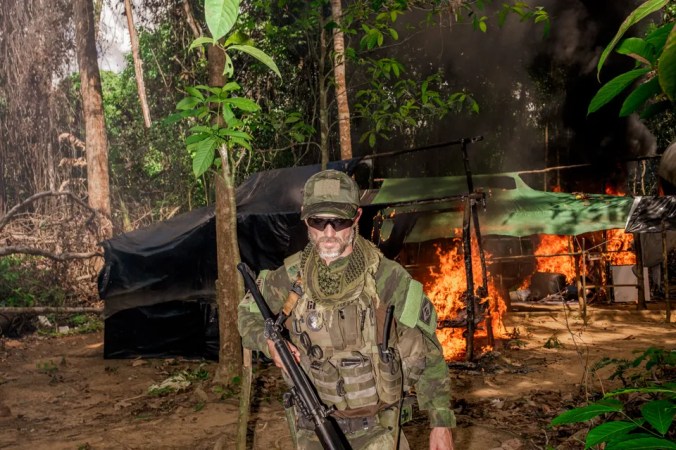
The G.E.F. burns mining camps as part of a long-running counteroffensive against environmental depredation. “Wherever they go, the miners destroy everything,” Felipe Finger, the unit’s leader, says. Photographs by Tommaso Protti for The New Yorker

Thanks to Jon Lee Anderson, as always, for his reporting from the danger zone that Brazil’s Amazon forest too often is:

The Brazilian Special-Forces Unit Fighting to Save the Amazon

As miners ravage Yanomami lands, combat-trained environmentalists work to root them out.

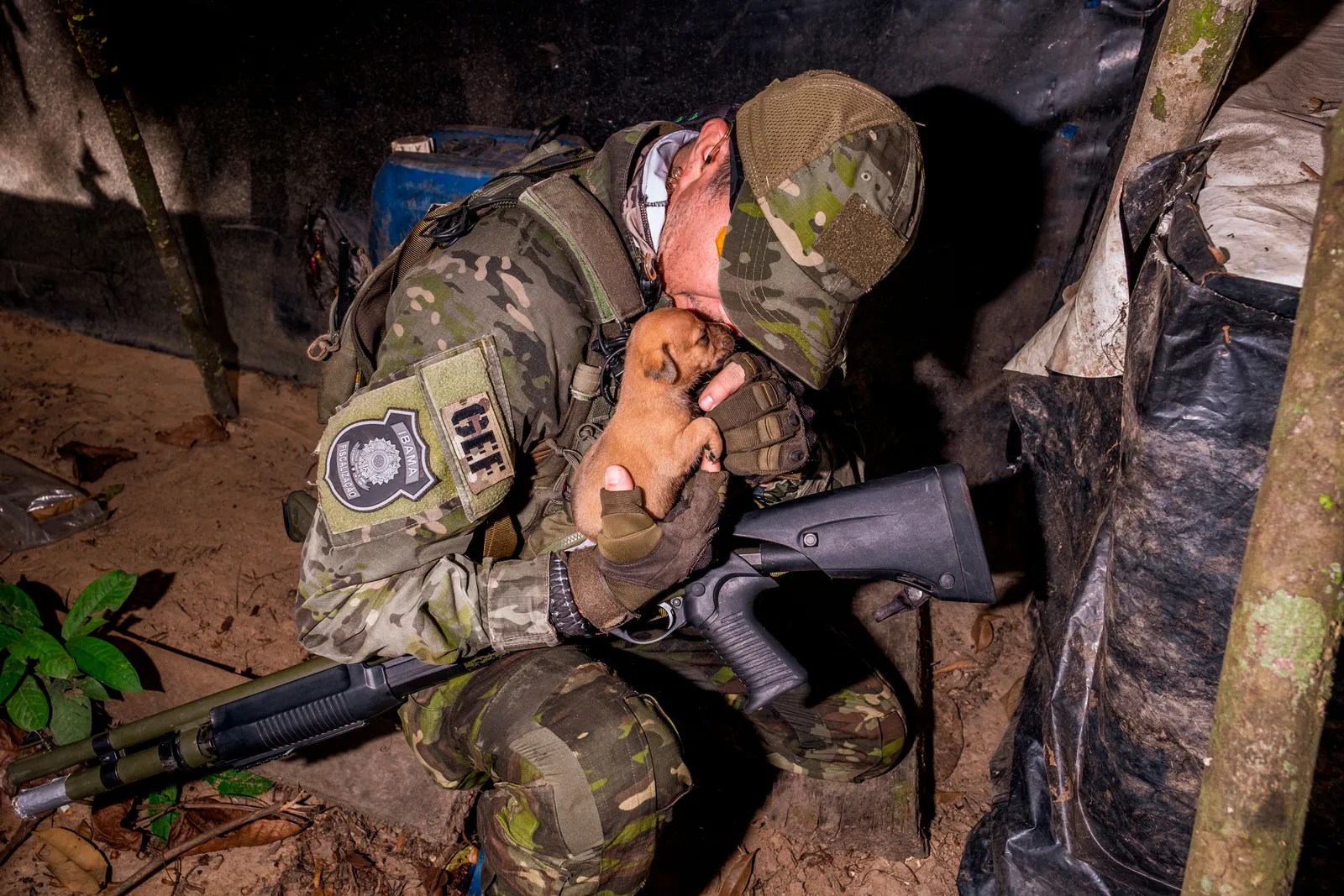
Roberto Cabral, a founder of the G.E.F., attends to a puppy discovered in a camp after miners fled.

In a clearing in the Brazilian Amazon, I stood with a group of armed men, discussing a viral TikTok video. The video, shot from a helicopter full of illegal miners, showed a vast stretch of rain forest, with dense foliage extending in all directions. The only sign of human habitation was below: a dirt circle surrounded by fanlike lean-tos made of wooden poles and palm fronds. It was a maloca, a traditional compound of the Yanomami, an Indigenous group that inhabits a remote territory in the rain forest of northern Brazil. Continue reading

Drone Cowboys

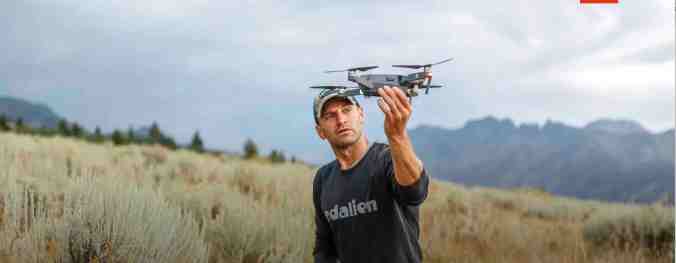
Daniel Anderson holds a drone on his family’s ranch in Montana’s Paradise Valley. Louise Johns/High Country News

High Country News is where a story like this gets assigned, and since they are a hyper-niche publication we thank The Atlantic for broadcasting it. If drones can unite these two constituencies, they are worth a moment of your time:

Illustration by Matteo Giuseppe Pani. Source: Getty.

Drones Could Unite Ranchers and Conservationists

Flying robots could offer a nonlethal way to keep wolves away from cattle.

In the summer of 2022, several researchers with USDA Wildlife Services held their breath as a drone pilot flew a large drone, equipped with a camera, toward a wolf standing in a pasture in southwestern Oregon. Continue reading

Does Recycling Matter In 2024?

Thanks to Yale Climate Connections for this primer:

Does recycling actually do anything? What about carbon offsets? Did you know that the average person’s carbon footprint is about 6.5 tons but the average American’s footprint is double that? Meteorologist Alexandra Steele talks to the experts to get answers about what actually helps the planet, and what doesn’t. You can calculate you carbon footprint by using the links below:

https://coolclimate.berkeley.edu/calc…

https://www.nature.org/en-us/get-invo…

Credits Script, research, interviews, camera: Alexandra Steele Script Editors: Sara Peach, Pearl Marvell Edit Producers: Iain Moss, Sam Lucas Production support: Anthony Leiserowitz, Lisa Fernandez Production Editor: Iain Moss Graphics: Screen Stories Production Manager: Ellie Aitken Social Media Manager: Ellie Phillips Director of Production: Hal Arnold Production Company: Little Dot Studios

PureCycle Technologies, Promising But Still Needing Verification

Recycled polypropylene pellets at a PureCycle Technologies plant in Ironton, Ohio. Maddie McGarvey for The New York Times

Big companies have not earned our trust, especially when it comes to plastics. So, our thanks to Hiroko Tabuchi for the tough questions in this New York Times article:

There’s an Explosion of Plastic Waste. Big Companies Say ‘We’ve Got This.’

By 2025, Nestle promises not to use any plastic in its products that isn’t recyclable. By that same year, L’Oreal says all of its packaging will be “refillable, reusable, recyclable or compostable.”

And by 2030, Procter & Gamble pledges that it will halve its use of virgin plastic resin made from petroleum.

To get there, these companies and others are promoting a new generation of recycling plants, called “advanced” or “chemical” recycling, that promise to recycle many more products than can be recycled today.
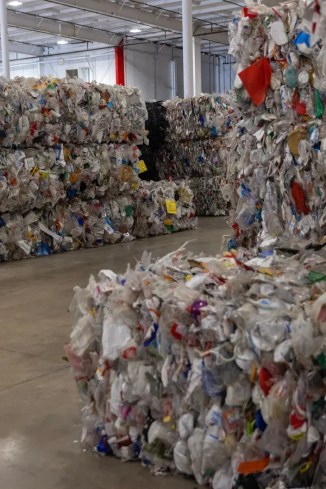
Crushed plastic waste at the PureCyle plant. Nestlé, Procter & Gamble and L’Oréal have expressed confidence in the company despite its early setbacks. Maddie McGarvey for The New York Times

So far, advanced recycling is struggling to deliver on its promise. Nevertheless, the new technology is being hailed by the plastics industry as a solution to an exploding global waste problem.

The traditional approach to recycling is to simply grind up and melt plastic waste. The new, advanced-recycling operators say they can break down the plastic much further, into more basic molecular building blocks, and transform it into new plastic.

PureCycle Technologies, a company that features prominently in Nestlé, L’Oréal, and Procter & Gamble’s plastics commitments, runs one such facility, a $500 million plant in Ironton, Ohio. Continue reading

An Oil Company Funding Carbon Capture?

The plant will be powered by geothermal energy. Francesca Jones for The New York Times

David Gelles in the New York Times furthers our understanding of the expanding use of carbon capture, and the motives of the key actors utilizing this technology:

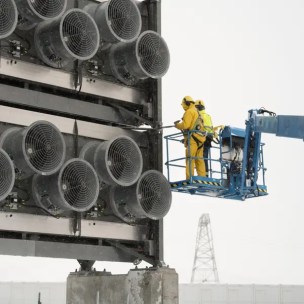
On a windswept Icelandic plateau, an international team of engineers and executives is powering up an innovative machine designed to alter the very composition of Earth’s atmosphere.

“Collector containers” where air is pulled in. Francesca Jones for The New York Times

If all goes as planned, the enormous vacuum will soon be sucking up vast quantities of air, stripping out carbon dioxide and then locking away those greenhouse gases deep underground in ancient stone — greenhouse gases that would otherwise continue heating up the globe.

Just a few years ago, technologies like these, that attempt to re-engineer the natural environment, were on the scientific fringe. They were too expensive, too impractical, too sci-fi. Continue reading

Map For Planting & For Not Planting Trees

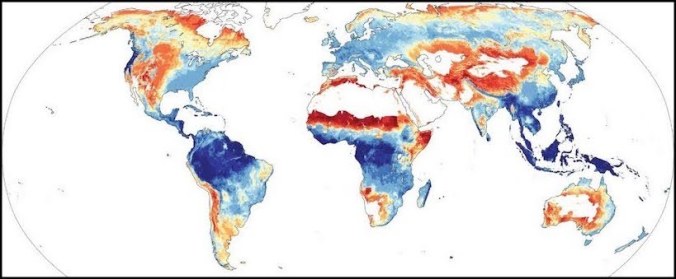
Regions where tree planting would curb warming on balance are shaded in blue, while regions where tree planting would intensify warming are shaded in red. HASLER, ET AL.

As we prepare to plant trees when the rainy season starts in a few weeks, a story like this one gives pause. If you are capable of reading and understanding the article summarized below, congratulations; meanwhile, thanks to Yale e360 for interpretation that allows the lay reader to follow along:

This Map Shows Where Planting Trees Would Make Climate Change Worse

Though oft touted as a fix for climate change, planting trees could, in some regions, make warming more severe, a new study finds. Continue reading

Orcas Reconsidered

Although all the planet’s killer whales are currently considered a single species (Orcinus orca), some of the world’s leading experts are proposing to split them into three species. Photo by imagebroker.com/Alamy Stock Photo

Hakai is the go-to magazine for marine stories, and we hope to see more work of Craig Welch, the science journalist who wrote the article below, in the future:

Meet the Killer Whales You Thought You Knew

The iconic marine mammals may not belong to one species but several. Surprise!

Transient, or Bigg’s, killer whales, not only look, sound, and act differently than their resident killer whale neighbors, they might be an entirely different species. Danita Delimont Creative/Alamy Stock Photo

John Ford still recalls the first time he heard them. He’d been puttering around the Deserters Group archipelago, a smattering of spruce- and cedar-choked islands in Queen Charlotte Strait, between Vancouver Island and mainland British Columbia. He was piloting a small skiff and trailing a squad of six killer whales. Ford, then a graduate student, had been enamored with cetacean sounds since listening to belugas chirp while he worked part-time at the Vancouver Aquarium as a teenager. Now here he was, on August 12, 1980, tracking the underwater conversations of wild killer whales through a borrowed hydrophone. Continue reading

Dutch Water Knowhow Is Respectable

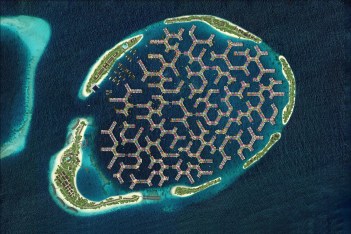
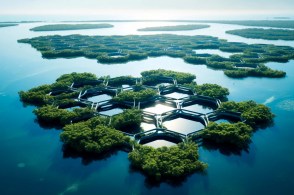
Waterstudio renderings like this one, of a floating “city” in the Maldives, are created using tools including Photoshop and the A.I. program Midjourney. Art work courtesy Waterstudio / Dutch Docklands

We respect the Dutch for their respect of nature, particularly their respect for the power of water and their longstanding determination to harmonize our life with it. This profile extends our respect:

A Dutch Architect’s Vision of Cities That Float on Water

What if building on the water could be safer and sturdier than building on flood-prone land?

Koen Olthuis, the founder of the architectural firm Waterstudio, believes that floating buildings like the Théâtre L’Île Ô, in Lyon, will transform urban living like skyscrapers did a century ago. Photograph by Giulio Di Sturco for The New Yorker

In a corner of the Rijksmuseum hangs a seventeenth-century cityscape by the Dutch Golden Age painter Gerrit Berckheyde, “View of the Golden Bend in the Herengracht,” which depicts the construction of Baroque mansions along one of Amsterdam’s main canals. Handsome double-wide brick buildings line the Herengracht’s banks, their corniced façades reflected on the water’s surface. Interspersed among the new homes are spaces, like gaps in a young child’s smile, where vacant lots have yet to be developed.

A rendering of a floating forest in the Persian Gulf, devised as part of a strategy to combat heat and humidity. When building projects on the water, Olthuis says, “you have to be very, very patient.” Art work courtesy Waterstudio

For the Dutch architect Koen Olthuis, the painting serves as a reminder that much of his country has been built on top of the water. The Netherlands (whose name means “low countries”) lies in a delta where three major rivers—the Rhine, the Meuse, and the Scheldt—meet the open expanse of the North Sea. More than a quarter of the country sits below sea level. Over hundreds of years, the Dutch have struggled to manage their sodden patchwork of land. Continue reading

Ed Yong With Binoculars

Ed Yong has graced our pages for a decade and still finds new ways to communicate the wonders of nature:

When I Became a Birder, Almost Everything Else Fell Into Place

Last September, I drove to a protected wetland near my home in Oakland, Calif., walked to the end of a pier and started looking at birds. Throughout the summer, I had been breaking in my first pair of binoculars, a Sibley field guide and the Merlin song-identification app, but always while hiking or walking the dog. On that pier, for the first time, I had gone somewhere solely to watch birds. Continue reading

An Unappreciated Creature

A macro image of a Costa Rican mosquito, Psorophora cilipes.

Living in, or even just visiting Costa Rica, inspires appreciation, and respect, for nature. But one creature defies this spirit:

Entomologist says there is much scientists don’t know about habitats, habits, impacts on their environments

A blood-sucking nuisance, mosquitoes are responsible for spreading diseases to hundreds of millions of people every year. True?

A Culex mosquito feeding from an invasive brown anole lizard in Florida. Photos courtesy of Lawrence Reeves

Yes, says entomologist Lawrence Reeves, but it’s also true that mosquitoes primarily feed on plant sugars, not blood. Only female mosquitoes consume blood, and only when they need it to complete their reproductive cycle. Also, it is possible some may serve as pollinators like bees, allowing plants to produce fruit, seeds, and more young plants. Continue reading